







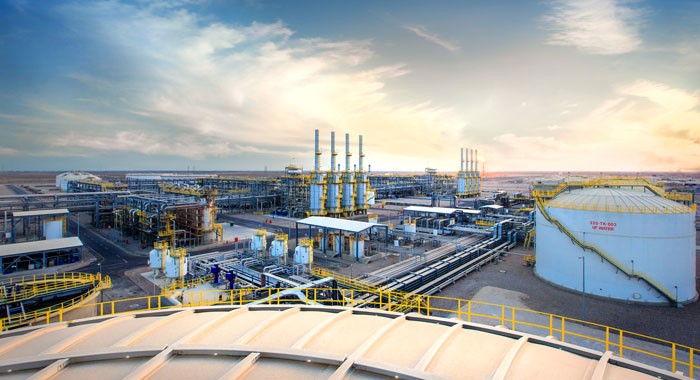
For over a decade, Russian oil major LUKOIL has held a 38% stake in Ghana‘s Deepwater Tano/Cape Three Points block, one of the most promising yet perpetually delayed ultra-deepwater projects in West Africa. With a $3.5 billion development plan approved, a floating drilling rig and FPSO standing by, and up to 550 million barrels of oil equivalent at stake, the Pecan field has been poised for a final investment decision since 2024. But Western sanctions on Russia, the exit of operator Aker Energy, and the entry of the African Finance Corporation have frozen the project in place. Now, as Ghana moves to invoke pre-emptive rights to acquire LUKOIL’s stake, the stage is set for a high-stakes geopolitical and financial battle over who will ultimately unlock the Black Volta of the Atlantic.
Executive Introduction
In the constellation of international oil companies operating in Ghana‘s upstream sector—where Tullow, Kosmos, Eni, and Vitol have drilled, discovered, and produced—one name has remained conspicuously in the background for over a decade: LUKOIL.

The Russian energy giant, one of the world‘s largest publicly traded oil companies, first entered Ghanaian waters in 2006, securing a 56.66% stake in the Cape Three Points Deep Water (CTPDW) block . By 2014, it had farmed into what would become its most significant Ghanaian asset: the Deepwater Tano/Cape Three Points (DWT/CTP) block, holding a 38% interest . At the centre of this block lies the Pecan field, an ultra-deepwater discovery with estimated recoverable reserves of 268 million barrels—and total block resources estimated at 550 million barrels of oil equivalent .
📢 GET A DETAILED ARTICLES + JOBS
Join ASJ's WhatsApp Channel and never miss a post or opportunity.

The Pecan field is Ghana‘s most significant undeveloped offshore asset. Located 115 kilometres from the coast, in water depths ranging from 2,400 to 2,700 metres, it is one of the deepest water fields in the world . The development plan, approved by Ghana in July 2023, envisions a two-stage project with peak production of 80,000 barrels per day and total capital investment of $3.5 billion . A floating drilling rig and a floating production, storage, and offloading (FPSO) unit have already been acquired and are standing by, awaiting the final investment decision (FID) that was expected by March 2024 .
That FID never came.

The reason is as geopolitical as it is financial. LUKOIL, a Russian state-aligned corporation, has been progressively ensnared by Western sanctions following Russia‘s invasion of Ukraine. In October 2025, the UK directly sanctioned LUKOIL for the first time, putting its overseas ventures at risk . The United States had already imposed sanctions on LUKOIL and peer Rosneft PJSC. These restrictions have frozen LUKOIL‘s ability to finance its share of the $3.5 billion development, leaving the Pecan project in a state of suspended animation.
The stalemate has triggered a complex chain of ownership changes. Norwegian operator Aker Energy, frustrated by delays, exited the block entirely in 2023, selling its stake to the African Finance Corporation (AFC) , which now operates the block through its subsidiary Pecan Energies with a 50% interest . Private equity giant Carlyle Group agreed in January 2026 to buy most of LUKOIL‘s international portfolio—likely including the Ghanaian block—but the transaction’s fate remains uncertain.
Into this void has stepped the Government of Ghana. In May 2026, news broke that Ghana intends to invoke its pre-emptive rights to acquire LUKOIL‘s 38% stake . A valuation of the stake has been commissioned, and LUKOIL has been formally informed. The government is also reportedly in talks with Shell Plc to bring in the supermajor as a strategic partner to help finance development.
For policymakers, energy analysts, and investors, the LUKOIL Ghana saga is a case study in how geopolitics can paralyse a multi-billion dollar energy asset—and how a resource-rich nation can use its contractual rights to regain control. This profile examines LUKOIL‘s history in Ghana, the Pecan field‘s immense potential, the sanctions-driven freeze, the ownership shuffle involving Aker and AFC, the government‘s pre-emptive rights gambit, and the critical question: Will Ghana succeed in wresting control from a sanctioned Russian giant, or will the Pecan field remain a $3.5 billion question mark for years to come?
LUKOIL in Ghana: A Timeline of a Delayed Giant
2006: First Entry into Ghanaian Waters
LUKOIL‘s presence in Ghana dates back to 2006, when the Russian major signed an exploration agreement for the Cape Three Points Deep Water (CTPDW) block . By 2010, LUKOIL held a 56.66% interest in the block, with Vanco holding 28.34% and the Ghana National Petroleum Corporation (GNPC) holding 15% . A major hydrocarbon field, the Dzata structure, was discovered in February 2010 .
2014: Farming into the Deepwater Tano/Cape Three Points Block
In March 2014, LUKOIL entered the DWT/CTP block, acquiring a 38% stake . The block, covering just over 2,000 square kilometres in water depths ranging from 1,600 to 3,000 metres, contains seven discovered fields—five oil and two gas . The crown jewel is the Pecan field, discovered by Hess and subsequently appraised by Aker Energy.
Shareholding Structure of DWT/CTP Block (Post-2023):
| Shareholder | Ownership % | Status |
|---|---|---|
| Pecan Energies (AFC subsidiary) | 50% | Operator |
| LUKOIL Overseas Ghana Tano Limited | 38% | Sanctioned, seeking exit |
| GNPC | 10% | State-owned |
| Fueltrade Limited | 2% | Ghanaian-owned |
2023: Ghana Approves the Pecan Development Plan
In July 2023, Ghana officially approved the Pecan field development plan . The project was designed in two stages:
| Stage | Details |
|---|---|
| Stage 1 | Initial production phase, targeting early cash flow |
| Stage 2 | Full-field development |
| Peak Production | 80,000 barrels per day |
| Total Capital Investment | $3.5 billion |
| Estimated Reserves (Pecan) | 268 million barrels |
| Estimated Reserves (Total Block) | 550 million barrels of oil equivalent |
A floating drilling rig and an FPSO were acquired from Norway‘s Ocean Yield and positioned in Sri Lanka, awaiting the final investment decision (FID), which was expected by the end of March 2024 .

2024-2025: The Freeze
The FID never materialised. By late 2024, reports confirmed that the rig and FPSO remained idle, with no investment decision made . LUKOIL‘s ability to finance its share of development had been progressively constrained by Western sanctions.
In October 2025, the UK directly sanctioned LUKOIL for the first time, putting its overseas ventures at risk . This followed earlier US sanctions on LUKOIL and Rosneft. The sanctions effectively froze LUKOIL‘s position—it could not sell its stake easily, nor could it fund its share of development.
2023-2024: The Exit of Aker Energy and the Entry of AFC
Norwegian operator Aker Energy, which had been shepherding the project, grew frustrated with the delays and the complexities of dealing with a sanctioned partner. In 2023, Aker exited the block entirely, selling its stake to the African Finance Corporation (AFC) .
The AFC‘s Role:
The AFC, a pan-African development finance institution, took a 50% stake in the block through its subsidiary Pecan Energies, assuming operatorship . This was a significant vote of confidence in the asset‘s potential, but it also introduced a new variable: an operator with a development mandate but without the deep technical expertise of a major oil company.
2026: The Carlyle Interlude
In January 2026, private equity giant Carlyle Group agreed to buy most of LUKOIL‘s international portfolio . It was widely assumed that this portfolio included the Ghanaian block. However, Carlyle declined to comment on whether it was pursuing the stake, and the transaction‘s status remains unclear .
May 2026: Ghana Invokes Pre-Emptive Rights
The most consequential development occurred in May 2026. According to Bloomberg and Business Insider Africa, the Government of Ghana is taking steps to acquire LUKOIL‘s 38% stake using its pre-emptive rights under the petroleum agreement .
Key Details:
-
Pre-emptive rights give existing partners or the state the first right to acquire a stake when a shareholder seeks to sell.
-
Ghana claims it has the first right to the stake following Carlyle‘s agreement to buy LUKOIL‘s assets.
-
A valuation of the stake has been commissioned.
-
LUKOIL has been formally informed of Ghana‘s intention.
-
Ghana is reportedly in talks with Shell Plc to bring in the supermajor as a strategic partner to help finance development.
The government‘s move is part of a broader strategy by African producers to increase national control and revenue shares from oil resources . However, as The Herald Ghana reported in June 2026, the negotiations have been controversial. Closed-door meetings in Dubai and London have focused on structuring transactions that could see public funds used to purchase distressed interests, with the Finance Ministry reportedly reluctant to approve the deals .
The Pecan Field: A $3.5 Billion Prize
Geology and Location
The Pecan field is located within the DWT/CTP block, approximately 115 kilometres off the coast of Ghana, near the border with Côte d‘Ivoire . Water depths range from 2,400 to 2,700 metres, making it one of the deepest water fields in the world .
The block itself covers an area of just over 2,000 square kilometres and contains seven discovered fields: five oil and two gas .

Reserves and Potential
| Resource | Estimated Volume |
|---|---|
| Pecan Field Recoverable Reserves | 268 million barrels |
| Total Block Recoverable Resources | 550 million barrels of oil equivalent |
Peak production is projected at 80,000 barrels per day . At current oil prices (approximately $75–$80 per barrel), peak annual revenue would be approximately $2.2 billion, though actual government take would be lower after accounting for production costs, royalties, and profit sharing.
Development Status
| Component | Status |
|---|---|
| Development Plan Approval | July 2023 |
| Final Investment Decision (FID) | Not yet made (expected March 2024, delayed) |
| Drilling Rig | Acquired, positioned in Sri Lanka |
| FPSO | Acquired, positioned in Sri Lanka |
| Estimated Capex | $3.5 billion |
| Expected First Oil | 2026-2027 (now delayed) |
The physical assets required for development are in place—the rig and FPSO have been acquired and are waiting. What is missing is the final investment decision, which requires financing commitments from all partners. LUKOIL‘s inability to commit its share has been the primary blocker.
The Sanctions Shadow: How Geopolitics Paralyzed a Project
The Escalating Sanctions Regime
Russia‘s invasion of Ukraine in February 2022 triggered an escalating series of sanctions targeting the Russian energy sector.
| Date | Sanction | Impact on LUKOIL Ghana |
|---|---|---|
| 2022-2024 | US sanctions on LUKOIL and Rosneft | Restricted dollar-denominated transactions |
| October 2025 | UK directly sanctions LUKOIL | Put overseas ventures at risk |
| Ongoing | EU sanctions on Russian energy | Limited access to European equipment and financing |
LUKOIL, while not a state-owned enterprise, is closely aligned with the Russian state. Its chairman, Vagit Alekperov, was sanctioned by the UK in 2022 (though the company itself was only directly sanctioned later). The cumulative effect has been to freeze LUKOIL‘s ability to move capital, secure financing, or transact in dollars and euros.
The “Distressed LUKOIL” Narrative
By late 2025, industry insiders described LUKOIL‘s position in Ghana as “distressed” . The company could neither advance the project nor easily exit. Its 38% stake had become a frozen asset—valuable on paper but impossible to monetise.
The OFAC Designation
According to US Office of Foreign Assets Control (OFAC) data, LUKOIL Overseas Ghana Tano Limited is listed as “Owned or controlled by a sanctioned entity or by an entity owned by a sanctioned entity” . This designation, dating back to 2018, long predates the 2022 invasion, but its implications have become more severe as sanctions have tightened.
The Ownership Shuffle: Aker Out, AFC In, Carlyle Circling
2023: Aker Energy‘s Frustrated Exit
Norwegian operator Aker Energy had been the operator of the DWT/CTP block and the champion of the Pecan development. But after years of delays—largely attributed to difficulties in securing financing and aligning partners—Aker threw in the towel.
In 2023, Aker exited the block entirely, selling its stake to the African Finance Corporation (AFC) . The AFC, through its subsidiary Pecan Energies, assumed operatorship with a 50% interest .
Why Aker left:
-
Frustration with the pace of development
-
Difficulty managing a partnership that included a sanctioned Russian entity
-
Strategic repositioning away from ultra-deepwater assets
2024-2025: AFC as Operator
The AFC is a development finance institution, not an oil company. While it has deep pockets and a mandate to develop African infrastructure, it lacks the technical expertise of a major operator. The AFC‘s assumption of operatorship was a holding action—a way to keep the project alive while a more strategic partner was sought.
January 2026: Carlyle Group‘s Agreed Purchase
In January 2026, private equity giant Carlyle Group agreed to buy most of LUKOIL‘s international portfolio . The transaction was widely understood to include the Ghanaian block. Carlyle declined to comment, and the fate of the deal remains unclear.
The Carlyle Factor:
-
Carlyle is a financial buyer, not a strategic oil company.
-
If Carlyle acquired the stake, it would seek to monetise it quickly—likely by selling to a major oil company.
-
Carlyle‘s involvement could provide a clean break from LUKOIL, enabling the project to move forward.
However, Ghana‘s invocation of pre-emptive rights in May 2026 suggests that the government is not content to wait for Carlyle—or any other private buyer—to determine the asset‘s fate.
Ghana‘s Pre-Emptive Rights Gambit (May 2026)
What Are Pre-Emptive Rights?
Pre-emptive rights (also known as rights of first refusal) are contractual provisions that give existing partners or, in some cases, the host government the first opportunity to acquire a stake when a shareholder seeks to sell. Ghana‘s petroleum agreements include such provisions.
The Government‘s Move
In May 2026, Ghana formally signalled its intention to acquire LUKOIL‘s 38% stake using its pre-emptive rights .
Key steps:
-
Valuation: Ghana commissioned a valuation of the stake.
-
Notification: LUKOIL was formally informed of Ghana‘s intent to invoke pre-emptive rights.
-
Financing: Ghana is reportedly in talks with Shell Plc to bring in the supermajor as a strategic partner to help finance development.
-
Broader Strategy: The move is part of a larger effort to increase national control and revenue shares from oil resources .
The Shell Angle
Shell‘s reported interest in the block is significant. The supermajor has the technical expertise, financial capacity, and global reach to develop the Pecan field. A partnership between GNPC and Shell—with Shell as technical operator and Ghana as majority owner—would be a radically different structure than the current consortium.
Potential Shell-GNPC Partnership Structure:
| Shareholder | Role |
|---|---|
| Ghana (through GNPC) | Majority owner, sovereign oversight |
| Shell | Technical operator, minority partner |
| AFC | Development partner, financing |
The Controversy
Not everyone is pleased with the government‘s approach. The Herald Ghana reported in June 2026 that closed-door meetings in Dubai and London have focused on structuring state-backed transactions that could benefit both LUKOIL and indigenous operator Springfield Exploration and Production .
Key allegations:
-
The government is negotiating with LUKOIL and Springfield rather than enforcing relinquishment provisions for companies that have failed to meet contractual obligations.
-
Public funds may be used to acquire distressed interests.
-
The Finance Ministry is reportedly reluctant to approve the deals, while politically connected interests are pushing for accelerated approvals.
Industry analysts have warned that failure to enforce petroleum agreement provisions uniformly risks undermining investor confidence and creating perceptions that politically connected operators can avoid contractual consequences while benefiting from state intervention .
The Regulatory and Political Landscape
The Role of GNPC
The Ghana National Petroleum Corporation (GNPC) has a 10% carried interest in the block . Under the government‘s pre-emptive rights plan, GNPC would likely be the vehicle through which the state acquires LUKOIL‘s stake, potentially in partnership with a strategic investor like Shell.
The Petroleum Commission
The Petroleum Commission has registered LUKOIL Overseas Ghana Tano Limited as a contractor party to the petroleum agreement annually since 2015, with certificates of registration extending to 2024 . This confirms the company‘s continued legal standing, despite sanctions.
The Ministry of Energy
The Ministry of Energy has remained publicly silent on the negotiations, declining to comment to Bloomberg . This silence is consistent with the sensitive nature of the talks.
The Political Stakes
The Pecan field is Ghana‘s largest undeveloped oil asset. Its development would:
-
Increase national oil production (currently averaging 134,000 b/d in 2025, down from 142,000 b/d in 2024 )
-
Generate billions in government revenue
-
Create thousands of jobs
-
Enhance energy security
The political pressure to unlock the asset is immense. But the path forward is fraught with legal, financial, and geopolitical complexity.
Challenges and Risks
No analysis of LUKOIL Ghana is complete without acknowledging the headwinds.
Risk 1: Sanctions as a Permanent Barrier
As long as LUKOIL remains sanctioned, its stake cannot be easily monetised or developed. Even if Ghana acquires the stake, it must navigate the legal implications of dealing with a sanctioned entity.
Risk 2: Valuation Disputes
LUKOIL will likely dispute any valuation that it considers too low. The 38% stake is worth hundreds of millions, if not billions, of dollars. Expect protracted negotiations or arbitration.
Risk 3: Financing the Acquisition
Ghana does not have billions in spare cash. The government will need to secure financing from development partners (AFC, World Bank, China) or bring in a strategic partner (Shell) to fund the acquisition.
Risk 4: Shell‘s Commitment Is Not Guaranteed
Shell is in talks, but talks are not a deal. The supermajor may walk away if the terms are not favourable or if the geopolitical risks are too high.
Risk 5: AFC‘s Role
AFC currently holds a 50% stake and operatorship. It will not relinquish control easily. Any restructuring of the consortium must accommodate AFC‘s interests.
Risk 6: Springfield’s Parallel Claims
Springfield Exploration and Production, an indigenous operator, has its own interests in nearby blocks. The government‘s negotiations with Springfield could complicate the LUKOIL transaction.
Risk 7: Parliamentary Scrutiny
Any use of public funds to acquire oil assets will face parliamentary scrutiny. The Minority in Parliament may challenge the transaction‘s terms.
Risk 8: The Carlyle Wildcard
If Carlyle‘s purchase of LUKOIL‘s international portfolio proceeds, Ghana may find itself negotiating with a private equity firm rather than a sanctioned Russian company—a different legal and financial dynamic altogether.
Future Outlook
As of June 2026, the DWT/CTP block remains in limbo. The rig and FPSO wait. The reserves sit untapped. And LUKOIL‘s 38% stake is the subject of a high-stakes geopolitical and legal battle.
The Most Likely Scenario: Ghana Acquires the Stake with Shell as Partner
Ghana invokes its pre-emptive rights, acquires LUKOIL‘s 38% stake (with financing from AFC and a strategic partner), and brings in Shell as technical operator. The consortium restructures:
| Shareholder | Proposed Stake | Role |
|---|---|---|
| GNPC (Ghana) | 48% (38% acquired + original 10%) | Majority owner |
| Pecan Energies (AFC) | 50% | Development partner |
| Shell | Acquires portion of GNPC or AFC stake | Technical operator |
FID is reached by 2027, with first oil by 2029.
The Alternative Scenario: Carlyle Acquires, Sells to Shell
Carlyle‘s purchase of LUKOIL‘s portfolio proceeds. Carlyle then sells the 38% stake to Shell. Shell becomes a direct partner alongside AFC and GNPC. FID follows within 18 months.
The Pessimistic Scenario: Continued Stalemate
Ghana and LUKOIL cannot agree on valuation. Legal battles ensue. Shell walks away. The rig and FPSO remain idle. The Pecan field remains undeveloped into the 2030s.
The Verdict
LUKOIL Ghana is not a success story—not yet. It is a cautionary tale of how geopolitical forces can paralyse even the most promising energy assets.
The Pecan field is real. The reserves are substantial. The equipment is in place. But the final investment decision, expected in 2024, has been delayed indefinitely. The culprit is not geology, not technology, not even oil prices. It is sanctions.
LUKOIL, a Russian giant with a 38% stake, cannot move forward. Its partners cannot move forward without it. And Ghana, watching billions in potential revenue slip away, has decided to act.
The government‘s invocation of pre-emptive rights is bold. It is also legally complex and financially demanding. Ghana must value the stake, finance the acquisition, and find a technical partner capable of developing one of the world‘s deepest water fields.
Shell is the logical partner. The supermajor has the expertise, the capital, and the global reach. If Ghana and Shell can strike a deal—and if the AFC can be brought along—the Pecan field could finally be developed.
But the path is narrow. LUKOIL will not surrender its stake without a fight. The Kremlin may have its own views on a Russian asset being seized by a West African state. And the ghosts of past oil deals—with their promises of development and their legacies of delay—hang heavy over the negotiations.
For Ghana, the stakes could not be higher. The Pecan field represents one of the country‘s last great undeveloped natural resource assets. If developed, it could transform the nation‘s oil production profile, boost government revenues, and fund development for a generation.
If not, it will remain a $3.5 billion question mark—a monument to the collision of geopolitics, finance, and ambition.
LUKOIL Ghana is not trying to be the largest producer in Ghana—Tullow and Kosmos hold those titles. It is trying to be the catalyst for the next chapter of Ghana‘s oil story. But whether that chapter is written depends on decisions being made in Accra, Moscow, London, and The Hague.
The rig is waiting. The oil is there. The question is: who will be allowed to drill?
FAQ SECTION
1. Does LUKOIL operate in Ghana?
Yes. LUKOIL holds a 38% stake in the Deepwater Tano/Cape Three Points (DWT/CTP) offshore block through its subsidiary LUKOIL Overseas Ghana Tano Limited. The block contains the Pecan field, one of Ghana‘s largest undeveloped oil discoveries .
2. What is the Pecan field?
The Pecan field is an ultra-deepwater oil discovery located approximately 115 kilometres off the coast of Ghana, in water depths of 2,400 to 2,700 metres. It has estimated recoverable reserves of 268 million barrels, with total block resources estimated at 550 million barrels of oil equivalent .
3. How much will it cost to develop the Pecan field?
The development plan, approved by Ghana in July 2023, envisions a two-stage project with peak production of 80,000 barrels per day and total capital investment of $3.5 billion .
4. Why hasn‘t the Pecan field been developed yet?
The final investment decision (FID), expected by March 2024, has been delayed primarily due to Western sanctions on Russia, which have frozen LUKOIL‘s ability to finance its 38% share of the development .
5. What is LUKOIL‘s ownership structure in the DWT/CTP block?
As of 2023–2024, the shareholding structure is: Pecan Energies (AFC subsidiary) – 50% (operator), LUKOIL – 38%, GNPC – 10%, Fueltrade Limited – 2% .
6. What sanctions have been imposed on LUKOIL?
The US has imposed sanctions on LUKOIL and peer Rosneft. In October 2025, the UK directly sanctioned LUKOIL for the first time, putting its overseas ventures at risk. These sanctions have restricted LUKOIL‘s ability to transact in dollars, secure financing, and move capital .
7. What is Ghana‘s pre-emptive rights claim?
In May 2026, Ghana announced its intention to invoke pre-emptive rights to acquire LUKOIL‘s 38% stake. Pre-emptive rights give the state the first opportunity to acquire a stake when a shareholder seeks to sell. A valuation has been commissioned, and LUKOIL has been formally notified .
8. Is Shell involved in the Pecan field?
Shell is reportedly in ongoing talks over buying a stake in the local unit. Ghana is considering bringing in Shell as a strategic partner to help finance development if it successfully acquires LUKOIL‘s stake .
9. Who is the current operator of the DWT/CTP block?
Pecan Energies, a subsidiary of the African Finance Corporation (AFC), is the operator with a 50% stake. AFC acquired the stake from Aker Energy when the Norwegian operator exited in 2023 .
10. What is the Carlyle Group‘s involvement?
In January 2026, private equity giant Carlyle Group agreed to buy most of LUKOIL‘s international portfolio, likely including the Ghanaian block. Carlyle declined to comment, and the transaction‘s status remains unclear .
11. Where is LUKOIL Overseas Ghana Tano Limited headquartered?
The company‘s registered address is 1b Quartey-Papafio Avenue, Accra, Greater Accra, Ghana .
12. How much oil does Ghana currently produce?
Ghana‘s oil production averaged 134,000 barrels per day in the first eight months of 2025, down from 142,000 b/d in 2024 and 137,000 b/d in 2023 .
QUICK FACTS BOX
| Item | Details |
|---|---|
| Company Name | LUKOIL Overseas Ghana Tano Limited |
| Parent Company | PJSC LUKOIL (Russia) |
| Stake in DWT/CTP Block | 38% |
| Address | 1b Quartey-Papafio Avenue, Accra, Ghana |
| Entry into Ghana | 2006 (CTPDW block); 2014 (DWT/CTP block) |
| Block Location | Deepwater Tano/Cape Three Points, offshore Ghana |
| Water Depth | 1,600 – 3,000 metres |
| Distance from Coast | Approximately 115 km |
| Pecan Field Reserves | 268 million barrels recoverable |
| Total Block Resources | 550 million barrels of oil equivalent |
| Peak Production Target | 80,000 barrels per day |
| Development Cost | $3.5 billion |
| Development Plan Approval | July 2023 |
| FID Status | Not yet made (expected March 2024, delayed) |
| Current Operator | Pecan Energies (AFC subsidiary, 50%) |
| Other Partners | GNPC (10%), Fueltrade Limited (2%) |
| Sanctions Status | US sanctions; UK sanctions (Oct 2025); OFAC-listed as controlled by sanctioned entity |
| Ghana‘s Pre-Emptive Rights | Invoked May 2026; valuation commissioned |
| Potential Strategic Partner | Shell Plc (in talks) |
| Regulator | Petroleum Commission, Ghana |
| State Oil Company | Ghana National Petroleum Corporation (GNPC) |
Source: Accra Street Journal
Last Updated on June 5, 2026 by Samuel Kwame Boadu
Disclaimer: Some content on Accra Street Journal may be aggregated, summarized, or edited from third-party sources for informational purposes. Images and media are used under fair use or royalty-free licenses. Accra Street Journal is a subsidiary of SamBoad Publishing Hub under SamBoad Business Group Ltd, registered in Ghana since 2014.
For concerns or inquiries, please visit our Privacy Policy or Contact Page.

Samuel Kwame Boadu is a Ghanaian media entrepreneur and storyteller with a passion for amplifying urban voices and uncovering everyday truths. He is the Editor-in-Chief and Founder of Accra Street Journal, a dynamic digital platform dedicated to capturing the pulse of Ghana’s capital—its people, culture, challenges, business, sports and innovations.