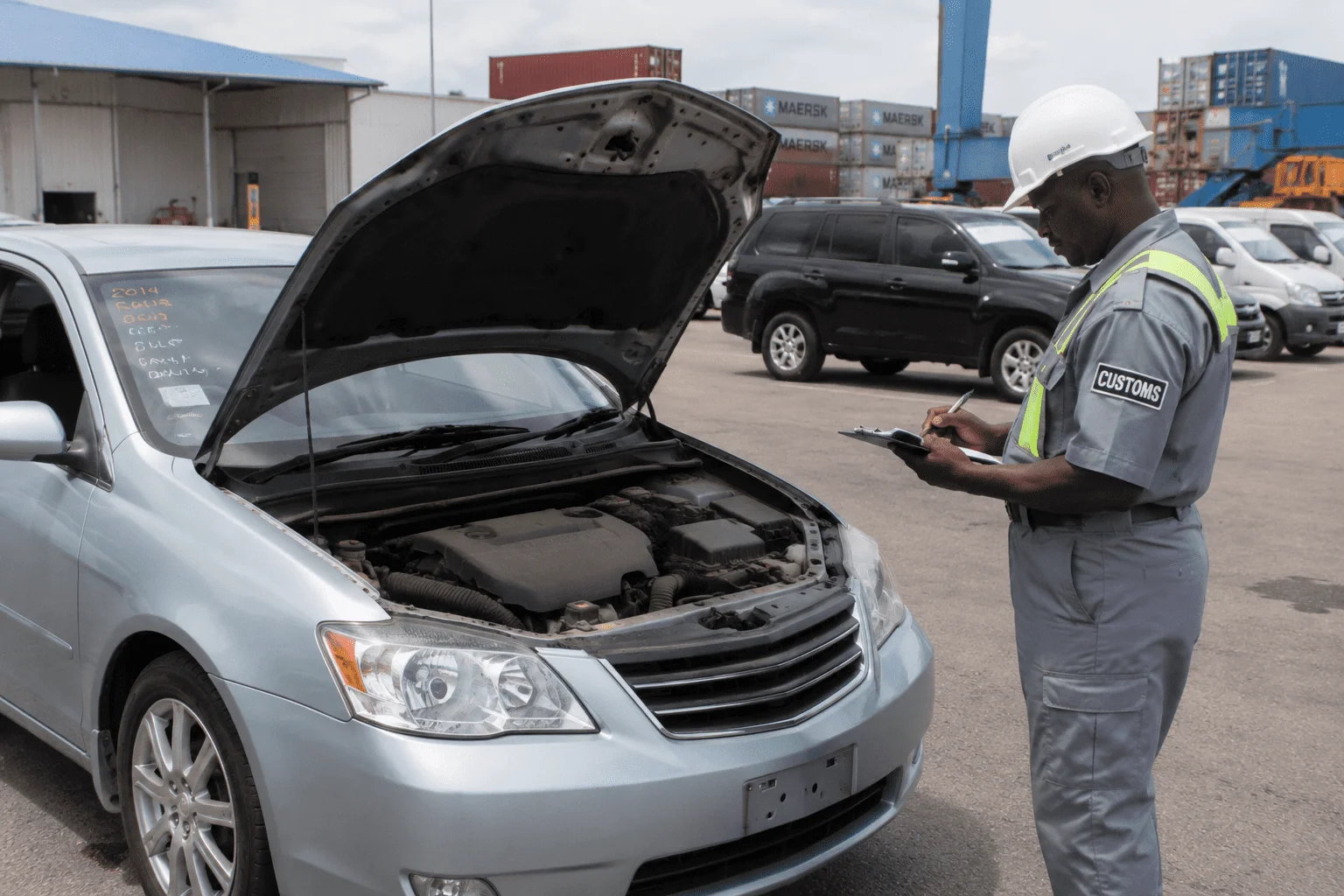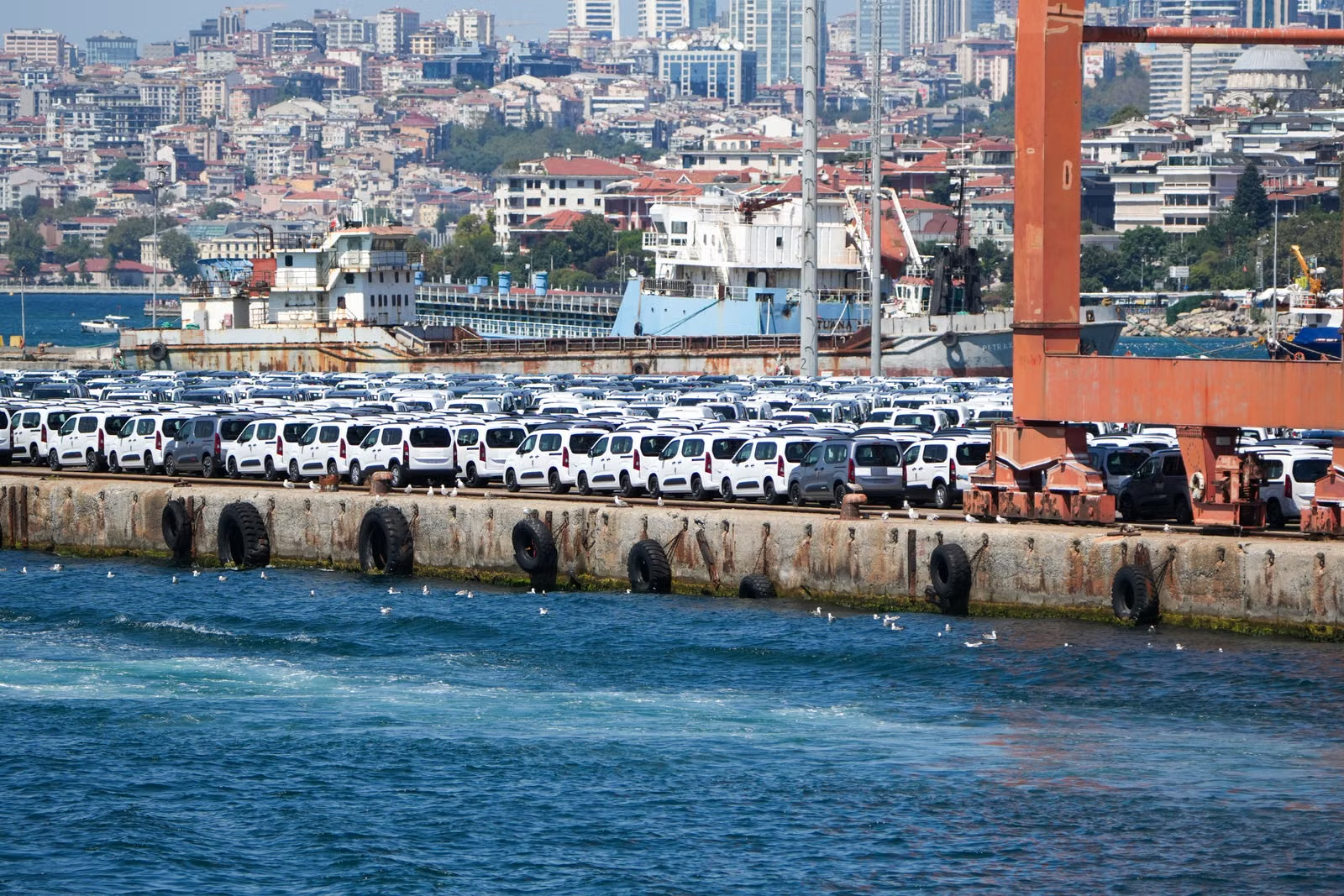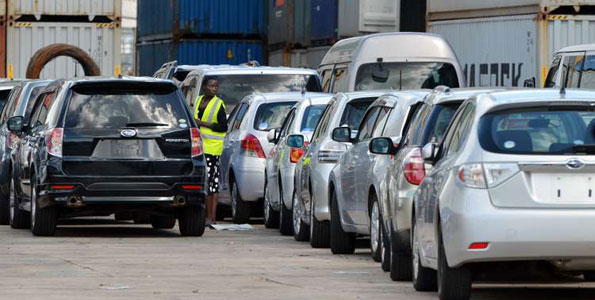









The duty you pay at Tema Port is not a negotiated figure. It is calculated by an algorithm. Since the full rollout of the Integrated Customs Management System (ICUMS), the Ghana Revenue Authority no longer relies on an officer’s discretion or even your invoice alone. The system pulls your vehicle’s VIN, looks up a benchmark value in its database, and applies a fixed stack of taxes to that number. Understanding that formula is the difference between budgeting accurately and being blindsided at the port.
The Foundation: CIF Value, Not Your Invoice
Every charge is calculated on the CIF value—Cost, Insurance, and Freight. This is the total cost of getting the car to Ghana, not just the purchase price.

But the CIF that Customs uses may not be the CIF you paid. The ICUMS system uses a Home Delivery Value (HDV) database—a benchmark of what each make, model, and year should cost . If your declared value is significantly below the benchmark, the system substitutes its own assessed value. As the US International Trade Administration notes, this system “tends to greatly overvalue used vehicles” compared to standard market guides, which magnifies every tax that follows .
📢 GET A DETAILED ARTICLES + JOBS
Join ASJ's WhatsApp Channel and never miss a post or opportunity.

The system also applies estimated freight and insurance costs, even if you found a cheaper shipping deal .
The Duty Bands: Engine Size Matters Most
Once the CIF is established, the base import duty rate is determined by engine capacity and fuel type. The GRA’s published schedule is clear :

Petrol Vehicles
| Engine Capacity | Import Duty |
|---|---|
| Not exceeding 1,000cc | 5% |
| 1,001cc – 3,000cc | 10% |
| Above 3,000cc | 20% |
Diesel Vehicles
| Engine Capacity | Import Duty |
|---|---|
| Not exceeding 1,500cc | 5% |
| 1,501cc – 2,500cc | 10% |
| Above 2,500cc | 20% |
Commercial goods vehicles (HS 8704) and special purpose vehicles generally attract 5%. A double-cab pickup configured for passengers may be classified under HS 8703 at 20%, so classification matters .
The Levies That Stack on Top
Beyond import duty, several other charges apply. Some are calculated on the CIF, while VAT, NHIL, and GETFund are calculated on a duty-inclusive base—meaning they compound .
| Charge | Rate | Base |
|---|---|---|
| ECOWAS Levy | 0.5% | CIF |
| AU Levy | 0.2% | CIF |
| EXIM Levy | 0.75% | CIF |
| Special Import Levy | 2% | CIF |
| Examination Fee (used vehicles) | 1% | CIF |
| NHIL | 2.5% | CIF + Duty + other charges |
| GETFund | 2.5% | CIF + Duty + other charges |
| VAT | 15% | CIF + Duty + other charges |
Together, NHIL, GETFund, and VAT equal 20% of the duty-inclusive base. The abolished 1% COVID-19 levy should not be included in current calculations .
A Worked Example You Can Check Line by Line
Using an assessed CIF of $10,000 and a 10% import duty rate (a mid-size petrol car), the calculation follows this sequence :
| Line Item | Amount (USD) |
|---|---|
| CIF Value | 10,000 |
| Import Duty (10%) | 1,000 |
| ECOWAS Levy (0.5%) | 50 |
| AU Levy (0.2%) | 20 |
| EXIM Levy (0.75%) | 75 |
| Special Import Levy (2%) | 200 |
| Examination Fee (1%) | 100 |
| Base for VAT/NHIL/GETFund | 11,445 |
| NHIL (2.5%) | 286 |
| GETFund (2.5%) | 286 |
| VAT (15%) | 1,717 |
| Total Government Charges | 3,734 |
In this illustration, the government charges equal 37.34% of CIF. Add the CIF itself, and the cost before port fees is $13,734.
This is an illustration, not a universal rate. A smaller engine (5% duty) reduces the bill. A larger engine (20% duty) increases it. And the HDV assessment may raise the CIF above what you paid.
The Age Penalty: Why Older Cars Cost More
Ghana penalises older vehicles with an over-age surcharge on top of standard duty. Age is measured from the year of manufacture, not the registration date .
| Vehicle Age | Penalty (of CIF) |
|---|---|
| 10 years or less | No penalty |
| Over 10 up to 12 years | 5% |
| Over 12 up to 15 years | 20% |
Critical update: For used vehicles shipped on or after 1 October 2026, vehicles more than 15 years old are prohibited under National Vehicle Standards . Always confirm the manufacture date from the VIN before shipping.
Electric Vehicles: A Significant Exemption
Pure electric vehicles currently enjoy a 0% import duty under the government’s eight-year waiver. However, they still attract VAT (15%), NHIL, GETFund, and the standard levies .

For a used EV with a CIF of $20,000, total clearance fees are estimated at **$4,500 to $5,500**, depending on the exchange rate. This is significantly lower than a comparable petrol vehicle.
ASJ Bottom Line
Ghana calculates vehicle duty through a fixed formula: CIF value (assessed by ICUMS), multiplied by the engine-size duty band, plus a stack of levies, with VAT/NHIL/GETFund compounding on the duty-inclusive base.
The variables you can influence are the engine size (choose a smaller engine for a lower duty band), the age (keep it under 10 years to avoid the penalty), and the accuracy of your declared CIF (declare honestly, because ICUMS will check it against its database anyway).
The variable you cannot influence is the exchange rate on the day of assessment. Budget with a buffer, and use the GRA’s online calculator before you ship to get a realistic estimate .
Quick Facts
| Topic | Details |
|---|---|
| Basis of Assessment | CIF Value (Cost + Insurance + Freight) |
| Petrol Duty (1,001–3,000cc) | 10% |
| Petrol Duty (above 3,000cc) | 20% |
| Diesel Duty (1,501–2,500cc) | 10% |
| VAT/NHIL/GETFund | 20% of duty-inclusive base |
| Age Penalty (10–12 years) | 5% of CIF |
| Age Penalty (12–15 years) | 20% of CIF |
| Electric Vehicle Duty | 0% |
| Effective Government Charge | ~35–50% of CIF |
| Valuation System | ICUMS with HDV database |
Frequently Asked Questions
1. How does Ghana calculate customs duty on imported vehicles?
The GRA uses the CIF value (Cost, Insurance, Freight) as the base. Import duty is applied based on engine size (5% to 20%), then a stack of levies, and finally VAT/NHIL/GETFund (20%) on the duty-inclusive base .
2. What is CIF and why does it matter?
CIF stands for Cost, Insurance, and Freight. It is the total value of the car plus shipping and insurance to Ghana. All government charges are calculated on this figure, not just the purchase price .
3. Does Customs use the price I paid for the car?
Not necessarily. The ICUMS system uses a Home Delivery Value (HDV) database to benchmark vehicles. If your declared value is below the benchmark, Customs will substitute its own assessed value, which can be higher .
4. What is the import duty rate for a petrol car in Ghana?
Petrol cars up to 1,000cc pay 5%, 1,001–3,000cc pay 10%, and above 3,000cc pay 20% .
5. How much are the total government charges on a car import?
In a worked example with a $10,000 CIF and 10% duty, the total government charges came to **$3,734**, or about 37% of CIF. In practice, the effective rate typically lands between 35% and 50% depending on engine size and age .
6. What is the over-age penalty?
Vehicles over 10 years old pay an additional penalty on top of standard duty: 5% of CIF for 10–12 years, and 20% for 12–15 years. Vehicles over 15 years are prohibited for shipment after 1 October 2026 .
7. Do electric vehicles pay import duty in Ghana?
No. Pure electric vehicles currently enjoy a 0% import duty under the government’s waiver. They still attract VAT (15%), NHIL, GETFund, and the standard levies .

8. How is VAT calculated on an imported car?
VAT is 15% of the duty-inclusive base (CIF + Import Duty + other charges). NHIL (2.5%) and GETFund (2.5%) are calculated on the same base, so together they equal 20% of that base .
9. What is ICUMS and how does it affect my duty?
ICUMS is the Integrated Customs Management System. It uses the VIN to pull technical specs and applies a benchmark value. The assessed value may be higher than what you paid, which increases the duty .
10. Can I reduce my import duty legally?
Choose a vehicle under 10 years old (no age penalty), with an engine size in the 5% or 10% duty band, and declare the correct CIF value. Pure electric vehicles enjoy a 0% duty waiver .
11. How much does it cost to ship a car to Ghana?
RoRo shipping costs roughly $700–$1,200, while container shipping costs $1,800–$3,200. Transit times vary: 10–15 days from Dubai, 20–28 days from the USA, and 30–45 days from China.
12. What documents do I need to clear a car at Tema?
You need the Bill of Lading, Commercial Invoice, Packing List, Export Certificate from the source country, and the Ghana Import Declaration Form (IDF/Form C86), which must be obtained before the vessel departs the origin port
Source: Accra Street Journal
Last Updated on October 30, 2026 by Samuel Kwame Boadu
Disclaimer: Some content on Accra Street Journal may be aggregated, summarized, or edited from third-party sources for informational purposes. Images and media are used under fair use or royalty-free licenses. Accra Street Journal is a subsidiary of SamBoad Publishing Hub under SamBoad Business Group Ltd, registered in Ghana since 2014.
For concerns or inquiries, please visit our Privacy Policy or Contact Page.

Samuel Kwame Boadu is a Ghanaian media entrepreneur and storyteller with a passion for amplifying urban voices and uncovering everyday truths. He is the Editor-in-Chief and Founder of Accra Street Journal, a dynamic digital platform dedicated to capturing the pulse of Ghana’s capital—its people, culture, challenges, business, sports and innovations.