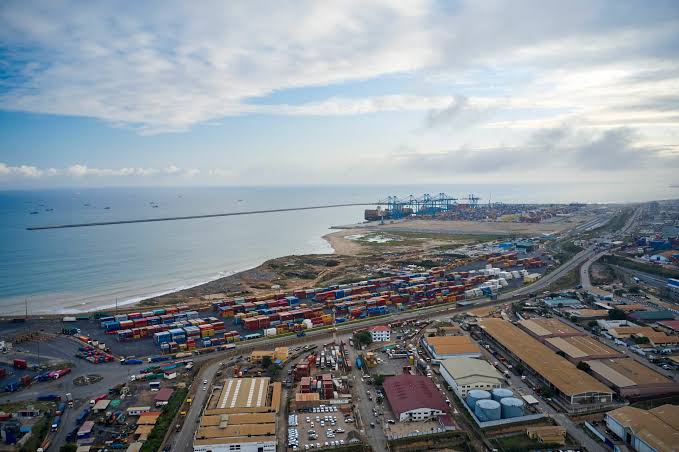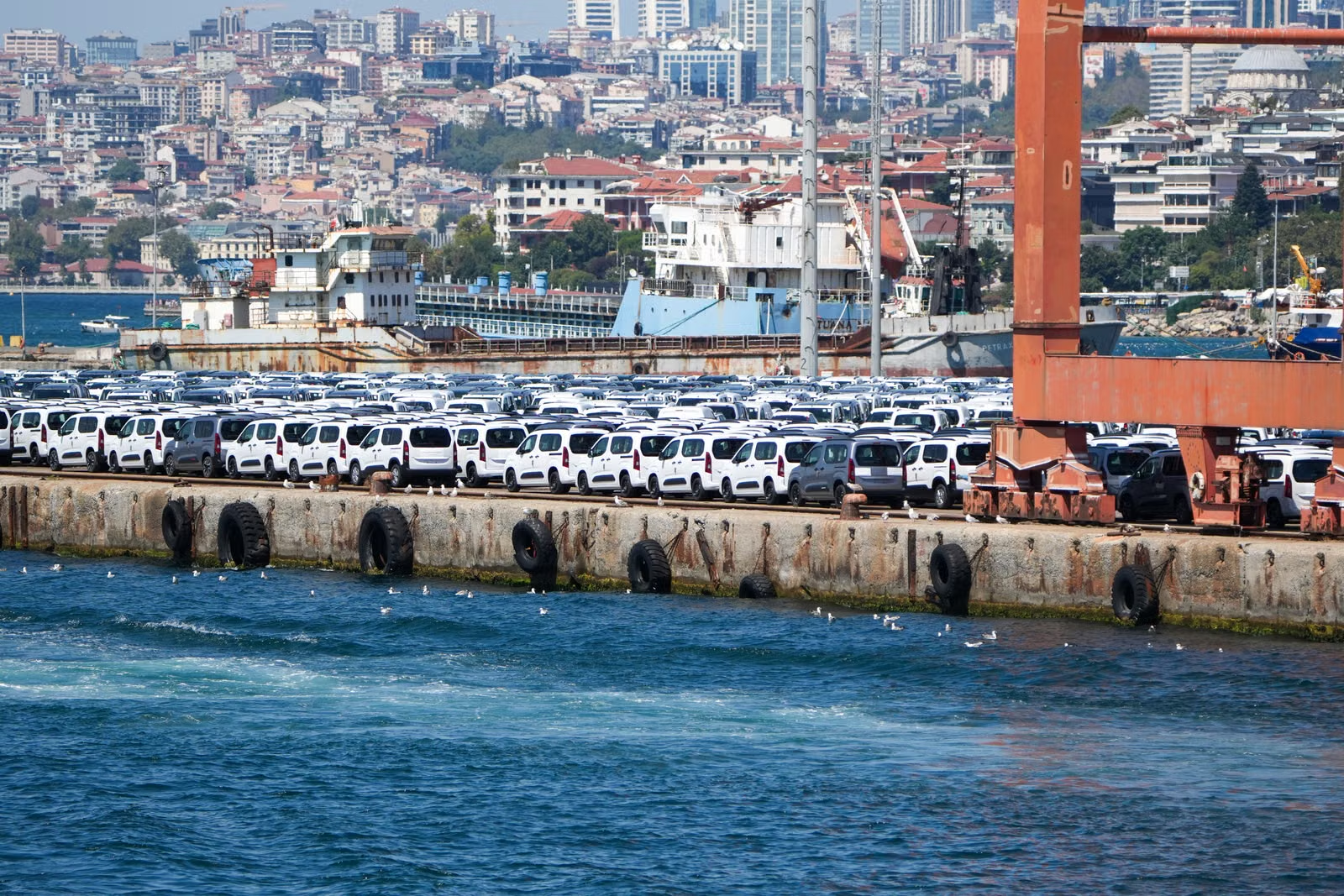









Your car has arrived. The vessel is at Tema Port, and the clock is now ticking. Every day the vehicle sits at the terminal, you accumulate storage and demurrage charges that can quietly eat into whatever you thought you saved on the purchase. Clearing a car at Tema in 2026 is not about who you know—it is about having the right documents ready before the ship docks, understanding the ICUMS valuation system, and knowing which steps you can do in advance and which ones must wait for arrival.
The Shift: ICUMS and the End of Discretion
The Integrated Customs Management System (ICUMS), locally known as Uni-Pass, has changed how vehicles are cleared. Previously, valuation often depended on the officer’s discretion, which created room for negotiation. In 2026, everything is driven by algorithms .

The system uses a Home Delivery Value (HDV) database—a fixed benchmark price for every car model. Even if you bought the car cheaply at an auction abroad, ICUMS may value it based on the standard market price. Valuation starts with the Chassis Number (VIN). The system automatically pulls up the technical specs, making it impossible to under-declare engine capacity or year of manufacture.
📢 GET A DETAILED ARTICLES + JOBS
Join ASJ's WhatsApp Channel and never miss a post or opportunity.

The practical consequence is that the duty bill is calculated on the system’s assessed value, not necessarily what you paid. Across bills of entry worked from real shipments, the assessed value came out roughly 1.16 to 1.28 times the commercial cost, and the cheaper the car, the larger the uplift .
Before the Ship Arrives: The Pre-Arrival Checklist
The most common cause of demurrage at Tema is missing paperwork. A complete document set is what turns a multi-week clearance into a multi-day one .

The Core Documents
| Document | Why You Need It |
|---|---|
| Bill of Lading (B/L) | The title document for the cargo, issued by the shipping line |
| Commercial Invoice | Shows purchase price and vehicle details for duty assessment |
| Packing List | Details of VIN, make, model, year, and colour |
| Insurance Certificate | Proof of marine insurance covering the shipment |
| Import Declaration Form (IDF) | Filed through ICUMS/GCNet before the vessel arrives |
| Tax Identification Number (TIN) | Your GRA tax ID, required for all import transactions |
| Ghana Card | Identification of the importer |
| Pre-Shipment Inspection Certificate | Where applicable; confirms roadworthiness and emissions compliance |
| Export Certificate/De-registration | Proof the car was legally exported from the source country |
Keep digital and printed copies of everything. A single missing document can trigger days of delay.
The G-CAP Certificate: The Step That Cannot Be Skipped
Every vehicle exported from the US to Ghana must pass the Ghana Conformity Assessment Programme (G-CAP) inspection before it leaves. This is handled by approved agencies including Bureau Veritas, SGS, and Intertek
The inspection covers roadworthiness, emissions compliance (Euro II minimum), product conformity, and safety systems. Scheduling typically requires 5 to 10 business days .
The 90-day window is critical. G-CAP certificates are valid for approximately 90 days from issue. If the vehicle sits in a warehouse before shipping and then faces port delays on arrival, the certificate can expire before clearance is complete. An expired certificate at Tema creates a clearance hold that is neither quick nor inexpensive to resolve. The practical fix: schedule the inspection after the container booking is confirmed, not before .
A vehicle arriving at Tema without a valid G-CAP certificate cannot complete the import process, regardless of how well everything else is prepared .
When the Ship Docks: The Clearing Sequence
Step 1: Lodge the Documents in ICUMS
Your clearing agent lodges the Bill of Lading, Commercial Invoice, Packing List, and related documentation into ICUMS . The system then generates a valuation based on the VIN and HDV database.
Step 2: Pay the Duty and Taxes
Once the assessment is generated, the duty bill is paid through authorised banks or digital platforms. Paperless payments have significantly reduced under-the-table risks .
The major charges include :
-
Import Duty: 5%–20% depending on engine size
-
Import VAT: 15%
-
NHIL and GETFund: 2.5% each
-
EXIM Levy: 0.75%
-
Examination Fee: 1% for physical inspection
-
Special Import Levy: 2% on used vehicles
The base for VAT, NHIL, and GETFund is the CIF value plus import duty—which is why a larger engine raises these charges as well as the duty line itself .

Exchange rate timing matters. Duties are pegged in dollars but paid in cedis. The weekly GRA exchange rate fluctuations can significantly change your final bill . Ensure adequate funding is available in compatible currency formats before initiating payment.
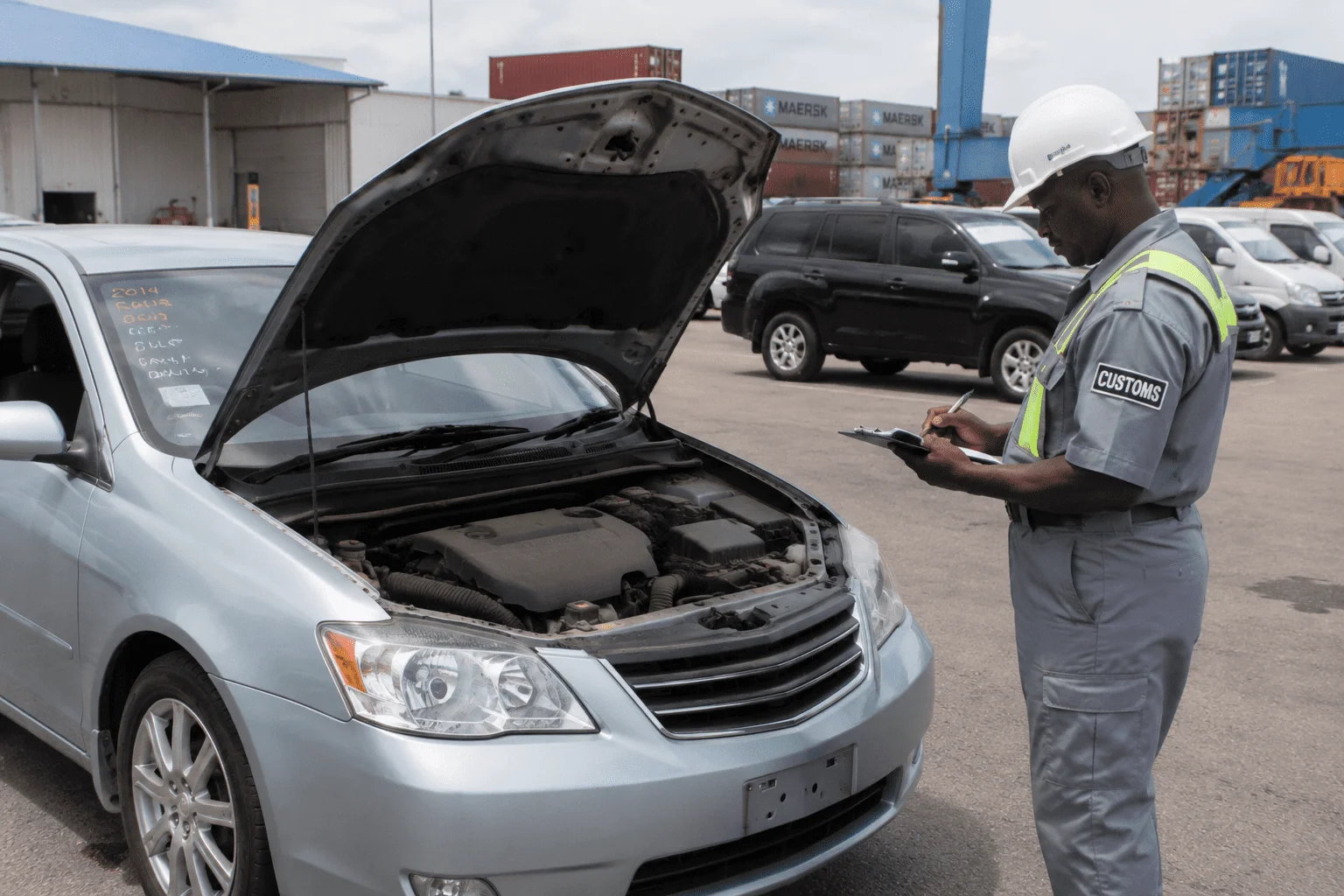
Step 3: Physical Inspection (If Selected)
ICUMS uses algorithms to determine which vehicles require physical inspection. Factors that increase selection probability include value discrepancies, first-time importer status, luxury vehicles, and documentation anomalies. Physical inspections typically add 3 to 5 days to processing times .
If your vehicle is selected, have your clearing agent present with condition reports, modification documentation, and valuation support .
Step 4: Obtain the Final Delivery Order and Release
After payment and inspection, the agent obtains the Final Delivery Order from the shipping line and terminal operator . The vehicle is then released from the port.
Step 5: Move the Vehicle Out
Arrange haulage from the port to your destination. If the vehicle is drivable, it can be driven out. If not, a tow truck or carrier is needed.
The Cost Beyond Duty: Port and Agent Fees
Government charges are only part of the bill. You also pay the port and your clearing agent. Based on actual July 2026 clearing invoices, the port and clearing subtotal can reach GH₵9,500 (about $816) .
A 2024 Shippers Authority review of a used Honda CRV cleared at Tema showed port terminal charges of GH₵4,621 on top of GH₵101,863 in customs duties and taxes . The ratio illustrates how port fees, while smaller than duty, are not negligible.
Demurrage is the silent killer. Slow clearing triggers daily port charges that can quickly erode any savings. The investment in professional representation—typically 1%–2% of total import costs—prevents delays that can cost 10%–20% through extended storage and opportunity costs .
The Realistic Timeline
| Stage | Estimated Time |
|---|---|
| G-CAP inspection (pre-shipment) | 5–10 business days |
| Ocean transit (varies by origin) | 14–45 days |
| Document preparation and IDF filing | Before vessel arrival |
| ICUMS assessment and payment | 1–3 days (if documents are complete) |
| Physical inspection (if selected) | 3–5 days |
| Release and haulage | 1–2 days |
| Total clearance (after arrival) | 6–10 days for well-prepared shipments |
Experienced agents achieve 95%+ on-time clearance with average processing times of 6–8 days, compared to industry averages of 10+ days for comparable shipments .
What Can Go Wrong (and How to Avoid It)
Title documentation issues are the single largest cause of delays, affecting roughly 40% of shipments that experience extended processing times. Common problems include outstanding liens not released before export, unclear ownership when multiple parties are listed, and recent purchases where the title transfer has not fully processed. Verify the title is clear and matches all shipping documents before the vehicle leaves the seller .
Payment system failures can also stall clearance. ICUMS payment systems require precise coordination between banking platforms. Work with agents experienced in ICUMS payment coordination to avoid technical complications

Peak period congestion adds 2–3 days to processing. High-activity periods include September–December (peak shipping season), January (processing delayed December arrivals), and month-end windows .
ASJ Bottom Line
Clearing a car at Tema in 2026 is a documentation exercise, not a negotiation. The ICUMS system has removed the discretion that once allowed “manoeuvring.” What matters now is having the G-CAP certificate valid, the title clean, the IDF filed before the ship docks, and the duty paid promptly.
The car will arrive whether you are ready or not. The difference between a smooth clearance and a demurrage nightmare is what you did before the vessel reached the port.
Quick Facts
| Topic | Details |
|---|---|
| Valuation System | ICUMS with HDV database |
| Valuation Uplift | ~1.16–1.28x commercial cost |
| G-CAP Certificate Validity | ~90 days |
| G-CAP Inspection Time | 5–10 business days |
| Physical Inspection Impact | +3–5 days |
| Typical Clearance (Prepared) | 6–8 days |
| Port and Agent Fees (2026) | ~GH₵9,500 (~$816) |
| Title Issues Share of Delays | ~40% of extended cases |
Frequently Asked Questions
1. What is the first thing I should do when my car arrives at Tema Port?
Lodge your documents in ICUMS through a clearing agent. The Bill of Lading, Commercial Invoice, Packing List, and IDF must be submitted for assessment. If the G-CAP certificate is not already in place, that must be resolved before clearance can proceed .
2. What is ICUMS and how does it affect my duty?
ICUMS is the Integrated Customs Management System. It uses the VIN to pull technical specs and applies a Home Delivery Value benchmark. The assessed value may be higher than what you paid—typically 1.16 to 1.28 times the commercial cost .
3. What is the G-CAP certificate?
The Ghana Conformity Assessment Programme certificate confirms the vehicle is roadworthy and meets Ghana’s emissions standards. It is mandatory for US exports to Ghana. Without it, the vehicle cannot complete the import process .
4. How long does G-CAP take?
Scheduling typically requires 5–10 business days from when the vehicle is ready and the inspection agency is contacted. The certificate is valid for approximately 90 days .
5. How long does clearance take at Tema?
For well-prepared shipments, clearance can be completed in 6–8 days after arrival. Poorly prepared shipments can take 10+ days and incur demurrage .
6. What documents do I need to clear my car?
Bill of Lading, Commercial Invoice, Packing List, Insurance Certificate, Import Declaration Form (IDF), Tax Identification Number (TIN), Ghana Card, and the G-CAP certificate where applicable.
7. What is demurrage and how do I avoid it?
Demurrage is the daily charge for keeping your vehicle at the port beyond the free period. Avoid it by preparing documents before the ship arrives, filing the IDF early, and ensuring payment is ready .
8. Can I clear my car without an agent?
It is possible but not advisable. Experienced agents navigate ICUMS, handle inspections, and prevent delays. Their fees are typically 1%–2% of total import costs .
9. What happens if my car fails the G-CAP inspection?
Common failure points include outstanding safety recalls, structural damage, emissions system tampering, and documentation mismatches. The vehicle must be rectified and re-inspected before it can be shipped .
10. How much does it cost to clear a car at Tema beyond the duty?
Port terminal and agent fees add roughly GH₵9,500 (about $816) on top of government duty, based on July 2026 clearing invoices .
11. What is the most common cause of clearance delays?
Title documentation issues account for roughly 40% of extended processing cases. Outstanding liens, unclear ownership, and incomplete title transfers are the main culprits .
12. Can I pay duty in instalments?
No. Duty must be paid in full before the vehicle is released. Ensure funds are available in compatible currency before initiating payment
Source: Accra Street Journal
Last Updated on October 30, 2026 by Samuel Kwame Boadu
Disclaimer: Some content on Accra Street Journal may be aggregated, summarized, or edited from third-party sources for informational purposes. Images and media are used under fair use or royalty-free licenses. Accra Street Journal is a subsidiary of SamBoad Publishing Hub under SamBoad Business Group Ltd, registered in Ghana since 2014.
For concerns or inquiries, please visit our Privacy Policy or Contact Page.

Samuel Kwame Boadu is a Ghanaian media entrepreneur and storyteller with a passion for amplifying urban voices and uncovering everyday truths. He is the Editor-in-Chief and Founder of Accra Street Journal, a dynamic digital platform dedicated to capturing the pulse of Ghana’s capital—its people, culture, challenges, business, sports and innovations.