2 min read
Underpaying Workers Will Lead to Legal Consequences — Labour, Jobs, and Employment Minister-designate, Rashid Pelpuo, has issued a stern warning to employers, emphasizing that those who fail to comply with Ghana‘s minimum wage laws will face legal consequences.
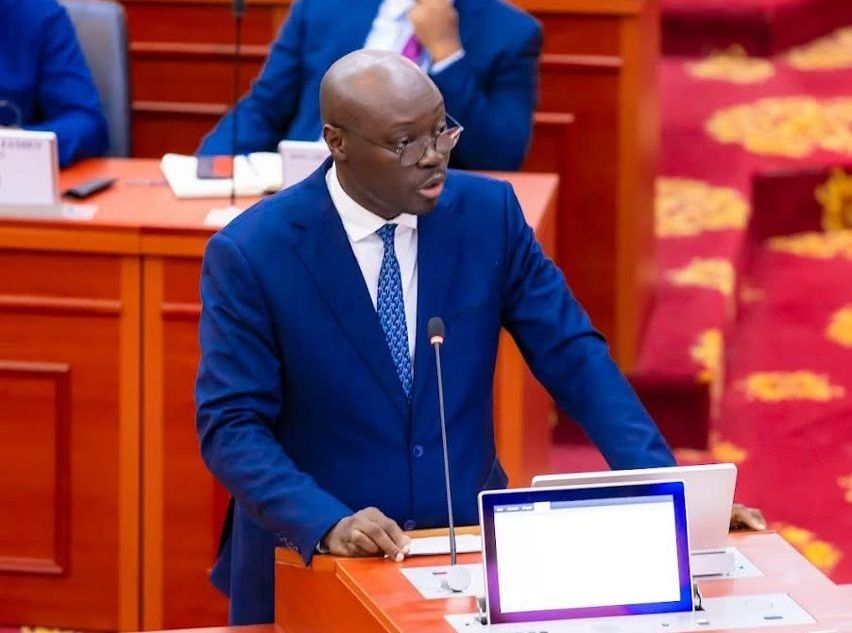
Appearing before the Appointments Committee of Parliament, Mr. Pelpuo reaffirmed his commitment to protecting workers’ rights, ensuring fair wages, and holding non-compliant employers accountable.
“If we agree on a minimum wage, the law is that it cuts across every organisation. You shouldn’t pay below that wage. So, if we find anybody doing that, you will be questioned, and if you are found guilty, you will face the law,” he stated.
Mr. Pelpuo stressed that workers deserve fair compensation and that any employer unable to meet the legal wage requirement would be held responsible. His comments come amid increasing concerns over labor rights and fair pay, particularly in the private sector.
The Minister-designate, during his vetting also tackled concerns regarding frequent labor strikes, particularly within the public sector. Of the 27 industrial actions recorded in 2024, 21 occurred in the public sector, with the tertiary education sector accounting for 40% of these strikes—66% of all public sector labor actions.
To address these challenges, he outlined a proactive engagement strategy with organized labor. “There are already laid-down rules that we follow to tackle these challenges,” he said, emphasizing his commitment to working closely with labor experts and union leaders to prevent industrial disruptions.
Mr. Pelpuo stressed the importance of balancing wages and productivity, stating that fair compensation must align with output. He expressed support for transforming the Fair Wages and Salaries Commission into a Bureau of Productivity and Fair Wages, which would better integrate wages with productivity benchmarks.
“As Ghanaians, we understand the realities of our public sector and the need for a match between what you produce and what you earn,” he explained. “When you are negotiating, you should be thinking about how much you’ve produced and how much you should earn in return. This concordance is critical.”
Last Updated on May 12, 2025 by Samuel Kwame Boadu
Disclaimer: Some content on Accra Street Journal may be aggregated, summarized, or edited from third-party sources for informational purposes. Images and media are used under fair use or royalty-free licenses. Accra Street Journal is a subsidiary of SamBoad Publishing Hub under SamBoad Business Group Ltd, registered in Ghana since 2014.
For concerns or inquiries, please visit our Privacy Policy or Contact Page.

Samuel Kwame Boadu is a Ghanaian media entrepreneur and storyteller with a passion for amplifying urban voices and uncovering everyday truths. He is the Editor-in-Chief and Founder of Accra Street Journal, a dynamic digital platform dedicated to capturing the pulse of Ghana’s capital—its people, culture, challenges, business, sports and innovations.

Use the following reference when citing or referencing this article.
Your feedback helps us improve our journalism.

Report an Error
Help us maintain accuracy. Let our editorial team know if you spot an issue in this article.
Report a problem with this article