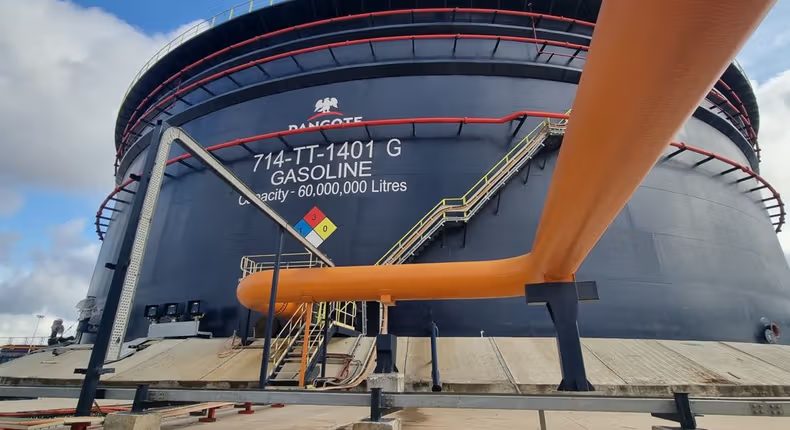
A flagship fuel supply arrangement between the Dangote Petroleum Refinery and a select group of oil marketers has reportedly collapsed, dealing a setback to efforts aimed at stabilising fuel prices and reducing Nigeria’s dependence on imported petrol.
The agreement, struck in October 2025, involved approximately 20 oil marketers who were designated as primary distributors of refined fuel from the Dangote Refinery. Under the pilot framework, each marketer was expected to offtake roughly 30 million litres of petrol monthly, bringing total distribution to about 600 million litres.

The deal was designed as a market-calming intervention. By concentrating bulk supply in the hands of a limited number of large depot owners, the refinery sought to streamline distribution, cut out multiple intermediaries, and dampen price volatility in the downstream market.
📢 GET A DETAILED ARTICLES + JOBS
Join ASJ's WhatsApp Channel and never miss a post or opportunity.

However, industry sources say the arrangement has now fallen apart following disagreements over pricing adjustments and commercial terms. Two sources familiar with the talks told local media that the collapse stemmed from disputes over how frequently prices should be reviewed and how margins were allocated.
According to one source, the agreement initially fixed a supply price of ₦806 per litre for marketers, with gantry prices set at ₦828 per litre during the first month of implementation. The understanding was that prices would be reviewed monthly in line with market realities. Tensions reportedly emerged when pricing expectations diverged between the refinery and the marketers.

The agreement also reshaped market access. As part of the arrangement, Dangote Refinery reportedly halted direct sales to smaller independent marketers lifting 250,000 litres or less. Those marketers were required to source fuel from the approved group of 20 distributors, a structure that centralised supply but also heightened sensitivities around pricing power.
With the deal now collapsed, the downstream market appears to have reverted to more familiar dynamics. Fuel importation rose sharply in November, according to figures released by the Nigerian Midstream and Downstream Petroleum Regulatory Authority, which reported imports of approximately 1.563 billion litres for the month—an indication that domestic supply constraints had resurfaced.
Chinedu Ukadike, National Public Relations Officer of the Independent Petroleum Marketers Association of Nigeria (IPMAN), confirmed that the original arrangement followed extensive consultations between the refinery and key downstream stakeholders. He said the plan was part of broader efforts to curb the recent surge in pump prices and stabilise fuel availability nationwide.
According to Ukadike, the consultation involved major distributors including A.Y.M. Shafa, A.A. Rano, NNPCL Retail, Salbas, and other large marketers. Discussions focused on simplifying product distribution and reducing the layers of middlemen that often contribute to price distortions across the supply chain.
“At the meeting, Dangote announced plans to sell to only 20 selected marketers who would serve as primary distributors to other dealers,” Ukadike said. “Each of them was expected to lift a minimum of two million litres, translating to about 600 million litres every month.”
The collapse of the deal underscores the fragility of Nigeria’s downstream reforms at a time when the Dangote Refinery is widely viewed as a potential game-changer for Africa’s largest oil producer. While the refinery has the capacity to meet a substantial share of domestic fuel demand, translating that capacity into stable, affordable supply remains heavily dependent on pricing frameworks, regulatory clarity, and market trust.
For policymakers, the breakdown is a reminder that infrastructure alone cannot resolve Nigeria’s fuel challenges. Pricing discipline, transparent market rules, and alignment between producers and distributors remain just as critical as refining capacity in shaping outcomes for consumers and the wider economy.
Source: Accra Street Journal

Last Updated on March 9, 2026 by Samuel Kwame Boadu
Disclaimer: Some content on Accra Street Journal may be aggregated, summarized, or edited from third-party sources for informational purposes. Images and media are used under fair use or royalty-free licenses. Accra Street Journal is a subsidiary of SamBoad Publishing Hub under SamBoad Business Group Ltd, registered in Ghana since 2014.
For concerns or inquiries, please visit our Privacy Policy or Contact Page.

Samuel Kwame Boadu is a Ghanaian media entrepreneur and storyteller with a passion for amplifying urban voices and uncovering everyday truths. He is the Editor-in-Chief and Founder of Accra Street Journal, a dynamic digital platform dedicated to capturing the pulse of Ghana’s capital—its people, culture, challenges, business, sports and innovations.