




5 min read
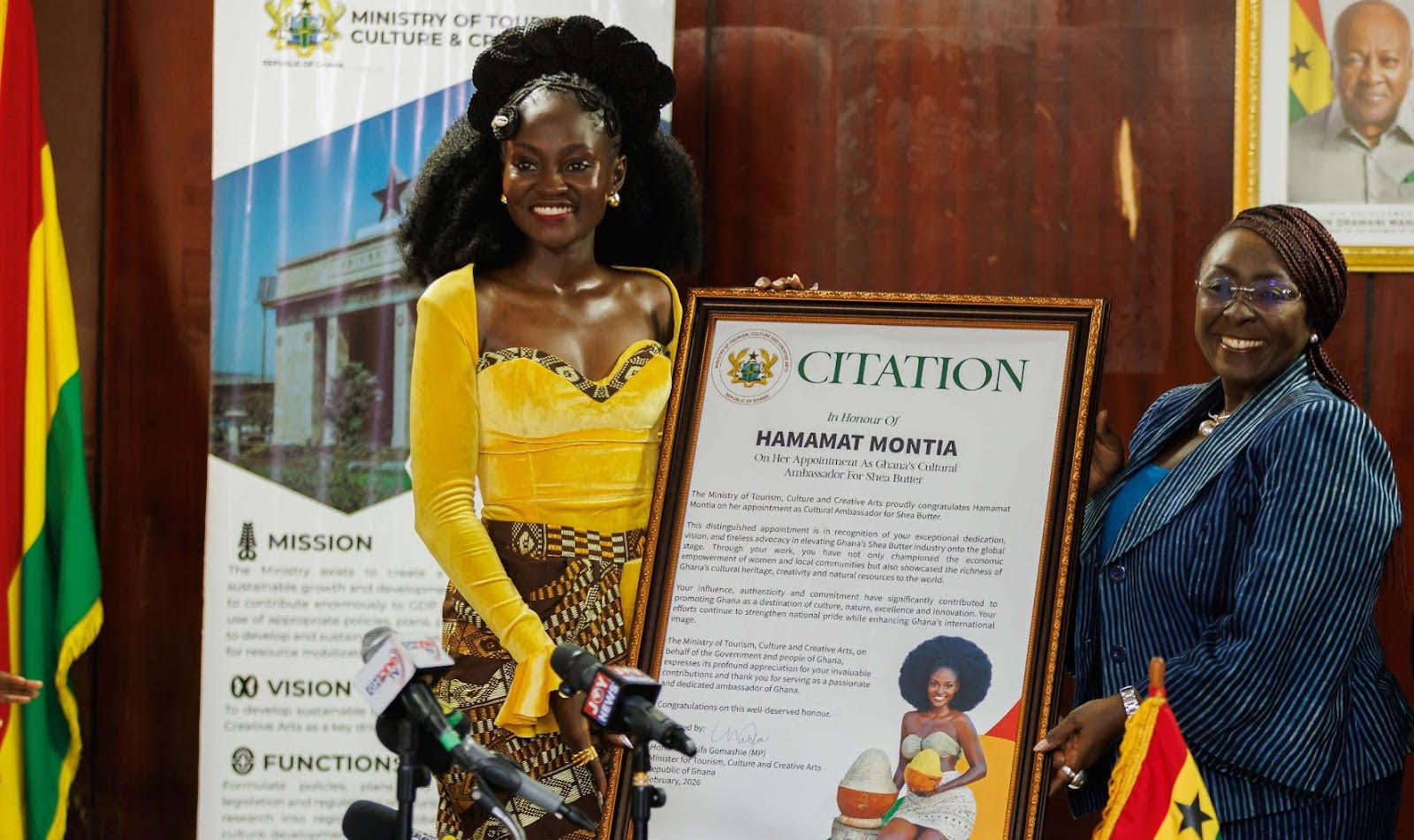
ACCRA, GHANA — In a significant step toward heritage-led economic development, the Government of Ghana, through the Ministry of Tourism, Culture & Creative Arts (MoTCCA), has officially appointed Hamamat Montia as Ghana’s Ambassador of Shea.
The appointment recognises her longstanding commitment to preserving ancestral knowledge, promoting African identity, and transforming shea butter from a traditional commodity into a global cultural and economic symbol.
Key Takeaways
- The appointment recognises her longstanding commitment to preserving ancestral knowledge, promoting African identity, and transforming shea butter from a traditional commodity into a global cultural and economic symbol.
- Amplified by Gen Z publicity firm BStarPR, the broadcast introduced more than 50 million viewers to Ghanaian cultural traditions, placing shea butter at the center of a global conversation.
- Her collections now span raw shea butter, African black soap, traditional teas, artisan accessories, and curated heritage gift boxes.
Shea Butter: Culture, Medicine, and Economic Power
More Than a Cosmetic Commodity
For centuries, raw shea butter has been used across Africa as:
-
Medicine
-
Skincare
ADWUMAFIE JOB JOB OPPORTUNITYInsurance Sales Agent (Commission-Based) – AP&L Consult LTDAP&L Consult LTD · Ghana · FreelancePowered by Adwumafie View Job → -
Nutritional nourishment
-
Spiritual protection
It has assisted childbirth, healed wounds, and sustained communities long before commercialisation placed it on global retail shelves.
Hamamat’s journey with shea began in childhood in Bolgatanga, where she learned directly from her grandmother. That intergenerational transfer of knowledge laid the foundation for what would later become a global beauty enterprise rooted in authenticity, sustainability, and African pride.
Culture as Strategy, Not Ornament
Minister Abla Dzifa Gomashie’s Vision
Speaking at the announcement, Abla Dzifa Gomashie, Minister for Tourism, Culture and Creative Arts, framed the appointment as part of Ghana’s broader cultural diplomacy agenda.
“Our culture is not ornamental. It is foundational,” she emphasised.
“If we want Ghana to stand tall in global tourism and trade, then we must deliberately fund culture — not as charity, but as strategy.”
The Ministry views shea butter as more than a beauty product. It represents:
-
Rural women-led economies
-
Indigenous knowledge systems
-
Sustainable African innovation
By elevating shea, Ghana seeks to elevate its people and reposition cultural heritage as a pillar of economic growth.
The IShowSpeed Effect: When Culture Went Viral
A Livestream That Shifted Global Attention
The appointment follows a surge in global attention triggered by IShowSpeed (Barima Kofi Akuffo), whose livestreamed visit to the Hamamat Shea Butter Museum in Accra captivated millions across YouTube Live, Twitch, and TikTok.
Amplified by Gen Z publicity firm BStarPR, the broadcast introduced more than 50 million viewers to Ghanaian cultural traditions, placing shea butter at the center of a global conversation.

“When IShowSpeed visited the Shea Butter Museum, that moment was not just viral — it was symbolic,” Hamamat noted. “What they saw was not just entertainment. It was our heritage.”
The ripple effects were immediate:

-
Global search interest in shea butter surged
-
Spa services booked out through April 2026
-
Public acknowledgment from John Dramani Mahama
The Hamamat Shea Butter Museum: A Cultural Landmark
A Living Celebration of African Heritage
Located in Accra and opened during Ghana’s historic Year of Return in 2019, the Hamamat Shea Butter Museum holds the distinction of being the first and only Shea Butter Museum in the world.
Inside, visitors encounter:
-
21 varieties of shea butter sourced across Africa
-
Traditional calabash displays
-
Hands-on production demonstrations
-
Cultural storytelling experiences
The museum serves as a bridge between the diaspora and the African homeland, transforming education into immersive cultural engagement.
Economic Transformation: From Raw Material to Premium Brand
A $2.62 Billion Question
The global shea market is currently valued at approximately $2.62 billion.
Hamamat posed a critical question:
“How much of that money is truly ours?”
For decades, Africa has largely exported raw shea nuts while value addition occurred abroad. As Ambassador of Shea, Hamamat intends to advocate for:
-
Government protections for shea farms
-
Policy awareness and sustainability standards
-
Women-led cooperative empowerment
-
Local processing and premium African branding
“We must move from being suppliers of raw materials to producers of premium, ethical, excellent African products,” she stated.
A Cultural Ambassador for the 21st Century
Identity, Excellence, and Global Relevance
Minister Gomashie described Hamamat as embodying modern cultural ambassadorship — authentic, globally relevant, yet firmly rooted in African identity.
From former Miss Malaika beauty queen to international entrepreneur and cultural preservationist, Hamamat has built:

-
A shea farm
-
A full line of handcrafted wellness products
-
A globally recognised museum experience
Her collections now span raw shea butter, African black soap, traditional teas, artisan accessories, and curated heritage gift boxes.
The Vision Ahead
Partnerships and Policy
The Ministry stressed that cultural diplomacy requires collaboration — including creatives, traditional authorities, and digital influencers such as Wodemaya and IShowSpeed.
Hamamat’s next initiatives include:
-
Launching a Twitch channel
-
Relaunching her YouTube platform
-
Expanding global Shea educational experiences
-
Touring internationally with museum-based wellness programming
ASJ Conclusion: A Cultural Economy Awakening
Ghana’s appointment of Hamamat Montia as Ambassador of Shea signals a broader national shift — one that places culture at the center of trade, tourism, and global branding.
Shea butter is no longer merely an export. It is a narrative, an identity marker, and a strategic asset.
If managed deliberately, Ghana’s cultural economy could transform rural livelihoods, empower women-led industries, and reposition the nation as a global skincare and wellness hub.
Right now, as Hamamat herself observed, “The world is looking at us.”
The question is whether Ghana will seize this moment — not just for visibility, but for value.
Source: Accra Street Journal
Last Updated on February 13, 2026 by Samuel Kwame Boadu
Disclaimer: Some content on Accra Street Journal may be aggregated, summarized, or edited from third-party sources for informational purposes. Images and media are used under fair use or royalty-free licenses. Accra Street Journal is a subsidiary of SamBoad Publishing Hub under SamBoad Business Group Ltd, registered in Ghana since 2014.
For concerns or inquiries, please visit our Privacy Policy or Contact Page.

Samuel Kwame Boadu is a Ghanaian media entrepreneur and storyteller with a passion for amplifying urban voices and uncovering everyday truths. He is the Editor-in-Chief and Founder of Accra Street Journal, a dynamic digital platform dedicated to capturing the pulse of Ghana’s capital—its people, culture, challenges, business, sports and innovations.
Use the following reference when citing or referencing this article.
Your feedback helps us improve our journalism.
Report an Error
Help us maintain accuracy. Let our editorial team know if you spot an issue in this article.
Report a problem with this article