










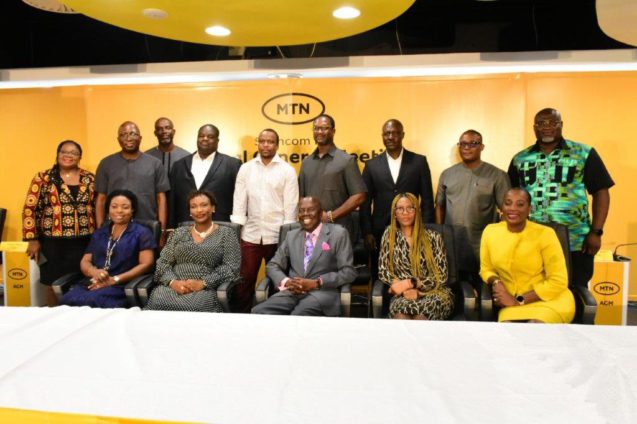
When people invest in shares, they are essentially buying a portion of a company’s future profits. One of the most widely held stocks on the Ghana Stock Exchange is MTN Ghana.
But how exactly does MTN Ghana generate income for its shareholders? How does the company turn mobile calls, data usage, and mobile money transactions into profits and dividends?

This ASJ article breaks down the key revenue streams, cost structure, and profit mechanisms that allow MTN Ghana to create value for investors.
📢 GET A DETAILED ARTICLES + JOBS
Join ASJ's WhatsApp Channel and never miss a post or opportunity.

1. Voice Revenue (Traditional Telecom Services)
The foundation of MTN Ghana’s business is telecommunications.
How It Works:
-
Customers buy airtime.
-
They make calls locally and internationally.
-
They are charged per minute or per bundle.
Although voice revenue is no longer the fastest-growing segment, it remains a steady and predictable source of income. Millions of subscribers making daily calls generate consistent cash flow.

For shareholders, predictable revenue is important because it supports stable profitability.
2. Data Revenue (The Growth Engine)
Data has become the dominant growth driver.
As smartphone adoption rises in Ghana:
-
Businesses rely on mobile connectivity.
-
Streaming, social media, and digital platforms increase data demand.
Data services often carry higher margins compared to traditional voice services.
More data usage means:
-
Higher revenue per user.
-
Recurring monthly subscriptions.
-
Increased long-term customer retention.
For shareholders, this growth segment improves earnings potential over time.
3. Mobile Money (MoMo)
One of the most powerful revenue engines for MTN Ghana is its mobile financial service platform.
Through mobile money:
-
Customers send and receive money.
-
Pay bills.
-
Buy airtime.
-
Receive salaries.
-
Make merchant payments.
Each transaction attracts a small fee. Individually, these fees seem minor — but collectively, across millions of transactions daily, they generate substantial revenue.

Mobile money strengthens:
-
Cross-selling opportunities.
For shareholders, MoMo diversifies revenue beyond telecom services and reduces reliance on voice calls alone.
. Enterprise and Corporate Services
MTN Ghana also earns revenue from:
-
Corporate data services.
-
Dedicated internet connections for businesses.
-
Bulk SMS services.
-
Managed network solutions.
Corporate clients pay premium rates for reliable and high-capacity services.
This segment provides:
-
Higher-value contracts.
-
Long-term agreements.
-
Stable institutional income.
5. Infrastructure Efficiency and Scale
A key reason MTN Ghana generates profits is scale.
With millions of subscribers:
-
Fixed infrastructure costs are spread across a large customer base.
-
Network towers, fiber cables, and switching equipment serve massive volumes.
-
Economies of scale reduce average cost per user.
This operational leverage allows revenue growth to translate into stronger profit margins.
6. Cost Management and Operational Control
Profitability is not only about revenue — it is about cost control.
MTN Ghana manages:
-
Network maintenance costs.
-
Staff salaries.
-
Regulatory fees.
-
Marketing expenses.
Efficient cost management increases net profit, which ultimately benefits shareholders.
7. Dividend Payments to Shareholders
One of the main ways MTN Ghana rewards shareholders is through dividends.
When the company makes profit:
-
The board may recommend a dividend.
-
Shareholders approve it at the AGM.
-
Dividends are paid per share owned.
For example:
If a dividend of GHS 0.15 per share is declared and you own 10,000 shares:
10,000 × 0.15 = GHS 1,500 dividend income.
Dividends represent direct income from company profits.
8. Share Price Appreciation
Shareholders benefit in two main ways:
-
Dividend income.
-
Capital gains (increase in share price).
If MTN Ghana’s revenue and profit grow consistently, investor confidence increases. This can push share demand higher, increasing its market price.
Selling shares at a higher price than you bought them creates capital gains.
9. Regulatory and Market Stability
MTN Ghana operates under regulatory oversight, including telecommunications and capital market supervision.
Market transparency and regulation from bodies like the Securities and Exchange Commission Ghana ensure:
-
Financial reporting standards.
-
Investor protection.
-
Fair trading practices.
This regulatory framework builds investor confidence, which supports long-term shareholder value.
10. Innovation and Expansion Strategy
MTN Ghana continues to invest in:
-
4G and expanding network coverage.
-
Digital platforms.
-
Customer experience improvements.
Innovation drives:
-
Higher customer acquisition.
-
Increased data consumption.
-
Expanded mobile money usage.
-
Competitive advantage.
Long-term growth strategies directly influence shareholder returns.
How Revenue Becomes Shareholder Value
Here is the simplified flow:
Customers → Pay for voice/data/MoMo
Revenue → Covers operational costs
Remaining Profit → Retained earnings + Dividends
Strong Performance → Increased investor demand
Higher Demand → Share price growth
That cycle creates wealth for shareholders.
Risks Shareholders Should Consider
While MTN Ghana is a strong company, shareholders should consider:
-
Regulatory changes.
-
Competition from other telecom providers.
-
Currency fluctuations.
-
Technology disruption.
Understanding both opportunity and risk helps investors make balanced decisions.
Frequently Asked Questions (FAQs)
1. Does MTN Ghana pay dividends every year?
Historically, the company has paid dividends regularly, but payments depend on profitability and board approval.
2. What drives MTN Ghana’s biggest revenue growth?
Data services and mobile money are major growth drivers.
3. How do shareholders receive dividends?
Dividends are paid directly into the registered bank account linked to the investor’s CDS account.
4. Can the share price fall even if the company makes profit?
Yes. Market sentiment, economic conditions, and external factors can influence share prices.
5. Is MTN Ghana only a telecom company?
No. It operates as both a telecom and digital financial services provider.
6. How do I benefit long term?
By holding shares for dividend income and potential capital appreciation.
7. Does company expansion benefit shareholders?
Yes. Growth initiatives can increase revenue, profit, and share price over time.
Source: Accra Street Journal
Last Updated on March 14, 2026 by Samuel Kwame Boadu
Disclaimer: Some content on Accra Street Journal may be aggregated, summarized, or edited from third-party sources for informational purposes. Images and media are used under fair use or royalty-free licenses. Accra Street Journal is a subsidiary of SamBoad Publishing Hub under SamBoad Business Group Ltd, registered in Ghana since 2014.
For concerns or inquiries, please visit our Privacy Policy or Contact Page.

Samuel Kwame Boadu is a Ghanaian media entrepreneur and storyteller with a passion for amplifying urban voices and uncovering everyday truths. He is the Editor-in-Chief and Founder of Accra Street Journal, a dynamic digital platform dedicated to capturing the pulse of Ghana’s capital—its people, culture, challenges, business, sports and innovations.





