Markets & Resource Governance Report
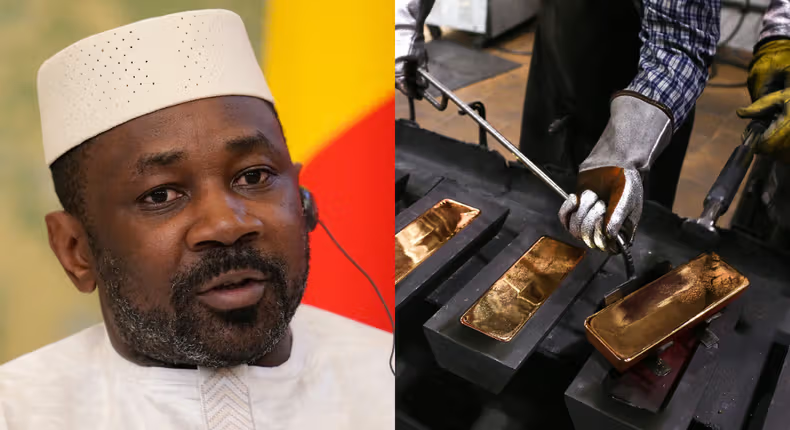
Mali has begun redistributing mining revenues to local authorities, allocating roughly $33 million to municipalities across the country as part of a government initiative aimed at ensuring resource wealth supports community development.
The funds—amounting to more than CFA18.4 billion—were distributed through the Local Mining Development Fund, a mechanism created under reforms to Mali’s mining sector to channel a portion of mineral revenues directly into local economies.

The allocation was formally announced during a ceremony at the Koulouba Presidential Palace, presided over by Mali’s head of state, Assimi Goïta, alongside government ministers and members of the National Transitional Council.
📢 GET A DETAILED ARTICLES + JOBS
Join ASJ's WhatsApp Channel and never miss a post or opportunity.

Linking Mining Wealth to Local Development
Officials say the redistribution is part of a broader strategy to ensure that communities located near mining operations benefit directly from the country’s natural resource wealth.
Under the allocation structure, half of the funds will go directly to municipalities in mining zones, while other local authorities in those regions will also receive support.

An additional equalisation mechanism has been introduced to ensure that all regions of the country benefit from mining revenues, even if they are not directly hosting mining operations.
The government says the funds will be used to finance projects including:
-
Healthcare and education programmes
-
Water supply systems
-
Energy access initiatives
-
Local economic development projects
With more than 800 municipalities across Mali, local governments play a critical role in implementing development programmes at the community level.
Mining Code Reforms Drive Policy Shift
The redistribution initiative follows the adoption of a new mining code, which aims to increase the economic benefits Mali receives from its extractive industries.
The Local Mining Development Fund is primarily financed through mining royalties paid to the state as well as mandatory contributions calculated from the turnover of mining companies operating in the country.
Authorities say these reforms are designed to improve transparency, increase state participation in the mining sector and ensure a more equitable distribution of resource revenues.
Gold Remains the Backbone of the Economy
Mining continues to be a cornerstone of Mali’s economy.
The country is one of West Africa’s leading gold producers, with gold exports accounting for a significant share of government revenue and foreign exchange earnings.
Global demand for gold, combined with relatively strong commodity prices, has helped maintain the sector’s importance to Mali’s economic stability.

Lithium Emerges as a Strategic Opportunity
While gold remains dominant, Mali is also positioning itself to benefit from rising global demand for strategic minerals used in the energy transition.
Authorities have backed the development of several lithium projects, which could place the country among emerging suppliers of battery minerals used in electric vehicles and renewable energy technologies.
Industry analysts say lithium exploration could diversify Mali’s mining sector and attract new investment into the country’s resource economy.
Strengthening Community Trust
For policymakers, the redistribution of mining revenues is also intended to strengthen trust between mining companies, the government and local communities.
Communities located near mining projects often bear the environmental and social impacts of resource extraction.
By allocating funds directly to municipalities, authorities hope to ensure that mining activities generate tangible improvements in living standards for affected populations.
A Broader African Trend
Mali’s approach reflects a wider policy shift across Africa, where governments are increasingly seeking ways to ensure natural resource wealth supports local economic development rather than only national revenue.
Revenue-sharing mechanisms, local content rules and mining sector reforms have become central tools for governments attempting to maximise the economic benefits of extractive industries.
For analysts monitoring African resource markets, Mali’s latest allocation signals that governments across the continent are placing greater emphasis on community development, transparency and equitable resource management.
If implemented effectively, such policies could help transform mineral wealth into long-term development gains for communities directly connected to the mining sector.
Source: Accra Street Journal

Last Updated on March 14, 2026 by Samuel Kwame Boadu
Disclaimer: Some content on Accra Street Journal may be aggregated, summarized, or edited from third-party sources for informational purposes. Images and media are used under fair use or royalty-free licenses. Accra Street Journal is a subsidiary of SamBoad Publishing Hub under SamBoad Business Group Ltd, registered in Ghana since 2014.
For concerns or inquiries, please visit our Privacy Policy or Contact Page.

Samuel Kwame Boadu is a Ghanaian media entrepreneur and storyteller with a passion for amplifying urban voices and uncovering everyday truths. He is the Editor-in-Chief and Founder of Accra Street Journal, a dynamic digital platform dedicated to capturing the pulse of Ghana’s capital—its people, culture, challenges, business, sports and innovations.