









15 min read
Nkwanta, the capital of the Oti Region, is one of Ghana’s most underexplored destinations. Tucked away in the northeastern corner of the country, this municipality is home to some of Ghana’s most extraordinary natural wonders—from the country’s second-highest peak to a “hanging village” believed to be the only one of its kind in West Africa .
For travelers seeking adventure beyond Ghana’s well-trodden tourist trail, Nkwanta offers an authentic, off-the-beaten-path experience. The journey is long—over 350 kilometers from Accra—but the rewards are immense: breathtaking mountain vistas, rare butterfly species found nowhere else on Earth, cascading waterfalls, and warm hospitality from the Akyode people .
Key Takeaways
- For travelers seeking adventure beyond Ghana's well-trodden tourist trail, Nkwanta offers an authentic, off-the-beaten-path experience.
- This ASJ guide covers everything you need to know about traveling from Accra to Nkwanta, including transport options, road conditions, estimated costs, and the incredible attractions awaiting you in the Oti Region.
- Key attractions include Mount Kyabobo (Ghana's second-highest peak), Breast Mountain (Nipple Rock), Kyabobo National Park, the hanging village of Shiare, waterfalls, and rare butterfly species found nowhere else on Earth .
This ASJ guide covers everything you need to know about traveling from Accra to Nkwanta, including transport options, road conditions, estimated costs, and the incredible attractions awaiting you in the Oti Region.
Distance and Travel Time from Accra
| Mode | Distance | Travel Time |
|---|---|---|
| By Road | ~354 km | 6–7 hours |
| Private Car | ~354 km | 5–6.5 hours |
The road distance from Accra to Nkwanta is approximately 354 km . Driving time ranges from 5 to 7 hours, depending on traffic, road conditions, and the route taken .
The journey follows the Eastern Corridor via the N2 highway: Accra → Tema → Akosombo → Ho → Hohoe → Jasikan → Nkwanta. This route takes you through the scenic Volta Region, with lush hills, traditional villages, and views of Lake Volta along the way.
Important Note: The portion of the road between Nkwanta and Kpassa has been reported as rough (“roff”) by travelers, so caution is advised on this stretch . Additionally, if you continue north beyond Nkwanta, the road conditions deteriorate significantly.
Getting from Accra to Nkwanta: Transport Options
Bus/Tro-Tro (Most Common & Affordable)
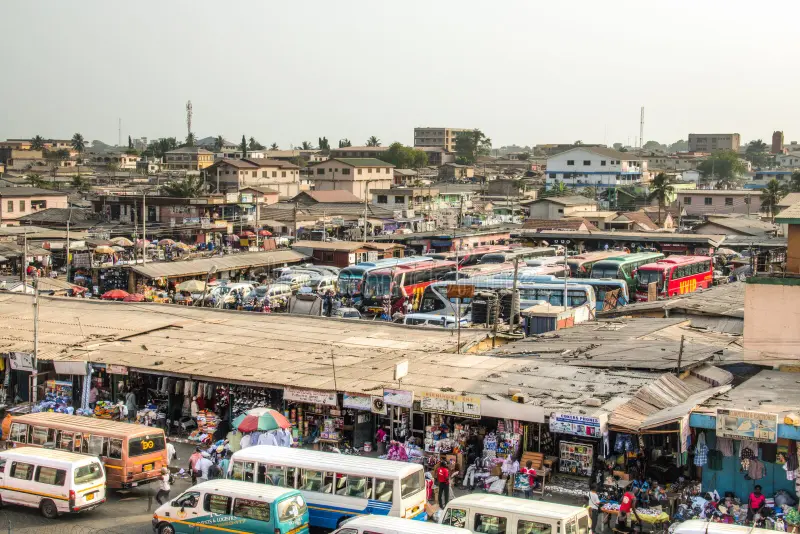
Public transport is the most common way to reach Nkwanta, though the journey requires patience. Buses and minivans (tro-tros) depart from Accra’s main terminals.
| Departure Point | Estimated Cost (GHS) | Notes |
|---|---|---|
| Accra Central / Neoplan Station | 80 – 150 | Direct buses may be limited |
| Madina Lorry Park | 80 – 150 | Frequent departures toward Volta Region |
| Tudu Lorry Park | 80 – 150 | Multiple operators |
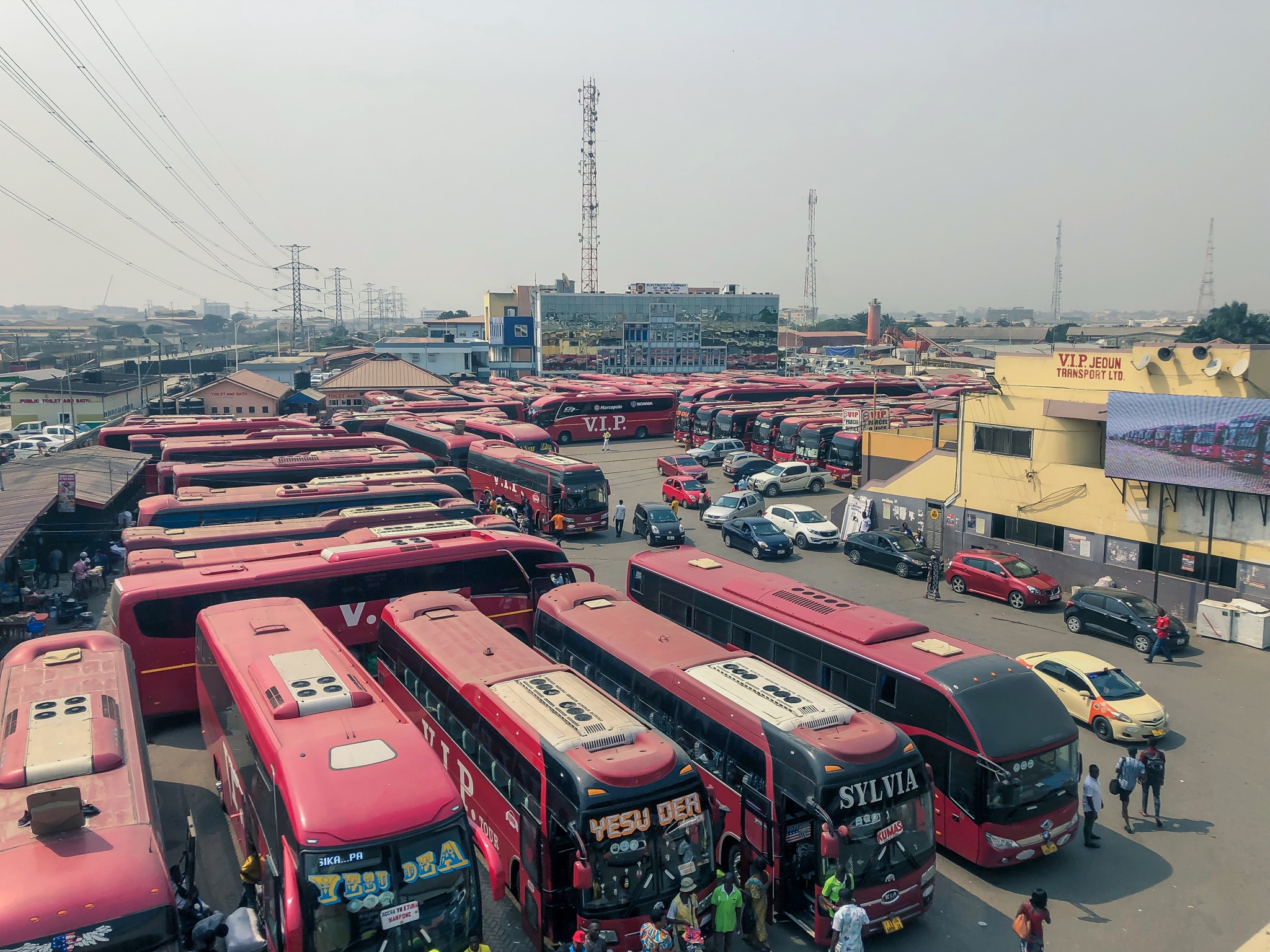
Important: There is no direct luxury bus service (VIP, Sky Boss, etc.) to Nkwanta. Most buses will drop you at Jasikan or Hohoe, from where you will need to take a shared taxi or tro-tro to Nkwanta (additional 1–2 hours).
Recommendation: For a smoother journey, take a bus to Hohoe (approximately GHS 60–80, 4–5 hours), then connect to a shared taxi or tro-tro to Nkwanta (additional GHS 30–50, 1.5–2 hours).
Private Car / Hire (Most Flexible)
Driving offers the most flexibility, especially for travelers planning to explore multiple attractions in the Oti Region.

| Expense | Estimated Cost (GHS) |
|---|---|
| Fuel (round trip) | ~700 – 900 |
| Private Driver Hire (per day) | ~500 – 700 |
| Tolls | Small fee |
A private car allows you to stop at attractions along the way, including the Akosombo Dam, Tafi Atome Monkey Sanctuary, and Wli Waterfalls (slight detour).
Shared Taxi (Budget Alternative)
For budget travelers, shared taxis from Hohoe or Jasikan to Nkwanta are available. These cost approximately GHS 30–50 and take 1.5–2 hours. Expect to wait for the vehicle to fill with passengers before departure.

Route and Road Conditions
The Recommended Route
The most reliable route is the Eastern Corridor:
Accra → Tema → Akosombo → Ho → Hohoe → Jasikan → Nkwanta
From Nkwanta, you can continue north to Kpassa and beyond, but be aware that road conditions deteriorate significantly beyond Nkwanta .
Road Condition Reports
Traveler feedback on the road to Nkwanta is mixed but generally positive:
-
Accra to Hohoe: Generally good, paved road
-
Hohoe to Jasikan to Nkwanta: Mostly paved but with rough patches
-
Nkwanta to Kpassa: Reported as “rough” and challenging
One traveler noted: “Accra to Nkwanta road is good, but from Nkwanta-Kpassa-Yendi is not not not at all” .
Pro Tip: Ensure your vehicle is in excellent condition before attempting this journey. “Let your car be 99-100% good before using that road. You may not get help if you have a fault because few cars are on that road and the towns are far apart” .
Alternative Route via Dambai
Some travelers prefer the Dambai route (Accra → Kpando → Dambai → Nkwanta), which requires crossing the Volta Lake by ferry. This route is longer but offers a unique experience. However, the ferry crossing can involve waiting times of 30 minutes to 2 hours .
Top Attractions in and Around Nkwanta
Nkwanta is home to some of Ghana’s most extraordinary natural and cultural attractions, many of which remain virtually unknown to domestic and international tourists .
1. Mount Kyabobo (Ghana’s Second-Highest Peak)
At the heart of Nkwanta’s ecotourism offering is Mount Kyabobo, Ghana’s second-highest mountain after Mount Afadjato. Located within the Kyabobo National Park (established 1993, covering 360 square kilometers), the mountain is a haven for hiking enthusiasts .
| Detail | Information |
|---|---|
| Height | Second-highest in Ghana |
| Location | Kyabobo National Park, Nkwanta South Municipality |
| Hiking Difficulty | Moderate to challenging |
| Round Trip | Approximately 7 km from Odome village |
| Best Time | Dry season (November–March) |
| Entry Fee | Small fee (pay at park entrance) |
The mountain’s name comes from the local word meaning “to travel around and around in order to arrive at the top,” a fitting description of the winding ascent that rewards visitors with stunning views of the Volta Basin and surrounding plains .

Wildlife: The park is home to elephants, buffalos, antelopes, green monkeys, river hawks, and over 500 species of butterflies—including rare species found nowhere else on Earth .
2. The Breast Mountain (Nipple Rock)
Another extraordinary natural landmark in Nkwanta is the Breast Mountain, named for its resemblance to the shape of a human breast. Part of the Kyabobo National Park, this formation has become a favorite for adventurous hikers .
| Detail | Information |
|---|---|
| Nickname | Nipple Rock |
| Location | Kyabobo National Park |
| Hike Start | Odome village |
| Round Trip Distance | 7 km |
| Summit View | Volta Basin and expansive plains |
The mountain stands “sublimely with its swanky grades and craggy peaks” against the lush green of the tropical forest, creating a visual harmony that inspires and awes .
3. The Hanging Village of Shiare (West Africa’s Only Floating Village)
Perhaps the most remarkable attraction in the region is Shiare, a “hanging village” perched on the side of a mountain. This small settlement of the Akyode people is believed to be the only known hanging village in West Africa .
| Detail | Information |
|---|---|
| Location | Near Nkwanta, Oti Region |
| Unique Feature | Village appears suspended in mid-air on mountain slope |
| People | Akyode ethnic group |
| Historical Note | Migrated from Ejisu due to tribal conflicts |
| Architecture | Traditional stone/mud houses with thatch or iron sheet roofing |
The village’s striking location offers visitors a surreal view that seems almost otherworldly. The Akyode people chose this mountainous location for security and farming purposes after fleeing conflicts .
4. Kyabobo National Park
Established in 1993, Kyabobo National Park covers 360 square kilometers and is a biodiversity hotspot . The park offers:
| Activity | Description |
|---|---|
| Hiking | Trails to Mount Kyabobo and Breast Mountain |
| Wildlife Viewing | Elephants, antelopes, buffalo, monkeys |
| Birdwatching | Diverse bird species |
| Butterfly Watching | Over 500 species, some endemic |
| Waterfall Visit | Picturesque falls within the reserve |
Butterfly Paradise: Nkwanta is one of only two places in the world known to host a rare species of butterfly, making it a must-visit destination for entomologists and nature enthusiasts . A Hungarian researcher recently discovered a previously unknown breed of butterfly within the forest .
5. Waterfalls
The Nkwanta municipality is home to several hidden waterfalls:
| Waterfall | Location | Features |
|---|---|---|
| Aka Falls | Near Akposo-Kabo | Flows through lush forested area |
| Kyabobo Waterfall | 5.5 km into forest reserve | Tumbles over rocky outcroppings into serene pool |
About 5.5 kilometers into the Kyabobo Forest Reserve, a picturesque waterfall tumbles over rocky outcroppings, creating a dazzling display of natural wonder as the water collects in a serene pool .
6. Cultural Heritage and the Akyode Shrine
Beyond natural beauty, Nkwanta boasts a deep cultural heritage. The region is known for its vibrant festivals and traditional ceremonies celebrating the agricultural cycle and honoring ancestral spirits .
The Akyode Shrine is considered one of the most powerful spiritual sites in the region, attracting both locals and tourists curious about traditional African spirituality. Visitors are warmly welcomed by the Akyode people, who take pride in sharing their customs, dances, and oral histories .
Accommodation in Nkwanta
Accommodation in Nkwanta is basic. There are no luxury hotels, and options are limited to simple guesthouses.
| Type | Price Range (GHS) | Notes |
|---|---|---|
| Basic guesthouse | 30 – 60 | Fan room, shared bathroom |
| Mid-range guesthouse | 60 – 120 | Air conditioning, private bath |
| Lodging in Kyabobo Park | Contact park office | Basic camping or ranger accommodation |
Important: Book accommodation in advance if possible. For more comfortable lodging, consider staying in Hohoe (3–4 hours away) and making Nkwanta a day trip—though this requires a very long day of travel.
Where to Eat
Food options in Nkwanta are limited to local chop bars and street food vendors.
| Type | Price Range (GHS) | Notes |
|---|---|---|
| Local chop bar | 10 – 25 | Banku, fufu, rice and stew |
| Street food | 5 – 15 | Kelewele, roasted plantain, eggs |
| Bottled water (1.5L) | 3 – 5 | Essential—drink only bottled/filtered water |
Must-try local dishes:
-
Fresh tilapia (if available from local markets)
-
Fufu with light soup
-
Banku with okro stew or pepper sauce
Best Time to Visit Nkwanta
| Season | Months | Conditions | Best For |
|---|---|---|---|
| Dry Season (Peak) | November – March | Warm, sunny, low humidity; Harmattan haze Dec–Feb | Hiking, mountain climbing, wildlife viewing, clear views |
| Dry Season (Minor) | August – September | Pleasant temperatures, brief showers | Lush scenery, fewer visitors |
| Rainy Season | April – July, October | Hot, humid, heavy rainfall | Trails may be muddy and slippery |
Pro Tip: The dry season (November to March) is strongly recommended for hiking Mount Kyabobo and exploring the national park. Trails can become treacherous during the rainy season.
Estimated Budget (Per Person)
| Category | Budget (GHS) | Mid-range (GHS) |
|---|---|---|
| Transport (round trip, bus) | 150 – 250 | 400 – 600 (private car) |
| Accommodation (per night) | 30 – 60 | 60 – 120 |
| Food (per day) | 20 – 40 | 40 – 80 |
| Activities (park fees, guide) | 50 – 100 | 100 – 200 |
| Miscellaneous | 20 – 50 | 50 – 100 |
| Total (approx. 2-day trip) | 270 – 500 | 650 – 1,100 |
A realistic independent traveler budget for Nkwanta is roughly $15–$45 USD per day (approx. GHS 180–550) depending on choices.
Travel Tips for Nkwanta
Practical Advice
-
Depart early from Accra (5–6 AM) to arrive before dark—the Eastern Corridor has few streetlights and traveling at night is not recommended
-
Carry sufficient cash—there are few ATMs in Nkwanta, and mobile money may be unreliable
-
Pack light, breathable clothing for hiking, plus a jacket for cooler evenings in the mountains
-
Bring sturdy hiking shoes for Mount Kyabobo and Breast Mountain trails
-
Drink only bottled or filtered water—bring a reusable bottle
-
Charge all devices before leaving—reliable electricity is not guaranteed
-
Hire a local guide for hiking and village visits—guides are essential for navigation and cultural context
-
Inform someone of your plans if hiking remote trails
Cultural Etiquette
-
Language: The local language is Akyode (a Guan language). English is understood but limited in rural areas.
-
Greetings: Always greet people before asking questions or conducting business
-
Right-hand rule: Use your right hand for giving and receiving items
-
Photography: Always ask permission before photographing people, shrines, or sacred sites
-
Dress modestly, especially when visiting the Shiare hanging village or cultural sites
Safety
-
Nkwanta is generally safe for travelers, though the region has experienced periodic chieftaincy conflicts. Check current conditions before traveling
-
Avoid traveling at night on unfamiliar roads
-
Keep valuables secure and avoid displaying expensive items
-
Hire a reputable guide for all hiking and village visits
Vehicle Preparation
If driving yourself, ensure your vehicle is in excellent condition. As one experienced traveler advised: “Let your car be 99-100% good before using that road. You may not get help if you have a fault because few cars are on that road and the towns are far apart” .
Sample Itinerary: 3 Days in Nkwanta
Day 1: Journey from Accra
| Time | Activity |
|---|---|
| 5:00 AM | Depart Accra (bus or private car) |
| 8:00 AM | Stop at Akosombo Dam (optional) |
| 11:00 AM | Continue through Volta Region |
| 1:00 PM | Lunch stop in Hohoe |
| 3:00 PM | Arrive Nkwanta, check into guesthouse |
| 5:00 PM | Explore town, visit local market |
| 7:00 PM | Dinner at local chop bar |
Day 2: Mount Kyabobo and Breast Mountain
| Time | Activity |
|---|---|
| 6:00 AM | Early breakfast |
| 7:00 AM | Depart for Kyabobo National Park |
| 8:00 AM | Begin hike to Mount Kyabobo (allow 3–4 hours) |
| 12:00 PM | Picnic lunch at summit (stunning Volta Basin views) |
| 1:00 PM | Descend and hike to Breast Mountain |
| 4:00 PM | Return to guesthouse, rest |
| 6:00 PM | Dinner |
Day 3: Shiare Hanging Village and Return
| Time | Activity |
|---|---|
| 7:00 AM | Breakfast |
| 8:00 AM | Visit Shiare hanging village (local guide essential) |
| 10:00 AM | Explore Akyode cultural sites |
| 11:00 AM | Depart Nkwanta for Accra |
| 6:00 PM | Arrive Accra |
Frequently Asked Questions (FAQs)
1. How long does it take to travel from Accra to Nkwanta?
By road, approximately 6 to 7 hours, depending on traffic, road conditions, and stops. The distance is about 354 km .
2. What is the bus fare from Accra to Nkwanta?
There is no direct luxury bus service. Take a bus to Hohoe (GHS 60–80, 4–5 hours), then a shared taxi to Nkwanta (GHS 30–50, 1.5–2 hours). Total approximately GHS 90–130 .
3. Is there a direct bus to Nkwanta?
No. Most buses go to Hohoe or Jasikan. From there, you must take a shared taxi or tro-tro to Nkwanta.
4. What is the road condition like?
Accra to Hohoe is generally good. Hohoe to Nkwanta is mostly paved but has rough patches. Beyond Nkwanta to Kpassa, the road is reportedly rough .
5. What is there to do in Nkwanta?
Key attractions include Mount Kyabobo (Ghana’s second-highest peak), Breast Mountain (Nipple Rock), Kyabobo National Park, the hanging village of Shiare, waterfalls, and rare butterfly species found nowhere else on Earth .
6. What is the hanging village of Shiare?
Shiare is a village perched on the side of a mountain, believed to be the only known hanging village in West Africa. It is home to the Akyode people, who migrated to this location for security and farming purposes .
7. Where can I stay in Nkwanta?
Accommodation is limited to basic guesthouses. There are no luxury hotels. Budget GHS 30–60 per night for basic rooms .
8. Is Nkwanta safe for tourists?
Generally yes, though the region has experienced periodic chieftaincy conflicts. Check current conditions before traveling, hire local guides, and avoid traveling at night .
9. What should I pack for Nkwanta?
Sturdy hiking shoes, light breathable clothing, insect repellent, sunscreen, hat, reusable water bottle, flashlight, power bank, and cash .
10. Can I climb Mount Kyabobo?
Yes. Mount Kyabobo is Ghana’s second-highest mountain. The hike is moderate to challenging. Hire a local guide and visit during the dry season (November–March) for best conditions .
11. What is special about Kyabobo National Park?
The park is home to over 500 butterfly species, including rare endemic species, plus elephants, buffalos, antelopes, and Ghana’s second-highest mountain .
12. When is the best time to visit Nkwanta?
The dry season (November to March) offers the best conditions for hiking and outdoor activities .
Conclusion: Why Nkwanta Deserves a Spot on Your Ghana Itinerary
Nkwanta is not for travelers seeking luxury or convenience. The journey is long—over 350 kilometers and 6–7 hours from Accra. The roads are imperfect. The accommodation is basic. But for those who make the effort, Nkwanta offers something increasingly rare in Ghana: authentic, unspoiled adventure.
Here, you can stand on Ghana’s second-highest peak and gaze across the Volta Basin. You can visit a “hanging village” that exists nowhere else in West Africa. You can spot butterflies found on only one other place on Earth. You can hike to waterfalls hidden in lush forest, swim in natural pools, and experience the warm hospitality of the Akyode people .
The Oti Region remains one of Ghana’s most underexplored destinations. As one development advocate noted, “For too long, conflict has shrouded this enchanting region, hiding its treasures from eager tourists.” But the potential is immense—Mount Kyabobo, the Breast Mountain, Shiare, and the rare butterflies are wonders waiting to be discovered .
If you’re seeking comfort and convenience, stay in Accra or Kumasi. But if you want to experience Ghana beyond the guidebooks—to hike mountains, discover hidden villages, and witness biodiversity found nowhere else—then Nkwanta awaits.
Pack light, depart early, hire a local guide, and let the adventure unfold. The road may be long, but the rewards are extraordinary.
Frequently Asked Questions (FAQs)
1. How long does it take to travel from Accra to Nkwanta?
By road, approximately 6 to 7 hours, depending on traffic, road conditions, and stops. The distance is about 354 km .
2. What is the bus fare from Accra to Nkwanta?
There is no direct luxury bus service. Take a bus to Hohoe (GHS 60–80, 4–5 hours), then a shared taxi to Nkwanta (GHS 30–50, 1.5–2 hours). Total approximately GHS 90–130 .
3. Is there a direct bus to Nkwanta?
No. Most buses go to Hohoe or Jasikan. From there, you must take a shared taxi or tro-tro to Nkwanta.
4. What is the road condition like?
Accra to Hohoe is generally good. Hohoe to Nkwanta is mostly paved but has rough patches. Beyond Nkwanta to Kpassa, the road is reportedly rough .
5. What is there to do in Nkwanta?
Key attractions include Mount Kyabobo (Ghana’s second-highest peak), Breast Mountain (Nipple Rock), Kyabobo National Park, the hanging village of Shiare, waterfalls, and rare butterfly species found nowhere else on Earth .
6. What is the hanging village of Shiare?
Shiare is a village perched on the side of a mountain, believed to be the only known hanging village in West Africa. It is home to the Akyode people, who migrated to this location for security and farming purposes .
7. Where can I stay in Nkwanta?
Accommodation is limited to basic guesthouses. There are no luxury hotels. Budget GHS 30–60 per night for basic rooms .
8. Is Nkwanta safe for tourists?
Generally yes, though the region has experienced periodic chieftaincy conflicts. Check current conditions before traveling, hire local guides, and avoid traveling at night .
9. What should I pack for Nkwanta?
Sturdy hiking shoes, light breathable clothing, insect repellent, sunscreen, hat, reusable water bottle, flashlight, power bank, and cash .
10. Can I climb Mount Kyabobo?
Yes. Mount Kyabobo is Ghana’s second-highest mountain. The hike is moderate to challenging. Hire a local guide and visit during the dry season (November–March) for best conditions .
11. What is special about Kyabobo National Park?
The park is home to over 500 butterfly species, including rare endemic species, plus elephants, buffalos, antelopes, and Ghana’s second-highest mountain .
12. When is the best time to visit Nkwanta?
The dry season (November to March) offers the best conditions for hiking and outdoor activities
Source: Accra Street Journal
Last Updated on March 29, 2026 by Samuel Kwame Boadu
Disclaimer: Some content on Accra Street Journal may be aggregated, summarized, or edited from third-party sources for informational purposes. Images and media are used under fair use or royalty-free licenses. Accra Street Journal is a subsidiary of SamBoad Publishing Hub under SamBoad Business Group Ltd, registered in Ghana since 2014.
For concerns or inquiries, please visit our Privacy Policy or Contact Page.

Samuel Kwame Boadu is a Ghanaian media entrepreneur and storyteller with a passion for amplifying urban voices and uncovering everyday truths. He is the Editor-in-Chief and Founder of Accra Street Journal, a dynamic digital platform dedicated to capturing the pulse of Ghana’s capital—its people, culture, challenges, business, sports and innovations.
Use the following reference when citing or referencing this article.
Your feedback helps us improve our journalism.
Report an Error
Help us maintain accuracy. Let our editorial team know if you spot an issue in this article.
Report a problem with this article