Introduction: A Town in Transition
Teshie was not built for peace. It was founded as a garrison, a warrior state established to defend the Ga people from external aggressors . Its warriors earned a legendary reputation, fighting in the Katamanso War of 1826, where according to the records, victory was won through their bravery. The accolade “Gonti ni ashiii see anmoo kpo” commemorates the occasion when the Teshie Mantse led the entire Ga State to repel an attack on Ga Mashie.
That Teshie is vanishing.

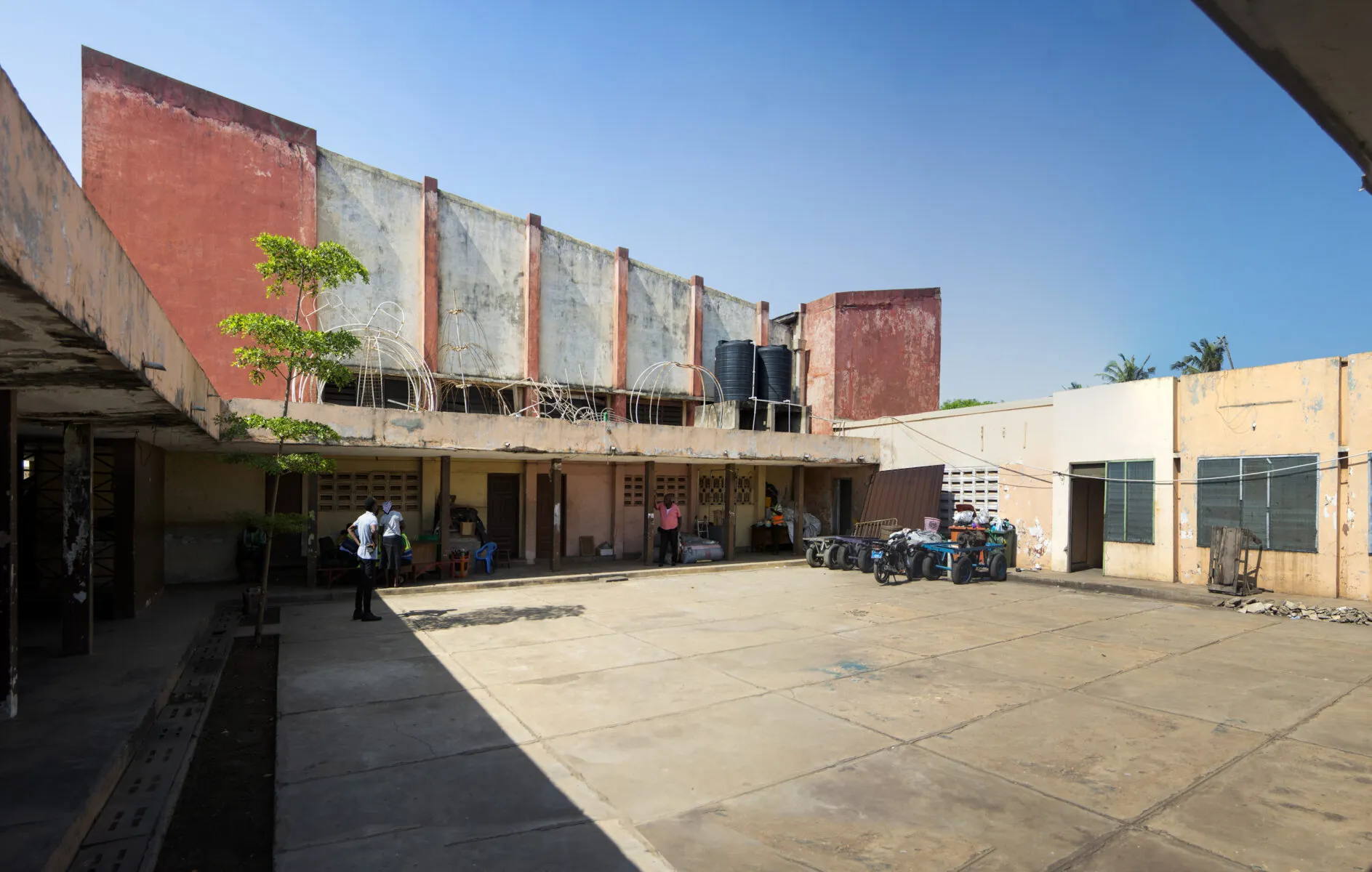
Today, the town stretches from the Kpeshie Lagoon to the Teshie-Nungua Estates, its boundaries increasingly blurred with those of neighbouring Nungua as urban expansion continues . The population has exploded from 32,803 in 1970 to over 182,145 in 2010, making it the ninth most populous settlement in Ghana . Traditional fishing, once the economic backbone, is giving way to new industries: education, tourism, creative arts, and security training .
📢 GET A DETAILED ARTICLES + JOBS
Join ASJ's WhatsApp Channel and never miss a post or opportunity.

The warrior is becoming the urban youth. And that transformation is reshaping everything—from the role of traditional leaders to the aspirations of young people, from the economy to the very identity of what it means to be from Teshie.
Part 1: The Warrior Legacy – What Teshie Once Was
A Garrison Founded for Defense
According to historian Wendell Adjetey, whose ancestors founded Teshie, the town was established as a “garrison after the outbreak of a civil conflict in neighboring Laa, a previous settlement that my ancestors co-founded” . This military origin shaped every aspect of early Teshie society.

The Ga-Dangme people, of whom Teshie is one of sixteen traditional areas, “fought endless battles, crossed huge and wide rivers, lakes and oceans, climbed terrible mountains, wrestled with dangerous animals, pulled down fortified walls, dismantled kingdoms, and blasphemed dreaded shrines” . They survived “because of the supremacy of our God and our indomitable fighting spirit” .
The Asafo Companies
The Asafo (warrior companies) were the backbone of Teshie’s military organisation. Young men who attained puberty were initiated into their respective Asafo companies and taught how to handle, load, and fire a gun for the first time. The Asafo companies were not merely military units—they had the power to elect or reject candidates for the chieftaincy. No chief could be installed without the consent of the warrior class.
The military culture was reinforced by the annual Homowo festival, which commemorated the Ga people’s victory over famine. And the war stools of the Ga towns served as “the central object of Ga ritual and war magic”—repositories of the spiritual power that protected the town in battle.
The Katamanso War (1826)
The Katamanso War was the decisive battle that broke Asante power on the coast. Teshie warriors fought alongside British forces, other Ga states, and the Denkyira to defeat the Asante army. According to the records, “Katamanso was won through the bravery of Teshie Warriors” .
The battle was the last war fought along the coast before the end of slavery. The British used rockets for the first time in the country, but the Ga-Dangbe forces used guerrilla tactics, fighting from trenches dug in the forest. The “Nkotoso” tree, under which the warriors gathered before the battle to “drink fetish concoctions, swear their oath and pray to their gods to help defeat the Ashantis,” is still standing at the battle site today.
Fort Augustaborg: The Danish Presence
The Danish built Fort Augustaborg at Teshie in 1787, naming it after Princess Louise Auguste of Denmark . The fort was occupied by the British from 1850 until Ghana’s independence in 1957 . Today, only ruins remain—a physical reminder of the European rivalries that once played out on Teshie’s coast.
These ruins, along with the Ghana Military Academy Training School established in Teshie and the Kofi Annan International Peacekeeping Training Centre (KAIPTC) founded in 1998, represent a continuity of military tradition—though transformed from indigenous warfare to national and international security.
Part 2: The Demographic Transformation – From Fishing Village to Urban Hub
Population Explosion
The numbers tell a dramatic story of urbanisation. Teshie’s population has grown from 32,803 in 1970 to 58,476 in 1984, 67,913 in 2000, and 182,145 in 2010 . It is now the ninth most populous settlement in Ghana .
This growth is driven by Teshie’s proximity to Accra and Tema. Many families have chosen to live in Teshie due to the lower rents compared to the capital, while working in the larger urban centres . The result is a commuter town, increasingly integrated into the Accra-Tema conurbation.

The Blurring of Boundaries
Teshie’s boundaries are increasingly unclear. In local media, it is not uncommon to refer to “Teshie-Nungua” rather than simply Teshie, as the border between the two towns has become less marked . The Ghanaian postal services treat these two entities as one .
This physical merging symbolises a deeper transformation: Teshie is no longer a distinct, self-contained warrior state. It is a node in a sprawling urban region, its identity increasingly shaped by its relationship to Accra rather than by its own independent history.
The Traditional Economy in Decline
Teshie’s traditional economy was fishing. But this is gradually disappearing as the town becomes absorbed into the urban conurbation . Many businesses have established themselves in Teshie, attracted by lower rents than the capital city centre.
Yet the fishing legacy endures in other forms. The Labadi Beach, which lies near Teshie, remains the busiest beach on Ghana’s coast, maintained by local hotels . The marine trades are being reimagined through initiatives like the proposed Youth Skills and Entrepreneurship Hub, which includes training in marine-related trades .
Part 3: The New Economy – Art, Education, and Security
Fantasy Coffins: Teshie’s Global Art Form
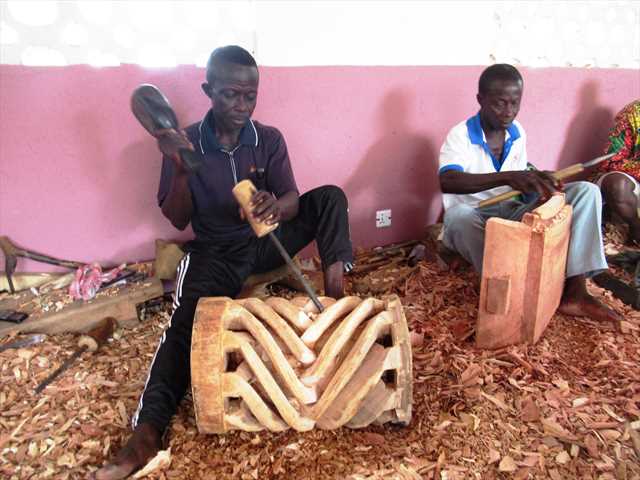
Teshie is internationally renowned as the home of fantasy coffins—elaborately sculpted coffins shaped like objects representing the life of the deceased. This art form was invented in the 1950s by Seth Kane Kwei, an artist from La who later established his workshop in Teshie .
The Kane Kwei Carpentry Workshop continues to produce these remarkable works of art under the direction of Eric Adjetey Anang, the legitimate heir of the inventor. Other artists, including Daniel Mensah (“Hello”), continue the tradition .
Teshie fantasy coffins have been exhibited in museums around the world, including the Sainsbury Centre for Visual Arts in the UK and the Hämeenlinna Art Museum in Finland. This art form has put Teshie on the global cultural map, representing a new kind of warrior spirit—not of the battlefield, but of the workshop.
Educational Institutions: Shaping the Next Generation
Teshie has become a significant educational hub. The town hosts:
-
Ghana Military Academy Training School – one of the most prestigious military training institutions in Ghana, whose alumni include former Head of State Jerry John Rawlings
-
Kofi Annan International Peacekeeping Training Centre (KAIPTC) – established in 1998, providing peacekeeping training to military and civilian personnel from across Africa and beyond
-
Nursing and Midwifery Training College, Teshie
-
Family Health University College, Nursing & Midwifery School
-
Presbyterian Senior High School, Teshie
-
Teshie Technical Training Centre
-
O’Reilly Senior High School
-
Saint Johns Senior High School
-
Anglican Senior High School
These institutions represent a profound shift in Teshie’s identity. The town that once produced warriors now produces nurses, peacekeepers, teachers, and technicians. The military tradition endures—but in the form of professional armed forces and international peacekeeping, not indigenous Asafo companies.
Tourism and Hospitality
Teshie has several hotels along the coast, catering to domestic tourists and business travellers . Labadi Beach, one of Accra’s most famous tourist destinations, lies near Teshie. The Laboma Beach Resort, whose CEO sponsored the 2026 COTA unity walk, represents the growing hospitality sector .
Part 4: The Redefinition of Traditional Leadership
The Obediben Mantse’s Youth Vision
In March 2026, the Obediben Mantse of the Gbugblah quarters, Nii Martey Dzata Obrempong I, unveiled a five-year development agenda centred on youth empowerment . His vision represents a dramatic redefinition of traditional leadership.
“Leadership today is not only about preserving the stool,” he explained. “It is about preparing the youth to inherit it with strength, discipline, and opportunity” .
The Mantse proposed a Youth Skills and Entrepreneurship Hub offering training in digital technology, creative arts, carpentry, fashion and textile design, marine-related trades, and small-scale agribusiness .
We cannot sit and wait for white collar jobs that may never arrive,” he said. “Our mission is to produce innovators, creators, and employers from within Teshie itself” .
He also advocated for a mentorship and scholarship programme connecting young students with accomplished professionals from Teshie both in Ghana and abroad .
“When a child sees someone from his own community become a lawyer, a doctor, or an engineer, that dream suddenly becomes attainable” .
Development Without Identity?
Crucially, the Obediben Mantse insisted that cultural identity must remain the foundation of development. “Development without identity is dangerous,” he said. “We must modernize, but we must do so as proud Teshie people” .
This statement captures the central tension of Teshie’s transformation. The town cannot—and should not—return to its warrior past. But neither can it abandon its identity. The challenge is to modernise while retaining the core values that have defined Teshie for centuries.
The Coalition of Teshie Associations (COTA)
In March 2026, the Coalition of Teshie Associations (COTA) called for peace, unity, and youth empowerment in the Teshie community . The group pledged to address leadership disputes and social vices affecting residents.
More than 2,000 participants walked through the principal streets of Teshie in a unity walk sponsored by the CEO of Laboma Beach Resort . COTA’s initiatives are aimed at fostering cooperation among the five quarters that make up Teshie: Kle Musum, Lenshie, Agbawe, Krobo, and Gbugblah .
The Chairman of COTA, Alfred Amarh-Lienks, noted that leadership disputes had hindered development, discouraging potential investors . Yet even these disputes, he said, are driven by a desire for progress.
The Partnership with Papillon
In June 2025, the Teshie Traditional Council partnered with Papillon Brand & Marketing Specialist to transform Teshie into a dynamic hub for youth innovation, entrepreneurship, and cultural tourism . The initiative includes entrepreneurship training, digital storytelling, eco-tourism branding, and community development workshops .
“This partnership is purpose-driven and deeply rooted in community impact,” the Papillon team said. “Teshie has untapped potential, and our goal is to help uncover it, amplify it, and support systems that enable youth to thrive” .
Part 5: The Challenge of Chieftaincy Disputes
Despite these positive developments, Teshie continues to struggle with chieftaincy disputes that threaten to undermine progress. At the 2011 elevation ceremony for La, Nungua, and James Town, it was stated that “for the past 26 years, Teshie has been without a chief” .
In 2023, the chiefs and traditional leaders of Teshie warned the Greater Accra Regional Minister and the Registrar of the Greater Accra Regional House of Chiefs to refrain from meddling in Teshie’s chieftaincy concerns . The Teshie Mantse has declared that he is “not ready to pull down his cloth from over his shoulder to the chest and stand on his sandals in public to pay obeisance to the Ga Mantse who is his co-equal Paramount Chief.”
The 2011 National House of Chiefs verdict affirmed that Teshie holds no allegiance to the Ga Paramount Stool . But the practical resolution of chieftaincy disputes has been slower.
COTA’s call for peace and unity is directly addressed to these disputes. The group hopes that by fostering cooperation among the five quarters, Teshie can present a united front to investors and developers .
Part 6: The Evolution of Ga-Dangme Warfare
A New Kind of Enemy
Francis Opai Tetteh has argued that the enemy of the Ga-Dangme people has evolved completely, and therefore, “our art of war needs serious revision too” .
“Today, the enemy of the Ga-Dangme people has evolved completely, and therefore, our art of war needs serious revision too. Our enemies are no longer fighting us with weapons and ammunition. Rather, they are using ideologies, systems, and strategies which include economic power, political power, intellectual power, and religious power to whittle and take away our hard-earned heritage” .
This insight applies directly to Teshie. The threats facing the community are not military invasions but economic marginalisation, political exclusion, and cultural erosion. The warriors of today must fight with different weapons.
The Seven Pillars of Modern Strategy
Tetteh proposes that the Ga-Dangme Tahuloi (warriors) must develop a new strategy standing on seven pillars :
| Pillar | Focus |
|---|---|
| 1 | A composite strategic development plan for the entire Ga-Dangme area |
| 2 | A powerful Ga-Dangme Media House |
| 3 | A resourceful movie and music production house |
| 4 | Education and training (including a Ga-Dangme State University focused on STEM) |
| 5 | Continuous coaching in leadership and governance skills |
| 6 | A Ga-Dangme Chamber of Commerce and Industry |
| 7 | Ga-Dangme youth and sports development |
These pillars are not about muskets and trenches. They are about economic power, media influence, educational excellence, and political organisation. The warrior is becoming the entrepreneur, the student, the media professional, the athlete.
The New Tahuloi
The transformation of Teshie’s identity is not a loss—it is an evolution. The same spirit that drove the Asafo companies now drives the young entrepreneurs in the proposed Youth Skills Hub. The same courage that won the Katamanso War now drives the students at the Nursing and Midwifery Training College. The same pride that built the war stools now drives the artists creating fantasy coffins for the world.
The new Tahuloi are not armed with muskets. They are armed with laptops, business plans, educational qualifications, and creative visions. And they are fighting not for territory but for economic opportunity, social mobility, and cultural recognition.
Summary Table: The Changing Identity of Teshie
| Aspect | Historical Teshie | Contemporary Teshie |
|---|---|---|
| Primary Identity | Warrior state, garrison | Urban suburb, part of Accra-Tema conurbation |
| Population | 32,803 (1970) | 182,145+ (2010), 9th largest in Ghana |
| Economy | Fishing | Education, tourism, creative arts, security training |
| Military Focus | Asafo companies, indigenous warfare | Ghana Military Academy, KAIPTC (peacekeeping) |
| Global Recognition | Limited | Fantasy coffins exhibited worldwide |
| Traditional Leadership | War stool, Asafo consent | Youth empowerment, skills development, cultural tourism |
| Key Institutions | Fort Augustaborg (Danish, 1787) | KAIPTC (1998), Nursing Training College, multiple secondary schools |
| Core Challenge | External military threats | Economic marginalisation, chieftaincy disputes, urban pressures |
| Warrior Ethos | Muskets, trenches, guerrilla tactics | Entrepreneurship, education, media, political organisation |
Frequently Asked Questions (FAQs)
1. Was Teshie really a warrior state?
Yes. Teshie was founded as a garrison after a civil conflict in La. Its warriors played a crucial role in the Katamanso War of 1826, and the town earned the accolade “Gonti ni ashiii see anmoo kpo” for leading the Ga State to repel Obutu aggressors .
2. How has Teshie’s population changed?
Teshie’s population grew from 32,803 in 1970 to 182,145 in 2010, making it the ninth most populous settlement in Ghana .
3. What is Teshie known for today?
Teshie is internationally known for fantasy coffins, invented by Seth Kane Kwei in the 1950s. It is also home to the Ghana Military Academy and the Kofi Annan International Peacekeeping Training Centre (KAIPTC) .
4. What is the Obediben Mantse’s development vision?
Nii Martey Dzata Obrempong I, the Obediben Mantse, has proposed a five-year development agenda centred on youth empowerment, including a Youth Skills and Entrepreneurship Hub offering training in digital technology, creative arts, marine trades, and agribusiness .
5. What is the Coalition of Teshie Associations (COTA)?
COTA is a community-based group formed to promote unity, development, and job opportunities for Teshie’s youth. In March 2026, it organised a unity walk with over 2,000 participants to call for peace and cooperation among Teshie’s five quarters .
6. What are the five quarters of Teshie?
Teshie is composed of five quarters: Kle Musum, Lenshie, Agbawe, Krobo, and Gbugblah .
7. How has the concept of warfare evolved for the Ga-Dangme?
Francis Opai Tetteh argues that the enemy is no longer fighting with weapons but with economic, political, and intellectual power. The new strategy requires education, media, entrepreneurship, and political organisation—not muskets and trenches .
8. What is Fort Augustaborg?
Fort Augustaborg is a Danish fort built at Teshie in 1787, named after Princess Louise Auguste of Denmark. It was occupied by the British from 1850 to 1957 and is now in ruins .
9. Is Teshie subordinate to the Ga Mantse?
No. The 2011 National House of Chiefs verdict affirmed that the Teshie Stool holds no allegiance to the Ga Paramount Stool .
10. What is the future of Teshie’s warrior identity?
The warrior spirit is being transformed, not lost. It now expresses itself through entrepreneurship, education, creative arts, and international peacekeeping—a new kind of warfare for a new kind of enemy .
Conclusion: The Warrior Reborn
Teshie’s identity is not being erased. It is being transformed. The same spirit that drove the Asafo companies now drives the young entrepreneur learning digital skills at the proposed Youth Hub. The same courage that won the Katamanso War now drives the student at the Nursing Training College. The same pride that built the war stools now drives the artist creating fantasy coffins for the world.
The enemy has changed. The weapons have changed. But the warrior endures.
As Francis Opai Tetteh has argued, the Ga-Dangme people must revise their art of war for a new era . The new Tahuloi are not armed with muskets but with laptops, business plans, and educational qualifications. The new battlefields are not the coastal plains but the economy, the media, the education system, and the political arena.
The Obediben Mantse understands this. His vision is not about returning to the past but about preparing the youth for the future—”to produce innovators, creators, and employers from within Teshie itself” . The Coalition of Teshie Associations understands this. Their call for peace and unity is not about nostalgia but about creating the conditions for development .
The warrior is becoming the urban youth. And in that transformation lies Teshie’s greatest strength.
Source: Accra Street Journal
Last Updated on April 12, 2026 by Samuel Kwame Boadu
Disclaimer: Some content on Accra Street Journal may be aggregated, summarized, or edited from third-party sources for informational purposes. Images and media are used under fair use or royalty-free licenses. Accra Street Journal is a subsidiary of SamBoad Publishing Hub under SamBoad Business Group Ltd, registered in Ghana since 2014.
For concerns or inquiries, please visit our Privacy Policy or Contact Page.

Samuel Kwame Boadu is a Ghanaian media entrepreneur and storyteller with a passion for amplifying urban voices and uncovering everyday truths. He is the Editor-in-Chief and Founder of Accra Street Journal, a dynamic digital platform dedicated to capturing the pulse of Ghana’s capital—its people, culture, challenges, business, sports and innovations.