










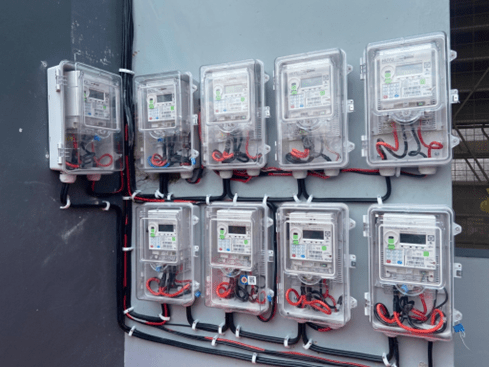
Introduction: Understanding Your Electricity Bill
Electricity tariffs in Ghana are not arbitrary numbers. They are the result of a complex calculation involving inflation, exchange rates, fuel costs, infrastructure investment, and a national commitment to universal access. The Public Utilities Regulatory Commission (PURC) reviews these tariffs quarterly and undertakes a comprehensive Multi-Year Tariff Review (MYTO) every few years to align rates with the long-term needs of the power sector .
In 2026, Ghana is operating under a new MYTO framework covering 2026–2030. This framework sets the trajectory for electricity pricing over five years, balancing consumer affordability with the financial sustainability of utility providers like the Electricity Company of Ghana (ECG), the Volta River Authority (VRA), and GRIDCo .

This Accra Street Journal guide provides a complete breakdown of ECG tariffs in Ghana for 2026, explaining the rates you pay, the reasons behind recent changes, and what the future holds for electricity pricing in the country.
📢 GET A DETAILED ARTICLES + JOBS
Join ASJ's WhatsApp Channel and never miss a post or opportunity.

The Two Layers of Tariff Adjustments
Before diving into specific rates, it is important to understand how tariff adjustments work in Ghana. There are two distinct processes:
1. Major Multi-Year Tariff Review (MYTO)
The MYTO is a comprehensive review conducted every 3–5 years that sets the base tariff structure for a multi-year period. The 2026–2030 MYTO took effect on January 1, 2026, and included a 9.86% average increase in electricity tariffs .

This major review accounts for long-term factors:
-
Capital expenditure (CAPEX): Investments in new infrastructure, substations, meters, and IT systems over five years
-
The generation mix: The shift from hydro to more expensive thermal power
-
System losses: Transmission and distribution losses factored into revenue requirements
-
Universal access: The cost of extending electricity to remote island and lakeside communities
2. Quarterly Tariff Reviews
Every quarter, the PURC adjusts tariffs to reflect short-term changes in:
-
Inflation
-
Fuel costs (Weighted Average Cost of Gas – WACoG)
-
Generation mix (hydro vs. thermal)
For the second quarter of 2026 (April 1 – June 30), the PURC reduced electricity tariffs by an average of 4.81% due to improved macroeconomic conditions .
Current ECG Tariffs (Effective April 1, 2026)
The following tariffs took effect on April 1, 2026, representing a reduction from the first quarter rates .
Residential Tariffs (Home Consumers)
| Customer Category | Consumption Band | Rate (GHS per kWh) |
|---|---|---|
| Lifeline (Low-income) | 0 – 30 kWh | 0.8690 (86.90 pesewas) |
| Residential | 0 – 300 kWh | 1.9688 (196.88 pesewas) |
| Residential | Above 300 kWh | Rate varies based on band |
Source: The High Street Business
Important Notes on the Lifeline Tariff:
The lifeline tariff is designed to subsidise electricity for low-income households consuming between 0 and 30 kilowatt-hours per month . However, research has found that this benefit is not always reaching its intended targets .
Key issues with the current lifeline system include:
-
Only a small proportion of households benefit, and beneficiaries are unevenly distributed across ECG districts
-
Households living in compound houses often share meters, making it impossible to accurately measure individual consumption
-
Many low-income households reduce appliance usage to stay within the 30 kWh band, potentially sacrificing quality of life
Proposed reforms include redesigning the lifeline tariff into a hybrid, better-targeted protection system, introducing micro-consumption bands (e.g., 0–30 and 30–35 kWh), and enforcing a one-household-one-meter policy .

Non-Residential Tariffs (Small Businesses, Shops, Offices)
| Customer Category | Consumption Band | Rate (GHS per kWh) |
|---|---|---|
| Non-Residential | 0 – 300 kWh | 1.7775 (177.75 pesewas) |
| Non-Residential | 301 kWh and above | 2.1649 (216.49 pesewas) |
Source: SKB Journal
Special Load Tariff (Large-Scale Consumers)
| Voltage Category | Rate (GHS per kWh) |
|---|---|
| Low Voltage | 2.3211 (232.11 pesewas) |
| High Voltage | 1.8212 (182.12 pesewas) |
Source: The High Street Business
New: Commercial Tariff for Electric Vehicle (EV) Charging Stations
For the first time, the PURC has introduced a dedicated tariff for EV charging stations .
| Rate Component | Amount |
|---|---|
| Energy Charge | 201.60 pesewas per kWh |
| Monthly Service Charge | GH¢50,000 |
This tariff is designed to support Ghana’s green energy transition and the growing adoption of electric vehicles.
Coming Soon: Night Power Tariffs for the 24-Hour Economy
In a significant policy development, the PURC has announced plans to introduce special night tariffs for businesses operating under the government’s 24-Hour Economy policy .
Key details:
-
Time window: 11:00 PM to 4:00 AM (under discussion)
-
Target beneficiaries: Businesses and individuals signed onto the 24-hour economy initiative
-
Implementation timeline: Expected by the fourth quarter of 2026 (October–December), subject to technical processes and meter deployment
The automated system will allow consumers to benefit seamlessly without requiring manual adjustments. This initiative is designed to boost commercial activity during off-peak hours, support electric vehicle adoption, and drive the success of Ghana’s emerging night-time economy .
Why Tariffs Increased in January 2026 (And Why They Dropped in April)
The January 2026 Increase: 9.86%
The 9.86% average increase that took effect on January 1, 2026, under the new MYTO framework was driven by several structural factors :
1. Infrastructure Investment Requirements
The tariffs are designed to fund the “regulated asset base” of utilities over the 2026–2030 period, including new substations, transmission lines, meters, and IT systems .
2. The Shift to Thermal Power
Ghana’s generation mix is shifting. Thermal power will rise from 70.75% in 2025 to 78.79% during the tariff period, while hydro will fall from 28.80% to 20.90% . Thermal generation is more expensive than hydro, and contractual obligations with Independent Power Producers (IPPs) include “take-or-pay” clauses that require payment for available capacity even when not fully utilised .
3. Weighted Average Cost of Gas (WACoG)
Natural gas costs increased from US$7.7134/MMBtu to US$7.8749/MMBtu . The WACoG is a composite figure that blends gas from different sources, transport costs, and contractual obligations—it does not track petrol pump prices .
4. Universal Access Cross-Subsidy
The cost of supplying electricity to remote island and lakeside communities (through solar-battery mini-grids) has been added to VRA’s revenue requirement and spread across all consumers . This means part of your bill subsidises electricity for families who would otherwise live in the dark.
5. Legacy Debt Clearance
The tariff increase also helps utilities meet payment obligations to IPPs and gas suppliers, service loans, and regain financial health after years of tariff under-recoveries .
The April 2026 Reduction: 4.81%
The April reduction was driven by short-term macroeconomic improvements :
-
Cedi appreciation: Projected exchange rate of GH¢11.19 to US$1, down from GH¢12.00 in the previous quarter
-
Falling inflation: Inflation between December 2025 and February 2026 stood at 4.17%, a decline of about 48% compared to the previous quarter
-
Stable generation mix: Hydro (20.9%) and thermal (79.1%) remained unchanged from the 2025 MYTO
The reduction came despite a 2.84% increase in natural gas costs, demonstrating that the positive macroeconomic factors outweighed this pressure .
The Rapid Depletion Controversy (February–March 2026)
Following the January tariff increase, widespread public complaints emerged that prepaid electricity units were depleting faster than expected .
What Happened
Consumers reported that after the January adjustment, their prepaid credit seemed to vanish at an alarming rate. The PURC took these complaints seriously, summoning ECG for an emergency meeting on February 26, 2026 .
ECG’s Position
ECG denied any wrongdoing, stating that it only applies tariffs approved by PURC and has not exceeded sanctioned rates . The utility attributed increased electricity consumption to:
-
Hot weather (increased use of cooling appliances)
-
The proliferation of electrical appliances in homes
The Investigation
The Ministry of Energy and Green Transition, the PURC, and the Energy Commission are working jointly to investigate the complaints . Energy Minister Dr. John Abdulai Jinapor confirmed that any confirmed overcharging would trigger immediate compensation for affected consumers .
The February 26 Meeting Agenda
The emergency meeting was expected to:
-
Clarify how the MYTO tariff adjustment was integrated into the prepaid metering system
-
Review any system parameter changes
-
Provide a report on the scale of consumer complaints and proposed resolution measures
-
Receive reports from ECG on vending data trends, meter update protocols, and current resolution measures
Factors That Drive ECG Tariffs
Understanding the factors behind tariff changes can help you anticipate future adjustments.
1. Exchange Rate (Cedi to US Dollar)
Ghana imports a significant portion of its energy infrastructure and some fuel inputs. A weaker cedi increases costs. The 2026–2030 MYTO uses a projected exchange rate of GHS 12.0067 per US$ .
2. Inflation
The MYTO uses an inflation benchmark of 8% for the 2026–2030 period, compared to 12.43% in 2025 . Lower inflation supports tariff reductions, as seen in April 2026.
3. Weighted Average Cost of Gas (WACoG)
Gas is the primary fuel for thermal generation, which accounts for nearly 80% of Ghana’s generation mix. The WACoG increased from US$7.7134/MMBtu to US$7.8749/MMBtu in the MYTO .
4. Generation Mix
The share of hydro is declining (from 28.80% to 20.90%), while thermal is rising (from 70.75% to 78.79%). This shift increases the average cost of generation .
5. System Losses
Transmission losses are projected to increase slightly from 4.10% to 4.40%, while distribution losses rise from 21.40% to 24% . These losses affect the revenue requirements of utilities.
6. Universal Access Costs
The cross-subsidy for mini-grids serving remote island communities is factored into the revenue requirement of VRA and spread across all consumers .
Summary of ECG Tariff Changes in 2026
| Period | Average Change | Key Drivers |
|---|---|---|
| January 1, 2026 (MYTO 2026–2030) | +9.86% | Long-term investment requirements, shift to thermal power, universal access costs |
| April 1, 2026 (Q2 Quarterly Review) | -4.81% | Cedi appreciation, falling inflation |
| Late 2026 (Proposed) | Night tariff (11pm–4am) | 24-Hour Economy policy support |
Frequently Asked Questions (FAQs)
1. What is the current ECG tariff for residential customers?
Residential customers consuming 0–300 kWh pay 1.9688 GHS per kWh. Lifeline customers (0–30 kWh) pay 0.8690 GHS per kWh .
2. Why did electricity tariffs increase in January 2026?
The 9.86% increase under the 2026–2030 MYTO framework funds long-term infrastructure investments, reflects the shift to more expensive thermal power, covers universal access costs for remote communities, and helps clear legacy sector debts .
3. Why were tariffs reduced in April 2026?
The 4.81% reduction was driven by cedi appreciation and falling inflation .
4. What is the lifeline electricity tariff?
The lifeline tariff subsidises electricity for low-income households consuming between 0 and 30 kWh per month .
5. Is there a special tariff for EV charging stations?
Yes. A commercial tariff of 201.60 pesewas per kWh with a monthly service charge of GH¢50,000 took effect in April 2026 .
6. Will there be night tariffs for businesses?
Yes. The PURC plans to introduce special night tariffs (11pm–4am) for businesses operating under the 24-Hour Economy policy, expected by Q4 2026 .
7. Why did my prepaid units deplete faster after the January tariff increase?
This is under investigation. PURC has summoned ECG to explain the issue, and the government has promised compensation if overcharging is confirmed .
8. Does the lifeline tariff benefit all low-income households?
Research suggests it does not. Many low-income households in compound houses share meters, making it impossible to accurately measure individual consumption and access the benefit .
9. What is the MYTO?
MYTO (Multi-Year Tariff Order) is the framework used by PURC to set electricity tariffs for multi-year periods, accounting for long-term investment needs and structural factors .
10. How can I reduce my electricity consumption?
Track your usage, replace old appliances with energy-efficient models, use fans instead of air conditioners when possible, and unplug devices when not in use. Consider having a certified electrician inspect your wiring for hidden faults that could be draining power .
Conclusion: A Tariff in Transition
The ECG tariff in Ghana for 2026 reflects a sector in transition. The 9.86% increase in January was necessary to fund long-overdue infrastructure investments, shift to a more expensive generation mix, and extend electricity to remote communities that had never been connected to the national grid .
The 4.81% reduction in April demonstrates that positive macroeconomic trends can benefit consumers when the cedi strengthens and inflation falls .
Yet the rapid depletion controversy reminds us that the transition is not without friction. Consumers are right to question their bills, and regulators are right to investigate .
As Ghana moves toward a 24-hour economy, new tariff structures—including night rates for businesses—will reshape when and how electricity is consumed . And as the country commits to universal access, the cross-subsidies that make electricity affordable for island communities will continue to appear, invisibly, in the bills of every other customer .
Understanding your tariff is the first step toward managing your consumption and advocating for fair pricing. The rates are published. The drivers are explained. The rest is up to you.
Source: Accra Street Journal
Last Updated on April 14, 2026 by Samuel Kwame Boadu
Disclaimer: Some content on Accra Street Journal may be aggregated, summarized, or edited from third-party sources for informational purposes. Images and media are used under fair use or royalty-free licenses. Accra Street Journal is a subsidiary of SamBoad Publishing Hub under SamBoad Business Group Ltd, registered in Ghana since 2014.
For concerns or inquiries, please visit our Privacy Policy or Contact Page.

Samuel Kwame Boadu is a Ghanaian media entrepreneur and storyteller with a passion for amplifying urban voices and uncovering everyday truths. He is the Editor-in-Chief and Founder of Accra Street Journal, a dynamic digital platform dedicated to capturing the pulse of Ghana’s capital—its people, culture, challenges, business, sports and innovations.





