



Introduction: The Hidden Hunger
Behind Ghana’s stable macroeconomic headlines and falling inflation lies a quieter, more persistent crisis. By the third quarter of 2025, an estimated 12.5 million Ghanaians were food insecure —a figure that had risen from 11.2 million in early 2024 . Nearly one in three households struggles to put enough food on the table, and for female-headed households, the rate is even higher .
This is not a famine. It is not the dramatic hunger of war zones that makes international headlines. But it is a slow, grinding erosion of human potential —children who cannot learn because they are hungry, farmers trapped in cycles of low productivity, and a nation importing what it could grow.

The paradox is that Ghana has all the resources it needs to feed itself: fertile land, a favorable climate, and a growing population of young, tech-savvy citizens. The missing piece has been the application of technology to overcome the structural barriers that keep productivity low and waste high. This is where AgriTech comes in.
📢 GET A DETAILED ARTICLES + JOBS
Join ASJ's WhatsApp Channel and never miss a post or opportunity.

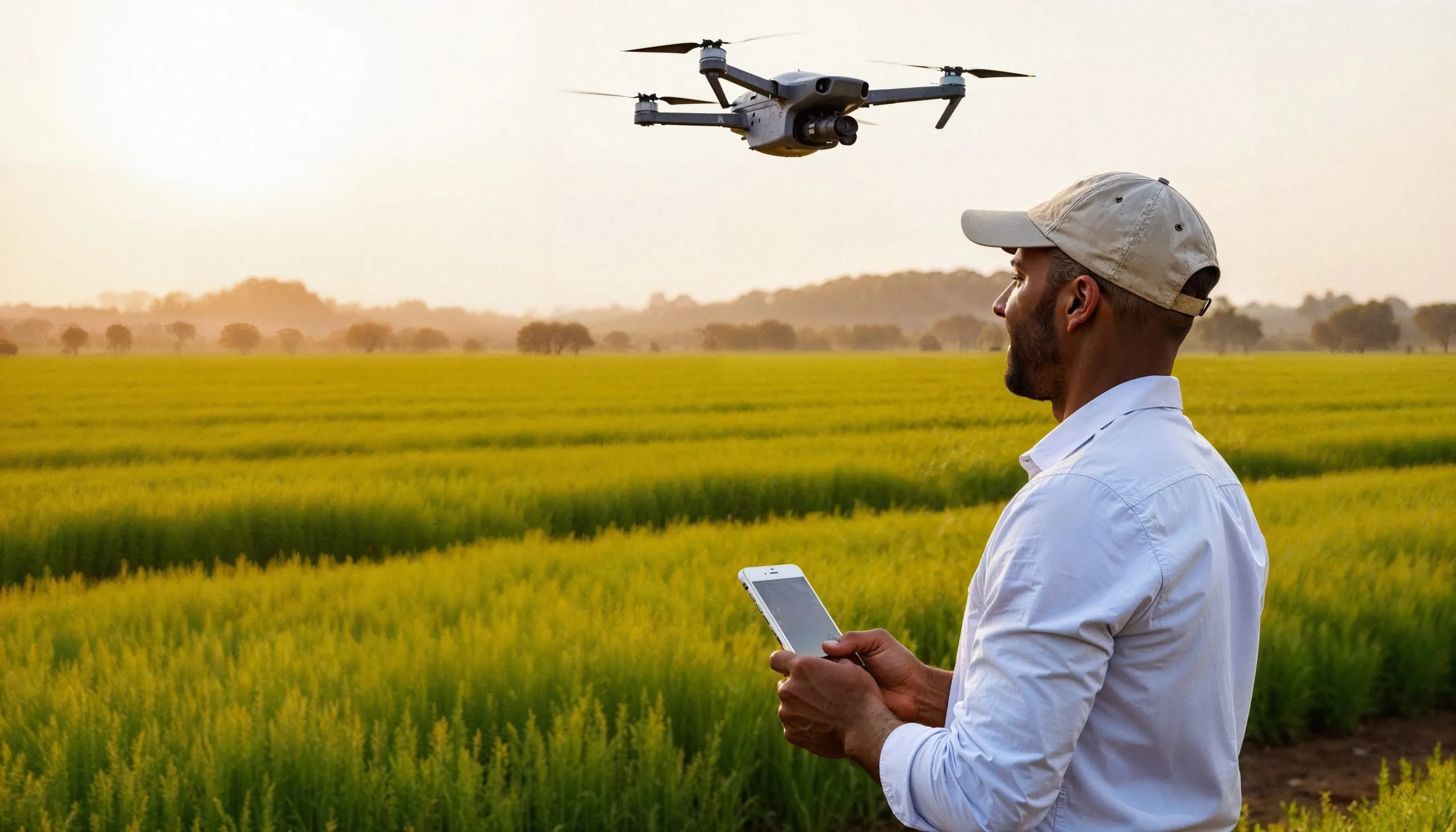
From AI-powered soil sensors and drone-based crop monitoring to digital platforms that connect farmers directly to markets and solar-powered irrigation that enables year-round farming, technology is transforming how food is grown, processed, and distributed. This Accra Street Journal article explores why AgriTech is not just a niche innovation but a national necessity for Ghana’s food security, examining the crisis, the solutions, the government’s response, and the path forward.
Part 1: The Scale of the Crisis – 12.5 Million Food Insecure
The Numbers Behind the Headlines
The Ghana Statistical Service (GSS), in collaboration with the World Food Programme (WFP), has been using an innovative tool called the Mobile Vulnerability Analysis Mapping (mVAM) survey to track food insecurity in real-time . The data, collected via mobile phones and processed by the GSS itself, provides an unprecedented window into the country’s food situation.

The findings are sobering:
| Metric | Q1 2024 | Q2 2025 | Q3 2025 |
|---|---|---|---|
| Food insecure population (millions) | 11.2 | 12.4 | 12.5 |
| National food insecurity prevalence | 35.2% | 41.1% | 38.1% |
| Severe food insecurity | Not specified | 5.1% | 4.1% |
The data reveals that food insecurity is not static—it fluctuates with economic conditions, seasonal patterns, and food price movements . The peak of 13.4 million food insecure people in Q2 2025 demonstrates how vulnerable households are to shocks .
Regional and Gender Disparities
Food insecurity does not affect all Ghanaians equally. The report revealed stark disparities :
| Region / Demographic | Food Insecurity Prevalence |
|---|---|
| Upper West Region | 55.9% (highest) |
| Volta Region | 50.1% |
| North East Region | 45.9% |
| Oti Region | 18.4% (lowest) |
| Female-headed households | 44.1% |
| Male-headed households | 38.7% |
| No formal education | Nearly 50% |
| Tertiary education | 15% |
The gap between the Upper West (55.9%) and Oti (18.4%) regions is a staggering 37.5 percentage points . Rural households are more vulnerable than urban households, and households with both children and elderly members face compounded risks .
Food insecurity, as Dr Alhassan Iddrisu, the Government Statistician, noted, “is not merely a social issue but one that affects household welfare, child health, labour productivity, business confidence, and national development .
Part 2: The Structural Weaknesses of Ghana’s Agriculture
The Productivity Gap
Despite employing a majority of the workforce, Ghana’s agricultural sector has long underperformed its potential. Key challenges include:
1. Climate Vulnerability
In the Guinea Savannah zone—which spans nearly half of Ghana’s land area and is critical for maize production—farmers face unpredictable weather patterns characterized by droughts and floods. Maize accounts for 50-60% of the country’s cereal production and is second only to cocoa in economic importance .
2. Soil Degradation
Inadequate soil conservation practices have led to degradation, reducing yields over time. Without intervention, this trend threatens long-term productivity.
3. Limited Access to Mechanization
Many smallholder farmers lack access to tractors, combine harvesters, and other equipment that could dramatically increase efficiency .

4. Post-Harvest Losses
Post-harvest losses are estimated to be as high as 40% for some crops. A tomato processing factory in Agogo has been commissioned to convert excess harvests into paste and ketchup, with a target of reducing losses to below 15% in coming years. Similar initiatives are underway for onions .
5. Fragmented Supply Chains and Market Inefficiencies
Farmers often struggle to access markets, and middlemen capture a significant portion of the value. The Timbuktoo Agritech Hub explicitly identifies “fragmented supply chains” and “market inefficiencies” as key challenges that technology can address .
6. Limited Access to Financing
Without capital, farmers cannot invest in improved seeds, fertilizers, or equipment, perpetuating a cycle of low productivity and low income .
The Import Dependence
Ghana continues to import significant quantities of food that could be grown locally. The government’s Feed Ghana 2025-2028 Agricultural Transformation Agenda explicitly aims to reduce this import dependence and restore the country’s food security and agro-industrial capacity .
Part 3: The AgriTech Solution – How Technology Transforms Agriculture
AgriTech—the use of technology in agriculture—offers targeted solutions to each of these structural weaknesses.
1. Precision Agriculture and AI
AI-driven devices are revolutionizing how farmers understand and manage their land. FarmSense, for example, allows farmers to analyze soil composition and apply fertilizers with precision, reducing waste and increasing yields . Modern tractors and irrigation systems are equipped with AI to optimize water and nutrient use, with tailor-made solutions for each region’s unique soil and climate conditions .
The Timbuktoo Agritech Hub, launched in Accra in March 2026, explicitly focuses on supporting startups that develop solutions in climate-smart agriculture, supply-chain innovations, and market-access technologies .
2. Real-Time Data and Agroadvisories
In the maize belt of northern Ghana, the AICCRA project (Accelerating Impacts of CGIAR Climate Research for Africa) has been rolling out improved soil and production technologies. A key component is the use of agroadvisories —timely, location-specific advice delivered via mobile phones on weather, soil moisture, and pest/disease management .
These advisories help farmers make better decisions about planting, watering, and harvesting, reducing crop losses and enhancing yields . The mVAM survey system developed by GSS and WFP is another example of how data can guide evidence-based food security decisions .
3. Mechanization and Farm Service Centers
The government is establishing 50 farm service centers nationwide to provide access to tractors, combine harvesters, irrigation systems, improved seeds, and expert agricultural guidance . These centers decentralize support, giving farmers in even the most remote areas the resources to maximize productivity.
4. Solar-Powered Irrigation and 24-Hour Agriculture
President John Dramani Mahama has launched the Vegetable Development Project (Yɛredua) , which includes solar-powered irrigation facilities in areas where water scarcity presents major challenges . The goal is to establish a “24-hour agricultural economy” powered by technology, reliable markets, and continuous production cycles .

This initiative enables dry-season farming, transforming regions that previously could only grow crops during the rainy season into year-round production zones. The Upper East region, in particular, is emerging as a hub for innovation, sustainability and commercial-scale production, transitioning from staple foods to high-value horticulture .
5. Digital Platforms for Market Access
Startups supported by the Timbuktoo Agritech Hub are developing digital solutions that connect farmers directly to buyers, reducing the role of exploitative middlemen and increasing farmer incomes . These platforms also help aggregate demand, making it easier for smallholders to access markets that were previously out of reach.
6. Post-Harvest Management and Processing
Technology is being deployed to reduce the staggering post-harvest losses—up to 40% for some crops. The tomato processing factory in Agogo, converting excess harvests into paste and ketchup, is a model that can be replicated for other crops .
The National Food Buffer Stock Company (NAFCO) has received GHS 100 million to purchase excess produce from farmers, store it, and stabilize market prices, and an additional GHS 200 million has been allocated for 2026 to expand the program .
Part 4: The Government’s Strategy – Feed Ghana 2025-2028
A Comprehensive Transformation Agenda
The government’s Feed Ghana 2025-2028 Agricultural Transformation Agenda is a comprehensive strategy to restore food security and agro-industrial capacity. Key components include:
-
Scaling up production of strategic commodities: Rice, maize, soya bean, vegetables, cassava, poultry and cashew .
-
Establishing farmer service centers: 50 centers providing mechanization services, input supply, repairs, and extension support .
-
Expanding and modernizing irrigation infrastructure nationwide .
-
Developing commodity-focused cooperatives to strengthen smallholder participation in value chains .
-
Improving storage, marketing, and agro-processing capacity to reduce post-harvest losses .
-
Structured marketing arrangements with guaranteed off-takes, cold chain and packhouse infrastructure .
-
Capacity building for women-led businesses and youth entrepreneurs .
-
Backyard poultry programs and entry point livelihood support schemes for women and youth .
The Timbuktoo AgriTech Hub
Launched in March 2026 under the auspices of the UNDP with support from the Government of Japan, the Timbuktoo AgriTech Hub is a pan-African initiative to advance agricultural innovation and entrepreneurship . The broader Timbuktoo initiative aims to:
-
Mobilize $1 billion over 10 years
-
Support 10,000 startups
-
Scale 1,000 high-growth enterprises
-
Improve livelihoods for 100 million people
-
Generate $10 billion in value across the continent
The Hub will support startups in climate-smart agriculture, supply-chain innovations, and market-access technologies .
Part 5: Real-World Impact – Case Studies
AICCRA’s Work in the Savannah Maize Belt
The AICCRA project’s work in the Guinea Savannah zone demonstrates the tangible impact of AgriTech interventions. By integrating agroadvisories, good agronomic practices, and mechanization tools, the project has enhanced crop resilience and productivity .
Key activities included:
-
Field demonstrations to showcase integrated smart production packages
-
Comprehensive capacity-building programs for farmers and extension agents
-
Rigorous data collection to assess the effectiveness of implemented packages
The use of agroadvisories proved pivotal, offering farmers critical guidance on weather management, optimizing water use, and planning field-based activities, thereby reducing crop losses and enhancing yields .
The Vegetable Development Project (Yɛredua)
The Yɛredua project, launched by President Mahama, demonstrates the government’s commitment to high-value horticulture. In its first phase, solar-powered irrigation facilities have been established in Kukum, with plans to replicate the model across northern regions where water scarcity is a major constraint .
The project includes:
-
Structured marketing arrangements with guaranteed off-takes
-
Cold chain and packhouse infrastructure
-
Capacity building for women-led businesses and youth entrepreneurs
-
Linkages to processing industries to promote value addition
-
Connections to institutional markets including hotels and major supermarket chains
Part 6: The Role of Data and Research
The mVAM Innovation
The Mobile Vulnerability Analysis Mapping (mVAM) survey, developed by GSS in partnership with WFP and funded by GAFSP and KOICA, represents a significant advance in Ghana’s ability to monitor food security. As Dr Alhassan Iddrisu stated:
“Ghana is navigating a difficult food insecurity environment which affects what families eat, how often they eat, and the choices they are forced to make. These shocks do not affect everyone equally and to respond effectively, we need data that is timely, precise and actionable. That is why the Ghana Statistical Service in collaboration with World Food Programme and our partners implemented the mVAM survey .
The system enables real-time data collection, processing, and storage, allowing policymakers to make evidence-based decisions on food security . The Representative and Country Director of the World Food Programme, Ms Aurore Rusiga, noted that the data is collected, stored, processed, and analyzed by the Ghana Statistical Service—promoting national ownership of the system .
The Cost of Hunger Study
The 2024 Cost of Hunger Study, discussed at an NDPC stakeholder meeting, revealed that more than half of households cannot afford a healthy diet . While hunger levels are declining, the inability of many families to consume balanced, nutritious meals demands urgent attention, as it affects child development, school performance, and long-term economic productivity .
Part 7: The Path Forward – What Still Needs to Be Done
Scaling Access to Finance
The Timbuktoo initiative recognizes that “expanding access to financing for innovation is essential if Africa’s start-up ecosystem is to reach its full potential” . Similarly, the government’s Feed Ghana agenda includes strengthening linkages between social protection programmes and food systems policies .
Building Digital Infrastructure
Reliable internet connectivity remains a challenge in rural areas. The mVAM system, which relies on mobile data collection, demonstrates what is possible when connectivity exists. Expanding digital infrastructure to underserved regions is essential for scaling AgriTech solutions.
Strengthening Extension Services
The AICCRA project’s capacity-building component—training farmers and extension agents—is critical. technology alone is insufficient; farmers need the knowledge to use it effectively.
Youth Engagement
The NDPC’s Food Systems and Nutrition Security meeting highlighted the importance of youth engagement in food systems. Agriculture must be made attractive to young people through technology, mechanization, and agribusiness opportunities if the sector is to thrive in the long term .
Policy Coordination
The NDPC’s Cross-Sectoral Planning Group brings together government institutions, development partners, civil society groups, and research organisations to coordinate the food systems transformation . Sustained collaboration across these stakeholders is essential for meaningful progress.
Key Takeaways
| Challenge | AgriTech Solution | Status |
|---|---|---|
| Climate vulnerability | AI-driven advisories, precision farming | AICCRA project ongoing |
| Soil degradation | Soil sensors, precision fertilizer application | Being scaled via FarmSense and Timbuktoo |
| Lack of mechanization | Farm service centers, tractor hire schemes | 50 centers being established |
| Post-harvest losses (up to 40%) | Processing facilities, cold chain infrastructure, NAFCO buffer stock | Tomato factory operational; buffer stock funded |
| Fragmented supply chains | Digital market access platforms | Timbuktoo-supported startups developing solutions |
| Limited financing | Timbuktoo catalytic capital, government agricultural loans | $1B over 10 years targeted |
| Water scarcity | Solar-powered irrigation | Yɛredua project launched |
Frequently Asked Questions (FAQs)
1. How many Ghanaians are food insecure?
As of Q3 2025, an estimated 12.5 million Ghanaians were food insecure, up from 11.2 million in Q1 2024 .
2. What is the Timbuktoo AgriTech Hub?
Launched in Accra in March 2026, the Timbuktoo AgriTech Hub is a pan-African initiative to support startups developing solutions in climate-smart agriculture, supply-chain innovations, and market-access technologies. It aims to mobilize $1 billion over 10 years and support 10,000 startups .
3. How does AI help farmers in Ghana?
AI-driven devices like FarmSense allow farmers to analyze soil composition and apply fertilizers with precision. AI is also integrated into tractors and irrigation systems to optimize water and nutrient use for specific soil and climate conditions .
4. What is the mVAM survey?
The Mobile Vulnerability Analysis Mapping (mVAM) survey is a real-time data collection system developed by the Ghana Statistical Service in partnership with the World Food Programme. It provides timely, actionable data on food insecurity to guide evidence-based decision-making .
5. What is the government doing to reduce post-harvest losses?
The government has commissioned a tomato processing factory in Agogo to convert excess harvests into paste and ketchup, with similar initiatives planned for onions. The goal is to reduce losses from as high as 40% to below 15% .
6. What is the Feed Ghana 2025-2028 agenda?
Feed Ghana is the government’s comprehensive agricultural transformation agenda, focused on scaling production of strategic commodities, establishing farmer service centers, expanding irrigation, reducing post-harvest losses, and strengthening value chains .
7. How is the government supporting farmers with mechanization?
The government is establishing 50 farm service centers nationwide to provide access to tractors, combine harvesters, irrigation systems, and expert agricultural guidance .
8. What is the Vegetable Development Project (Yɛredua)?
Yɛredua is a government initiative to promote vegetable production using solar-powered irrigation, enabling dry-season farming and year-round production. The project includes structured marketing arrangements, cold chain infrastructure, and support for women-led businesses .
9. What is the National Food Buffer Stock Company (NAFCO) doing?
NAFCO has received GHS 100 million to purchase excess produce from farmers, store it, and stabilize market prices. An additional GHS 200 million has been allocated for 2026 to expand the program to supply public institutions like schools and hospitals .
10. How can young people get involved in AgriTech?
The Timbuktoo AgriTech Hub supports startups and offers capacity-building bootcamps for incubator managers. The government’s Feed Ghana agenda also includes targeted initiatives for youth entrepreneurs, and Japan has announced plans to train three million African youth in AI and digital skills .
Conclusion: Technology as the Seed of Resilience
The food insecurity affecting 12.5 million Ghanaians is not a problem without a solution. The challenges are well understood: climate vulnerability, soil degradation, lack of mechanization, post-harvest losses, fragmented markets, and limited financing. And for each of these challenges, there is an AgriTech solution.
The government has laid the foundation. The Timbuktoo AgriTech Hub is mobilizing capital and supporting startups . The Feed Ghana agenda is scaling irrigation, mechanization, and processing capacity . The mVAM survey is providing the data needed to target interventions effectively . And farmers in the savannah maize belt are already seeing the benefits of AI-driven advisories and precision agriculture .
But the work is far from complete. Scaling these solutions requires sustained investment, political will, and a commitment to reaching the most vulnerable—the female-headed households in the Upper West Region, the rural farmers without access to markets, and the children whose growth is stunted by malnutrition.
AgriTech is not a magic wand. It is a tool—a powerful one—that, when wielded with intention and equity, can transform Ghana’s food system. The seed of resilience has been planted. It is now up to policymakers, investors, innovators, and citizens to ensure it grows.
Source: Accra Street Journal
Last Updated on April 27, 2026 by Samuel Kwame Boadu
Disclaimer: Some content on Accra Street Journal may be aggregated, summarized, or edited from third-party sources for informational purposes. Images and media are used under fair use or royalty-free licenses. Accra Street Journal is a subsidiary of SamBoad Publishing Hub under SamBoad Business Group Ltd, registered in Ghana since 2014.
For concerns or inquiries, please visit our Privacy Policy or Contact Page.

Samuel Kwame Boadu is a Ghanaian media entrepreneur and storyteller with a passion for amplifying urban voices and uncovering everyday truths. He is the Editor-in-Chief and Founder of Accra Street Journal, a dynamic digital platform dedicated to capturing the pulse of Ghana’s capital—its people, culture, challenges, business, sports and innovations.