









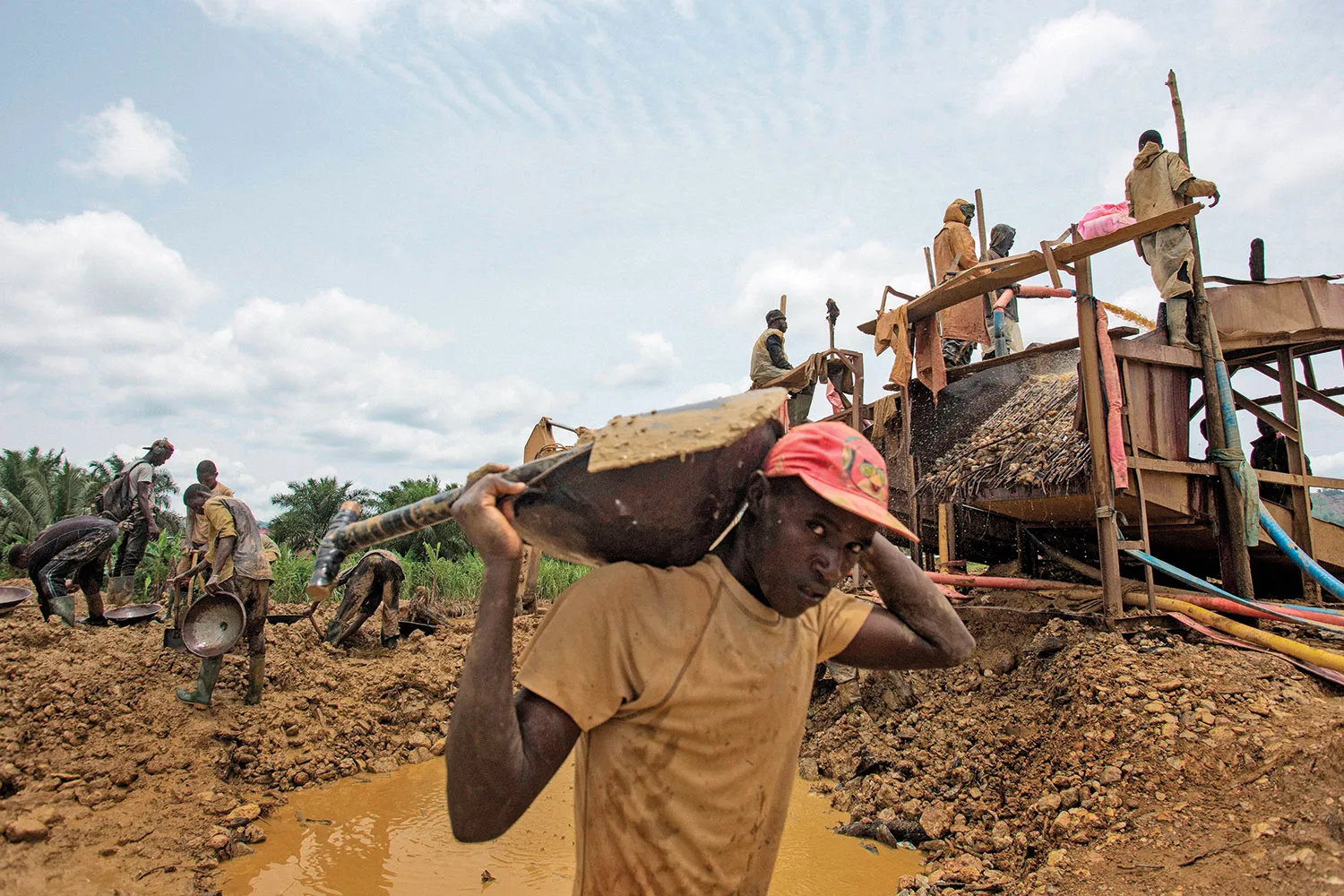
How Gold Prices Affect Ghana’s Economy
A Commodity That Anchors the National Economy
Gold is not just another export for Ghana—it is the backbone of the country’s external earnings and a major pillar of fiscal stability. As one of the largest gold producers in Africa, Ghana’s economic performance is closely tied to movements in global gold prices. These price fluctuations influence government revenue, foreign exchange inflows, investor behavior, and even the strength of the national currency.

Unlike diversified economies where commodity exposure is limited, Ghana’s reliance on gold creates a direct transmission channel between global markets and domestic economic conditions. When gold prices rise or fall, the effects are felt across multiple layers of the economy.
📢 GET A DETAILED ARTICLES + JOBS
Join ASJ's WhatsApp Channel and never miss a post or opportunity.

Historical Context: Gold’s Enduring Influence
The Foundation of Ghana’s Mining Economy
Gold has shaped Ghana’s economic structure for over a century. From colonial extraction systems to modern large-scale mining operations, the sector has consistently been a major contributor to export earnings.
Policy frameworks, institutional structures, and investment patterns have evolved around gold. This historical dependence means that shifts in gold prices carry more weight in Ghana than in many other countries.

Price Cycles and Economic Outcomes
Over the years, Ghana has experienced multiple gold price cycles. Periods of high prices have typically coincided with increased export revenues, stronger fiscal positions, and improved foreign exchange reserves. Conversely, price declines have exposed vulnerabilities, leading to revenue shortfalls and economic pressure.
This cyclical relationship underscores the importance of gold as both an opportunity and a risk factor.
Financial Implications: Revenue, Currency, and Fiscal Balance
Government Revenue and Royalties
Gold prices directly influence government income through royalties, taxes, and dividends from mining operations. When prices rise, the value of production increases, leading to higher royalty payments and tax revenues.
This provides fiscal space for government spending, including infrastructure, social programs, and debt servicing. However, reliance on price-driven revenue also introduces volatility into budget planning.
Foreign Exchange Earnings
Gold exports are a major source of foreign currency for Ghana. Higher prices translate into increased foreign exchange inflows, strengthening the country’s external position.
This is particularly important in managing imports, stabilizing the currency, and supporting overall economic balance. A decline in gold prices can reduce these inflows, putting pressure on foreign reserves.
Impact on the Ghanaian Cedi
The value of the Ghanaian cedi is closely linked to foreign exchange availability. Strong gold prices support the currency by increasing dollar inflows. This can help stabilize exchange rates and reduce inflationary pressures linked to imports.
Conversely, falling gold prices can weaken the cedi, leading to higher import costs and broader economic challenges.
Investor Interest: Capital Flows and Market Confidence
Attraction of High Gold Prices
Rising gold prices typically attract increased investment into Ghana’s mining sector. Higher prices improve project profitability, encouraging both expansion of existing operations and development of new mines.

This leads to increased capital inflows, job creation, and economic activity.
Risk During Price Declines
When gold prices fall, investor sentiment can shift quickly. Projects may be delayed, scaled down, or canceled altogether. This affects not only mining companies but also the broader economy through reduced investment and employment.
Sensitivity to Policy Environment
While gold prices are determined globally, investor decisions are influenced by local policy conditions. Stable and predictable policies can amplify the benefits of high prices, while uncertainty can limit investment even during favorable market conditions.
Government Policy Direction: Managing Price Volatility
Revenue Optimization Strategies
Ghana has increasingly focused on optimizing revenue from gold through policy tools such as royalties, taxes, and state participation. These mechanisms ensure that the country benefits when prices are high.
However, managing these revenues effectively requires careful planning to avoid overdependence on short-term price gains.
Buffering Against Price Shocks
To mitigate the impact of price volatility, policymakers emphasize diversification and fiscal discipline. Building reserves during periods of high prices can provide a buffer during downturns.
Efforts to expand into other minerals, such as lithium, also reflect a strategy to reduce reliance on gold.
Strengthening Institutional Frameworks
Effective management of gold revenue depends on strong institutions. Transparency, accountability, and efficient revenue collection systems are essential to ensure that price-driven gains translate into tangible economic benefits.
What Gold Prices Mean for Ghana’s Economy
Economic Growth and Stability
High gold prices can stimulate economic growth by increasing government spending, boosting investor confidence, and supporting currency stability. These effects create a positive economic cycle.
However, reliance on gold also means that downturns can quickly reverse these gains, highlighting the need for diversification.
Inflation and Cost of Living
Gold prices indirectly influence inflation through their impact on the currency. A stronger cedi, supported by high gold prices, can reduce import costs and ease inflation. A weaker currency, resulting from lower prices, can have the opposite effect.

Employment and Local Economies
Mining activity linked to gold prices affects employment and local economic conditions. High prices can lead to expansion and job creation, while low prices can result in cost-cutting and reduced economic activity in mining regions.
A Commodity That Shapes National Outcomes
Gold prices are not just market indicators—they are economic drivers that influence nearly every aspect of Ghana’s financial and policy landscape. Their impact extends from government revenue to household purchasing power, making them a central factor in the country’s economic performance.
Accra Street Journal observes that while Ghana cannot control global gold prices, it can control how it responds to them. The challenge lies in converting price-driven gains into sustainable development while minimizing the risks associated with volatility.
This requires a combination of prudent fiscal management, economic diversification, and consistent policy execution. Without these elements, the economy remains exposed to external shocks.
Managing Opportunity and Risk
The relationship between gold prices and Ghana’s economy is both an opportunity and a constraint. High prices provide immediate benefits, but they also reinforce dependence on a single commodity.
The long-term solution lies in balancing this dependence with diversification and strategic planning. By doing so, Ghana can ensure that gold remains a strength rather than a vulnerability.
FAQs
Why are gold prices important to Ghana’s economy?
Gold is a major export, so price changes directly affect revenue, foreign exchange, and economic stability.
How do rising gold prices benefit Ghana?
They increase government revenue, strengthen the currency, and attract investment.
What happens when gold prices fall?
Revenue declines, foreign exchange inflows reduce, and the currency may weaken.
Do gold prices affect inflation?
Yes, through their impact on the exchange rate and import costs.
How do investors respond to gold price changes?
Higher prices attract investment, while lower prices can lead to reduced activity.
Can Ghana control gold prices?
No, prices are determined globally, but Ghana can manage how it responds to them.
What is the main risk of relying on gold?
Dependence on a single commodity exposes the economy to global price volatility.
What is Ghana doing to reduce this risk?
The country is diversifying into other sectors and minerals, such as lithium.
Last Updated on April 30, 2026 by Samuel Kwame Boadu
Disclaimer: Some content on Accra Street Journal may be aggregated, summarized, or edited from third-party sources for informational purposes. Images and media are used under fair use or royalty-free licenses. Accra Street Journal is a subsidiary of SamBoad Publishing Hub under SamBoad Business Group Ltd, registered in Ghana since 2014.
For concerns or inquiries, please visit our Privacy Policy or Contact Page.

Samuel Kwame Boadu is a Ghanaian media entrepreneur and storyteller with a passion for amplifying urban voices and uncovering everyday truths. He is the Editor-in-Chief and Founder of Accra Street Journal, a dynamic digital platform dedicated to capturing the pulse of Ghana’s capital—its people, culture, challenges, business, sports and innovations.