









How a regulatory-forced marriage between a Ghanaian challenger and a pan-African lender produced the fastest-growing indigenous bank in the country—and what GH¢641 million in profit means for the industry.

Executive Introduction
In the turbulent aftermath of Ghana’s 2017-2019 financial sector cleanup, when nine banks collapsed and several others were forced into shotgun mergers, most industry observers expected the consolidated survivors to spend years—perhaps a decade—digesting their acquisitions, nursing legacy asset portfolios, and slowly rebuilding depositor confidence.
No one expected one of those merged entities to double its assets, double its deposits, and double its profit before tax within five years of operations.
📢 GET A DETAILED ARTICLES + JOBS
Join ASJ's WhatsApp Channel and never miss a post or opportunity.
OmniBSIC Bank Ghana Ltd has done precisely that. Born from the merger of OmniBank and Sahel Sahara Bank (BSIC) on March 4, 2020—a merger driven not by commercial courtship but by the Bank of Ghana’s minimum capital requirement hike from GH¢120 million to GH¢400 million—the bank has emerged as arguably the most successful post-consolidation story in Ghanaian banking .
The 2025 financial results are staggering by any measure. Profit before tax soared 104% to GH¢641 million. Total assets more than doubled to GH¢21.58 billion. Customer deposits doubled to GH¢16.56 billion . And the bank achieved this while maintaining a 95% liquidity ratio—meaning it held enough cash and near-cash assets to cover virtually all customer deposits .
For corporate clients, investors, and business observers, OmniBSIC represents a compelling case study: can a bank created by regulatory fiat, owned by a consortium of Ghanaian and regional investors, and led by a Managing Director who is also an ordained minister, truly compete with multinational giants and state-backed incumbents? The preliminary answer, based on 2025’s numbers, is an emphatic yes.
This ASJ profile examines OmniBSIC’s origins, its accelerated growth trajectory, its distinctive “Limitless Banking” strategy anchored in accessibility and inclusion, the lingering challenge of a 23% Non-Performing Loan ratio, and whether this pace of expansion is sustainable.
Company Overview
Origin Story: A Merger of Necessity That Became a Marriage of Strength
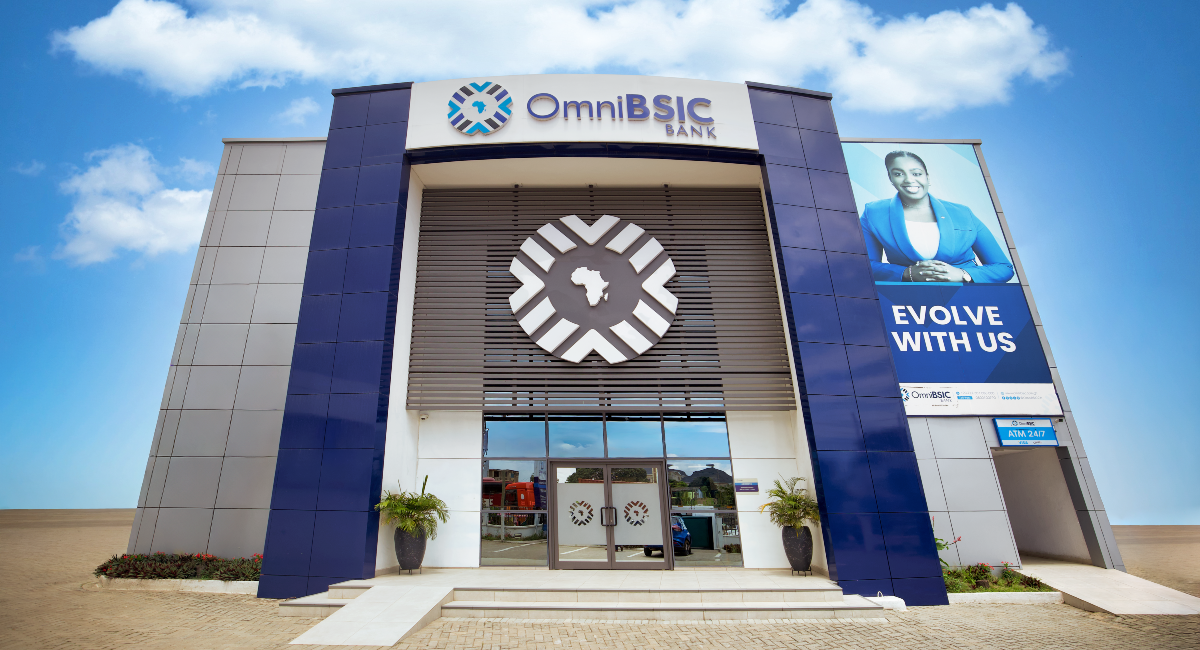
OmniBSIC Bank traces its roots to a merger between two previously distinct institutions: OmniBank Ghana Limited and Sahel Sahara Bank (BSIC) Ghana Limited .
The merger was not borne of romantic ambition but regulatory reality. In 2017, the Bank of Ghana initiated a sweeping financial sector reform program, culminating in a near-fourfold increase in the minimum capital requirement for commercial banks from GH¢120 million to GH¢400 million . Smaller banks that could not meet the new threshold had three options: raise capital, merge with a stronger partner, or face liquidation.
OmniBank and Sahel Sahara Bank chose to merge. The decision was commercially logical: the two banks had “similarities in business modules and size,” and the stakeholders—directors, management, and staff—were willing to embrace the merger due to the “potential synergy it could create to make the ‘new’ bank a significant player” .
The merger became effective on March 4, 2020 —a date that would prove challenging, as the COVID-19 pandemic struck Ghana within weeks. Integrating two banks’ systems, cultures, and customer bases during a global health crisis was an operational stress test that the new entity passed.
Ownership Structure: Truly Indigenous, Truly Private
OmniBSIC holds a distinctive position in Ghana’s banking landscape: it is one of only four privately-owned Ghanaian banks in the country, alongside Universal Merchant Bank, Prudential Bank, and Fidelity Bank .
Crucially, this is not state ownership. OmniBSIC is owned by Ghanaian individuals and institutions, with the Jospong Group identified as a significant investor . This distinguishes it from:
-
GCB Bank: State-influenced through government shareholding
-
CBG: Wholly state-owned
-
ADB: Majority state-owned
-
Ecobank, Stanbic, Standard Chartered, Absa, Access: Multinational-owned
The bank’s private indigenous status has become a competitive asset in an era where “buy Ghana first” sentiment influences corporate and consumer decisions.
Leadership: Daniel Asiedu and the Executive Team
Daniel Asiedu – Managing Director and Chief Executive Officer
Asiedu has led OmniBSIC through its most consequential period of growth. Notably, he is also a reverend minister and Chairman of the International Presbytery of Fountain Gate Chapel (FGC) —a dual career that is unusual in Ghanaian banking but has not impeded commercial performance.
Asiedu has articulated a clear strategic vision: “For the economy, our rapid expansion underscores a gradual restoration of confidence in the financial system and points to a more resilient flow of capital to support economic activity .
Teresa Effie Cooke – Board Chairperson
Cooke chairs the board of directors, bringing governance oversight and strategic guidance .
Executive Management
The executive team includes:
-
Mrs. Chidinma Braye-Yankee – Group Head of Corporate and Support Services, who has been central to the bank’s inclusion strategy and partnership development
-
Additional executive heads covering Corporate Banking, Retail Banking, Treasury, Risk, and Operations
Operations and Footprint
OmniBSIC operates 40 branches across Ghana, serving customers through a network that spans the country’s major urban centers and extends into regional hubs .
| Operational Metric | Value |
|---|---|
| Branches | 40+ |
| Headquarters | Airport City, Accra |
| Employees | 829 (as of 2025) |
| Customers | 125,000+ (as of 2019; grown significantly since) |
| Key Investor | Jospong Group |
The bank holds membership in the Ghana Deposit Protection Scheme, providing depositors with statutory coverage .
Business Model: The Universal Bank With a Conservative Asset Mix
OmniBSIC operates as a full-service universal bank, serving large corporations, small and medium enterprises (SMEs), individuals, and non-governmental organisations .
Revenue Segments
The bank’s business model spans four core areas:
-
Corporate Banking: Serving large Ghanaian enterprises, multinationals, and public institutions. This segment has been recognised with awards including Best Corporate Bank, Ghana (Global Banking and Finance Awards, 2024) .
-
SME Banking: Small and medium enterprises, a segment where OmniBSIC won SME Bank of the Year (Ghana Credit Excellence Awards, 2024) .
-
Retail Banking: Individual consumers, salary earners, and mass-market depositors. The bank’s Most Customer-Centric Bank (CIMG, 2022) award validates its retail strategy .
-
Treasury and Investment: Fixed income trading, foreign exchange, and investment securities.
How They Make Money: The 2025 Financials
OmniBSIC’s 2025 financial performance provides the clearest picture of its revenue model and strategic priorities .
| Metric | 2025 Performance | 2024 Performance | Change |
|---|---|---|---|
| Profit Before Tax | GH¢641 million | ~GH¢314 million | +104% |
| Total Assets | GH¢21.58 billion | ~GH¢10.5 billion | +106% |
| Customer Deposits | GH¢16.56 billion | ~GH¢8.3 billion | +100% |
| Interest Income | GH¢2.46 billion | ~GH¢1.27 billion | +94% |
| Net Interest Income | GH¢1.17 billion | GH¢545.8 million | +114% |
| Net Fees | GH¢109.1 million | Not disclosed | Significant increase |
| Trading Income | GH¢143.4 million | Not disclosed | Significant increase |
| Operating Income | GH¢1.43 billion | GH¢746.1 million | +92% |
| Shareholders’ Funds | GH¢1.11 billion | Not disclosed | Substantial increase |
Analysis of Revenue Drivers
The doubling of both assets and deposits is the headline achievement, but the composition of growth matters.
Conservative Asset Mix: The bank’s balance sheet reveals a cautious lending strategy. Loans and advances grew to GH¢1.39 billion—representing only about 6.4% of total assets. Meanwhile, cash and balances with banks surged to GH¢9 billion, and investment securities climbed to GH¢10.19 billion . This “conservative asset mix” prioritises liquidity and earnings stability over aggressive loan growth, reflecting management’s risk-aware posture while credit conditions normalised .
Net Interest Income Expansion: The 114% surge in net interest income—from GH¢545.8 million to GH¢1.17 billion—demonstrates effective pricing and balance sheet deployment, even as the Bank of Ghana reduced the policy rate .
Non-Funded Income Growth: Net fees of GH¢109.1 million and trading income of GH¢143.4 million, while smaller than interest income, provide revenue diversification and are less vulnerable to interest rate compression.
Cost Management: Personnel expenses rose to GH¢362.1 million, and other operating costs reached GH¢268.2 million in 2025 . These increases reflect the bank’s expansion—more employees, more branches, more transactions—but they also absorbed some of the revenue growth. Despite higher costs, the bank doubled pre-tax profit, indicating effective cost-to-income management.
Risk Metrics: The Tale of Two Ratios
OmniBSIC’s 2025 results reveal a bank making measurable progress on asset quality, though work remains.
Capital Adequacy Ratio (CAR): Rose from 13.66% in 2024 to 17.84% in 2025 . This exceeds the Bank of Ghana’s regulatory minimum of 13%, providing a comfortable buffer against unexpected losses. The improvement reflects retained earnings and the bank’s ability to generate capital organically.
Non-Performing Loan (NPL) Ratio: Eased from 26.99% in 2024 to 23.09% in 2025 . While this represents progress, a 23% NPL ratio remains high by industry standards. For context, GCB Bank achieved an NPL ratio of 4.9% by March 2026. OmniBSIC’s elevated NPL ratio reflects legacy assets inherited from the merging banks and the bank’s relatively cautious approach to new lending—hence the small loan book relative to total assets.
Liquidity Ratio: Stood at approximately 95% , meaning OmniBSIC held enough cash and near-cash assets to cover 95% of all customer deposits . This is exceptionally strong—most banks operate with liquidity ratios in the 30-60% range—and reflects the bank’s conservative asset allocation.
Off-Balance Sheet Commitments: Dropped to GH¢803 million from GH¢1.19 billion , indicating fewer contingent liabilities and reduced risk exposure from guarantees and letters of credit.
Market Position and Competition
Industry Standing: The Fastest-Growing Corporate Bank
OmniBSIC has accumulated an impressive collection of awards that validate its market positioning:
| Award | Year | Issuing Body |
|---|---|---|
| Most Customer-Centric Bank | 2022 | CIMG |
| Fastest-Growing Corporate Bank in Ghana | 2023 | Global Banking and Finance Awards |
| Best Bank in Ghana | 2023 | Ghana Business Awards |
| Bank of the Year | 2024 | Ghana Business Standard Awards |
| SME Bank of the Year | 2024 | Ghana Credit Excellence Awards |
| Best Ghanaian Owned Emerging Bank | 2024 | Made-In-Ghana Awards |
| Best Corporate Bank, Ghana | 2024 | Global Banking and Finance Awards |
Additionally, the bank is ranked 29th best company by the Ghana Investment Promotion Centre’s (GIPC) Ghana Club 100 .
These awards, while self-reported, are consistent with the bank’s financial performance and suggest genuine industry recognition.
Competitive Landscape
OmniBSIC competes across multiple segments against distinctly different rivals:
| Competitor | Where OmniBSIC Wins | Where OmniBSIC Loses |
|---|---|---|
| GCB Bank | Indigenous ownership narrative, private status, conservative balance sheet | Branch network (183 vs. 40), brand heritage (1953 vs. 2020) |
| Ecobank Ghana | Customer service perception (CIMG award), private ownership | Pan-African scale, trade finance corridors |
| Fidelity Bank | Growth rate (104% profit vs. 4% for Fidelity), liquidity position (95% vs. lower) | Agency banking network (9,000+ agents vs. smaller network) |
| Stanbic Bank | Indigenous control, local decision-making | Corporate CX rankings (Stanbic leads at 88.8) |
| CalBank | Profitability trajectory (doubling vs. recovering), CAR (17.84% vs. 19.80%) | NPL ratio (23% vs. 17%) |
The Jospong Factor
The Jospong Group’s investment in OmniBSIC provides a unique competitive advantage. Jospong is one of Ghana’s largest conglomerates, with interests in sanitation, logistics, printing, and manufacturing. The group’s business relationships and supply chain networks create organic corporate banking opportunities that most mid-tier banks cannot access.
Competitive Advantages
-
Cleanest Post-Merger Balance Sheet: Unlike some consolidated banks that inherited toxic assets requiring years to clean, OmniBSIC has maintained a conservative asset mix focused on cash and investment securities .
-
Exceptional Liquidity: The 95% liquidity ratio is a significant differentiator. In times of economic stress, depositors value liquidity above nearly all other attributes.
-
Private Indigenous Status: As one of only four privately-owned Ghanaian banks, OmniBSIC can credibly claim the “buy Ghanaian” mantle, appealing to corporate clients and government entities with local procurement preferences.
-
Award-Verified Customer Service: The CIMG “Most Customer-Centric Bank” award is not marketing fluff; it reflects systematic investment in service quality.
-
Jospong Ecosystem Access: The strategic relationship with Jospong Group provides a pipeline of corporate and SME relationships.
Competitive Disadvantages
-
Elevated NPL Ratio: At 23.09%, the NPL ratio remains high. While the bank’s conservative lending strategy limits new impairments, the legacy portfolio continues to drag on profitability.
-
Limited Branch Network: 40 branches is respectable but significantly smaller than GCB (183) or the agency networks of competitors like Fidelity (9,000+ agents).
-
Young Brand: Founded in 2020, OmniBSIC lacks the multi-generational brand equity of GCB (1953) or the pan-African prestige of Ecobank.
-
Small Loan Book: At GH¢1.39 billion, the loan book is modest relative to total assets. This limits interest income potential and suggests room for balance sheet optimisation.
Digital Strategy and Innovation: “Limitless Banking” for All
OmniBSIC’s digital strategy is framed by its “Limitless Banking” philosophy—a commitment to making banking accessible, connected, and empowering for all customers, irrespective of physical ability, income level, location, or background .
The Mobile App
OmniBSIC offers a mobile banking application described as “the fastest and secure mobile banking app” for taking control of finances anytime, anywhere . Key features include:
-
Account management
-
Funds transfers
-
Bill payments
-
Transaction history
Braille-Assisted Services (The Inclusion Moonshot)
OmniBSIC’s most distinctive innovation—and arguably the most significant banking accessibility initiative in Ghana—is its Braille-Assisted Services for visually impaired customers, launched in October 2025 .
The Scale of the Need: According to the Ghana Statistical Service, approximately 4% of Ghanaians, or over 1.2 million people, live with some form of visual impairment . Historically, these individuals have relied on friends or relatives for assistance in reading documents or navigating banking halls—a dependence that “often undermines privacy and confidence” .
The Solution: OmniBSIC introduced Braille versions of key banking documents, enabling visually impaired customers to:
-
Open accounts independently
-
Read account information
-
Make autonomous financial decisions
-
Conduct transactions securely and with dignity
Daniel Asiedu framed this initiative in stark terms: “At OmniBSIC, we believe banking should be for everyone, everywhere. Our Braille-Assisted Services are not just a technological addition; they are a statement of our belief that accessibility is a right, not a privilege” .
Beyond Braille: The bank has committed to extending services to all persons with disabilities, not just the visually impaired. Staff training on visual impairment awareness is underway, with plans to extend sensitisation programmes across the 40-branch network .
University of Ghana Partnership
During the 2025 Global Customer Service Week under the theme “Mission: Possible,” OmniBSIC engaged students of the University of Ghana at the Assistive Technology Lab in collaboration with the university’s Institutional Advancement Directorate, Information Technology Directorate, and the Centre for Disability Studies and Advocacy (CEDSA) .
The engagement marked a significant moment in OmniBSIC’s financial inclusion journey, as the bank seeks to “deepen collaboration with academia and advocates in shaping inclusive financial solutions” .
Strategic Implications: This partnership positions OmniBSIC as the preferred banking partner for Ghana’s disability advocacy community—a niche that competitors have largely ignored—while also building brand equity among university students who will become future corporate decision-makers.
Inclusive Banking Framework
Mrs. Chidinma Braye-Yankee, Group Head of Corporate and Support Services, articulated the bank’s inclusive banking framework:
“Our goal is to ensure that everyone, regardless of income level, gender, location, ability, or background, has fair and convenient access to financial services that empower them to thrive. Inclusive banking is not just an option, it is essential. As a bank, we are not just investing in technology, we are investing in people.”
The framework aligns with:
-
Sustainable Development Goal 10 (reduced inequalities)
-
Bank of Ghana’s Financial Inclusion for Persons with Disability Directive
Awards and Recognition: Validating the Trajectory
OmniBSIC’s awards cabinet provides external validation of its market positioning:
| Award | Year | Significance |
|---|---|---|
| Most Customer-Centric Bank | 2022 | CIMG recognition of service quality |
| Fastest-Growing Corporate Bank in Ghana | 2023 | Global Banking and Finance Awards |
| Best Bank in Ghana | 2023 | Ghana Business Awards |
| Bank of the Year | 2024 | Ghana Business Standard Awards |
| SME Bank of the Year | 2024 | Ghana Credit Excellence Awards |
| Best Ghanaian Owned Emerging Bank | 2024 | Made-In-Ghana Awards |
| Best Corporate Bank, Ghana | 2024 | Global Banking and Finance Awards |
| Ranked 29th | 2024 | GIPC Ghana Club 100 |
Challenges and Risks
No analysis of OmniBSIC is complete without addressing the headwinds that accompany its remarkable growth.
Risk 1: The NPL Overhang (23% is Still Elevated)
While OmniBSIC reduced its NPL ratio from 26.99% to 23.09% in 2025 , this remains high by industry standards. For context:
| Bank | NPL Ratio (most recent) | Comparison |
|---|---|---|
| GCB Bank | 4.9% (March 2026) | Significantly better |
| CalBank | 17% (2025) | Better |
| OmniBSIC | 23.09% (2025) | Current |
| Fidelity Bank | <10% (2024) | Significantly better |
The Optimistic Interpretation: OmniBSIC’s loan book is small (GH¢1.39 billion) relative to total assets (GH¢21.58 billion). Legacy non-performing loans constitute a manageable portion of the balance sheet, and the bank has ample liquidity to absorb write-offs without systemic stress.
The Pessimistic Interpretation: A 23% NPL ratio indicates underwriting weaknesses or inadequate recovery processes. If the ratio does not continue to trend downward, earnings will be persistently impaired by provisions.
Risk 2: The “Cash-Heavy” Balance Sheet
OmniBSIC holds GH¢9 billion in cash and GH¢10.19 billion in investment securities—over 88% of total assets in low-yielding instruments . While this provides exceptional liquidity and safety, it also means the bank is not maximising returns. As the Bank of Ghana reduces interest rates, the yield on these securities will compress, potentially squeezing net interest margins.
The Trade-Off: OmniBSIC has prioritised safety over returns. This is appropriate for a young bank still building depositor confidence, but it is not a long-term optimal strategy. The bank must eventually deploy more capital into higher-yielding loans.
Risk 3: The Merger Integration Is Complete, but Was It Smooth?
OmniBSIC was formed in March 2020—the same month Ghana recorded its first COVID-19 cases. Integrating two banks’ IT systems, corporate cultures, and customer bases during a pandemic was an extraordinary challenge. While the 2025 results suggest successful integration, the elevated NPL ratio may partly reflect legacy portfolio issues that have not been fully resolved.
Risk 4: Competition on Both Flanks
OmniBSIC is squeezed from above by multinational banks with deeper pockets and from below by fintechs with more agile platforms:
-
Above: Ecobank and Stanbic have superior trade finance capabilities and regional networks that OmniBSIC cannot match.
-
Below: MTN MoMo and other mobile money operators are capturing the unbanked and underbanked segments that OmniBSIC might target for expansion.
Risk 5: Economic Sensitivity
OmniBSIC’s 2025 performance benefited from Ghana’s post-DDEP stability and falling interest rates. If the economic recovery stalls, the bank’s NPL ratio could worsen, and its investment securities portfolio could face mark-to-market pressures.
Economic and Industry Impact
Employment
OmniBSIC employs approximately 829 people as of 2025 , providing stable, formal-sector jobs in Ghana’s financial services industry. The bank’s expansion has likely increased this figure.
Financial Inclusion Leadership
The Braille-assisted services initiative directly addresses a neglected segment of Ghana’s population. By enabling over 1.2 million visually impaired Ghanaians to bank independently, OmniBSIC has advanced the Bank of Ghana’s financial inclusion agenda more concretely than any other institution .
Alignment with Policy: The initiative complies with the Persons with Disability Act, 2006 (Act 715), which mandates that all public goods and services be accessible to everyone .
SME Support
Through its SME Bank of the Year award-winning offerings, OmniBSIC provides working capital, trade finance, and transaction banking services to Ghana’s small and medium enterprises—the sector that employs the majority of Ghanaians.
Banking Sector Confidence
OmniBSIC’s 104% profit growth and 95% liquidity ratio signal to the market that indigenous Ghanaian banks can not only survive regulatory consolidation but thrive. This confidence is essential for deposit mobilisation and credit extension across the sector.
Future Outlook
As of May 2026—the present date of this profile—OmniBSIC stands as one of the most dynamic banks in Ghana. The 2025 results have reset expectations, but the strategic questions ahead are substantial.
The Bull Case (Optimistic)
-
NPL ratio continues to decline: If OmniBSIC reduces NPLs from 23% to 15% or lower by end-2026, the bank will have definitively shed legacy asset quality concerns.
-
Loan book expansion accelerates: With GH¢9 billion in cash and a capital adequacy ratio of 17.84%, OmniBSIC has ample capacity to grow lending. A shift from 6.4% of assets in loans to 15-20% would significantly boost net interest income.
-
Inclusion strategy builds durable loyalty: The Braille services and disability-focused initiatives create a loyal customer base that competitors cannot easily replicate. Word-of-mouth referrals from the disability advocacy community could drive low-cost deposit growth.
-
Jospong ecosystem deepens: As Jospong Group expands its conglomerate, OmniBSIC benefits from first refusal on banking relationships across the group’s subsidiaries, creating a captive corporate client base.
-
Profit growth sustains: If OmniBSIC can maintain 30-50% profit growth (rather than 104%, which is unlikely to repeat), it will attract institutional investment and potentially position for a listing on the Ghana Stock Exchange.
The Bear Case (Pessimistic)
-
NPL reduction stalls: If economic conditions deteriorate, the 23% NPL ratio could stagnate or rise. Without aggressive provisioning, earnings could be significantly impaired.
-
Conservative asset mix persists: If management continues to prioritise cash and securities over lending, returns will remain suboptimal. Investors and analysts may question why the bank is not deploying its capital more productively.
-
Competitors copy the inclusion model: OmniBSIC’s Braille services are currently a differentiator, but if larger banks launch similar programmes, the competitive advantage erodes.
-
Liquidity ratio normalises downward: 95% liquidity is exceptional but inefficient. As the bank normalises its liquidity position to industry norms (40-60%), it must carefully manage depositor confidence to avoid perception of “reduced safety.”
-
Jospong dependency risk: While the Jospong relationship is valuable, over-reliance on a single conglomerate for corporate banking revenues creates concentration risk.
The Verdict
OmniBSIC Bank Ghana is the most compelling post-consolidation success story in the country. The merger that created it in March 2020 could have produced a middling institution struggling with legacy issues; instead, it produced a doubling machine: assets doubled, deposits doubled, profit doubled, and the bank achieved this while maintaining 95% liquidity.
The 23% NPL ratio is the asterisk on an otherwise pristine report card. But NPLs are a lagging indicator—they reflect past lending decisions, not current underwriting. The bank’s conservative asset allocation (only 6.4% of assets in loans) suggests management has learned from whatever mistakes produced the legacy NPLs.
For corporate clients, OmniBSIC offers indigenous ownership, exceptional liquidity, and award-verified customer service. For depositors, the 95% liquidity ratio provides safety that few competitors can match. For the Ghanaian economy, the bank’s success validates the regulatory consolidation and demonstrates that indigenous banks can compete.
The risks are real—NPLs, competition, the challenge of deploying a cash-heavy balance sheet—but the trajectory is unmistakable. OmniBSIC is not just surviving; it is redefining what a merged bank can become.
FAQ SECTION
1. What is OmniBSIC Bank Ghana?
OmniBSIC Bank Ghana is a universal commercial bank formed by the March 4, 2020 merger of OmniBank Ghana Limited and Sahel Sahara Bank (BSIC) Ghana Limited. The merger was driven by the Bank of Ghana’s increase in minimum capital requirements from GH¢120 million to GH¢400 million. The bank is one of only four privately-owned indigenous banks in Ghana .
2. Who owns OmniBSIC Bank?
OmniBSIC is owned by Ghanaian individuals and institutions. The Jospong Group is a significant investor in the bank . Unlike GCB or CBG, OmniBSIC has no state ownership—it is entirely privately held .
3. Who is the Managing Director of OmniBSIC Bank?
The Managing Director and CEO is Daniel Asiedu, who is also a reverend minister and Chairman of the International Presbytery of Fountain Gate Chapel (FGC). The Board is chaired by Teresa Effie Cooke .
4. How did OmniBSIC perform in 2025?
OmniBSIC delivered exceptional 2025 results:
-
Profit Before Tax: GH¢641 million (+104%)
-
Total Assets: GH¢21.58 billion (+106%)
-
Customer Deposits: GH¢16.56 billion (+100%)
-
Capital Adequacy Ratio: 17.84% (up from 13.66%)
-
Liquidity Ratio: ~95%
5. Is OmniBSIC Bank a Ghanaian-owned bank?
Yes. Fact-checking organisations have confirmed that OmniBSIC is one of only four privately-owned Ghanaian banks, alongside Universal Merchant Bank, Prudential Bank, and Fidelity Bank .
6. What is OmniBSIC’s Non-Performing Loan (NPL) ratio?
As of 2025, OmniBSIC’s NPL ratio was 23.09% , improved from 26.99% in 2024 . While this represents progress, it remains elevated compared to industry leaders like GCB (4.9%) .
7. What is the “Limitless Banking” strategy?
“Limitless Banking” is OmniBSIC’s strategic framework for making banking accessible to all customers, regardless of physical ability, income level, location, or background. The strategy’s flagship initiative is the launch of Braille-assisted banking services for visually impaired customers .
8. Does OmniBSIC offer Braille banking services?
Yes. In October 2025, OmniBSIC launched Braille-assisted banking services, becoming the first bank in Ghana to provide Braille versions of key banking documents for visually impaired customers. The initiative serves over 1.2 million Ghanaians living with visual impairment and is part of the bank’s commitment to financial inclusion .
9. How many branches does OmniBSIC Bank have?
OmniBSIC operates 40+ branches across Ghana, with its headquarters in Airport City, Accra .
10. What awards has OmniBSIC Bank won?
OmniBSIC has won numerous awards, including:
-
Most Customer-Centric Bank (CIMG, 2022)
-
Fastest-Growing Corporate Bank in Ghana (Global Banking and Finance Awards, 2023)
-
Best Bank in Ghana (Ghana Business Awards, 2023)
-
Bank of the Year (Ghana Business Standard Awards, 2024)
-
SME Bank of the Year (Ghana Credit Excellence Awards, 2024)
-
Best Corporate Bank, Ghana (Global Banking and Finance Awards, 2024)
The bank is also ranked 29th in the GIPC Ghana Club 100 .
11. Is OmniBSIC Bank safe for deposits?
Yes. OmniBSIC is a licensed bank under the Bank of Ghana and a member of the Ghana Deposit Protection Scheme. The bank also maintains an exceptionally high liquidity ratio of approximately 95%, meaning it holds enough cash and near-cash assets to cover 95% of all customer deposits .
12. Does OmniBSIC have a mobile banking app?
Yes. OmniBSIC offers a mobile banking application described as “the fastest and secure mobile banking app” for account management, fund transfers, bill payments, and other banking services .
QUICK FACTS BOX
| Item | Details |
|---|---|
| Founded | March 4, 2020 (merger effective date) |
| Headquarters | Airport City, Accra, Ghana |
| Industry | Banking / Financial Services |
| Services | Corporate Banking, SME Banking, Retail Banking, Treasury, Investment Services |
| Ownership | Privately held Ghanaian-owned (Jospong Group significant investor) |
| CEO (MD) | Daniel Asiedu |
| Board Chairperson | Teresa Effie Cooke |
| Market Position | Fastest-growing indigenous bank; Tier-2 with Tier-1 trajectory |
| Branches | 40+ |
| Employees | 829 (as of 2025) |
| Total Assets (2025) | GH¢21.58 billion |
| Customer Deposits (2025) | GH¢16.56 billion |
| Profit Before Tax (2025) | GH¢641 million (+104% YoY) |
| Capital Adequacy Ratio | 17.84% |
| NPL Ratio | 23.09% (improved from 26.99% in 2024) |
| Liquidity Ratio | ~95% |
| Key Shareholder | Jospong Group |
| Key Innovation | Braille-assisted banking services (first in Ghana) |
| Key Awards | Fastest-Growing Corporate Bank (2023), Best Bank in Ghana (2023), Bank of the Year (2024) |
| GIPC Ghana Club 100 Ranking | 29th |
| Deposit Protection | Ghana Deposit Protection Scheme member |
| Website | omnibsic.com.gh |
Source: Accra Street Journal
Last Updated on May 3, 2026 by Samuel Kwame Boadu
Disclaimer: Some content on Accra Street Journal may be aggregated, summarized, or edited from third-party sources for informational purposes. Images and media are used under fair use or royalty-free licenses. Accra Street Journal is a subsidiary of SamBoad Publishing Hub under SamBoad Business Group Ltd, registered in Ghana since 2014.
For concerns or inquiries, please visit our Privacy Policy or Contact Page.

Samuel Kwame Boadu is a Ghanaian media entrepreneur and storyteller with a passion for amplifying urban voices and uncovering everyday truths. He is the Editor-in-Chief and Founder of Accra Street Journal, a dynamic digital platform dedicated to capturing the pulse of Ghana’s capital—its people, culture, challenges, business, sports and innovations.