









28 min read
Transformed from Equity Assurance in 2018, backed by a US$1 billion Pan-African parent operating in 17 countries, and led by a newly appointed MD who is both a Chartered Insurer and a professional engineer, this mid-tier non-life specialist is quietly building a reputation for prompt claims payment and technical underwriting excellence. But as it navigates a 58.5% profit drop in its Nigerian associate, the question is whether its Ghana operations can decouple from regional headwinds.
Executive Introduction
In Ghana‘s insurance industry, the narrative of “Pan-African expansion” is most often associated with South African giants (Sanlam, Old Mutual) or Nigerian banking-led conglomerates (Access, UBA). But there is a quieter, more deliberate player stitching together a continental network: the SUNU Group.
Key Takeaways
- SUNU Assurances Ghana Limited was incorporated on 28th February 2008 as Equity Assurance Ghana, a non-life insurance company .
- SUNU Assurances Ghana is a non-life (general) insurance company.
- Under the leadership of Dan Koenya Hetor (currently Head of Risk & Internal Control), SUNU (then Equity Assurance) won the “Best Insurance Company in Claims Initiative & Administration” award in 2017 .
Headquartered in Côte d‘Ivoire and founded by Pathé Dione in the late 1990s, SUNU has grown into a **Pan-African insurance powerhouse with over US1billioninassets∗∗andoperationsspanning17Africancountries[citation:1].Thegroupreportednear−identicalrevenuestoitsrivalNSIAin2023—330.6billionCFAfrancs(504 million) —and controls 16 insurance subsidiaries across the CIMA zone .
In Ghana, SUNU‘s presence dates to February 2008, when the company was incorporated as Equity Assurance Ghana. In January 2018, it rebranded to SUNU Assurances Ghana Ltd, aligning its identity with the continental parent . For the past seven years, the company has operated as a mid-tier, non-life specialist, offering a broad suite of general insurance products: motor, fire, marine, engineering, oil & gas, aviation, bonds, and personal accident .
Yet 2025 was a year of significant transition. In July 2025, the company appointed Ing. Osman Abudu as its new Managing Director and Chief Executive Officer . Abudu is a rare hybrid: a professional engineer (member of the Ghana Institution of Engineering), a Chartered Insurer (CII, UK), and an Associate in Risk Management (ARM, USA). He arrived at SUNU after 22 years at Enterprise Insurance, where he established the Risk Management Department and rose to Acting General Manager, Operations . He has been at SUNU since 2024 as Executive Director/COO and Deputy MD before assuming the top role.
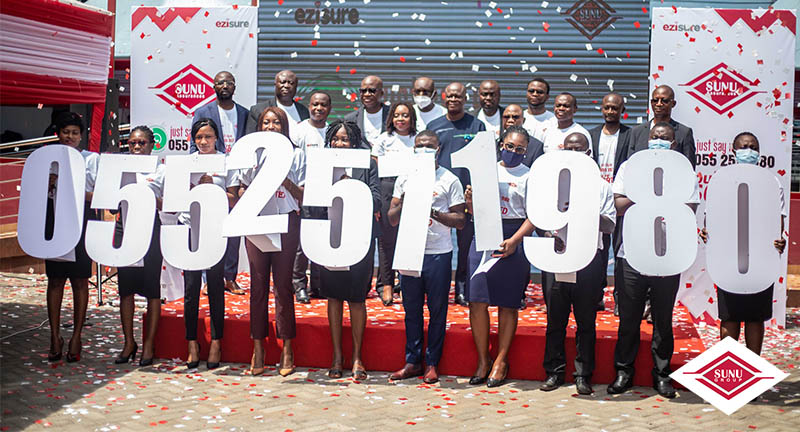
For corporate risk managers, industry analysts, and policyholders, SUNU Assurances Ghana represents a case study in parent-group backing meets local technical execution. The company boasts a nationwide branch network (Accra, Tema, Kumasi, Obuasi, Tamale, Takoradi, Koforidua, Sunyani) , an employee tenure profile where 29% have over 11 years of service , and an established reputation for “prompt claims payment” . It has also forged strategic partnerships, including a 2025 customer loyalty initiative with GOIL, Ghana‘s leading oil marketing company .
However, the context is not without concern. SUNU‘s Nigerian associate reported a 58.5% drop in profit after tax in Q2 2025, despite 31.8% revenue growth, as service expenses and reinsurance costs outpaced premium income . While the Ghana operation is a separate legal entity, the group‘s regional profitability pressures raise questions about capital allocation and strategic focus.
This profile examines SUNU‘s 2008 founding and 2018 rebranding, the leadership transition to Ing. Osman Abudu, its comprehensive non-life product portfolio, its branch and agency network, its partnership with GOIL, its employee tenure profile (29% over 11 years), and the critical question: Can a Pan-African-backed, mid-tier general insurer with a new engineer-CEO at the helm navigate regional headwinds and capture meaningful market share in Ghana‘s concentrated non-life sector?
Company Overview
The Genesis: From Equity Assurance to SUNU (2008–2018)
SUNU Assurances Ghana Limited was incorporated on 28th February 2008 as Equity Assurance Ghana, a non-life insurance company . It received approval from the National Insurance Commission (NIC) under the Insurance Act 2006 (Act 724) to operate as a non-life insurer and opened its doors in May 2008 .
For the first decade of its existence, the company operated under the Equity Assurance brand, building a presence in Ghana‘s general insurance market. It was a corporate member of the West African Insurance Company Association (WAICA), the Ghana Insurers‘ Association (GIA), and the African Insurance Organisation (AIO) .

The pivotal transformation came in January 2018, when the company changed its name from Equity Assurance Ghana Limited to SUNU Assurances Ghana Limited . The rebranding was approved by shareholders and the NIC and was designed to align the Ghana operation with the exemplary brand of its parent company, the SUNU Group .
The SUNU Group: A Pan-African Insurance Powerhouse
Understanding SUNU Assurances Ghana requires understanding its parent, the SUNU Group.

| Metric | Value |
|---|---|
| Founded | Late 1990s |
| Founder | Pathé Dione |
| Headquarters | Côte d‘Ivoire |
| Asset Base | Over US$1 billion |
| Countries of Operation | 17 (spanning West and Central Africa) |
| Insurance Subsidiaries | 16 |
| 2023 Revenue | 330.6 billion CFA francs ($504 million) |
| Primary Focus | Mass-market retail, microinsurance |
| Key Innovations | Micro-health, education, funeral insurance, MySUNU Bank |
The SUNU Group‘s vision is to be a leading Pan-African insurance group, leaning on its financial strength, professionalism, and core values: Proximity to customers and workforce, Innovation in offers and services, and Quality of service for mutual and continuous trust .
The group has expanded into microfinance and digital banking, launching MySUNU Bank to embed insurance in everyday financial life . This group-level digital infrastructure could eventually benefit the Ghana operation.
The Parent‘s Regional Challenge: Nigerian Profit Drop
In August 2025, SUNU Assurances (likely the Nigerian associate) released its Q2 unaudited interim financial statements. The results present a mixed picture:
| Metric | Q2 2025 | Change vs Q2 2024 |
|---|---|---|
| Revenue | N4.69 billion | +31.77% |
| Insurance Service Expenses | N2.36 billion | +42.75% |
| Net Expenses from Reinsurance | N850.85 million | +24.78% |
| Insurance Service Result | N1.47 billion | +20.83% |
| Profit Before Tax | N667.04 million | -46.01% |
| Profit After Tax | N417.58 million | -58.50% |
Key Takeaways:
-
Top-line growth is strong: Revenue increased by nearly 32%, indicating successful premium collection.
-
Expenses are growing faster than revenue: Service expenses (+42.75%) and reinsurance costs (+24.78%) outstripped revenue growth, compressing margins.
-
Profit collapse: Despite higher revenue, PAT dropped by 58.5%.
The Nigerian associate remains profitable, but the sharp profit decline is a concern for the group. While SUNU Assurances Ghana is a separate legal entity with its own capital base, the Nigerian results may affect:
-
Group capital allocation: If the Nigerian operation requires capital support, less may be available for Ghana.
-
Reinsurance terms: If the group‘s combined ratio worsens, global reinsurers may adjust pricing for all subsidiaries.
However, SUNU Ghana‘s new MD, Ing. Osman Abudu, has a strong technical background and has been with the company since 2024, suggesting that the Ghana operation is being managed with local autonomy.
Operations and Footprint
Headquarters:
SUNU Assurances Ghana is headquartered at SUNU House on George Walker Bush Highway (N1), Close to the Petroleum Commission, Accra .
Branch Network:
The company has an extensive nationwide presence:
| Branch / Contact Office | Location |
|---|---|
| Head Office | Accra (George Walker Bush Highway) |
| Spintex Road | Accra |
| Tema | Greater Accra Region |
| Kumasi | Ashanti Region |
| Obuasi | Ashanti Region |
| Tamale | Northern Region |
| Takoradi | Western Region |
| Koforidua | Eastern Region |
| Sunyani | Bono Region |
In addition to branches and contact offices, the company has opened agency offices throughout the country to ensure services are within arm‘s length of customers .

Workforce:
| Metric | Value |
|---|---|
| Estimated Total Employees | 200–500 |
| 2025–2026 Turnover (1 quarter) | 1 total employee movement (very low) |
Employee Tenure Profile (SignalHire Data):
| Tenure Length | Percentage |
|---|---|
| Less than 1 year | 10% |
| 1–2 years | 19% |
| 3–4 years | 10% |
| 5–7 years | 14% |
| 8–10 years | 19% |
| Over 11 years | 29% |
Tenure Profile Significance:
-
29% of employees have over 11 years of service —dating back to the Equity Assurance era. This provides deep institutional knowledge and stable claims handling.
-
Low turnover: The company saw only one employee movement in a quarter (as of early 2026), indicating a stable, engaged workforce .
-
Cross-industry experience: The management team includes veterans from Donewell Insurance, SIC Life, Graphic Communications Group, and other major institutions .
Leadership: Ing. Osman Abudu — The Engineer-Insurer
The most significant development in SUNU Assurances Ghana‘s recent history is the appointment of Ing. Osman Danfodio Abudu as Managing Director and Chief Executive Officer, effective 22nd July 2025 .
A Rare Combination: Engineering, Insurance, and Risk Management
| Qualification | Institution |
|---|---|
| BSc Chemical Engineering | University of Camaguey, Cuba |
| Chartered Insurer (ACII) | Chartered Insurance Institute, UK |
| Associate in Risk Management (ARM) | The Institutes (AICPCU), USA |
| Professional Engineer | Ghana Institution of Engineering |
Abudu‘s combination of engineering expertise and deep technical insurance knowledge is rare in Ghana‘s insurance industry. Most CEOs come from finance, sales, or underwriting backgrounds; few have professional engineering credentials. This technical foundation is particularly valuable for underwriting engineering, oil & gas, and contractors‘ all risks insurance—specialised lines that require understanding of machinery, processes, and risk quantification.
Career at Enterprise Insurance (2002–2024)
Abudu spent 22 years at Enterprise Insurance Company, one of Ghana‘s largest and oldest insurers. His trajectory:
| Role | Key Achievement |
|---|---|
| Joined Enterprise | 2002 |
| Established Risk Management Department | Created the Engineering Unit from scratch |
| Head of Claims, Underwriting, Reinsurance | Built technical credibility across core functions |
| Head of Technical | Oversaw underwriting and claims |
| Acting General Manager, Operations | Played pivotal role in building Enterprise‘s technical strength |
During his tenure, he helped build Enterprise‘s claims management and technical credibility—experience he now brings to SUNU.
Transition to SUNU (2024–2025)
| Role | Period |
|---|---|
| Executive Director / COO | 2024 |
| Deputy Managing Director | Late 2024 – July 2025 |
| Managing Director / CEO | 22nd July 2025 – Present |
Early Impact and Innovation
Even before becoming MD, Abudu was instrumental in spearheading strategic initiatives in marketing, distribution, and product innovation. Notably, one of the innovative products he introduced has already earned national recognition at the recent Ghana Insurers Awards .
His appointment is seen by the Board and Management as a move to steer SUNU through “an era of accelerated growth, industry leading innovation and unparalleled customer-focused service” .
Industry Leadership
Abudu is also a member of the National Insurance Commission‘s Motor Compensation Fund Committee , giving him direct input into one of the NIC‘s most important consumer protection mechanisms.
Other Executive Team Members
| Name | Role | Background |
|---|---|---|
| Mathieu N‘katta | Executive Director – Corporate Strategy, Performance, Transformation (Board Member) | Actuarial Science (INP-HB), HEC Paris, MBA IAE Paris; former MD/CEO SUNU Liberia; Regional Insurance Risk Manager for JA DELMAS (11 countries) |
| Gideon Sosoo | Executive Director / Chief Finance & Administration Officer | Chartered Accountant, Chartered Insurer, Certified Information System Auditor; former Head of Audit at Unique Life Assurance |
| Ebenezer Abeku Onumah | Business Development Manager (Retail/Branches) | M.Phil Communications; former 9-year veteran at Donewell Insurance; pursuing PhD in Corporate Communication |
| Elorm Amenumey Adagwine | Company Secretary/Head, Legal & Compliance | Ghana Bar Association; former Legal Officer at uniBank, Legal Business Partner at Consolidated Bank Ghana |
| Clifford K. Anim | Head Strategy & Legal Officer | CIM UK, CII UK (student), LLB Wisconsin; over 8 years in technology sector |
| Obed Agyei Frimpong | Head, HR/Administration | MBA HR (GIMPA); former roles at SIC Life, Graphic Communications Group |
| Mr. Olatunji Yusuf S. | Head, Information Technology | MSc MIS (Coventry University); over 17 years in insurance IT; Global Champion at The World CIO Summit 2024 |
| David Akrofi Adjorlolo | Head, Internal Audit | Chartered Accountant (ICAG), IIA; joined as officer in 2009 (Equity Assurance era), rose to Head |
| Dan Koenya Hetor | Head, Risk & Internal Control | ACIIG, CIP (Canada), CRMS; pioneered SUNU‘s claims department in 2009; led SUNU to win “Best Insurance Company in Claims Initiative & Administration” (2017) |
| Mavis Boateng | Acting Head of Technical Operations | Chartered Insurance Professional; over 15 years experience |
Management Team Significance:
-
Deep technical expertise: The team includes Chartered Accountants, Chartered Insurers, Actuarial Science graduates, and IT professionals.
-
Long tenure: Several leaders (Dan Hetor, David Adjorlolo) have been with SUNU since the Equity Assurance era (2009), providing institutional memory.
-
Cross-industry experience: Members come from Donewell, SIC Life, uniBank, Consolidated Bank Ghana, and technology sectors.
-
Proven claims excellence: Under Dan Hetor‘s leadership, SUNU won “Best Insurance Company in Claims Initiative & Administration” in 2017 .
Business Model: The General Insurance Specialist
SUNU Assurances Ghana is a non-life (general) insurance company. It does not underwrite life assurance. Its business model is built on three pillars: comprehensive product portfolio, prompt claims payment, and strategic partnerships.
Product Portfolio
SUNU offers a wide range of general insurance products, covering both standard and specialised lines :
| Category | Specific Products |
|---|---|
| Motor | Comprehensive, Third Party |
| Fire | Fire and Special Peril Insurance, Consequential Loss Insurance |
| Marine | Marine Insurance |
| Accident | Group Personal Accident, Individual Personal Accident, Workers‘ Compensation, Fidelity Guarantee, Money Insurance, Public Liability |
| Property | Householder Comprehensive, Burglary, Cash-In-Transit |
| Engineering | Contractors All Risks, Factory All Risks |
| Oil & Gas | Oil and Gas Insurance (upstream/downstream) |
| Aviation | Aviation Insurance |
| Bonds | Performance Bonds, Bid Bonds, Advance Payment Bonds |
| Other | Goods in Transit |
Differentiators in the Portfolio:
-
Oil & Gas and Aviation Insurance: Not every mid-tier insurer in Ghana offers these specialised lines. Their inclusion suggests SUNU has the underwriting capacity and reinsurance relationships to handle complex, high-value risks.
-
Engineering and Contractors All Risks (CAR): With an engineer as MD and a leadership team that includes risk management specialists, SUNU is well-positioned to underwrite construction and industrial risks.
-
Bond Insurance: Performance, bid, and advance payment bonds are essential for contractors bidding on government and corporate projects. SUNU‘s capacity in this area is a strategic asset.
The “Prompt Claims Payment” Promise
SUNU‘s core market positioning is built on prompt claims payment. As Samuel Awuku Asare (Team Lead) stated at the GOIL partnership event:
“The real test of an insurance company is how well and how quickly it pays claims. We are dedicated to ensuring that our customers receive their claims without unnecessary delays.”
This commitment is not merely marketing. The company‘s leadership includes Dan Koenya Hetor, Head of Risk & Internal Control, who led SUNU to win “Best Insurance Company in Claims Initiative & Administration” in 2017 . That award, earned when the company was still operating as Equity Assurance, validates that the claims focus has deep roots.
Distribution Channels
SUNU distributes through multiple channels:
-
Branch Network: Eight locations across the country .
-
Agency Offices: Numerous agency offices nationwide .
-
Strategic Partnerships: Including the 2025 initiative with GOIL .
-
Direct Sales: Corporate and commercial clients.
The GOIL Partnership (2025)
In May 2025, SUNU Assurances organised a free car wash initiative at select GOIL filling stations across Accra, including Dansoman, Tema, Spintex, Haatso, Madina, and Oyarifa .
Key Features:
-
The event rewarded loyal customers holding SUNU comprehensive motor policies.
-
It engaged potential new clients at high-traffic locations.
-
The choice of GOIL was strategic: the oil marketing company has credible, accessible, highly visible locations that can accommodate many vehicles .
-
Associating with a respected brand like GOIL enhances SUNU‘s credibility .
Strategic Significance:
-
Customer retention: Rewarding existing customers builds loyalty.
-
Customer acquisition: Engaging prospects at GOIL stations introduces new customers to SUNU.
-
Brand association: Partnering with GOIL, a trusted Ghanaian brand, transfers some of that trust to SUNU.
-
Physical activation: In a digital age, face-to-face engagement at petrol stations reaches customers who might ignore online ads.
This is not a one-off event; it reflects a broader customer engagement strategy focused on deepening loyalty and expanding the client base .
Revenue Model
As a general insurer, SUNU generates revenue from:
-
Gross Written Premiums (GWP): The primary driver. Historical premiums reported: GHS 21.5M (2015), GHS 32.8M (2016), GHS 36.3M (2017) . Current premium volume is not publicly disclosed but is likely significantly higher.
-
Investment Income: Returns on the “float” (premiums held between collection and claims payment).
-
Reinsurance Commissions: Income from reinsurers.
Financial Performance (Historical Context)
The most recent financial data available for SUNU Ghana specifically is from 2017, when premium income was GHS 36.3 million . The company has since grown, as evidenced by its expanded branch network and the appointment of a new MD focused on “accelerated growth” . However, current financial statements are not publicly available.
The Nigerian associate‘s 58.5% profit drop in Q2 2025 serves as a cautionary context but does not directly reflect SUNU Ghana‘s performance, as the Ghana operation is a separate legal entity with its own capital base and underwriting results.
Market Position and Competition
Industry Standing: The Mid-Tier Pan-African Contender
SUNU Ghana is not among the top 5 non-life insurers by claims payout—Activa (GHS 223 million), Star (GHS 217 million), Enterprise (GHS 201 million), Hollard (GHS 172 million), and Vanguard (GHS 157 million) dominate that table. However, the company is recognised as “one of the largest generals (non-life) insurance companies in the country” and “one of the fast growing Insurance Companies in Ghana” .
SUNU Ghana‘s Competitive Position:
| Dimension | SUNU‘s Standing |
|---|---|
| Asset Base (Parent) | US$1 billion+ |
| Geographical Reach | 17 countries (through parent) |
| Product Breadth | Comprehensive, including Oil & Gas, Aviation |
| Claims Reputation | Award-winning (2017 Claims Initiative Award) |
| Local Presence | 8 branches + agencies nationwide |
| Leadership | Engineer + Chartered Insurer |
| Parent Financial Trend | Nigerian associate profit -58.5% (Q2 2025) |
Competitive Advantages
1. Pan-African Parent Scale
SUNU‘s parent group has over US1billioninassets,operatesin17countries,andgenerated504 million in revenue in 2023 . This provides:
-
Reinsurance leverage (better terms from global reinsurers)
-
Technical expertise from multiple markets
-
Shared technology platforms (potentially including MySUNU Bank)
-
Cross-border claims handling for regional clients
2. Engineer-CEO with Claims Expertise
Ing. Osman Abudu‘s combination of engineering, insurance (ACII), and risk management (ARM) qualifications is rare. His 22 years at Enterprise Insurance, including establishing its Risk Management Department and serving as Acting GM of Operations, provide deep technical credibility . This is particularly valuable for underwriting engineering, oil & gas, and contractors‘ all risks insurance.
3. Proven Claims Excellence (Award-Winning)
Under Dan Koenya Hetor (Head of Risk & Internal Control), SUNU won the “Best Insurance Company in Claims Initiative & Administration” award in 2017 . This award validates that SUNU‘s claims processes are industry-recognised.
4. Extensive Branch and Agency Network
With eight branches across the country and agency offices nationwide, SUNU has physical reach that many mid-tier insurers lack . This is particularly valuable for serving customers outside Accra.
5. Strategic Partnership with GOIL
The GOIL partnership provides SUNU with access to high-traffic locations and association with a trusted Ghanaian brand . It also demonstrates a commitment to customer engagement beyond digital channels.
6. Stable Workforce with Deep Tenure
Twenty-nine percent of employees have over 11 years of service , dating back to the Equity Assurance era. This stability translates into consistent underwriting and claims handling.
7. Comprehensive Product Portfolio
SUNU offers specialised lines (Oil & Gas, Aviation, Engineering) that many mid-tier competitors do not . This allows it to target corporate and industrial clients, not just mass-market retail.
Competitive Disadvantages
1. No Public GCR Rating
SUNU does not prominently advertise a GCR rating. For large corporate clients (particularly multinationals), a published rating is often a prerequisite.
2. Lower Public Visibility Than Top 5
SUNU is not a household name like Enterprise, Star, or SIC. Its marketing presence is less aggressive, and it does not appear prominently in consumer-facing insurance rankings.
3. Parent Group Profit Pressure
The Nigerian associate‘s 58.5% profit drop may lead the group to reallocate capital away from Ghana or to demand higher remittances, constraining local investment.
4. No Recent Public Financials
SUNU Ghana has not publicly disclosed its recent Gross Written Premiums, claims ratio, or combined ratio. Financial transparency is a trust signal; its absence may deter some corporate clients.
5. Consumer-Facing Digital Tools Less Prominent
Unlike competitors with WhatsApp chatbots (Priority‘s “Nhyira,” Hollard‘s “ChatInsure”), SUNU does not prominently advertise direct-to-consumer digital purchase channels.
6. Competition from Larger, Rated Insurers
Enterprise (AAA rating), Star (A+ rating), and Activa (A+ rating) have published ratings and larger balance sheets. For large corporate tenders, these competitors have structural advantages.
7. Brand Still Relatively New (Rebranded 2018)
The SUNU name has only been in Ghana since 2018. Some customers may still associate the brand with Equity Assurance or may not recognise the SUNU name at all.
8. Dependence on Parent for Reinsurance
While parent-group scale provides reinsurance leverage, it also means that if the group‘s overall loss ratio worsens, SUNU Ghana‘s reinsurance terms could deteriorate.
Employee Tenure and Stability
SUNU‘s workforce is notably stable, with 29% of employees having over 11 years of service . This tenure profile is significant:
| Tenure Length | Percentage | Significance |
|---|---|---|
| Over 11 years | 29% | Pre-rebranding (Equity Assurance) veterans; deep institutional knowledge |
| 8–10 years | 19% | Joined around the time of rebranding (2018) |
| 5–7 years | 14% | Post-rebranding hires |
| 1–2 years | 19% | Recent hires |
| Less than 1 year | 10% | New staff |
Strategic Implications:
-
Claims consistency: Long-tenured claims staff (e.g., Dan Hetor, who joined in 2009) ensure consistent claims handling.
-
Institutional memory: 29% of employees remember the Equity Assurance era and have navigated the rebranding transition.
-
Low recruitment costs: Low turnover reduces training and recruitment expenses.
-
Risk of key-person dependency: With a small head office, the departure of a few senior staff could have outsized impact.
The company saw only one employee movement in a quarter as of early 2026, indicating that SUNU is a stable employer in Ghana‘s insurance sector .
Economic and Industry Impact
Insurance Penetration in Ghana
Ghana‘s insurance penetration remains below 2% of GDP, far lower than the African average . The NIC has identified the need for stronger customer engagement initiatives to address this gap. SUNU‘s branch network, agency offices, and GOIL partnership are direct responses to this need.
Oil & Gas and Aviation Insurance Capacity
By including Oil & Gas and Aviation in its product suite, SUNU contributes to local capacity to underwrite these specialised risks. Ghana‘s oil and gas sector (Jubilee, TEN, OCTP fields) and aviation sector require sophisticated insurance solutions. Local capacity reduces reliance on foreign insurers and retains premium income within the Ghanaian economy.
Employment
SUNU directly employs 200–500 Ghanaians, providing stable, formal-sector jobs. The company‘s low turnover rate indicates that these are quality jobs with career progression.
Customer Engagement Innovation
The GOIL partnership represents a creative approach to customer engagement. Rather than relying solely on digital advertising or broker networks, SUNU is meeting customers where they already are—at petrol stations. This model could be replicated by other insurers.
Claims Excellence as Industry Benchmark
SUNU‘s 2017 award for “Best Insurance Company in Claims Initiative & Administration” set a benchmark for claims processing. The company‘s continued emphasis on prompt claims payment puts pressure on competitors to improve their own claims handling.
Challenges and Risks
No analysis of SUNU Assurances Ghana is complete without acknowledging the headwinds it faces.
Risk 1: Parent Group Profit Pressure
The Nigerian associate‘s 58.5% profit drop in Q2 2025 is a significant concern. If the Nigerian operation requires capital support from the group, less capital may be available for SUNU Ghana. Additionally, if the group‘s overall combined ratio worsens, reinsurance terms for all subsidiaries could deteriorate.
Risk 2: No Public Financial Disclosure
SUNU Ghana has not publicly disclosed its recent financial statements, including Gross Written Premiums, claims ratio, or combined ratio. For corporate risk managers, financial transparency is a trust signal. The absence of published financials may deter some corporate clients.
Risk 3: No Public Credit Rating
Unlike Enterprise (AAA), Star (A+), and Activa (A+), SUNU does not prominently advertise a GCR rating. For large corporate tenders, a rating is often a prerequisite. Without one, SUNU may be excluded from consideration.
Risk 4: Brand Recognition Gap
The SUNU name has only been in Ghana since 2018. Enterprise (1924), SIC (1955), and Star (aggressive marketing) have far stronger brand recognition. Many Ghanaians have never heard of SUNU.
Risk 5: Dependence on Parent for Reinsurance and Capital
While the parent‘s US$1 billion asset base is a strength, it also creates dependency. If the parent faces financial difficulties or changes its strategic priorities, SUNU Ghana could be affected.
Risk 6: Competition from Larger, Rated Insurers
Activa, Star, Enterprise, and Hollard have larger balance sheets, published ratings, and stronger brand recognition. For large corporate mandates, these competitors have structural advantages.
Risk 7: Economic Headwinds
-
Inflation: Claims costs rising; premiums fixed.
-
Cedi Depreciation: Reinsurance costs in foreign currency increasing.
-
Interest Rates: Investment income fluctuating.
Risk 8: Limited Consumer-Facing Digital Tools
Unlike competitors with WhatsApp chatbots (Priority‘s “Nhyira,” Hollard‘s “ChatInsure,” Donewell‘s “ESI DONEWELL”), SUNU does not prominently advertise a direct-to-consumer digital purchase channel. This may disadvantage it with younger, tech-savvy customers.
Risk 9: Leadership Transition Execution
Ing. Osman Abudu was appointed MD in July 2025 . Any leadership transition carries execution risk. While he has been with SUNU since 2024 as Executive Director and Deputy MD, the full weight of the role is now his.
Risk 10: Parent‘s Nigerian Exposure
The Nigerian associate‘s profit drop may be a sign of broader challenges in Nigeria‘s insurance market (currency volatility, regulatory changes). If the Nigerian market worsens, the parent‘s focus may shift away from Ghana.
Future Outlook
As of May 2026, SUNU Assurances Ghana is executing a strategy built on prompt claims payment, branch expansion, strategic partnerships (GOIL), and technical underwriting excellence under an engineer-CEO.
The appointment of Ing. Osman Abudu is the most significant strategic development. His technical background (engineering, ACII, ARM) and his 22-year track record at Enterprise Insurance position SUNU to compete for more complex, higher-value risks in engineering, oil & gas, and construction.
The Immediate Agenda (2026-2027)
-
Deepen Specialised Lines: Leverage MD Abudu‘s engineering expertise to win more Contractors‘ All Risks, Oil & Gas, and Engineering insurance mandates.
-
Expand GOIL Partnership: Roll out the customer engagement initiative to more GOIL locations nationwide.
-
Enhance Digital Presence: Potentially launch a WhatsApp chatbot or customer portal for motor insurance (following competitors).
-
Seek GCR Rating: Obtain a published rating to attract large corporate clients.
-
Publish Financial Statements: Increase transparency to build trust with corporate risk managers.
-
Maintain Claims Excellence: Continue to differentiate on prompt claims payment, leveraging the expertise of long-tenured claims staff (e.g., Dan Hetor).
-
Leverage Parent‘s Digital Tools: Explore integration with MySUNU Bank and other group-level digital platforms .
The Bull Case (Optimistic)
-
MD Abudu‘s Technical Expertise Drives Growth: Abudu‘s engineering background and Enterprise Insurance experience attract new corporate clients in construction, energy, and manufacturing. SUNU becomes a leading provider of Engineering and Oil & Gas insurance in Ghana.
-
Parent Group Invests in Ghana: Despite Nigerian profit pressures, the group sees Ghana as a strategic market and injects additional capital, allowing SUNU to compete for large tenders.
-
GOIL Partnership Scales: The customer engagement initiative expands to 50+ GOIL stations nationwide, driving significant new policy sales.
-
Claims Reputation Spreads: Word-of-mouth about SUNU‘s prompt claims payment attracts SME and individual customers frustrated with slower competitors.
-
GCR Rating Achieved: A ‘B+‘ or ‘A-‘ rating opens corporate tenders, diversifying revenue beyond retail.
-
Employee Stability Pays Off: The 29% of employees with over 11 years of service provide consistent underwriting and claims handling, building a reputation for reliability.
The Bear Case (Pessimistic)
-
Parent Group Capital Constraints: The Nigerian associate‘s profit drop leads the group to reduce capital allocation to Ghana. SUNU Ghana cannot compete for large tenders.
-
No Rating, No Corporate Clients: Without a GCR rating, SUNU remains excluded from large corporate tenders. It remains a retail-focused mid-tier insurer.
-
Brand Recognition Lags: Despite SUNU‘s Pan-African scale, Ghanaian consumers continue to prefer Enterprise, Star, and SIC. The brand does not gain traction.
-
MD‘s Transition Stumbles: Abudu struggles to adapt from Enterprise‘s culture to SUNU‘s mid-tier operations. Strategic drift follows.
-
Competitors Out-Invest: Activa, Star, and Enterprise—with larger marketing budgets—capture the SME and corporate clients that SUNU targets.
-
No Financial Transparency: Corporate risk managers, unable to verify SUNU‘s financial health, choose rated competitors.
The Verdict
SUNU Assurances Ghana Ltd is a Pan-African-backed mid-tier insurer with significant unrealised potential. The parent group‘s US1billionassetbase,17−countryfootprint,and504 million annual revenue provide a scale that most Ghanaian insurers cannot match . The 2017 award for “Best Insurance Company in Claims Initiative & Administration” validates that SUNU‘s claims processes are industry-recognised. The nationwide branch network (8 locations) and agency offices provide physical reach . And the new MD, Ing. Osman Abudu, brings a rare combination of engineering expertise (Chemical Engineering), insurance credentials (ACII), and risk management qualifications (ARM) .
However, the company faces significant headwinds. The Nigerian associate‘s 58.5% profit drop in Q2 2025 raises questions about group-level profitability and capital allocation. SUNU Ghana has not published recent financial statements or obtained a GCR rating, limiting its ability to compete for large corporate clients. Its brand is still relatively new (rebranded in 2018) and lacks the recognition of Enterprise, Star, or SIC.
The question for SUNU Ghana is not whether it can survive—it has demonstrated that it can, with a stable workforce and a loyal customer base. The question is whether it can thrive by capturing the specialised lines (engineering, oil & gas, aviation) that distinguish its product suite, or whether it will remain a quiet, mid-tier general insurer with a low public profile.
Under Ing. Osman Abudu‘s leadership, SUNU has the technical expertise to compete for complex risks. The company‘s stable workforce (29% over 11 years) and proven claims excellence provide a solid foundation. But to reach the next level, SUNU must increase its public visibility, obtain a credit rating, and demonstrate its financial strength through transparent reporting.
SUNU Assurances Ghana is not trying to be the largest insurer in Ghana. It is trying to be the most technically capable and claims-efficient. With an engineer at the helm, it has the right leader for that mission. Whether the parent group provides the necessary capital and strategic focus remains to be seen.
Last Updated on May 13, 2026 by Samuel Kwame Boadu
Disclaimer: Some content on Accra Street Journal may be aggregated, summarized, or edited from third-party sources for informational purposes. Images and media are used under fair use or royalty-free licenses. Accra Street Journal is a subsidiary of SamBoad Publishing Hub under SamBoad Business Group Ltd, registered in Ghana since 2014.
For concerns or inquiries, please visit our Privacy Policy or Contact Page.

Samuel Kwame Boadu is a Ghanaian media entrepreneur and storyteller with a passion for amplifying urban voices and uncovering everyday truths. He is the Editor-in-Chief and Founder of Accra Street Journal, a dynamic digital platform dedicated to capturing the pulse of Ghana’s capital—its people, culture, challenges, business, sports and innovations.
Use the following reference when citing or referencing this article.
Your feedback helps us improve our journalism.
Report an Error
Help us maintain accuracy. Let our editorial team know if you spot an issue in this article.
Report a problem with this article