
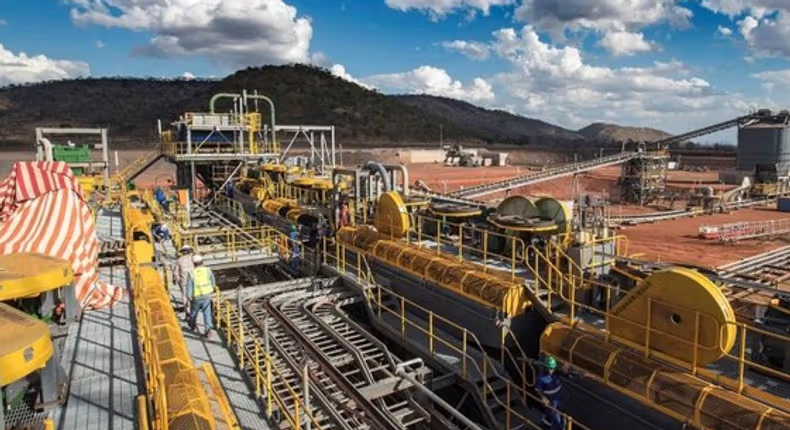
Mozambique has enacted sweeping new mining legislation requiring the state to hold a minimum 15% stake in all mining projects, as the resource-rich southern African nation seeks to capture a larger share of the value generated by its vast mineral wealth. The new law, signed by President Daniel Chapo, comes at a time of rising global demand for critical minerals used in electric vehicle batteries and energy storage systems.
Under the legislation, the Mozambican state, through the National Mining Company (ENM), will receive a minimum 15% free-carried and non-dilutable stake in all mining ventures across the value chain. The law was approved by Parliament in May and officially signed this week. Beyond ownership requirements, Mozambique has also moved to restrict the export of unprocessed and semi-processed minerals, requiring companies to process resources locally unless they obtain special government authorization.

The reforms also introduce new licensing rules and require 10% of mining revenues to be directed to a local development fund. Mozambique is one of the world’s leading graphite producers, ranking behind only China and Madagascar in global production, and hosts the giant Balama mine—one of the largest graphite deposits globally. The move places Mozambique among a growing number of African countries seeking greater control over their natural resources, including Zimbabwe (raw lithium export restrictions) and the Democratic Republic of Congo (cobalt and copper local value addition).
📢 GET A DETAILED ARTICLES + JOBS
Join ASJ's WhatsApp Channel and never miss a post or opportunity.

Key Developments: The 15% Free-Carried Stake, Local Processing Mandate, and Development Fund
The 15% free-carried stake is the centrepiece of the legislation. “Free-carried” means the state does not pay for its equity; the mining company finances the state’s share. “Non-dilutable” means the state’s percentage ownership does not decrease when the company raises additional capital. The provision is designed to give the state a significant ownership stake without upfront capital expenditure. For mining companies, the free-carried stake increases the effective cost of the project, as they must finance the state’s share.
The restriction on unprocessed mineral exports is intended to encourage local processing. Graphite concentrate can be processed into spherical graphite or battery-grade material, capturing more value. However, local processing requires investment in processing plants, which may not be economical at current volumes. The government can grant special authorisation for unprocessed exports; the law’s flexibility is intentional.

The 10% revenue requirement for a local development fund ensures that mining communities benefit directly. The funds can be used for infrastructure, health, education, and other local priorities. This provision addresses a common grievance in resource-rich countries: that mining benefits are captured by national governments and foreign companies, while local communities bear the environmental and social costs.
The legislation applies to all mining projects, but it is unclear whether it applies retroactively to existing projects covered by long-term agreements. Mining companies typically sign stability agreements with governments, guaranteeing that the fiscal and regulatory terms will not change for a specified period. If the new law applies to existing projects, it could trigger disputes and arbitration. The government may exempt existing projects to avoid litigation.
The timing is strategic. Global demand for graphite is rising due to the electric vehicle (EV) revolution. Graphite is the primary material for the anode in lithium-ion batteries. China dominates graphite processing; other countries, including Mozambique, want to capture more value by processing locally. The new law positions Mozambique to benefit from the EV supply chain.
Mozambique already hosts significant mining projects: the Balama graphite mine (owned by Syrah Resources), coal mines (Vale, Jindal), and the Montepuez ruby mine (one of the world’s largest gemstone operations). The new law will affect these projects, and future projects.
Analysis & Implications: Resource Nationalism, Investor Reaction, and Value Retention
Mozambique joins a wave of resource nationalism across Africa. Zimbabwe has restricted raw lithium exports to encourage domestic processing. The Democratic Republic of Congo has policies aimed at increasing local value addition in cobalt and copper. Namibia has similar provisions. The trend is driven by the rising value of critical minerals and the desire to capture more of that value locally.
Investor reaction is likely to be mixed. Mining companies prefer stable, predictable regulatory environments. A sudden increase in state ownership is a negative signal. However, the 15% free-carried stake is not unprecedented; many countries have similar provisions. The key questions are: how will the state exercise its ownership rights? Will it be a passive investor or an active manager? Will it provide capital when needed? The answers will determine whether the policy deters investment.
The free-carried stake is less burdensome than an additional tax or royalty. The company finances the state’s share, but the state does not receive dividends until the company is profitable. In early-stage projects, the free-carried stake may have little practical effect. In profitable projects, it reduces the return to private investors.
The local processing requirement is more significant. Building a processing plant requires capital, technical expertise, and off-take agreements. For graphite, processing involves several steps: crushing, milling, flotation, and purification. The final product (battery-grade graphite) is more valuable than concentrate. The government’s goal is to attract investment in processing plants, not just mines. The special authorisation provision allows flexibility; the government can grant exemptions if processing is not economically viable.
The 10% revenue requirement for local development is a positive provision. It ensures that mining communities benefit directly, which can reduce conflict and build support for mining. However, the funds must be managed transparently and effectively; otherwise, they may be wasted.

The Accra Street Journal notes that Mozambique’s policy mirrors trends elsewhere in Africa, including Ghana. Ghana’s mining localization policy requires major mining firms to transition operations to local contractors. Ghana’s Minerals Commission is also seeking stricter scrutiny of lease renewals. The difference is that Ghana has not (yet) mandated state equity. Mozambique’s approach is more direct.
What This Means for Mozambique’s Mining Sector, Foreign Investors, and Local Communities
For Mozambique’s mining sector, the new law increases state control. The 15% stake gives the government a seat at the table (though not necessarily a board seat). The government can use its ownership to influence decisions on local content, employment, and environmental management. The law also signals that Mozambique is serious about capturing more value from its resources.
For foreign investors, the law adds a layer of complexity. Prospective investors must now factor in the free-carried stake when evaluating project economics. The 15% may be acceptable; higher stakes (e.g., 30% or 50%) would be more problematic. The law’s stability—whether it will be applied retroactively—is a key uncertainty. Investors should seek stability agreements that grandfather existing terms.
For local communities, the 10% revenue requirement is a potential benefit. However, the funds must be managed well. The government should establish transparent mechanisms for allocating and spending the funds. Communities should have a say in how the funds are used. The success of the provision depends on governance.
For the global EV supply chain, Mozambique is a critical source of graphite. The new law could affect the cost and availability of graphite. If the law deters investment, production may not expand as quickly as needed. If the law encourages local processing, the supply chain may become more diversified (less dependent on China). The outcome is uncertain.
The Accra Street Journal’s assessment: the new law is a significant shift. It aligns with global trends toward resource nationalism. The 15% free-carried stake is not extreme; countries like Ghana have not gone that far, but others (e.g., DRC) have. The local processing requirement is ambitious; its success depends on investment in processing plants. The 10% local development fund is positive. The law’s impact on investment depends on implementation. If the government is pragmatic and flexible, investment may continue. If the government is rigid and aggressive, investment may decline.
Wider Context: Critical Minerals and Africa’s Resource Nationalism Wave
The global energy transition is driving demand for critical minerals: lithium, cobalt, graphite, nickel, copper, and rare earths. Africa is rich in these minerals. The DRC (cobalt), Zimbabwe (lithium), Mozambique (graphite), South Africa (manganese), and Zambia (copper) are key producers. The rising demand gives African governments leverage to demand better terms.
Resource nationalism is the response. Governments are increasing taxes, royalties, and state ownership. They are restricting raw mineral exports and requiring local processing. The goals are to capture more value, build local industries, and create jobs. The risk is that excessive nationalism deters investment, leading to lower production and less revenue.
The comparison with Indonesia is instructive. Indonesia, the world’s largest nickel producer, banned raw nickel exports in 2020 to encourage local processing. The policy succeeded: several nickel processing plants were built. However, the ban also led to a trade dispute with the EU, which argued that the ban violated WTO rules. The WTO ruled against Indonesia. The lesson: resource nationalism can succeed, but it may face legal challenges.
The role of China is also relevant. China is the largest buyer of Africa’s critical minerals and the largest processor. China has invested in mining projects across Africa. The new law will affect Chinese investors as well as Western ones. China may adapt, as it has elsewhere, by investing in local processing.
The Accra Street Journal’s conclusion: Mozambique’s new mining law is a bold move. The 15% free-carried stake, local processing requirement, and 10% local development fund are designed to capture more value from the country’s graphite and other minerals. The law aligns with global trends but carries risks. Implementation will determine whether Mozambique becomes a model for resource nationalism or a cautionary tale. The government must be pragmatic, transparent, and consistent. Investors must adapt. Communities must hold the government accountable. The stakes are high; the outcome will shape Mozambique’s economic future.

Source: Accra Street Journal
Last Updated on June 5, 2026 by Samuel Kwame Boadu
Disclaimer: Some content on Accra Street Journal may be aggregated, summarized, or edited from third-party sources for informational purposes. Images and media are used under fair use or royalty-free licenses. Accra Street Journal is a subsidiary of SamBoad Publishing Hub under SamBoad Business Group Ltd, registered in Ghana since 2014.
For concerns or inquiries, please visit our Privacy Policy or Contact Page.

Samuel Kwame Boadu is a Ghanaian media entrepreneur and storyteller with a passion for amplifying urban voices and uncovering everyday truths. He is the Editor-in-Chief and Founder of Accra Street Journal, a dynamic digital platform dedicated to capturing the pulse of Ghana’s capital—its people, culture, challenges, business, sports and innovations.