For decades, the Peugeot 504 was Nigeria’s car. It ferried civil servants to work, served as the backbone of taxi fleets, and became a fixture of family road trips across the country. At its peak, Peugeot was so dominant that the Kaduna factory assembling the vehicles stood as one of the clearest symbols of Nigeria’s industrial ambitions. Then it all fell apart. The company behind the iconic brand, Peugeot Automobile Nigeria (PAN), struggled under years of declining sales, policy inconsistency, competition from imported used vehicles, and mounting financial troubles.
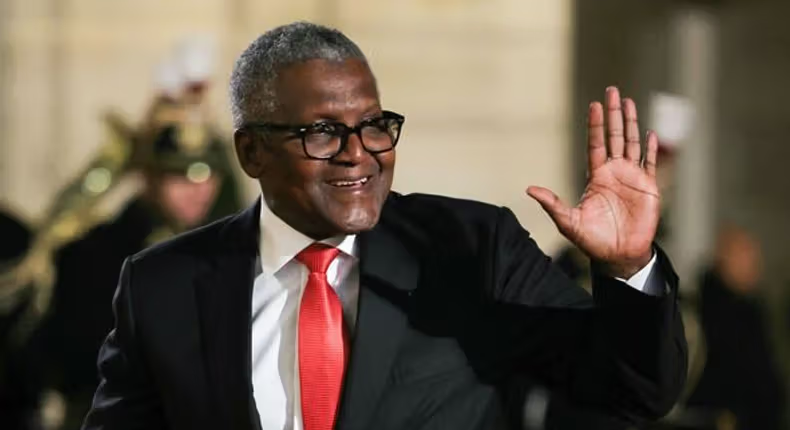
By 2012, the company had accumulated debts estimated at about N30 billion and was taken over by the Asset Management Corporation of Nigeria (AMCON). Today, however, Peugeot is back in production in Nigeria, thanks largely to a bet placed by Africa’s richest man, Aliko Dangote. In 2016, Dangote Industries joined a consortium that acquired a controlling stake in PAN Nigeria from AMCON. Rather than simply restarting the old arrangement, Dangote pursued a bigger plan, entering discussions with Peugeot’s parent company to create a new entity—Dangote Peugeot Automobiles Nigeria Limited (DPAN)—with rights to assemble and market Peugeot vehicles under a fresh licensing framework.

A modern assembly facility along the Kaduna-Abuja Expressway began operations in January 2022. The factory has a designed production capacity of up to 120 vehicles daily across two shifts, producing the Peugeot 301 sedan, Landtrek pickup, 508 saloon, and the new 3008 and 5008 SUV models.
📢 GET A DETAILED ARTICLES + JOBS
Join ASJ's WhatsApp Channel and never miss a post or opportunity.

Key Developments: The Collapse, Dangote’s Intervention, and the Kaduna Assembly Plant
The Peugeot story in Nigeria began with promise. When PAN was established in 1972 as a joint venture involving the Nigerian government and French automaker Peugeot, it represented something larger than a car assembly business. It was part of Nigeria’s post-independence industrialisation strategy. The Kaduna plant became one of the country’s most prominent manufacturing facilities, producing popular models such as the Peugeot 404, 504, and later the 505. For years, locally assembled Peugeot vehicles dominated Nigeria’s passenger vehicle market.
The decline was gradual but inexorable. Economic crises, foreign exchange shortages, weak industrial policies, and a flood of imported used vehicles eroded the company’s position. By the late 2000s, production volumes collapsed. Capacity utilisation fell sharply. The factory that had once symbolised Nigeria’s manufacturing future became an example of deindustrialisation. When AMCON assumed control in 2012, many observers believed the Peugeot story in Nigeria had effectively ended.

Dangote saw something different. The acquisition in 2016 aligned with a strategy he had already pursued successfully in cement, sugar, fertiliser, and later petroleum refining: acquire or build domestic production capacity in sectors where Nigeria depended heavily on imports. The arrangement gave DPAN the rights to assemble Peugeot vehicles under a fresh licensing framework. Following the formation of Stellantis (merger of PSA Groupe and Fiat Chrysler Automobiles in 2021), the partnership continued under one of the world’s largest automotive groups.
The new Kaduna assembly plant, along the Kaduna-Abuja Expressway, is a modern facility. It began operations in January 2022 with the assembly of the Peugeot 301 sedan. Production has since expanded to include the Landtrek pickup truck, the Peugeot 508 saloon, and the 3008 and 5008 SUV models. In April 2026, Stellantis announced the start of local production of the new Peugeot 3008 and 5008 models at the Kaduna facility, marking another milestone. The factory has a designed production capacity of up to 120 vehicles daily across two shifts, although actual output remains significantly below that level as the company gradually expands operations and market penetration.
Analysis & Implications: Import Substitution, Local Content, and the Challenge of Used Imports
The revival of Peugeot is part of a broader Nigerian automotive policy. The National Automotive Industry Development Plan (NAIDP) aims to reduce dependence on imported vehicles by encouraging local assembly and manufacturing. Several global brands have established assembly operations in Nigeria over the past decade, including Toyota, Nissan, Hyundai, and Kia. Yet many of those initiatives have struggled with inconsistent policies, foreign exchange constraints, weak consumer financing, and infrastructure challenges.
Peugeot enjoys one advantage many competitors do not: Nigerians already know the brand. For older generations, Peugeot evokes memories of a period when locally assembled vehicles were commonplace on Nigerian roads. That brand recognition could translate into consumer trust and loyalty, provided the quality and pricing are competitive.
The primary obstacle is the flood of imported used vehicles (tokunbo). Nigeria imports hundreds of thousands of used cars annually, primarily from Europe, the United States, and Asia. These vehicles are often cheaper than new locally assembled cars, even after accounting for import duties. Consumers choose used imports because they are affordable, even if they are older, less fuel-efficient, and lack modern safety features. For local assembly to succeed, the government must enforce policies that make used imports less attractive: higher tariffs, age restrictions, or outright bans.
The foreign exchange challenge is also acute. Nigeria’s currency, the naira, has depreciated significantly. Importing components for local assembly requires dollars; the cost of those components has risen in naira terms. Local assemblers must either raise prices (reducing demand) or absorb the cost (reducing profitability). The government’s ability to provide forex at official rates to automotive assemblers is limited.
The local content requirement is a long-term goal. The NAIDP includes targets for local content (percentage of vehicle components sourced locally). Achieving these targets requires investment in supplier networks: companies that produce tyres, batteries, glass, wiring harnesses, seats, and other components. Nigeria has a small but growing auto parts industry. DPAN must work with local suppliers to increase local content, reducing dependence on imported components and improving the economics of assembly.
The Accra Street Journal notes that Ghana has also attempted to revive local automotive assembly. Companies like Volkswagen, Toyota, and Suzuki have assembly plants in Ghana. However, the industry remains small. The challenges are similar: competition from used imports, forex constraints, and weak local content. Nigeria’s larger population (over 200 million) gives it greater potential scale.
What This Means for Nigeria’s Industrialisation, Consumer Choice, and Dangote’s Strategy
For Nigeria’s industrialisation, the revival of Peugeot is a symbolic victory. The brand that once represented Nigeria’s manufacturing ambitions is back. The new Kaduna plant is modern and has capacity. If successful, it could create jobs, develop skills, and support a supplier network. The government’s automotive policy needs consistency; frequent changes in tariffs and regulations deter investment.

For consumer choice, the revival means that Nigerians can buy new, locally assembled vehicles with warranty, service support, and modern features (safety, fuel efficiency, technology). The models produced—301 sedan, Landtrek pickup, 508 saloon, and 3008/5008 SUVs—cover a range of segments. Pricing will be critical; if DPAN can offer competitive prices, consumers may shift from used imports.
For Dangote’s strategy, the Peugeot investment fits his philosophy: build domestic production capacity in sectors where Nigeria depends on imports. He transformed Nigeria from a major importer of cement into one of Africa’s largest producers. He is attempting something similar in petroleum refining through the 650,000-barrel-per-day Dangote Refinery. The Peugeot revival is a smaller bet, but the logic is the same: capture value locally, create jobs, and reduce the trade deficit.
The challenges are substantial. The Kaduna plant’s actual output is far below its 120-vehicle-per-day capacity. Demand must increase. The used import market must be restrained. Forex must be available. Local suppliers must be developed. The government must provide consistent policy support. Dangote has deep pockets and patience; he can afford to wait. But even he cannot single-handedly transform Nigeria’s automotive sector.
The Accra Street Journal’s assessment: the Peugeot revival is a positive development, but it is not a turning point. Nigeria’s automotive industry remains small; most vehicles on the road are imported used cars. The government must enforce policies that favour local assembly, or the revival will stall. Dangote’s investment is a vote of confidence; now the government must respond.
Wider Context: Automotive Manufacturing in Africa
Africa’s automotive industry is small compared to other regions. South Africa is the largest producer, assembling over 500,000 vehicles annually, with exports to Europe. Morocco is the second-largest, assembling over 400,000 vehicles, with exports to Europe. Egypt, Algeria, and Nigeria have smaller industries. The continent as a whole assembles approximately 1.5 million vehicles annually, compared to over 10 million in Europe and 20 million in China.
The challenges are well-known: small markets, fragmented across 54 countries; competition from used imports; weak local supplier networks; inconsistent policies; forex constraints; and infrastructure deficits. The opportunities are also clear: a growing population, rising urbanisation, increasing vehicle demand, and the potential for regional integration under the African Continental Free Trade Area (AfCFTA).
The AfCFTA offers a pathway. A vehicle assembled in Nigeria could be exported to other African countries without tariffs. This would allow assemblers to achieve economies of scale, serving a market of over 1.4 billion people. However, the AfCFTA’s rules of origin require a certain percentage of local content; meeting those requirements takes time.
The global automotive industry is shifting toward electric vehicles (EVs). Nigeria is not ready for EVs: charging infrastructure is absent, and electricity supply is unreliable. The immediate future is internal combustion engines, with a gradual transition to hybrids and EVs later. DPAN should prepare for the transition by assembling hybrid models and eventually EVs.
The Accra Street Journal’s conclusion: the Peugeot revival is a welcome development, but Nigeria’s automotive industry is still in its infancy. Dangote’s investment provides a foundation; the government must build on it by enforcing policies, providing forex, and developing infrastructure. The days of the Peugeot 504 dominating Nigerian roads will not return—the market is more fragmented, and competition is fiercer. But a locally assembled Peugeot, built in Kaduna, sold to Nigerian consumers, could become a symbol of a different kind of industrialisation: not the dominance of a single brand, but the emergence of a sustainable, competitive automotive sector. That would be a revival worth celebrating.
Source: Accra Street Journal

Last Updated on June 5, 2026 by Samuel Kwame Boadu
Disclaimer: Some content on Accra Street Journal may be aggregated, summarized, or edited from third-party sources for informational purposes. Images and media are used under fair use or royalty-free licenses. Accra Street Journal is a subsidiary of SamBoad Publishing Hub under SamBoad Business Group Ltd, registered in Ghana since 2014.
For concerns or inquiries, please visit our Privacy Policy or Contact Page.

Samuel Kwame Boadu is a Ghanaian media entrepreneur and storyteller with a passion for amplifying urban voices and uncovering everyday truths. He is the Editor-in-Chief and Founder of Accra Street Journal, a dynamic digital platform dedicated to capturing the pulse of Ghana’s capital—its people, culture, challenges, business, sports and innovations.