How GOIL, Star Oil, and Zen Petroleum Dethroned the Multinationals
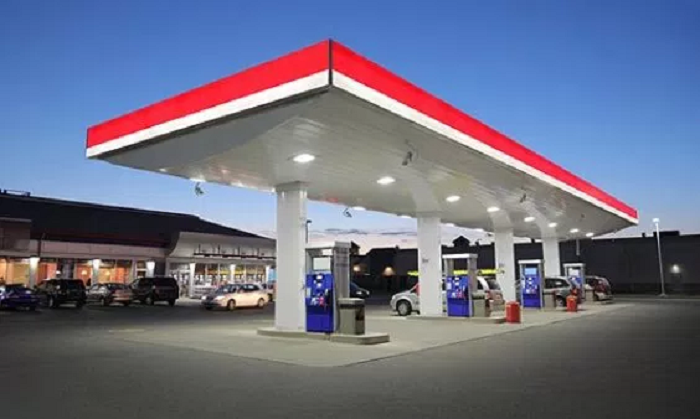
The Ghanaian forecourt has been transformed. For decades, the logos of Shell and Total were ubiquitous symbols of the urban landscape. However, the 2025/2026 financial year has marked a definitive power shift: the country’s downstream petroleum sector is now dominated by fierce, cash-rich, and technologically savvy indigenous giants.

This ASJ intelligence brief analyzes the competitive dynamics reshaping the sector, focusing on the strategic resurgence of state-owned GOIL, the disruptive efficiency of Star Oil, and the capital markets milestone achieved by ZEN Petroleum.
📢 GET A DETAILED ARTICLES + JOBS
Join ASJ's WhatsApp Channel and never miss a post or opportunity.

1. The New Hierarchy: GOIL, Star Oil, and the Multinational Retreat
The most tangible evidence of this shift is the National Petroleum Authority (NPA) data for the first two months of 2026, which reveals that two Ghanaian-owned entities now control the commanding heights of the market .
The Top Five OMCs (Jan-Feb 2026):

-
GOIL PLC (Indigenous): 158.2 million litres (11.93% market share). With over 400 stations, it boasts the largest retail network .
-
Star Oil Ghana (Indigenous): 155.7 million litres (11.74% market share). Notably, it sold the highest volumes of petrol and diesel specifically .
-
Vivo Energy (Shell Brand): ~92.5 million litres (~6.98%). The highest-ranked foreign player, now a distant third .
-
ZEN Petroleum (Indigenous): ~70.3 million litres (~5.30%). The fourth force, leveraging its mining dominance .
-
TotalEnergies (Foreign): ~53.7 million litres (~4.13%). Once a top contender, now rounding out the top five .
2. The Titans: A Study in Contrasting Strategies
The battle for the top spot is a fascinating duel between two very different corporate philosophies.
Star Oil: The Disruptive “GaoGao” (Market Share ~14%)
Star Oil’s journey from a rural budget brand known colloquially as “GaoGao” (cheap) to the market leader is a masterclass in operational efficiency . After the deregulation of fuel prices in 2015, Star Oil capitalized on the volatility by becoming the “least-cost competitor.”
Key Strategic Wins:
-
Tech-Driven Operations: They ditched the dealer-operated model plagued by theft, building proprietary software to monitor daily forecourt operations. By 2018, leakages and losses disappeared .
-
Substance over Marketing: While competitors rely on brand heritage, Star Oil focused on quantity integrity (temperature compensation) and quality assurance, winning over price-sensitive drivers .
-
Governance Pivot: Star Oil’s decision to indefinitely suspend its membership in COMAC in January 2026 signals a widening rift. It accused the chamber of failing to advocate for consumer-friendly pricing, specifically challenging the NPA’s price floor policy, which it argues prevents efficiency gains from reaching consumers .
GOIL PLC: The Elephant Learns to Dance (Market Share ~11.93%)
Just a year ago, the state-owned giant looked sluggish, burdened by a $110 million debt and ceding market leadership. Under CEO Edward Bawa, GOIL staged one of the swiftest turnarounds in corporate history .
The Turnaround Blueprint:
-
Debt Slashing: Leveraging a period of cedi stability, GOIL slashed its arrears by 73% to $30 million, freeing up cash flow for aggressive pricing .
-
Aggressive Pricing: With a healthier balance sheet, GOIL engaged in a direct price war with Star Oil in early 2026, utilizing its 400+ station network to claw back the number one spot .
-
Investor Confidence: The market has validated this revival, with GOIL shares surging approximately 95% on the Ghana Stock Exchange over the past year .
3. The New Financial Frontier: The ZEN Petroleum IPO
The rise of the indigenous players has moved beyond operational efficiency to financial sophistication. ZEN Petroleum listed on the Ghana Stock Exchange (GSE) in April 2026, raising GH¢640 million .
Why this is a game-changer:
-
Mining Dominance: ZEN supplies approximately 49% of the fuel consumed by major mining companies, giving it a stable, industrial revenue base separate from the volatile retail margins .
-
Access to Capital: Unlike its rivals, ZEN now has direct access to the public debt and equity markets, allowing it to fund logistics infrastructure and storage capacity without the debt constraints that hampered GOIL in the past .
-
Symbolism: ZEN’s Managing Director, William Tewiah, captured the sentiment, noting that the listing signals “that a wholly Ghanaian company could compete, grow, and succeed in a sector largely dominated by multinational players” .
4. The Structural Fault Line: The Price Floor
The most significant threat to this domestic ascendancy is regulatory. The NPA’s price floor policy, designed to prevent predatory pricing and maintain margins for smaller players, has become a flashpoint .
-
The Argument for the Floor: Protects over 180 OMCs from being crushed in a price war, ensuring rural supply security and preventing a monopoly .
-
The Argument Against (Star Oil’s view): It punishes efficiency. Star Oil argues that without the floor, they could pass on massive savings to consumers (as low as GH¢9.50/litre), but the regulation forces prices to stay artificially high .
The Africa Sustainable Energy Centre (ASEC) has called for a gradual overhaul—suggesting a phased removal of the floor in Accra first—warning that the current “protective” stance disincentivizes efficiency .

5. The Multinationals: From Owners to Franchisees
The role of the foreign majors has fundamentally shifted. Shell (via Vivo Energy) and TotalEnergies still operate extensive networks (250+ stations each), but they are no longer price-setters .
They have retreated into high-margin niches:
-
Vivo Energy: Leveraging the Shell brand for premium fuel (V-Power) and lubricants.
-
TotalEnergies: Dominates the specialized lubricants market, holding an estimated 33% share in that segment, effectively avoiding the brutal price war for regular petrol .
Conclusion: The Ghanaian Takeover is Complete
The data from the first half of 2026 confirms a fundamental truth: the downstream sector is now an indigenous battleground. GOIL represents the might of the state, restored through fiscal discipline. Star Oil represents the agility of the private disruptor, leveraging technology to win on price. ZEN Petroleum represents the future, using capital markets to industrialize the supply chain.
For the consumer, this means a market where prices are driven by local competition rather than foreign dictates. For the investor, the narrative has shifted from “extraction” to “entrepreneurship,” with Ghanaian firms proving they can outmaneuver global giants on their home turf. The multinationals are no longer running the show; they are just trying to keep up.
Quick Reference: The Indigenous Oil Marketing Landscape (2026)
| Company | Role/Archetype | Key Metric (Market Share & Q1 2026 Volume) | Strategic Strength |
|---|---|---|---|
| GOIL PLC | The Comeback State Giant | #1 (158.2m litres / 11.93%) | Largest retail network (400+ stations); Debt recovery allowing aggressive pricing |
| Star Oil Ghana | The Tech Disruptor | #2 (155.7m litres / 11.74%) | Highest petrol/diesel volumes; “Least-cost competitor” model |
| ZEN Petroleum | The Industrial Capitalist | #4 (70.3m litres / 5.30%) | 49% market share in mining; Listed on GSE (GH¢640m IPO) |
Source: Accra Street Journal
Last Updated on June 6, 2026 by Samuel Kwame Boadu
Disclaimer: Some content on Accra Street Journal may be aggregated, summarized, or edited from third-party sources for informational purposes. Images and media are used under fair use or royalty-free licenses. Accra Street Journal is a subsidiary of SamBoad Publishing Hub under SamBoad Business Group Ltd, registered in Ghana since 2014.
For concerns or inquiries, please visit our Privacy Policy or Contact Page.

Samuel Kwame Boadu is a Ghanaian media entrepreneur and storyteller with a passion for amplifying urban voices and uncovering everyday truths. He is the Editor-in-Chief and Founder of Accra Street Journal, a dynamic digital platform dedicated to capturing the pulse of Ghana’s capital—its people, culture, challenges, business, sports and innovations.