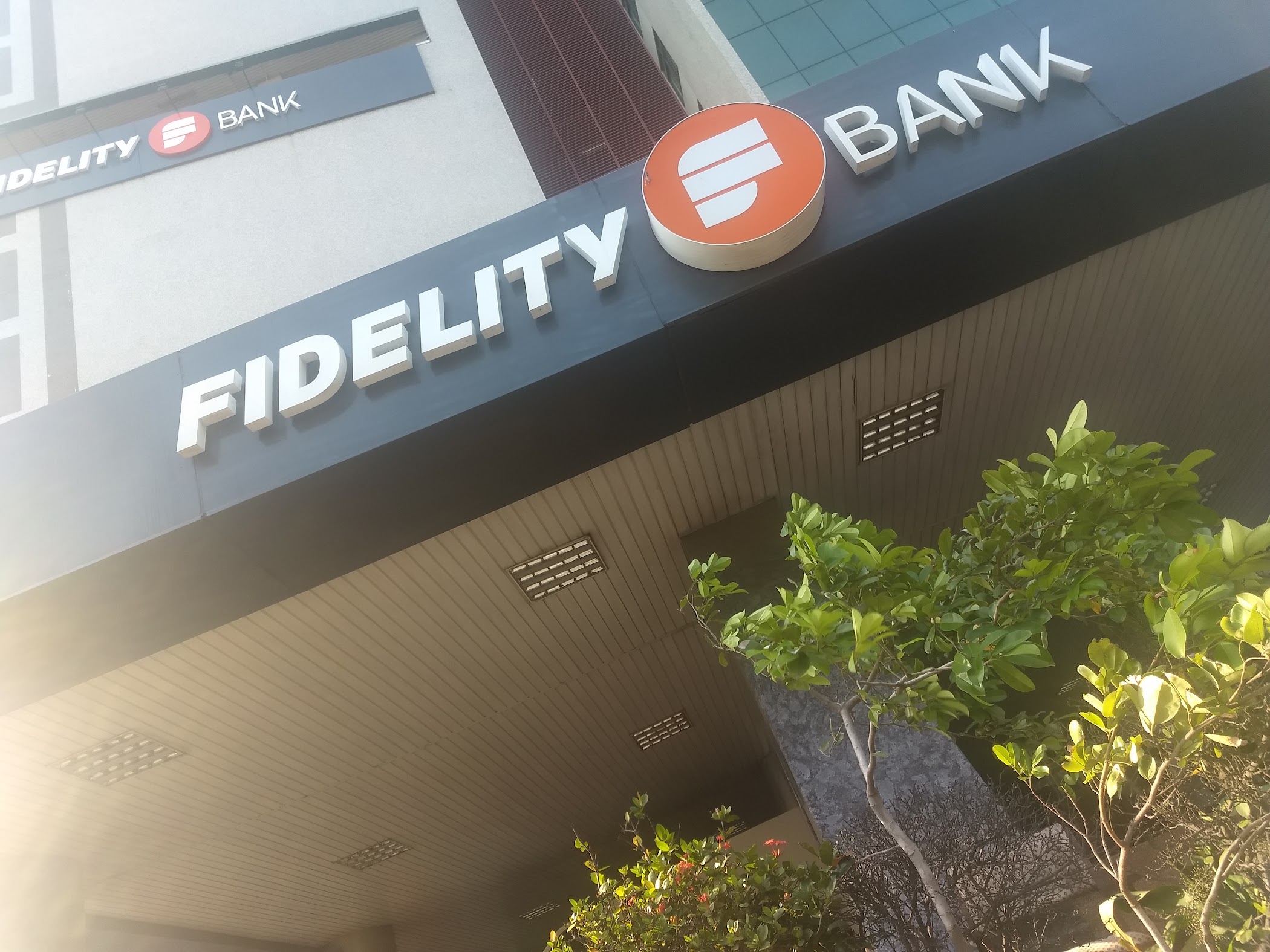
From its 2004 incorporation as the asset management arm of the Fidelity Group to its rebranding as Fidelity Securities Limited (FSL) and its current status as a two-time ‘Fund Manager of the Year‘ award winner, this wholly-owned subsidiary of Fidelity Bank Ghana has spent over two decades building a fortress in pension fund management, collective investment schemes, and wealth advisory. With a Minimum Viable Investment of just GH¢100 across its fund range, over 20 years of experience, a staff size of 11-50 professionals, and a track record of launching the Fidelity Money Market Trust, Fidelity Fixed Income Trust, and Fidelity Balanced Trust, FSL is the quiet engine of wealth creation for thousands of Ghanaian retail and institutional investors.
Executive Introduction
In the crowded landscape of Ghana‘s asset management industry, there are firms that chase headlines with blockbuster returns, and there are firms that quietly, diligently manage the retirement savings and investment portfolios of thousands of Ghanaians. Fidelity Securities Limited (FSL)—formerly Fidelity Asset Management Limited—belongs to the latter category, and has been doing so for over two decades.

Founded as the investment banking and asset management subsidiary of the Fidelity Group, FSL has evolved from a modest startup in 2004 into a regulated, award-winning investment house. It is a wholly-owned subsidiary of Fidelity Bank Ghana, the largest privately-owned indigenous bank in the country . This parentage is not merely a badge of honor; it provides FSL with a stable capital base, access to the Bank‘s extensive network of over 2 million customers, and the credibility of a Tier-1 financial institution with a reputation for service excellence.
📢 GET A DETAILED ARTICLES + JOBS
Join ASJ's WhatsApp Channel and never miss a post or opportunity.

However, FSL is not a bank; it is a specialist. Its mandate is singular: professional asset management. Licensed by the Securities and Exchange Commission (SEC) and approved as a Pension Fund Manager by the National Pensions Regulatory Authority (NPRA), FSL operates at the intersection of institutional finance and retail wealth creation .
The firm’s product suite is designed to cater to a wide spectrum of investors. For the conservative retiree, it offers money market funds that provide stability and liquidity. For the long-term growth seeker, it offers equity and balanced funds. For institutions, it manages provident funds, welfare funds, endowments, and bespoke portfolios .

The firm‘s commitment to excellence has been validated by the industry. Fidelity Securities was adjudged Investment Fund Manager of the Year at the 2018 Ghana Accountancy and Finance Awards, and retained the title in 2019, marking a successful defense of its crown .
For pension consultants, institutional trustees, and individual savers, Fidelity Securities Limited represents a case study in bank-backed asset management stability. It is not the largest player in the market, nor is it the flashiest. But it is arguably one of the most resilient and accessible.
This ASJ profile examines the firm‘s 2004 founding, its rebranding journey from Fidelity Asset Management to Fidelity Securities, its parentage under Fidelity Bank, its three core funds (Money Market Trust, Fixed Income Trust, Balanced Trust), its status as a licensed pension fund manager, its award-winning track record, and the critical question: As Ghana’s asset management industry consolidates and institutional investors demand higher yields, can a bank-owned asset manager maintain the specialized investment expertise required to compete with independent firms?
Company Overview: The 2004 Founding Under the Fidelity Group
The Genesis: Fidelity Asset Management to Fidelity Securities
Fidelity Securities Limited traces its origins to 28th September 2004, when it was incorporated under the name Fidelity Asset Management Limited . It was established as the dedicated asset management subsidiary of the Fidelity Group (Ghana), which is anchored by Fidelity Bank Ghana Limited.
The firm’s original mandate was unambiguous: to provide professional investment management services to institutional and individual clients, leveraging the financial backing and customer network of the parent bank. For the first decade of its existence, the firm operated under the Fidelity Asset Management brand, building a reputation for prudence and reliability.
However, as the firm‘s capabilities expanded—particularly into investment banking, securities dealing, and capital raising—a rebrand was necessary to reflect its broader scope. The entity transitioned to Fidelity Securities Limited (FSL) , a name that better encapsulates its role as a securities and investment management firm rather than a pure asset gatherer .
Despite the name change, the core mission remained unchanged: to empower clients with financial freedom by undertaking well-researched investments on their behalf .
The Parent Bank Connection: Fidelity Bank Ghana
FSL is a wholly-owned subsidiary of Fidelity Bank Ghana . To understand FSL, one must understand the formidable parent that stands behind it.
| Parent Bank Metric | Value |
|---|---|
| Name | Fidelity Bank Ghana Ltd |
| Founded | 2006 (as bank); originally 1998 as Discount House |
| Status | Largest privately-owned indigenous bank in Ghana |
| Total Assets | Over GHS 22 billion (2024) |
| Customer Deposits | Over GHS 17 billion (2024) |
| Market Position | Tier-1 Bank |
| Number of Agents | 9,000+ |
| UNEP FI Member | Yes (Joined 2019) |
| Shareholder Base | Privately held; owned by Ghanaian private investors and international impact funds |
Why the Parent Matters for FSL:

-
Capital Stability: FSL does not have to worry about the short-term capital constraints that plague independent startups. It can draw on the Bank‘s balance sheet if needed.
-
Distribution Network: Fidelity Bank has a massive customer base (over 2 million customers) and a massive agency network (9,000+ agents). While FSL primarily operates through direct sales and institutional channels, the Bank‘s network provides a ready pool of potential retail investors for funds like the Money Market Trust.
-
Credibility: For risk-averse pension fund trustees and institutional investors, knowing that the asset manager is backed by a Tier-1 bank is a significant competitive advantage.
Key Operational Metrics
| Metric | Value |
|---|---|
| Incorporation Date | 28th September 2004 |
| Original Name | Fidelity Asset Management Limited |
| Current Name | Fidelity Securities Limited (FSL) |
| Years of Operation | 20+ Years |
| Ownership | Wholly-owned subsidiary of Fidelity Bank Ghana Ltd |
| Regulators | SEC (Licensed), NPRA (Approved Pension Fund Manager) |
| Employees | 11 – 50 |
| Headquarters | 1st Floor, Ridge Tower-Ridge, Accra |
| Key Awards | Investment Fund Manager of the Year (2018, 2019) |
| Minimum Investment (Funds) | GH¢100 |
| Auditor | Ernst & Young |
| Trustee (Funds) | Guarantee Trust Bank (Ghana) Ltd |
Leadership and the Executive Team
While the exact current Chief Executive Officer is not explicitly named in the immediate search results, the leadership structure has historically been anchored by professionals who also held senior roles within the broader Fidelity Group.
Notable historical leadership figures associated with the firm include:
-
David Tetteh-Amey Abbey: Served as Executive Director at Fidelity Securities Limited and Managing Director at Fidelity Asset Management Ltd before moving on to become Deputy CEO of the National Pensions Regulatory Authority (NPRA) . His trajectory from asset management to the highest levels of pension regulation demonstrates the quality of talent incubated at FSL.
-
Joseph Nii Okai Afful: Listed as the Fund Manager for the Fidelity Fixed Income Trust in 2020, responsible for the day-to-day management of the portfolio .
-
Daniel Kwaku T. Asirifi: Serves as a Director/Board Member at Fidelity Securities Ltd, bringing extensive financial and legal expertise to the firm‘s governance .
The current leadership continues to emphasize a culture of integrity, expertise, and innovation, underpinned by “exceptional corporate governance standards” .
The FSL Fund Range: Accessible Wealth Creation
FSL‘s product strategy is designed to be inclusive. Recognizing that wealth creation should not be the preserve of the ultra-wealthy, the firm has set a minimum initial investment of just GH¢100 across its collective investment schemes .
1. Fidelity Money Market Trust (MMT)
The Money Market Trust is the flagship retail product, designed for capital preservation and liquidity.
-
Target Investor: Individuals, institutions, pension fund managers, groups, registered associations, and non-profit organizations .
-
Investment Objective: To provide a safe haven for short-term funds while earning competitive returns through investments in Treasury bills, fixed deposits, and other short-term instruments.
-
Strategic Importance: This fund serves as an entry point for retail investors. With a GH¢100 minimum, it is accessible to the mass market.
2. Fidelity Fixed Income Trust (FFIT)
Launched in October 2019, the Fixed Income Trust is an open-ended Unit Trust designed for investors with medium to long-term financial goals .
-
Investment Objective: To preserve and enhance unit holder‘s wealth by investing primarily in Fixed Income Securities, while creating liquidity to meet immediate needs .
-
Asset Allocation: Primarily invests in Government of Ghana securities (Treasury Bills, Notes, Bonds) and high-quality Corporate Bonds.
-
Historical Performance (2020): The fund demonstrated resilience in its early days, posting annualized returns in line with benchmark rates .
| Period | Benchmark Return | Fund Notes |
|---|---|---|
| November, 2019 | 17.91% | Early performance |
| December, 2019 | 17.89% | Stable returns |
| January, 2020 | 17.89% | Consistent |
| February, 2020 | 17.86% | Maintained spread |
-
Key Features:
-
Inception Date: 1st October, 2019
-
Minimum Initial Investment: GH¢100
-
Minimum Top Up: GH¢10
-
Management Fee: 2% p.a.
-
Valuation: Daily
-
3. Fidelity Balanced Trust
The Balanced Trust is designed for investors seeking a mix of growth and income. By allocating assets across equities, fixed income, and money market instruments, the fund aims to provide capital appreciation while managing volatility.
-
Target Investor: Investors with a longer time horizon who are comfortable with moderate risk.
-
Strategic Importance: This fund allows FSL to compete for assets with investors who are looking for equity exposure without the full volatility of a pure equity fund.
Institutional Fund Management: The Pension Mandate
Beyond the retail collective investment schemes, FSL is a significant player in the institutional and pension fund management space.
As an approved pensions fund manager licensed by the NPRA, FSL manages a diverse range of institutional assets :
| Institutional Segment | Description |
|---|---|
| Pension Funds | Tier-2 and Tier-3 retirement savings under the Three-Tier Pension Scheme |
| Provident Funds | Employer-sponsored lump-sum retirement schemes |
| Welfare Funds | Employee benefit funds |
| Endowment Funds | Funds set up by institutions for specific long-term purposes |
| Individual Wealth Portfolios | Bespoke management for High Net Worth individuals |
This institutional business is the “stickier” part of the asset management industry. Pension fund mandates are typically long-term, and switching costs are high. FSL‘s ability to retain these mandates depends on consistent performance, regulatory compliance, and the stability of its management team.
Corporate Governance and Regulatory Standing
The SEC License and NPRA Approval
FSL operates under a dual regulatory framework, which provides significant comfort to investors:

-
Securities and Exchange Commission (SEC): FSL is licensed by the SEC to operate as a fund manager and investment advisor. The firm is required to adhere to the Securities Industry Act, 2016 (Act 929) and the SEC‘s regulations on collective investment schemes.
-
National Pensions Regulatory Authority (NPRA): As an approved pensions fund manager, FSL is subject to the National Pensions Act, 2008 (Act 766). The NPRA requires rigorous reporting, capital adequacy, and fiduciary standards .
The Trustee Safeguard
To ensure the safety of client assets, FSL‘s collective investment schemes are held by an independent trustee, Guarantee Trust Bank (Ghana) Ltd . This separation of the fund manager (FSL) from the custodian (GT Bank) is a critical investor protection mechanism. It prevents FSL from commingling client assets with corporate funds and provides an independent check on the valuation and distribution of assets.
Auditor Credibility
The firm‘s financial statements and fund accounts are audited by Ernst & Young, one of the “Big Four” global accounting firms . This level of audit scrutiny is rare among smaller asset managers and signals FSL‘s commitment to transparency.
Awards and Industry Recognition
FSL‘s trophy cabinet, while not overflowing, contains the most relevant award for an asset manager: Investment Fund Manager of the Year.
-
2018: Fidelity Securities was adjudged Investment Fund Manager of the Year at the Ghana Accountancy and Finance Awards .
-
2019: FSL successfully defended its title, winning Fund Manager of The Year for the second consecutive time at the 2019 Ghana Accountancy and Finance Awards .
These awards are significant because they are judged by peers and industry experts, not by popular vote. Winning back-to-back validates the firm‘s internal processes, risk management, and client service standards.
Market Position and Competition
The “Big Players” of Ghanaian Asset Management
Ghana‘s asset management landscape is dominated by a mix of bank-owned subsidiaries and independent firms.
| Firm | Ownership | Key Strengths | FSL‘s Position |
|---|---|---|---|
| Fidelity Securities | Bank-owned (Fidelity Bank) | Parent bank stability, GH¢100 access, NPRA license, back-to-back awards | The Accessible Bank-Backed Player |
| Databank Asset Management | Independent (Databank Group) | Largest mutual fund provider, strong brand recognition, long track record | The Market Leader |
| GCB Capital | Bank-owned (GCB Bank) | Largest indigenous bank backing, pension expertise | The State-Backed Competitor |
| Republic Investments | Bank-owned (Republic Bank) | Caribbean parentage, first REIT in Ghana | The Niche Specialist |
Competitive Advantages
1. Fidelity Bank Parentage (The Stability Factor):
For institutional investors and retail clients alike, the stability of the parent bank is a powerful selling point. Fidelity Bank is the largest privately-owned indigenous bank in Ghana, with billions in assets and a track record of navigating crises. FSL benefits from this association.
2. Low Barrier to Entry (GH¢100 Minimum):
FSL‘s collective investment schemes have a minimum investment of just GH¢100 . This is among the lowest in the industry, making FSL a true democratizer of wealth creation.
3. Dual Regulatory License (SEC & NPRA):
Being licensed by both the SEC (for retail funds) and the NPRA (for pension funds) allows FSL to capture a broader spectrum of assets than firms that only hold one license.
4. Back-to-Back Awards:
The consecutive Fund Manager of the Year awards in 2018 and 2019 provide third-party validation of FSL‘s capabilities . In an industry where trust is the primary currency, these awards are invaluable.
5. Experienced Governance:
The presence of seasoned professionals like Daniel Kwaku T. Asirifi on the board ensures that the firm adheres to best practices in corporate governance and risk management .
Competitive Disadvantages
1. Smaller Scale Than Market Leaders:
While FSL is profitable and growing, its assets under management (AUM) are likely smaller than giants like Databank. The fund sizes reported (e.g., GHS 4.43 million for the Fixed Income Trust in 2020) suggest a mid-tier player.
2. Limited Brand Recognition (Outside the Bank):
While Fidelity Bank is a household name, the subsidiary Fidelity Securities is less well-known to the general public. Many savers may not realize that their bank has an asset management arm.
3. Digital Maturity:
FSL does not currently offer a widely publicized proprietary mobile trading or investment app comparable to some fintech competitors or the ICWealth platform.
Economic and Industry Impact
Professionalizing Pension Fund Management
As an NPRA-licensed pensions fund manager, FSL plays a critical role in the formal economy. It helps ensure that the retirement savings of Ghanaian workers are not sitting idle but are invested productively in government securities and the capital market.
Supporting the Ghana Fixed Income Market (GFIM)
FSL‘s Fixed Income Trust invests heavily in Government of Ghana securities and corporate bonds. By channeling retail and institutional funds into the GFIM, FSL provides liquidity to the government‘s borrowing program and helps keep interest rates stable.
Employment and Skills Development
FSL directly employs a team of 11-50 professionals . Furthermore, the firm has produced talent that has gone on to hold some of the highest offices in financial regulation, such as David Tetteh-Amey Abbey, who became Deputy CEO of NPRA .
Challenges and Risks
No analysis of an asset management firm is complete without acknowledging the headwinds it faces.
Risk 1: The Interest Rate Trap
FSL‘s Fixed Income Trust is heavily exposed to government securities. If the Bank of Ghana cuts policy rates aggressively (as it did from 30% to 18% in 2025), the yields on new investments fall. This compresses the returns that FSL can offer to its unitholders, making the fund less attractive relative to other asset classes.
Mitigation: The Balanced Trust provides some equity exposure to hedge against falling bond yields.
Risk 2: Sovereign Risk
Ghana‘s debt restructuring (2022-2023) was a traumatic event for bondholders. While Treasury Bills were excluded from the restructuring, long-dated bonds suffered significant haircuts. FSL‘s fixed income portfolios were likely impacted, though the firm‘s shift towards shorter-duration instruments in its recovery strategy mitigated the damage.
Mitigation: Conservative duration management and a focus on short-term Treasury Bills.
Risk 3: Competition from High-Yielding Alternatives
When interest rates are high, money market funds are attractive. However, if the stock market rallies (as it did in 2025-2026 with a 108% return), investors may pull money out of fixed income funds to chase equity gains.
Mitigation: FSL offers the Balanced Trust to capture this “risk-on” sentiment.
Risk 4: Motherhood Statement Risk
As a bank subsidiary, FSL must navigate the potential conflict of interest between acting in the best interest of its fund clients and serving the strategic interests of the parent bank. However, the presence of an independent trustee (Guarantee Trust Bank) and the SEC regulatory framework provide safeguards.
Future Outlook
As of June 2026, Fidelity Securities Limited is executing a strategy of organic growth, focusing on deepening its penetration in the pension fund market and expanding its retail investor base via the GH¢100 entry point.
The Immediate Agenda (2026-2027)
-
Scale the Balanced Trust: With the GSE performing strongly, FSL will likely market the Balanced Trust aggressively to capture equity exposure.
-
Expand Pension Mandates: Leverage the parent bank‘s corporate relationships to win more provident fund and Tier-2 pension mandates.
-
Product Innovation: Consider launching a Shariah-compliant fund (Islamic fund) to tap into a growing market segment, or a technology-focused fund.
-
Digital Enhancement: While FSL does not need a trading app like a brokerage, enhancing its digital onboarding and client reporting portals is essential to compete with fintechs.
The Bull Case (Optimistic)
-
The Bank Synergy Deepens: Fidelity Bank‘s 9,000+ agents begin actively cross-selling FSL‘s Money Market Trust to the Bank‘s 2 million customers. AUM triples within 3 years.
-
Pension Fund Inflows Surge: FSL wins a mandate from a major state-owned enterprise for its provident fund. Institutional AUM crosses the GHS 1 billion mark.
-
Balanced Fund Outperforms: The Fidelity Balanced Trust captures the 2026-2027 stock market rally, delivering 25%+ returns. Media coverage drives retail inflows.
The Bear Case (Pessimistic)
-
Bank Profitability Pressure: If Fidelity Bank faces margin pressure (due to falling interest rates or increased competition), it may reduce its investment in FSL‘s technology upgrades, causing FSL to lag digitally.
-
Equity Market Correction: The GSE bull run ends. The Balanced Trust suffers losses. Risk-averse investors flee back to fixed income, but yields are falling. AUM stagnates.
-
Talent Drain: Key portfolio managers are poached by independent firms offering equity stakes. FSL struggles to replace the award-winning team.
The Verdict
Fidelity Securities Limited is the tortoise in Ghana‘s asset management race. It is not the fastest, it is not the flashiest, and it does not have the largest market share. But it has the backing of one of the strongest banks in the country, a stable of well-structured funds, and a track record of regulatory compliance and industry awards.
The GH¢100 minimum investment is a silent revolution. It opens the door to professional asset management for the same market woman who keeps her savings in a metal box under her bed. By lowering the barrier to entry, FSL is not just managing money; it is building a culture of investment.
For the pension fund trustee looking for a safe pair of hands, FSL offers the stability of the Fidelity brand and the expertise of an NPRA-licensed manager. For the retail investor looking to beat inflation, FSL offers a low-cost, low-risk entry into the Ghanaian capital markets.
Fidelity Securities Limited is not trying to be the biggest asset manager in Ghana. It is trying to be the most trusted and the most accessible. With two decades of experience, a back-to-back award-winning track record, and the full backing of Ghana‘s largest private bank, it is well-positioned to achieve that goal.
FAQ SECTION
1. Is Fidelity Securities Limited the same as Fidelity Asset Management?
Yes. Fidelity Securities Limited (FSL) was originally incorporated in 2004 under the name Fidelity Asset Management Limited. The name was changed to better reflect its broader role in securities, investment banking, and capital raising .
2. Who owns Fidelity Securities Limited?
FSL is a wholly-owned subsidiary of Fidelity Bank Ghana Limited, the largest privately-owned indigenous bank in Ghana .
3. Is Fidelity Securities Limited regulated?
Yes. FSL is licensed and regulated by the Securities and Exchange Commission (SEC). It is also an approved pensions fund manager licensed by the National Pensions Regulatory Authority (NPRA) .
4. What is the minimum investment for Fidelity funds?
The minimum initial investment for the Fidelity Fixed Income Trust and other collective investment schemes is GH¢100. The minimum top-up amount is GH¢10 .
5. What funds does Fidelity Securities offer?
FSL manages at least three core collective investment schemes:
-
Fidelity Money Market Trust (Focus on liquidity & safety)
-
Fidelity Fixed Income Trust (Focus on bonds & treasury bills)
-
Fidelity Balanced Trust (Mix of equities and fixed income)
6. What fees does Fidelity Securities charge?
For the Fidelity Fixed Income Trust, the management fee is 2% per annum. There is no subscription fee and no redemption fee .
7. Has Fidelity Securities won any awards?
Yes. FSL was adjudged Investment Fund Manager of the Year at the Ghana Accountancy and Finance Awards in 2018 and successfully defended the title in 2019, winning Fund Manager of the Year for the second consecutive time .
8. Who is the trustee for Fidelity funds?
The trustee for the Fidelity Fixed Income Trust is Guarantee Trust Bank (Ghana) Ltd. The Trustee is responsible for holding the assets of the fund separately from the Fund Manager‘s own assets .
9. What is the fund size of the Fidelity Fixed Income Trust?
As of February 2020, the fund size was GHS 4.43 million .
10. Where is Fidelity Securities headquartered?
The head office is located at 1st Floor, Ridge Tower-Ridge, Accra .
11. Who audits Fidelity Securities?
The firm‘s financials are audited by Ernst & Young, one of the world‘s largest professional services networks .
12. How can I contact Fidelity Securities?
You can call +233 302 214490 or visit the website at www.fidelitysecuritieslimited.com.gh .
QUICK FACTS BOX
| Item | Details |
|---|---|
| Legal Name | Fidelity Securities Limited (FSL) |
| Formerly Known As | Fidelity Asset Management Limited |
| Incorporation Date | 28th September, 2004 |
| Headquarters | 1st Floor, Ridge Tower-Ridge, Accra |
| Parent Company | Fidelity Bank Ghana Ltd (Largest private indigenous bank) |
| Ownership | Wholly-owned subsidiary |
| Employees | 11 – 50 |
| Years of Operation | 20+ Years |
| Core Services | Pension Fund Management, Collective Investment Schemes, Wealth Management, Investment Advisory |
| Key Funds | Fidelity Money Market Trust, Fidelity Fixed Income Trust (FFIT), Fidelity Balanced Trust |
| Minimum Investment | GH¢100 |
| Management Fee | 2% p.a. (FFIT) |
| Regulators | SEC (Fund Management), NPRA (Pension) |
| Trustee | Guarantee Trust Bank (Ghana) Ltd |
| Auditor | Ernst & Young |
| Key Award | Investment Fund Manager of the Year (2018, 2019) |
| Website | fidelitysecuritieslimited.com.gh |
| Phone | +233 302 214490 |
Last Updated on June 8, 2026 by Samuel Kwame Boadu
Disclaimer: Some content on Accra Street Journal may be aggregated, summarized, or edited from third-party sources for informational purposes. Images and media are used under fair use or royalty-free licenses. Accra Street Journal is a subsidiary of SamBoad Publishing Hub under SamBoad Business Group Ltd, registered in Ghana since 2014.
For concerns or inquiries, please visit our Privacy Policy or Contact Page.

Samuel Kwame Boadu is a Ghanaian media entrepreneur and storyteller with a passion for amplifying urban voices and uncovering everyday truths. He is the Editor-in-Chief and Founder of Accra Street Journal, a dynamic digital platform dedicated to capturing the pulse of Ghana’s capital—its people, culture, challenges, business, sports and innovations.