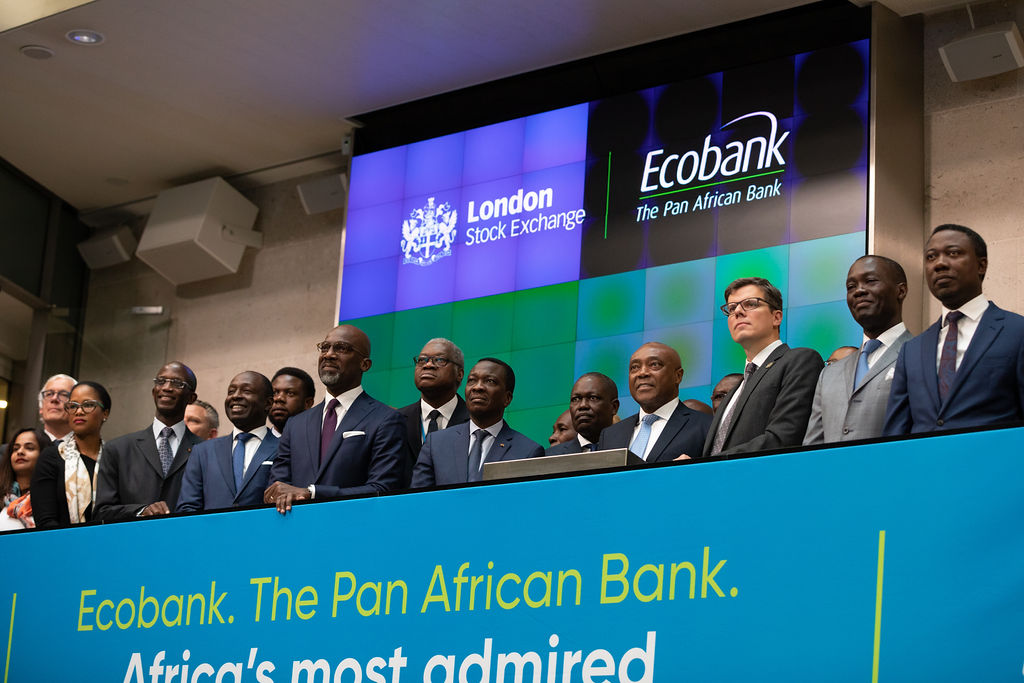
From its 2008 founding as the investment banking arm of the Ecobank Group to its current status as a multi-billion cedi asset manager with the largest fixed-income unit trust in Ghana, EDC Investments has spent nearly two decades building a fortress of trust among pension funds, institutions, and retail investors. With a flagship Fixed Income Unit Trust boasting a GHS 1.49 billion fund size, a Balanced Fund delivering 23.59% returns in 2024, a groundbreaking Shariah-compliant Nigeria Halal Fund, and ambitious plans for a five-nation Pan-African Halal fund spanning Nigeria, Ghana, Senegal, Ivory Coast, and Kenya, the firm is the quiet engine of wealth creation for thousands—and the Ecobank group’s strategic vehicle for ethical, cross-border Islamic finance.
Executive Introduction
In the crowded landscape of Ghana’s asset management industry, there are firms that chase headlines with blockbuster returns, and there are firms that quietly, diligently manage the billions of cedis entrusted to them by pension funds, institutions, and retail investors. EDC Investments Ltd. belongs firmly to the latter category—and has been doing so for nearly two decades.

Founded in 2008 as the asset management and investment banking subsidiary of the Ecobank Group, EDC Investments has grown from a modest startup into a multi-billion cedi fund manager with one of the largest fixed-income unit trusts in the country . Today, the firm manages a suite of funds that span the risk spectrum: from the conservative Fixed Income Unit Trust (GHS 1.49 billion fund size, minimum investment GHS 50) to the balanced EDC Ghana Balanced Fund (GHS 138 million AUM, 23.59% return in 2024) to the specialised EDC Kiddi Fund .
📢 GET A DETAILED ARTICLES + JOBS
Join ASJ's WhatsApp Channel and never miss a post or opportunity.

The firm’s parentage is formidable. As part of the Ecobank Group—which has a presence in 35 African countries—EDC Investments has access to a continent-wide distribution network, deep capital markets expertise, and the credibility of one of Africa’s most respected banking brands . This affiliation allows the firm to structure pan-African investment products that few indigenous asset managers can replicate.
But EDC Investments is not merely a fund manager; it is a pioneer. In 2022, the firm launched the Nigeria Halal Fund, an open-ended mutual fund designed for retail and institutional investors seeking Shariah-compliant investments in Nigeria’s domestic market . This laid the foundation for an ambitious regional expansion: EDC is now planning a five-nation Pan-African Halal Fund spanning Nigeria, Ghana, Senegal, Côte d’Ivoire, and Kenya, capitalising on rising investor interest and favourable demographics in its core markets .

Under the leadership of Managing Director Paul Kofi Mante—who has been the public face of the firm’s financial literacy advocacy and product innovation—EDC Investments has positioned itself as a trusted partner for individuals, religious organisations, schools, institutions, pension funds, provident funds, and corporations .
For pension consultants, institutional trustees, and retail investors, EDC Investments represents a case study in bank-backed asset management stability, ethical finance innovation, and pan-African ambition. This profile examines the firm’s 2008 founding, its parentage under the Ecobank Group, its flagship fund suite (Fixed Income Unit Trust, Balanced Fund, Kiddi Fund), its pioneering Shariah-compliant funds, the leadership of Paul Mante, and the critical question: As EDC expands its Halal offerings across five African nations, can it successfully bridge the gap between local regulatory frameworks and global Islamic finance standards—and will Ghanaian investors embrace ethical, Shariah-compliant products?
Company Overview: The 2008 Founding Under the Ecobank Group
The Genesis: Ecobank Development Corporation to EDC Investments
EDC Investments Ltd. traces its origins to 2008, when it was established as the asset management and investment banking subsidiary of the Ecobank Group . The firm was originally known as the Ecobank Development Corporation (EDC), serving as the investment banking wing of the pan-African banking giant.
In March 2009, EDC launched its first major retail investment product—the iFUND, a balanced mutual fund designed to invest 50 percent of its assets in fixed income instruments and 50 percent in listed equities under normal market conditions . The fund was launched with a minimum subscription of GH¢200,000 during its initial public offer period, and investors could purchase a minimum of 200 shares at GH¢0.10 per share .
Speaking at the launch, Mr. Paul Mante—then Acting Head of EDC Investments Limited—told journalists that “the objective of the fund is to preserve and enhance shareholders’ wealth to meet medium to long-term financial goals and create liquidity to meet short term needs” . This philosophy has remained at the core of EDC’s investment approach.
The Ecobank Parentage: A Pan-African Advantage
EDC Investments is a subsidiary of the Ecobank Group, one of Africa’s largest banking conglomerates with a presence in 35 African countries (excluding North Africa) and a global footprint covering Paris, London, Dubai, and Beijing . This parentage provides EDC with several structural advantages:
| Advantage | Explanation |
|---|---|
| Capital Stability | EDC can draw on the Ecobank Group’s balance sheet for capital needs, rather than seeking external funding |
| Pan-African Distribution | The firm can leverage Ecobank’s extensive branch network across 35 countries for fund distribution and client acquisition |
| Cross-Border Expertise | EDC has access to the Group’s capital markets teams across Africa, enabling the structuring of multi-jurisdictional funds |
| Regulatory Credibility | As part of a licensed, regulated banking group, EDC benefits from the trust and credibility of the Ecobank brand |
| Investment Banking Synergy | EDC can co-ordinate with Ecobank’s corporate finance and capital markets teams for deal flow and proprietary investments |
The firm is registered as a Fund Manager with the Securities and Exchange Commission (SEC) and operates under the Securities Industry Act, 2016 (Act 929).
Key Operational Metrics
| Metric | Value |
|---|---|
| Founded | 2008 |
| Formerly Known As | Ecobank Development Corporation (EDC) |
| Headquarters | 2nd Floor, New Ecobank Head Office, 2 Morocco Lane, Off Independence Avenue, Accra, Ghana |
| Ownership | Subsidiary of the Ecobank Group (Ecobank Capital Group) |
| Pan-African Presence | Parent group operates in 35 African countries |
| Regulator | Securities and Exchange Commission (SEC) |
| MD/CEO | Paul Kofi Mante |
| Portfolio Manager (Fixed Income Fund) | Emmanuel Bossman Ampadu |
| Portfolio Manager (Balanced Fund) | Edna Ahunu |
| Auditor | Baker Tilly Andah and Andah |
| Trustee (Unit Trusts) | Universal Merchant Bank (UMB) Ghana Ltd |
| Phone | +233 (0) 302 634 165, +233 (0) 302 610 400 |
| 050 926 8414 | |
| [email protected] |
Leadership: Paul Kofi Mante (Managing Director)
Mr. Paul Kofi Mante serves as the Managing Director of EDC Investments Ltd. . He has been the public face of the firm’s strategic direction, product innovation, and financial literacy advocacy.
Career Highlights and Advocacy:

In July 2025, Mante launched a five-book financial literacy series co-authored with his wife, Linda Mante, aimed at reshaping how Ghanaians think about money, wealth-building, and financial stability . The book collection includes:
-
How to Own Your First House
-
Retirement Planning
-
Marriage and Finance
-
A Practical Guide to Multiple Streams of Income
-
80 Practical Multiple Stream of Income Ideas
Speaking ahead of the launch, Mante urged Ghanaians to adopt a disciplined approach to retirement and financial planning, stating: “Retirement is a blessing, not a curse… Life moves fast, and if investment must be done, it must be done now—and fast. I recommend that everyone invests at least 20% of their monthly income” .
He emphasised that “financial freedom in marriage is not automatic—couples need to sit and plan for it,” highlighting the importance of joint financial planning for couples .
Mante’s leadership has been instrumental in driving EDC’s expansion into ethical finance, including the launch of the Nigeria Halal Fund in 2022 and the firm’s ambitious plans for a five-nation Pan-African Halal fund .
Historical Role (March 2009):
Mante was present at the launch of the original iFUND in 2009, serving as Acting Head of EDC Investments Limited at the time . His tenure with the firm spans nearly two decades, providing continuity and deep institutional knowledge.
Board of Directors
The 2024 Annual Report identifies Mr. Richard Adu-Poku as the Chairman of the Board of Directors for the EDC Ghana Balanced Fund PLC . The Board provides strategic oversight and governance for the firm’s collective investment schemes.
The Fund Suite: Over GHS 1.5 Billion in Assets Under Management
EDC Investments manages a diverse portfolio of collective investment schemes, catering to retail investors, institutions, pension funds, and provident funds. The fund sizes range from GHS 1.49 billion for the flagship Fixed Income Unit Trust to GHS 138 million for the Balanced Fund .
1. EDC Ghana Fixed Income Unit Trust (The Flagship)
The EDC Ghana Fixed Income Unit Trust is the crown jewel of EDC’s fund suite—and one of the largest fixed-income unit trusts in Ghana.
| Metric | Value |
|---|---|
| Portfolio Manager | Emmanuel Bossman Ampadu |
| Inception Date | 27th July 2012 |
| Fund Size | GHS 1.49 billion |
| Minimum Initial Investment | GHS 50 |
| Valuation Period | Daily |
| Subscription Fee | 0.5% front load |
| Redemption Fee | Nil |
| Management Fee | 2.0% p.a. |
| Investment Objective | Achieve current income on a long-term basis; outperform short-term interest rates offered on Government Securities while delivering an inflation-protected income stream to investors |
| Asset Allocation | 100% of the Fund’s net assets shall be invested in a well-diversified mix of fixed income securities |
| Annual Reports | Available on the Ecobank Asset Management website |
Key Features:
-
Hassle-Free Withdrawals: Access your funds within 5 working days
-
Daily Interest Earnings: Watch your money grow every day
-
Low-Risk Option: Designed for peace of mind
-
Expert Financial Guidance: Managed by a team of experts
Performance (September 2024):

As of September 2024, the fund had declined by 0.17% in the month, reflecting price rallies in its underlying holdings. The fund has yielded a compound annual growth rate (CAGR) of 18.33% since inception .
Historical NAV and Performance:
| Period | NAV per Share (AMC) | NAV per Share (MTM) | Monthly Return (%) |
|---|---|---|---|
| Current | GHS 7.77335 | GHS 5.13576 | — |
| 2021 YTD | — | — | +16.44% |
| 2022 YTD | — | — | +13.44% |
| 2023 YTD | — | — | -8.24% |
| 2024 YTD | — | — | +6.55% |
2023 Volatility Context:
The fund experienced significant volatility in 2023, with monthly returns fluctuating between +16.62% (March) and -12.70% (December), reflecting the turbulent post-DDEP economic environment . However, the fund rebounded strongly, with 2024 performance positive.
Who Can Invest:
“Everyone! Whether you’re an individual, religious organization, school, institution, pensions fund, provident fund, company, or club, the EDC Ghana Fixed Income Sub-Account is for you” .
Investment Options:
Investors can deposit funds through multiple channels:
-
Make a deposit at any Ecobank branch
-
Bank transfer to EDC Ghana Fixed Income Account No 1441002000910 (using your 7-digit EDC Number as reference)
-
USSD option: Dial “*887505” for a quick and seamless deposit
-
Paybill on the Ecobank Mobile app
2. EDC Ghana Balanced Fund
The EDC Ghana Balanced Fund is a balanced mutual fund designed to provide a mix of growth and income by investing in both equities and fixed income securities.
| Metric | Value |
|---|---|
| Type | Balanced Mutual Fund (MF) |
| Portfolio Manager | Edna Ahunu |
| Number of Active Clients | 10,381 (slight decline from 10,402 in 2023) |
| Assets Under Management (Dec 2024) | GHS 138 million (+34% YoY) |
| 2024 Return | 23.59% |
| Asset Allocation | Diversified portfolio including equities, fixed income, and hard currency assets |
2024 Performance Summary:
The Chairman’s Report for the 16th Annual General Meeting noted:
*“In full-year 2024, the EDC Ghana Balanced Fund delivered a strong return of 23.59%, reflecting effective portfolio positioning amid evolving market conditions. Performance was largely driven by exposure to select counters on the Ghana Stock Exchange, capitalizing on the broad equity market rally and improved investor sentiment. Additionally, the Fund made its first foray into hard currency assets, aiming to enhance diversification and capture gains from more stable external markets. This increased exposure also served as a hedge against local currency volatility, contributing positively to overall returns”* .
Market Context (2024):
-
The GSE Composite Index (GSE-CI) recorded a year-on-year gain of 56.2% in 2024, a significant improvement over the 28.1% growth recorded in 2023 .
-
Market capitalisation rose to GHS 111.36 billion in December 2024, marking a 50.7% increase year-on-year .
-
This strong equity performance benefited the Balanced Fund’s equity allocation.
Hard Currency Diversification:
In 2024, the Fund made its first foray into hard currency assets, aiming to enhance diversification and capture gains from more stable external markets. This also served as a hedge against local currency volatility .
3. EDC Kiddi Fund
The EDC Kiddi Fund is a mutual fund (MF) categorised as a fixed-income fund . It is designed for long-term savings for children’s education and future needs, investing primarily in fixed income securities.
This fund is part of EDC’s strategy to capture the growing demand for education savings plans and long-term retail investment products.
4. EDC Money Market Unit Trust
The EDC Money Market Unit Trust is a unit trust (UT) categorised as a fixed-income fund . It is designed for investors seeking capital preservation, liquidity, and competitive returns through short-term fixed income instruments.
This fund complements the Fixed Income Unit Trust, offering a shorter-duration, more liquid option for risk-averse investors.
5. iFUND (Historical, Launched 2009)
The iFUND was EDC’s first major retail collective investment scheme, launched in March 2009. It was a balanced mutual fund designed to invest 50 percent of its assets in fixed income instruments and 50 percent in listed equities under normal market conditions .
Historical Fund Details (2009):
| Metric | Value |
|---|---|
| Launch Date | 2 March 2009 |
| Type | Open-ended balanced mutual fund |
| Asset Allocation | 50% fixed income, 50% listed equities |
| Minimum Subscription (IPO) | GH¢200,000 |
| Shares Offered | Minimum 2 million shares at GH¢0.10 per share |
| Minimum Investment | 200 shares (GH¢20) |
| Investment Scope | Ghana, West African sub-region, East Africa |
Historical Context:
At the launch, Mr. Paul Mante (Acting Head of EDC Investments) stated:
“While acknowledging the effects of the global financial crisis on various African markets, after careful study of the situation, the Fund Managers were of the view that ‘there are very attractive emerging opportunities.’ The Managers are aware of the difficult and jittery investment climate at the moment, but they also believe that in times of severe market correction, there is always a window of opportunity for wealth transfer from the fearful to the astute investor” .
The iFUND’s launch demonstrated EDC’s contrarian investment philosophy—investing when others were fearful—a philosophy that has served the firm well over the subsequent decades.
Summary of EDC’s Fund Suite
| Fund Name | Type | Fund Size (Dec 2024) | Minimum Investment | Latest Return | Key Features |
|---|---|---|---|---|---|
| EDC Ghana Fixed Income Unit Trust | Fixed Income Unit Trust | GHS 1.49 billion | GHS 50 | 18.33% CAGR (since inception) | Daily valuation; 5-day withdrawal; low-risk |
| EDC Ghana Balanced Fund | Balanced Mutual Fund | GHS 138 million | — | 23.59% (2024) | Equity + fixed income + hard currency diversification |
| EDC Kiddi Fund | Fixed Income Mutual Fund | — | — | — | Education savings; fixed income focus |
| EDC Money Market Unit Trust | Fixed Income Unit Trust | — | — | — | Short-duration; high liquidity |
| iFUND (2009) | Balanced Mutual Fund | — | GH¢20 (historical) | — | Historical; 50/50 equity/fixed income |
Pioneering Shariah-Compliant Finance: The Nigeria Halal Fund and Five-Nation Pan-African Fund
One of EDC Investments’ most distinctive strategic initiatives is its expansion into Shariah-compliant (Halal) finance. This positions the firm to capture the growing demand for ethical investment products in Africa’s Muslim-majority and Muslim-minority markets.
The Nigeria Halal Fund (Launched August 2022)
In August 2022, EDC launched the Nigeria Halal Fund, an open-ended mutual fund designed for retail and institutional investors seeking ethical, Shariah-compliant investments in Nigeria’s domestic market .
Key Features of the Nigeria Halal Fund:
| Feature | Description |
|---|---|
| Type | Open-ended mutual fund (Shariah-compliant) |
| Target Market | Retail and institutional investors in Nigeria |
| Investment Approach | Ethical, Shariah-compliant (prohibits interest, gambling, alcohol, tobacco, pork, and other non-Halal activities) |
| Asset Classes | Equities, Sukuk (Islamic bonds), fixed income (Shariah-compliant), commodities |
| Regulatory Status | Laid the foundation for EDC’s regional ambitions in Islamic finance |
Strategic Significance:
The Nigeria Halal Fund was not merely a product launch; it was a proof of concept. By successfully launching a Shariah-compliant fund in Nigeria—Africa’s largest Muslim-majority country—EDC demonstrated its ability to structure, market, and manage Halal investment products in compliance with both SEC regulations and Islamic finance principles.
As Multi-Asset Portfolio Manager Olanrewaju Abimbola explained:
“The idea is to have a product that enables people to invest across Africa in a Halal way. We know there is demand, and we are building the platform to meet this need” .
The Ambitious Five-Nation Pan-African Halal Fund (2025–2026)
Building on the success of the Nigeria Halal Fund, EDC is now mobilising plans for a Shariah-compliant fund offering that will span five key African markets: Nigeria, Ghana, Senegal, Côte d’Ivoire, and Kenya .
Target Markets for the Pan-African Halal Fund:
| Country | Region | Halal Market Significance |
|---|---|---|
| Nigeria | West Africa | Largest Muslim population in Africa; robust Halal finance ecosystem |
| Ghana | West Africa | Growing Muslim population; emerging Halal finance awareness |
| Senegal | West Africa | Majority Muslim; Francophone market with established Islamic banking |
| Côte d’Ivoire | West Africa | Significant Muslim population; Francophone market |
| Kenya | East Africa | Hub for Islamic finance in East Africa; established Halal financial institutions |
Investment Sectors:
Olanrewaju Abimbola noted that EDC will “zero in on sectors like agriculture, oil and gas, commodities as well as Sukuk and fixed income” .
Target Audience:
“We want to create a structure that gives people globally an opportunity to participate in Africa’s growth” .
Product Characteristics:
The new fund will mimic EDC’s existing Pan-African Fixed Income and Equity Products Africa 8 fund—which invests in fixed income, equity, and currency markets of eight countries identified as Africa Economic Transformation drivers .
Regulatory Timeline (2025–2026):
“We are still working with the regulators in the different countries. The goal is to have a multi-jurisdictional product ready to be rolled out, and not to wait until all the approvals are in. The target is to have the fund operational in at least one country by the year-end” .
Strategic Rationale for Halal Fund Expansion
1. Favorable Demographics:
Africa has a rapidly growing Muslim population, with significant Muslim-majority countries including Nigeria, Senegal, and Kenya, as well as substantial Muslim minorities in Ghana, Côte d’Ivoire, and other nations. There is rising investor interest in Halal products across the continent .
2. Capitalising on Ecobank’s Pan-African Presence:
EDC is “capitalising on the parent group’s regional presence in 35 African countries (excluding North Africa) and its global footprint covering Paris, London, Dubai and Beijing to provide ethical exposure to Africa’s real economy for both regional and international investors” .
3. Medium-Term Target:
EDC aims to increase the share of Halal products in its overall portfolio to 15% to 20% of total Assets under Management (AUM) in the medium-term .
4. Africa Economic Transformation (AET) Focus:
The fund will target sectors identified as “Africa Economic Transformation drivers,” aligning with the continent’s industrialisation and infrastructure development agenda .
Service Excellence: Accessibility and Client Focus
EDC Investments has prioritised making its funds accessible to a wide range of investors, from retail savers to large institutions.
Low Minimum Investments
| Fund | Minimum Initial Investment |
|---|---|
| EDC Ghana Fixed Income Unit Trust | GHS 50 |
| EDC Ghana Fixed Income Sub-Account | GHS 50 |
| iFUND (2009 historical) | GH¢20 (200 shares at GH¢0.10) |
The GHS 50 minimum investment is among the lowest in the Ghanaian asset management industry, making professional investment management accessible to low-income savers, market women, teachers, and small business owners.
Multiple Investment Channels
EDC has embraced technology to make investing seamless:
| Channel | Details |
|---|---|
| Ecobank Branches | Make a deposit at any Ecobank branch nationwide |
| Bank Transfer | Transfer funds from any bank to EDC Ghana Fixed Income Account No 1441002000910 (use your 7-digit EDC Number as reference) |
| USSD | Dial “*887505” for a quick and seamless deposit |
| Ecobank Mobile App | Use the Paybill feature on the Ecobank Mobile app |
Client Communication
EDC maintains active communication with its clients through:
-
WhatsApp: 050 926 8414
-
Email: [email protected]
-
Phone: +233 (0) 302 634 165, +233 (0) 302 610 400
-
Annual General Meetings: The 16th AGM for the Balanced Fund was held in 2025
Financial Performance and Market Context (2024–2025)
The Balanced Fund’s 23.59% Return in 2024
The EDC Ghana Balanced Fund delivered a 23.59% return in 2024, driven by:
-
Exposure to select equities on the Ghana Stock Exchange, capitalising on the broad equity market rally
-
Improved investor sentiment following Ghana’s economic recovery and debt restructuring
-
First foray into hard currency assets to enhance diversification and hedge against local currency volatility
Fixed Income Unit Trust: 18.33% CAGR Since Inception
The Fixed Income Unit Trust has delivered a compound annual growth rate of 18.33% since inception (27th July 2012), providing consistent, inflation-beating returns to income-seeking investors .
The GSE Rally (2024-2025)
The Ghana Stock Exchange experienced a remarkable rally in 2024 and 2025, benefiting EDC’s Balanced Fund:
| Metric | 2024 Performance |
|---|---|
| GSE Composite Index (GSE-CI) | +56.2% year-on-year |
| Market Capitalisation | GHS 111.36 billion (+50.7% YoY) |
The 2024 AGM noted that this performance was “a significant improvement over the 28.1% growth recorded in 2023” and was “driven by a recovery in the profitability of listed financial institutions, improved market liquidity, and limited domestic investment alternatives following the Domestic Debt Exchange Programme (DDEP)” .
2025 Economic Outlook
The Chairman’s Report for 2025 noted that:
-
The global economy is projected to expand by 2.8% in 2025, a downward revision from earlier forecasts
-
Ghana’s economy is projected to grow by 4.0% in 2025 (slightly below the government’s target of 4.4% according to the IMF’s April 2025 update)
-
As of June 2025, the cedi had appreciated significantly—by 30% against the US dollar—reflecting improved macroeconomic fundamentals and strong external support
-
Inflation is expected to moderate further, driven by tight monetary policy, enhanced food supply, and a relatively stronger cedi
Academic Validation: A Case Study in Portfolio Optimization
EDC Investments has been the subject of academic research, providing external validation of its portfolio management capabilities.
A study titled “The Optimization of Portfolio Management in Emerging Capital Markets: The Case of EDC Investments Ltd” investigated how portfolio management could be optimized in emerging markets by focusing on equity portfolio management at EDC Investments Ltd .
Key Findings:
The study investigated a rotation strategy that shifts the equity portfolio allocation among cyclical and defensive stocks listed on the Ghana Stock Exchange over a 5-year period from January 2006 to December 2010. The rotation strategy used the Bank of Ghana’s monetary policy stance to time the economic trend in the portfolio allocation process .
Results:
“The rotation strategy produced more than 300% in excess of the market returns and more than 150% in excess of the sample portfolios’ returns over the sample period” .
Conclusion on Diversification:
“Besides, diversification across major African equity markets shows that, exposing the portfolio to various markets precludes the portfolio from being subject to the fluctuations of only one market while enhancing performance” .
About the Author:
The study was conducted by Toudeka Yaovi Elikplim, a senior executive in Orabank Togo where he oversees the Treasury Sales Desk .
Competitive Landscape: EDC vs. The Market
The “Big Players” of Ghanaian Asset Management
| Firm | Ownership | Key Strengths | EDC’s Position |
|---|---|---|---|
| EDC Investments | Bank-owned (Ecobank Group) | Pan-African distribution, Halal fund innovation, GHS 1.49bn fixed income fund | The Pan-African Halal Pioneer |
| Databank Asset Management | Independent (Databank Group) | Largest mutual fund provider, strong brand recognition, long track record | The Market Leader |
| GCB Capital | Bank-owned (GCB Bank) | Largest indigenous bank backing, pension expertise | The State-Backed Competitor |
| Republic Investments | Bank-owned (Republic Bank) | Caribbean parentage, first REIT in Ghana | The Niche Specialist |
| Fidelity Securities | Bank-owned (Fidelity Bank) | Largest private bank backing, low minimums | The Accessible Alternative |
Competitive Advantages
1. Ecobank Group Backing (The Pan-African Advantage):
EDC can leverage Ecobank’s presence in 35 African countries for fund distribution, client acquisition, and investment research. This is a structural advantage that independent asset managers cannot replicate.
2. Largest Fixed-Income Unit Trust in Ghana (GHS 1.49 billion):
The Fixed Income Unit Trust’s scale provides economies of scale, allowing EDC to offer competitive fees (2.0% management fee, 0.5% front load) and attract institutional investors .
3. Pioneer in Shariah-Compliant Funds:
EDC is one of the few asset managers in Ghana offering Halal investment products. The Nigeria Halal Fund and the planned five-nation Pan-African Halal fund position EDC to capture the growing demand for ethical, Islamic finance products across Africa .
4. Low Barrier to Entry (GHS 50 Minimum):
The GHS 50 minimum investment for the Fixed Income Unit Trust is among the lowest in the industry, making EDC accessible to retail investors .
5. Strong 2024 Performance (23.59% for Balanced Fund):
The Balanced Fund’s 23.59% return in 2024 outperformed many competitors, providing validation of EDC’s investment strategy .
6. Academic Validation:
The independent academic study demonstrating that EDC’s rotation strategy produced “more than 300% in excess of the market returns” provides external validation of the firm’s investment capabilities .
Competitive Disadvantages
1. Smaller Balanced Fund AUM (GHS 138 million):
While the Fixed Income Unit Trust is large (GHS 1.49 billion), the Balanced Fund’s AUM of GHS 138 million is smaller than some competitors. EDC may not be capturing as much of the equity market rally as larger competitors .
2. Lower Brand Recognition (Outside Ecobank Customers):
While Ecobank is a well-known brand, EDC Investments is less recognised among the general public compared to Databank or GCB Capital. Many savers may not be aware that their bank has an asset management arm.
3. Reliance on Fixed Income (Concentration Risk):
The Fixed Income Unit Trust (GHS 1.49 billion) dominates EDC’s AUM. This concentration exposes the firm to interest rate and sovereign risk. A sharp rise in interest rates or another debt restructuring would affect the fund’s performance.
4. Halal Fund Execution Risk:
The five-nation Pan-African Halal fund is ambitious. EDC must navigate the regulatory frameworks of five different countries—Nigeria, Ghana, Senegal, Côte d’Ivoire, and Kenya—each with its own SEC-equivalent regulator and its own approach to Islamic finance. Delays in regulatory approvals could stall the launch .
5. Balanced Fund Client Decline:
The Balanced Fund’s active clients declined from 10,402 in 2023 to 10,381 in 2024. While the drop was modest (21 clients), it is a trend that bears watching .
Challenges and Risks
No analysis of EDC Investments is complete without acknowledging the headwinds it faces.
Risk 1: Interest Rate Risk (Fixed Income Concentration)
The Fixed Income Unit Trust (GHS 1.49 billion) is heavily exposed to interest rate movements. If the Bank of Ghana cuts policy rates aggressively, the yields on new fixed income investments fall, compressing the returns that EDC can offer to its unitholders.
Mitigation: The Balanced Fund’s allocation to equities provides some diversification. The Fixed Income Unit Trust is positioned as a low-risk, income-focused product; investors accept lower returns in exchange for safety.
Risk 2: Sovereign Risk (Ghana’s Debt Sustainability)
EDC’s fixed income funds invest heavily in Government of Ghana securities. While Treasury Bills were excluded from the DDEP, long-dated bonds were restructured. A future debt sustainability crisis could affect the value of EDC’s fixed income holdings.
Mitigation: The Fixed Income Unit Trust focuses on shorter-duration instruments where possible. The Balanced Fund diversified into hard currency assets in 2024 to hedge against local currency volatility .
Risk 3: Halal Fund Regulatory Hurdles
The five-nation Pan-African Halal fund is ambitious. Regulatory approvals in five different countries—each with its own SEC-equivalent regulator and its own approach to Islamic finance—could be delayed. Nigeria, Ghana, Senegal, Côte d’Ivoire, and Kenya have varying levels of Islamic finance infrastructure. Kenya has a well-established Islamic finance ecosystem; Ghana is still developing its framework.
Mitigation: EDC is “working with the regulators in the different countries” and aims to have the fund operational in at least one country by the end of 2025 .
Risk 4: Currency Volatility (Cedi Depreciation)
The cedi’s historic volatility affects the value of hard currency assets in the Balanced Fund and the purchasing power of returns for local investors.
Mitigation: The Balanced Fund’s hard currency allocation serves as a hedge against cedi depreciation .
Risk 5: Competition from Other Asset Managers
Databank, GCB Capital, and other competitors have stronger brand recognition and larger AUM in balanced and equity funds. EDC may struggle to attract equity-seeking investors away from these established players.
Mitigation: EDC’s Halal fund differentiation and low minimum investments are competitive advantages.
Risk 6: Parent Bank Concentration
As a subsidiary of the Ecobank Group, EDC’s fortunes are tied to the Bank’s. If Ecobank faces financial or reputational challenges, the asset manager could be affected.
Mitigation: EDC has its own SEC license and operates as a distinct legal entity with separate governance. The funds’ assets are held by an independent trustee (UMB), providing an additional layer of protection .
Economic and Industry Impact
Supporting Ghana’s Fixed Income Market (GFIM)
EDC’s Fixed Income Unit Trust (GHS 1.49 billion) channels significant retail and institutional funds into government securities and corporate bonds. By providing liquidity to the GFIM, EDC supports the government’s borrowing programme and helps keep interest rates stable.
Democratising Investment (GHS 50 Minimum)
The GHS 50 minimum investment is a silent revolution. It opens the door to professional asset management for low-income savers, market women, teachers, and small business owners who would otherwise keep their savings in metal boxes under their beds.
Pioneering Halal Finance in West Africa
EDC’s Nigeria Halal Fund and the planned five-nation Pan-African Halal fund are pioneering initiatives in West African Islamic finance. By providing Shariah-compliant investment options, EDC is tapping into a growing market segment and promoting financial inclusion for Muslim investors who previously avoided conventional interest-bearing products.
Employment and Skills Development
EDC Investments directly employs portfolio managers, analysts, and support staff. The firm has also produced talent that has contributed to Ghana’s asset management industry, with professionals rotating between EDC, Ecobank, and other financial institutions.
Supporting Ecobank’s Pan-African Strategy
EDC’s Pan-African Halal fund aligns with Ecobank Group’s pan-African strategy, leveraging the Bank’s presence across 35 countries to provide cross-border investment products. This strengthens Ecobank’s position as a truly African banking group.
Future Outlook
As of June 2026, EDC Investments is executing a dual strategy: scale its conventional fixed income and balanced funds while pioneering Shariah-compliant pan-African Halal funds.
The Immediate Agenda (2026-2027)
-
Launch the Five-Nation Pan-African Halal Fund: Secure regulatory approvals in Nigeria, Ghana, Senegal, Côte d’Ivoire, and Kenya; launch in at least one country by the end of 2025 .
-
Grow the Balanced Fund’s AUM: Capitalise on the GSE’s strong performance to attract equity-seeking investors; aim to cross GHS 200 million AUM.
-
Expand Fixed Income Unit Trust: Maintain the GHS 1.49 billion fund size; continue to attract institutional investors seeking stable, low-risk returns.
-
Deepen Financial Literacy Advocacy: Leverage Managing Director Paul Mante’s book series to build brand awareness and attract new retail investors .
-
Explore Additional Halal Products: Consider launching Halal versions of the Fixed Income Unit Trust and Balanced Fund for Muslim investors.
The Bull Case (Optimistic)
-
Halal Fund Expansion Succeeds: The five-nation Pan-African Halal fund successfully launches, attracting significant assets from institutional and retail investors across West and East Africa. Halal products reach the 15-20% of AUM target within three years.
-
Balanced Fund AUM Grows: The Balanced Fund’s 23.59% 2024 return attracts new investors. AUM crosses GHS 250 million by 2027.
-
Fixed Income Unit Trust Maintains Dominance: The fund remains the largest fixed-income unit trust in Ghana, providing stable, recurring fee income.
-
Parent Bank Synergies Deepen: Ecobank’s 35-country network drives significant cross-border fund sales. Pan-African AUM grows substantially.
-
GSE Bull Run Sustains: The Ghana Stock Exchange continues its strong performance (56.2% return in 2024), benefiting the Balanced Fund’s equity allocation.
The Bear Case (Pessimistic)
-
Halal Fund Regulatory Hurdles: Regulators in one or more countries delay approvals. The five-nation launch is scaled back to two or three countries. Ambition is not fully realised.
-
Interest Rates Fall: The Bank of Ghana cuts policy rates. Fixed income yields decline. The Fixed Income Unit Trust’s returns become less attractive relative to other asset classes. Investors withdraw funds.
-
GSE Correction: The equity market rally ends. The Balanced Fund’s returns fall below 10%. Investors move funds to fixed income products.
-
Competition Intensifies: Other asset managers launch Halal funds, eroding EDC’s first-mover advantage.
-
Currency Crisis: The cedi depreciates sharply. The hard currency allocation in the Balanced Fund hedges some risk, but local investors’ purchasing power declines.
The Verdict
EDC Investments Ltd. is the most understated giant in Ghana’s asset management industry. It does not chase headlines with flashy marketing campaigns or celebrity endorsements. Instead, it has spent nearly two decades patiently, diligently managing the billions of cedis entrusted to it by pension funds, institutions, and retail investors.
The firm’s achievements are remarkable. Its flagship Fixed Income Unit Trust has a fund size of GHS 1.49 billion, one of the largest in Ghana . Its Balanced Fund delivered a 23.59% return in 2024, benefiting from the GSE’s strong rally . Its GHS 50 minimum investment is among the lowest in the industry, democratising access to professional investment management .
But what truly distinguishes EDC is its pan-African ambition and its pioneering role in Halal finance. The Nigeria Halal Fund, launched in 2022, was a proof of concept. Now, the firm is planning a five-nation Pan-African Halal fund spanning Nigeria, Ghana, Senegal, Côte d’Ivoire, and Kenya—a truly continental product that leverages Ecobank’s presence in 35 African countries . If successful, this will establish EDC as the premier Halal asset manager in West Africa.
The firm is backed by the Ecobank Group, one of Africa’s most respected banking brands. Its portfolio managers—Emmanuel Bossman Ampadu and Edna Ahunu—have demonstrated consistent performance across market cycles . Its Managing Director, Paul Kofi Mante, is not just a fund manager but a financial literacy advocate, actively working to improve the financial capability of ordinary Ghanaians through his book series .
For the pension fund trustee seeking a stable, SEC-regulated partner, EDC offers the largest fixed-income unit trust in the country. For the retail investor seeking to start small, EDC offers a GHS 50 entry point. For the Muslim investor seeking ethical, Shariah-compliant returns, EDC offers the Nigeria Halal Fund and—soon—a pan-African Halal product.
EDC Investments is not trying to be the loudest asset manager in Ghana. It is trying to be the most trusted, the most accessible, and the most innovative. With a GHS 1.49 billion fixed-income fund, a 23.59% balanced fund return, and a pan-African Halal vision, it is well-positioned to achieve that goal.
FAQ SECTION
1. Is EDC Investments a subsidiary of Ecobank?
Yes. EDC Investments Ltd. is a subsidiary of the Ecobank Group (Ecobank Capital Group), the pan-African banking giant with a presence in 35 African countries .
2. Who is the Managing Director of EDC Investments?
The Managing Director is Mr. Paul Kofi Mante. He is also a financial literacy advocate and co-author of a five-book series on personal finance and retirement planning .
3. What is the largest fund managed by EDC Investments?
The EDC Ghana Fixed Income Unit Trust is the largest, with a fund size of GHS 1.49 billion as of 2024 .
4. How much does it cost to invest in the Fixed Income Unit Trust?
The minimum initial investment is GHS 50. The subscription fee is 0.5% front load, and the annual management fee is 2.0%. There is no redemption fee .
5. What is the EDC Ghana Balanced Fund’s 2024 return?
The EDC Ghana Balanced Fund delivered a return of 23.59% in 2024, driven by exposure to equities on the Ghana Stock Exchange and a first foray into hard currency assets .
6. What is the Nigeria Halal Fund?
The Nigeria Halal Fund is a Shariah-compliant open-ended mutual fund launched by EDC in August 2022 for retail and institutional investors seeking ethical investments in Nigeria’s domestic market .
7. What is the five-nation Pan-African Halal fund?
EDC is planning to launch a Shariah-compliant fund spanning Nigeria, Ghana, Senegal, Côte d’Ivoire, and Kenya. The fund will invest in sectors such as agriculture, oil and gas, commodities, Sukuk, and fixed income .
8. How has the Fixed Income Unit Trust performed since inception?
The fund has yielded a compound annual growth rate (CAGR) of 18.33% since its inception on 27th July 2012 .
9. Does EDC Investments offer a children’s savings fund?
Yes. The EDC Kiddi Fund is a fixed-income mutual fund designed for long-term savings for children’s education and future needs .
10. How can I invest in EDC’s funds?
You can invest by making a deposit at any Ecobank branch, transferring funds to the designated EDC account (Account No 1441002000910), using the USSD code *887505, or the Ecobank Mobile app Paybill feature .
11. Who is the trustee for EDC’s unit trusts?
The trustee for the EDC Ghana Fixed Income Unit Trust and other unit trusts is Universal Merchant Bank (UMB) Ghana Ltd .
12. How can I contact EDC Investments?
You can contact EDC at +233 (0) 302 634 165, +233 (0) 302 610 400, via WhatsApp at 050 926 8414, or email [email protected] .
QUICK FACTS BOX
| Item | Details |
|---|---|
| Legal Name | EDC Investments Ltd. |
| Formerly Known As | Ecobank Development Corporation (EDC) |
| Founded | 2008 |
| Headquarters | 2nd Floor, New Ecobank Head Office, 2 Morocco Lane, Off Independence Avenue, Accra, Ghana |
| Ownership | Subsidiary of Ecobank Group (Ecobank Capital Group) |
| Parent Group Presence | 35 African countries + global footprint (Paris, London, Dubai, Beijing) |
| Managing Director | Paul Kofi Mante |
| Portfolio Manager (Fixed Income) | Emmanuel Bossman Ampadu |
| Portfolio Manager (Balanced Fund) | Edna Ahunu |
| Board Chairman (Balanced Fund) | Richard Adu-Poku |
| Fixed Income Unit Trust Fund Size | GHS 1.49 billion |
| Balanced Fund AUM (2024) | GHS 138 million (+34% YoY) |
| Balanced Fund Active Clients | 10,381 |
| Balanced Fund 2024 Return | 23.59% |
| Fixed Income Fund Minimum Investment | GHS 50 |
| Fixed Income Management Fee | 2.0% p.a. |
| Fixed Income Subscription Fee | 0.5% front load |
| Fixed Income CAGR Since Inception | 18.33% (27th July 2012) |
| Funds Managed | EDC Ghana Fixed Income Unit Trust, EDC Ghana Balanced Fund, EDC Kiddi Fund, EDC Money Market Unit Trust, iFUND (historical) |
| Halal Products | Nigeria Halal Fund (launched Aug 2022); Five-nation Pan-African Halal fund (Nigeria, Ghana, Senegal, Côte d’Ivoire, Kenya) in planning |
| Auditor | Baker Tilly Andah and Andah |
| Trustee | Universal Merchant Bank (UMB) Ghana Ltd |
| Regulator | Securities and Exchange Commission (SEC) |
| Phone | +233 (0) 302 634 165, +233 (0) 302 610 400 |
| 050 926 8414 | |
| [email protected] | |
| Website | www.ecobank.com (Asset Management section) |
Source: Accra Street Journal
Last Updated on June 8, 2026 by Samuel Kwame Boadu
Disclaimer: Some content on Accra Street Journal may be aggregated, summarized, or edited from third-party sources for informational purposes. Images and media are used under fair use or royalty-free licenses. Accra Street Journal is a subsidiary of SamBoad Publishing Hub under SamBoad Business Group Ltd, registered in Ghana since 2014.
For concerns or inquiries, please visit our Privacy Policy or Contact Page.

Samuel Kwame Boadu is a Ghanaian media entrepreneur and storyteller with a passion for amplifying urban voices and uncovering everyday truths. He is the Editor-in-Chief and Founder of Accra Street Journal, a dynamic digital platform dedicated to capturing the pulse of Ghana’s capital—its people, culture, challenges, business, sports and innovations.