









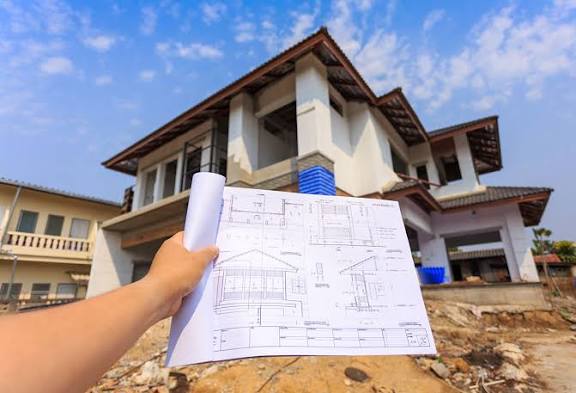

From incomplete designs to ignored stop-work orders—the structural reasons your construction budget never survives first contact with the site
Executive Introduction
The pattern is so common it has become a national cliché: the contractor quotes GHS 300,000; you sign the contract; the foundation goes in; the walls go up; then the money runs out. Not because you were reckless, but because the quote excluded half of what you actually needed. The National Development Planning Commission’s 2024 Annual Progress Report revealed a staggering GH¢70.3 billion in cost overruns across government projects alone . If the government cannot predict project costs, neither can the individual self-builder—unless they understand why budgets fail.

This ASJ report identifies the structural reasons home projects run over budget in Ghana: the systematic failure of informal estimating (the “completeness gap”), the design and planning failures that doom projects before they start, the financial and payment delays that cause cascading stoppages, the material price volatility that makes mockery of any quote, the regulatory and supervision gaps that allow unsafe and unauthorised work, and the hidden costs that no one mentions until the money is gone.
Part 1: The Completeness Gap — Why Your Contractor’s Quote Is Wrong
The single most costly mistake in Ghanaian construction is not choosing the wrong contractor or buying poor materials. It is accepting a quote that omits essential components. A 2026 study from the University of Cape Coast and KNUST found that true, code-compliant construction costs in Greater Accra are 29 to 98 percent higher than typical informal quotes . The gap arises from the omission of essential components: structural steel (Y16 rebar), plastering, floor screed, and full electrical and plumbing services .
📢 GET A DETAILED ARTICLES + JOBS
Join ASJ's WhatsApp Channel and never miss a post or opportunity.
This is not incompetence—it is a business strategy. Some contractors deliberately underquote to win the contract, knowing you will be forced to approve variations as the project progresses. The “completeness gap” is structural to the informal quoting process .
The critical warning: “Per-square-metre rates rarely cover the requirements for a fully completed, code-compliant building” . If a contractor quotes you a flat rate per square metre that seems too good to be true, it almost certainly is.
Part 2: Design and Planning Failures — The Mistakes That Happen Before Any Digging Starts
Poorly Defined Scope and Inadequate Feasibility Studies
Research on construction projects in Ghana has identified the critical factors causing cost overruns: poorly defined project scope, unrealistic contract durations imposed by clients, client-initiated variations, and underestimation of project cost by consultants. These are not site problems—they are planning problems.
The academic finding: “Factors affecting cost overruns were financial difficulty by client, delays in payments of completed works, variations in designs, lack of communications plans, poor feasibility and project analysis, poor financial management on site and material price fluctuations” .
A project that begins without a complete design will inevitably generate variations. Each variation adds cost. Each cost increase strains the budget. The project stalls.
The “Design Within Your Budget” Failure
A Ghanaian architectural consultant, Philips Construction, notes that many aspiring homeowners design their dream home first, then try to figure out how to pay for it—the reverse of what they should do . The house must be designed within your financial capabilities, not the other way around. If you design a 4-bedroom house on a 2-bedroom budget, the project will not survive the finishing stage.
The Unapproved Design Problem
The Ghana Institution of Engineering (GhIE) has called for all building designs to be prepared and approved by recognised Built Environment Professionals, and for the responsibility of professionals to be extended throughout the lifecycle of a building . Their preliminary investigations into recent building collapses found “un-engineered structures, inadequate foundations, unauthorised vertical extensions, and structural deficiencies” . Buildings that are not designed by qualified professionals are not only unsafe—they are also prone to cost overruns because no one accurately estimated what they would cost.
Part 3: Financial Factors — The Money Problems That Stop Everything
Delayed Payments and Contractor Cash Flow Crises
One of the most consistent findings across construction research in Ghana is that financial problems and delays in payments of completed works are major drivers of cost overruns . When contractors are not paid on time, they cannot pay workers or suppliers. Workers leave. Suppliers stop delivering. The project stalls. When work resumes, materials are more expensive. The budget overshoots.
The “Crisis-Driven Acceleration” Phenomenon
A 2025 study published in the Journal of Infrastructure Development found a counterintuitive relationship in Ghanaian infrastructure projects: cost overruns positively correlate with schedule performance in politically significant projects . The researchers identified a phenomenon of “crisis-driven acceleration,” where high-visibility projects facing cost overruns attract additional resources and attention to maintain schedule adherence despite mounting costs .
For homeowners, the implication is stark: if your project is not high-visibility and politically significant, you will not get the “acceleration.” You will just get the cost overrun.
Part 4: Material Price Volatility — The Moving Target
Construction in Ghana is highly sensitive to inflation and foreign exchange rates. The prices of cement, iron rods, tiles, and roofing sheets fluctuate often . The National Development Planning Commission attributes the GH¢70.3 billion in cost overruns to “sluggish GDP growth, high inflation, and volatile exchange rates, which have made completing public works increasingly expensive” .
2026 material price trends (June 2026):
-
Cement (32.5R per bag): GHS 80–85 (down 11.2% year-on-year)
-
Glazing: Up 16.2%—the fastest-rising cost component
-
Plumbing materials: Up 14.5%
-
Roofing sheets: Up 13.0%
The advice from Housing in Ghana: “Always add at least 10-15% contingency to your budget to cover unexpected price hikes” . The academic research confirms that the “completeness gap” means many builders underestimate by 30–100 per cent .
Part 5: Supervision and Quality Control — The “Nobody Is Watching” Problem
Poor Supervision and Lack of Inspections
The Chairman of the Civil Division of the Ghana Institution of Engineering, Ing. Michael Konadu, has attributed increasing building collapses to the use of inferior construction materials, poor supervision, and failure to comply with building regulations . He noted that inspections of some collapsed structures have revealed poor-quality concrete, undersized reinforcement bars, and improperly tied steel rods—all of which compromise the integrity of buildings .
If poor supervision leads to building collapses, it also leads to cost overruns: rework is expensive. A structure that is built incorrectly must be demolished and rebuilt. Each rework cycle consumes your contingency. When the contingency runs out, the project stalls.
Inadequate Assembly Capacity
Ing. Konadu expressed concern about the capacity of Metropolitan, Municipal and District Assemblies (MMDAs) to effectively enforce building regulations: many assemblies lack adequate personnel to monitor the growing number of construction projects . Using Ayawaso West as an example, he said a handful of technical officers cannot effectively oversee the large volume of building projects taking place in the area .
This enforcement gap means that unauthorised construction—work without permits, work without approved designs—proceeds unchecked. The Adenta building disaster, where a three-storey building collapsed, occurred despite ignored stop-work orders and construction without the required statutory approvals . The project was undertaken without approved architectural and structural engineering drawings, building permits, and other mandatory technical documentation . An additional floor was under construction at the time of collapse—an unauthorised vertical extension that placed excessive stress on a structure not designed to support the extra load .
The Informal Artisan Problem
The GhIE has called for formal certification of artisans, including masons and steel benders, given their critical role in construction delivery, particularly within the informal sector, which accounts for most of the building activity in the country . An uncertified mason who ties steel rods incorrectly may save GHS 500 in labour costs—and cost you GHS 50,000 in structural repairs when the beams fail.
Part 6: The Hidden Costs Nobody Tells You About
Beyond the structural and financial reasons for budget overruns, there are specific hidden costs that almost no one budgets for:
| Hidden Cost Category | Estimated Range (GHS) |
|---|---|
| Land documentation and registration | 2,000 – 10,000+ |
| Building permit and local assembly charges | 3,000 – 15,000+ |
| Utility connections (electricity, water, borehole) | 5,000 – 25,000 |
| Fencing and land security | 10,000 – 50,000+ |
| Professional fees (architect, engineer, QS) | 5% – 10% of construction cost |
| Finishing (tiles, paint, doors, electrical, plumbing) | 208,000 – 450,000 |
| Furnishing and landscaping | 95,000 – 290,000 |
Source: Adapted from Ono Aburi hidden costs guide and Housing in Ghana finishing analysis
The warning from Ono Aburi: “That’s why buying a house in Ghana always includes setting aside at least 10–20% extra for unexpected building costs” .
Part 7: Systemic Solutions — What Would Prevent Overruns
1. Use an Itemised Bill of Quantities
The academic research confirms that flat per-square-metre quotes systematically omit essential components . Demand an itemised BoQ that includes structural steel, plastering, floor screed, and full electrical and plumbing services.
Free tool: GhanaHousePlanner (ghanahouseplanner.com) provides region-aware material pricing updated monthly.
2. Design Within Your Budget
Philips Construction’s advice: “Allow them to design your home according to what you can afford financially. In this way, your house will be designed within your financial capabilities and not exceed them” .
3. Add Realistic Contingency
The Government Statistician advises adding 10-15% contingency for unexpected price hikes . The academic research confirms that many builders underestimate by 30–100 per cent .
4. Engage Licensed Professionals
The GhIE has called for all building designs to be prepared and approved by recognised Built Environment Professionals, and for professional responsibility to extend throughout the lifecycle of a building . This is not optional—it is the difference between a completed home and a collapsed one.
5. Comply with Permitting Requirements
The Adenta disaster shows what happens when builders ignore permits and stop-work orders: structural failure, trapped occupants, and a building that must be demolished . Permits are not red tape—they are safety infrastructure.
6. Budget for High-Inflation Items
The Ghana Statistical Service specifically advises “budgeting adequately for high-inflation items including glazing, plumbing materials and roofing sheets” .
Conclusion: The Overrun Is Not Bad Luck — It Is Poor Planning
Home projects in Ghana run over budget because the system is designed to hide costs. The “completeness gap” ensures that informal quotes exclude essential components. The payment delays ensure that contractors stop working. The material price volatility ensures that your budget is outdated before the foundation is dry. The supervision gap ensures that defects go undetected until they cost you twice as much to fix.
The GH¢70.3 billion in cost overruns across government projects is not a warning—it is evidence that cost overruns are systemic, not accidental .
The most important takeaway: If a contractor quotes you a flat per-square-metre rate that seems too good to be true, it almost certainly is. The “completeness gap” is not a conspiracy—it is a systematic failure of informal estimating. Use an itemised Bill of Quantities. Verify each line item. Add contingency. Engage licensed professionals. And build with confidence that your budget matches the real cost of a complete, code-compliant home.
Quick Reference: Why Home Projects Run Over Budget
| Reason | Evidence |
|---|---|
| Incomplete quotes (“completeness gap”) | 29–98% underestimates in informal quotes |
| Design and planning failures | Poorly defined scope, unrealistic contract durations, variations |
| Financial problems and payment delays | Cascading contractor cash flow crises |
| Material price volatility | Cement down 11.2%, glazing up 16.2%, plumbing up 14.5% |
| Poor supervision and lack of inspections | Undersized reinforcement, poorly tied steel rods |
| Regulatory enforcement gaps | Unauthorised construction, ignored stop-work orders |
| Hidden costs | Land registration, permits, utilities, fencing, finishing |
Source: Accra Street Journal
Last Updated on June 16, 2026 by Samuel Kwame Boadu
Disclaimer: Some content on Accra Street Journal may be aggregated, summarized, or edited from third-party sources for informational purposes. Images and media are used under fair use or royalty-free licenses. Accra Street Journal is a subsidiary of SamBoad Publishing Hub under SamBoad Business Group Ltd, registered in Ghana since 2014.
For concerns or inquiries, please visit our Privacy Policy or Contact Page.

Samuel Kwame Boadu is a Ghanaian media entrepreneur and storyteller with a passion for amplifying urban voices and uncovering everyday truths. He is the Editor-in-Chief and Founder of Accra Street Journal, a dynamic digital platform dedicated to capturing the pulse of Ghana’s capital—its people, culture, challenges, business, sports and innovations.