

4 min read
Africa’s richest man is developing a continent-wide refining network stretching from Nigeria to Kenya, with a combined capacity of 2.1 million barrels per day and $46 billion in planned investment across refining, cement, and fertiliser operations.
What began as a landmark refinery project in Nigeria is evolving into a continent-wide refining network, with Dangote Industries confirming plans for a 700,000-barrel-per-day refinery in Kenya as part of a $46 billion investment programme spanning its refining, cement and fertiliser businesses between 2026 and 2028 .
Once completed, Dangote Industries expects to operate a combined refining capacity of 2.1 million barrels per day—1.4 million in Nigeria and 700,000 in Kenya—creating one of Africa’s largest privately owned refining networks . The announcement represents a significant increase from Dangote’s earlier proposal for a 650,000-barrel-per-day facility, signalling growing confidence in East Africa’s long-term fuel demand .
Key Takeaways
- Once completed, Dangote Industries expects to operate a combined refining capacity of 2.1 million barrels per day—1.4 million in Nigeria and 700,000 in Kenya—creating one of Africa's largest privately owned refining networks .
- The announcement represents a significant increase from Dangote's earlier proposal for a 650,000-barrel-per-day facility, signalling growing confidence in East Africa's long-term fuel demand .
- The twin hubs would position Dangote to supply refined petroleum products across much of sub-Saharan Africa while reducing the continent's dependence on fuel imports from the Middle East, Europe and Asia .
The expanded plans were disclosed by Dangote Industries’ Group Vice President for Oil and Gas, Devakumar Edwin, during a visit by a delegation from the Republic of the Congo’s national oil company, Société Nationale des Pétroles du Congo (SNPC), to the Dangote Petroleum Refinery in Lagos . During the visit, the company outlined its long-term African expansion strategy while discussing regional energy cooperation .
Kenya emerged as Dangote’s preferred East African location after evaluations of several potential sites across the region . The Port of Mombasa, East Africa’s busiest seaport, already serves as a key gateway for petroleum products destined for Uganda, Rwanda, South Sudan, eastern Democratic Republic of Congo and parts of Tanzania . Kenya also possesses an extensive pipeline network operated by the Kenya Pipeline Company, enabling refined products to move efficiently across the country and into neighbouring landlocked states .
Dangote’s decision to favour Kenya over alternative sites such as Tanzania’s Tanga port was driven by maritime practicality, superior infrastructure, and stronger market demand . “I’m leaning more towards Mombasa because Mombasa has a much larger, deeper port,” Dangote told The Financial Times in a previous interview, adding that “Kenyans consume more. It’s a bigger economy” . Kenyan President William Ruto has confirmed the governments of the region would invest in the planned refinery, with Kenya designating seed capital of Ksh 21.5 billion towards the project .
The significance of the Kenyan refinery extends well beyond East Africa. Together with the planned 1.4 million barrels per day capacity in Nigeria, the two hubs would create a refining network stretching from the Atlantic coast to the Indian Ocean . The twin hubs would position Dangote to supply refined petroleum products across much of sub-Saharan Africa while reducing the continent’s dependence on fuel imports from the Middle East, Europe and Asia .
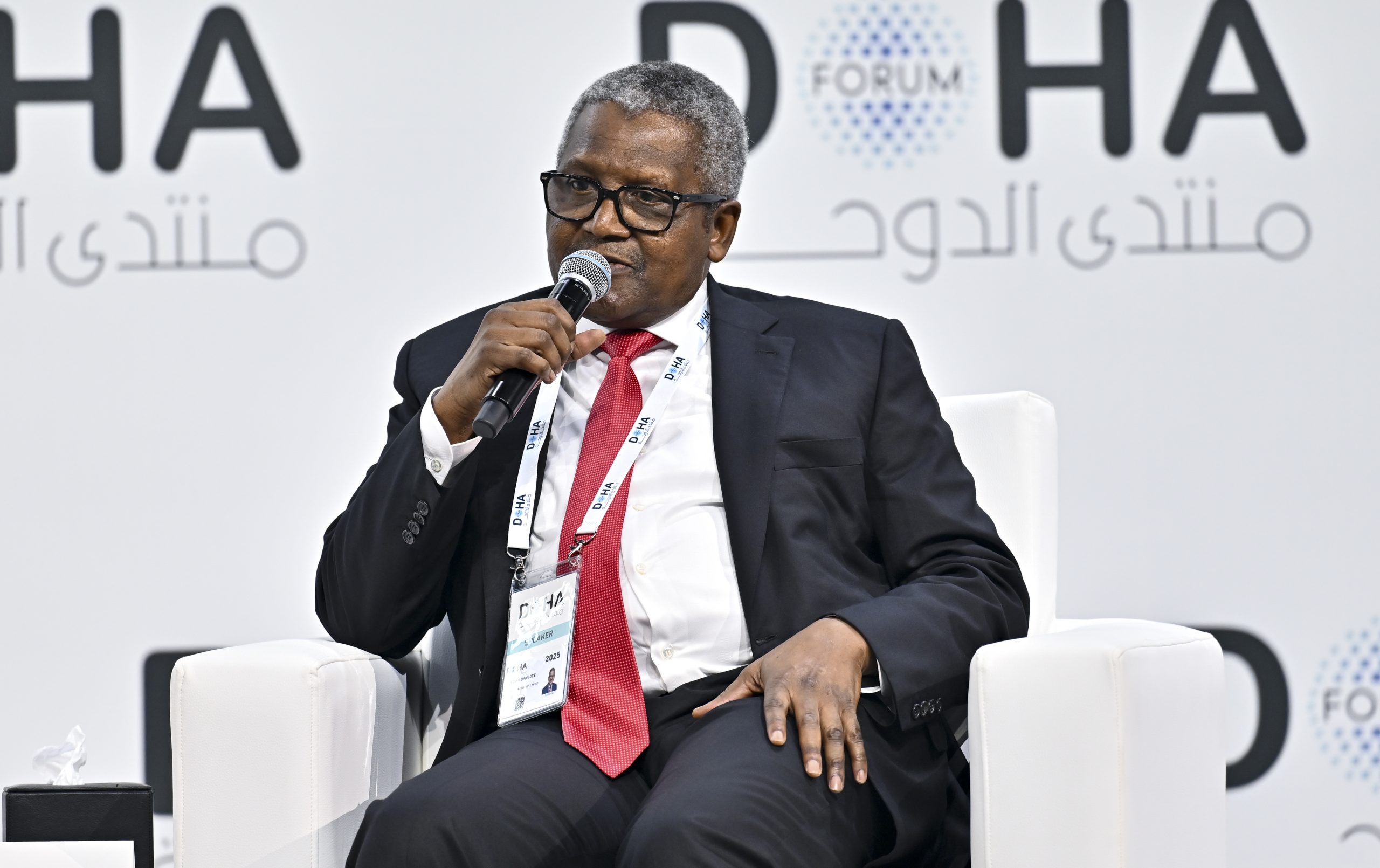
The strategy also complements the objectives of the African Continental Free Trade Area by strengthening intra-African industrial capacity and reducing dependence on overseas refiners . Dangote has repeatedly framed the company’s expansion as a continental rather than national project. We are for Africa, not just Nigeria. Tell us what you need, and we will see how we can work together,” Dangote said during the SNPC visit .
The Dangote Petroleum Refinery in Nigeria has already reshaped fuel trade flows across Africa. Export data from analytics firm Kpler shows shipments climbed to 353,000 barrels per day in April from 168,000 in February, with about half flowing to other African countries . The plant became the world’s largest jet fuel exporter in April, capitalising on supply disruptions linked to Middle East tensions . Chief Executive David Bird has described the Nigerian refinery as a “ruthless replication” project, with a second 700,000-barrel-per-day unit at the Lekki site targeted for late 2028 .
If completed, the twin-refinery strategy would place Dangote at the centre of Africa’s energy transition—not away from fossil fuels, but away from dependence on imported refined products. By linking West and East Africa through two mega-refineries, the group is positioning itself to become one of the continent’s most influential suppliers of transportation fuels while advancing a broader vision of African industrial self-sufficiency

Source: Accra Street Journal
Last Updated on July 6, 2026 by Samuel Kwame Boadu

Disclaimer: Some content on Accra Street Journal may be aggregated, summarized, or edited from third-party sources for informational purposes. Images and media are used under fair use or royalty-free licenses. Accra Street Journal is a subsidiary of SamBoad Publishing Hub under SamBoad Business Group Ltd, registered in Ghana since 2014.
For concerns or inquiries, please visit our Privacy Policy or Contact Page.

Samuel Kwame Boadu is a Ghanaian media entrepreneur and storyteller with a passion for amplifying urban voices and uncovering everyday truths. He is the Editor-in-Chief and Founder of Accra Street Journal, a dynamic digital platform dedicated to capturing the pulse of Ghana’s capital—its people, culture, challenges, business, sports and innovations.
Use the following reference when citing or referencing this article.
Your feedback helps us improve our journalism.
Report an Error
Help us maintain accuracy. Let our editorial team know if you spot an issue in this article.
Report a problem with this article