







Executive Introduction
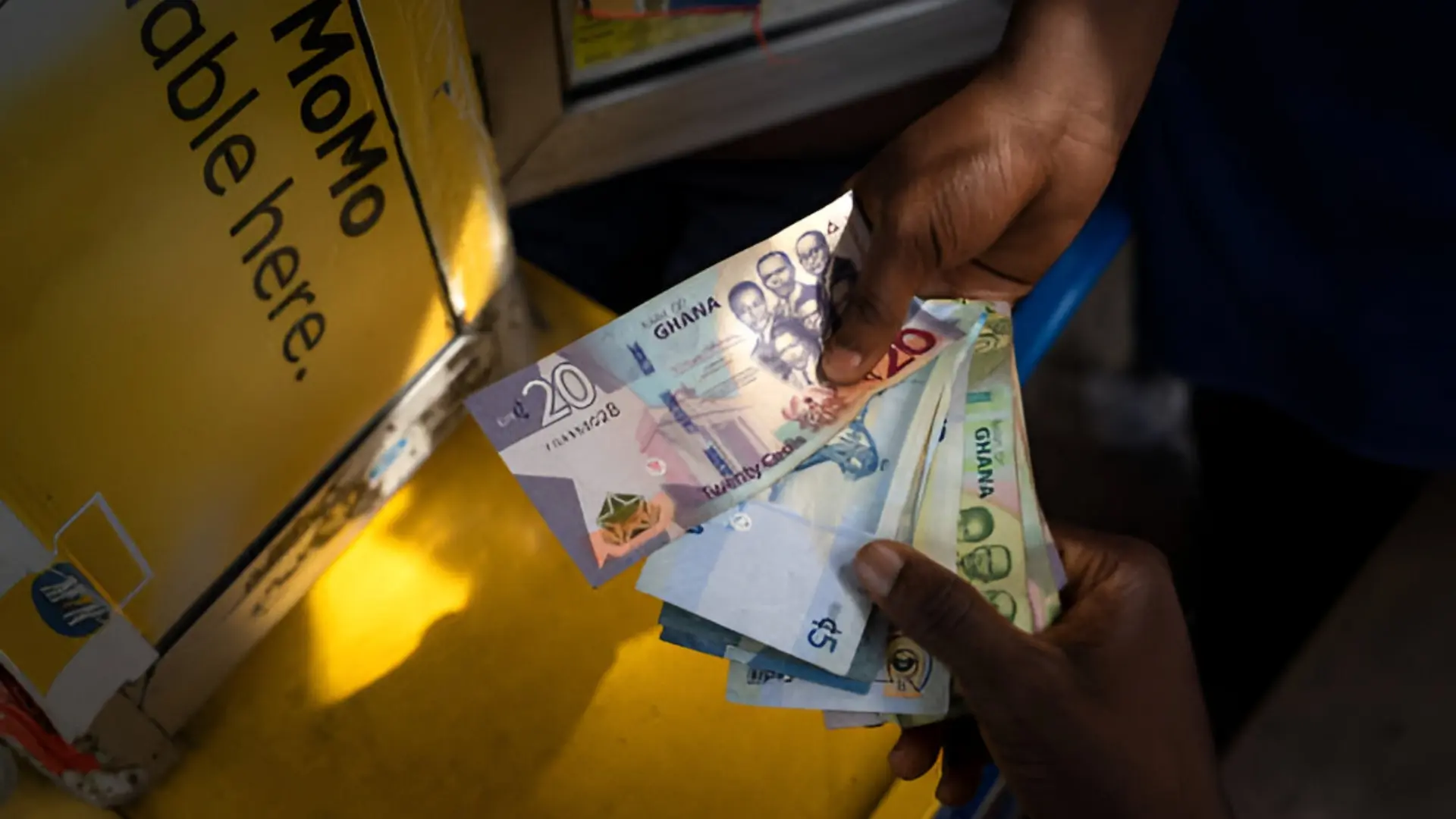
Walk through Makola Market on any given morning, and you will still hear the familiar jingle of mobile money transactions alongside the rustle of cash. But step into a mid-size retailer in Osu or a startup hub in Cantonments, and the story changes entirely . In 2026, Accra’s commercial heartbeat is increasingly digital—not because business owners woke up one day enamoured with technology, but because customers demanded it .
The numbers are staggering. In April 2026 alone, mobile money transactions in Ghana reached GH¢493.2 billion, with 967 million transactions recorded . Registered mobile money accounts climbed to 83 million—far exceeding the adult population of roughly 20 million—while active accounts stood at 26 million . Ghana now holds the distinction of being Africa’s most financially inclusive country, with a financial inclusion rate of 81 percent, driven largely by mobile money agents and basic phone-based transactions .

Yet this digital revolution has not reached every business equally. While 95 percent of individuals have used digital payments as consumers, only 37 percent of businesses across Ghana currently accept or use digital payment platforms . The future of cashless payments in Accra will be shaped by how this gap is closed.
📢 GET A DETAILED ARTICLES + JOBS
Join ASJ's WhatsApp Channel and never miss a post or opportunity.

Part 1: The Foundation – Mobile Money as the Operating System
Mobile money has evolved from a convenience into the backbone of Accra’s financial ecosystem. In 2026, 44.6 percent of consumers reported expanding their mobile money usage—the highest level observed in six years .
The infrastructure underpinning this dominance is formidable. Registered agents increased to 992,000, with 534,000 active, ensuring accessibility even in remote areas . Interoperability transaction values rose to GH¢5.8 billion in April 2026, nearly doubling from the previous year . This ease of movement between different financial ecosystems has been pivotal in mainstreaming digital payments.

As Clara Arthur, CEO of GhIPSS, explained at the 2026 3i Africa Summit, the growing confidence in mobile money is evident in everyday interactions. She recounted a recent conversation with a trader at Makola Market who, when asked how she preferred to receive payment, simply responded “mobile money” without asking whether the sender was using a bank account or mobile wallet . “What that moment represents goes beyond technology. It represents trust, access and progress,” Arthur stated .
Part 2: The Consumer Side – Why Accra Shops Differently Now
The consumer shift toward cashless payments is already well advanced. For many Accra residents, digital payments are no longer an alternative—they are the default.
Liquidity and Control
Ghanaian consumers are not simply adopting financial tools; they are reshaping their financial lives around control, liquidity, and resilience . Mobile money satisfies this need better than traditional financial instruments, offering speed, flexibility, and immediate access to funds . The emergence of the Ghana Card as a payment instrument in April 2026 reinforces this trajectory—rather than disrupting the system, it may deepen the liquidity-first behaviour already taking shape .
The Role of Fintechs
Fintech platforms such as Hubtel and ExpressPay have democratised access to tools once reserved for large corporations. A small fashion vendor in Labone can now accept QR-code payments, access real-time transaction analytics, and generate instant invoices—all without a traditional bank account . Businesses using integrated fintech platforms reduced cash-handling risks by nearly 60 percent while cutting transaction reconciliation time from hours to minutes .
The E-Cedi on the Horizon
The Bank of Ghana has signaled that the e-Cedi, Ghana’s central bank digital currency, has completed its pilot phase and is moving into a stage focused on cross-border settlement and wholesale payment applications . Governor Dr Johnson Pandit Asiama stated that the e-Cedi is now being actively designed for cross-border settlements and wholesale payments, positioning Ghana at the frontier of digital finance in Africa . “A payment initiated in Accra should clear in Abidjan or Lagos as easily as it clears in Kumasi,” he said, describing integrated financial infrastructure as essential for competitive emerging markets .
Part 3: The Business Challenge – Why Adoption Lags
The headline 37 percent adoption rate for business digital payments conceals significant disparities across firm size, sector, formality, and location .
The Urban-Rural Divide
Digital payments adoption is heavily concentrated in Greater Accra and a few regional capitals. For small businesses in secondary towns and rural growth centres, the infrastructure for digital payments is either absent or too costly. POS terminals reached only 23,151 units across the country by April 2026—a modest figure given Ghana’s population of approximately 35 million people .
Cost and Trust
Setting up digital payment acceptance involves POS devices, merchant accounts, data costs, and transaction fees. For a small market stall operating on thin margins, those expenses can outweigh perceived benefits . Some business owners also worry about fraud, scams, or technical failures that leave them unable to access their own money .
The Knowledge Gap
As Francis Annan, assistant professor of economics at UC Berkeley and co-lead of the ReFinD project, noted, while nearly 95 percent of individuals have used digital payments as consumers, only about 37 percent of businesses have done the same . “Firms face barriers like lack of understanding and concerns about security,” Annan said. “For more educated users, these barriers aren’t binding. But across the broader firm landscape, these constraints are real and they matter” .

Part 4: The Institutional Push – From Access to Integration
The Bank of Ghana is broadening its digital finance agenda beyond payments into areas such as digital credit, embedded finance, and cross-border financial services .
The Next Phase of Digital Finance
Governor Asiama argued that the challenge has evolved from expanding access to improving integration and scalability . “The issue is no longer access alone. It is fragmentation. It is cost. It is uneven regulatory alignment,” he said . The central bank is advancing several regulatory initiatives, including frameworks for virtual assets, digital credit, open banking, and cross-border fintech operations .
GhIPSS’s Infrastructure Upgrades
GhIPSS is migrating Ghana’s national payment infrastructure to the ISO 20022 global messaging standard to improve efficiency, enhance transaction data capabilities, and support seamless cross-border integration with global financial systems . According to Clara Arthur, this migration is a strategic step aimed at ensuring Ghana’s payment ecosystem aligns with international standards .
The Continental Digital Trade Corridor
At the 2026 3i Africa Summit, Vice President Professor Naana Jane Opoku-Agyemang announced that Ghana will collaborate with partners across Africa to pilot a continental digital trade corridor, focusing on mobile money interoperability, mutual recognition of digital identities for cross-border verification, and harmonised electronic invoicing . This initiative aims to make trade faster and more affordable within Africa .
Part 5: The Transport Sector – A Case Study in Cashless Adoption
One of the most significant recent developments in Accra’s cashless journey is the push to digitise the transport sector.
RidewithMomo
In July 2026, MobileMoney Fintech Limited launched RidewithMomo, a new digital payment solution designed to encourage cashless transactions for commercial drivers and transport operators . Under the new system, passengers will pay fares by scanning a GHQR code on the driver’s dashboard using the MoMo App or any app that accepts GHQR .
“They pay the exact fare from their phone to yours. No change. No arguments. No stopping in traffic,” said Shaibu Haruna, CEO of MobileMoney Fintech . “For long-haul drivers: you no longer carry large cash that makes you a target. Your money sits safely in your MoMo account” .
The Merchant Solution
RidewithMomo aims to transition drivers from using personal Mobile Money wallets to merchant accounts, which offer significantly lower transaction charges . Abdul Razak Ali, Chief Commercial and Operations Officer, explained that the merchant solution is specifically designed for businesses, allowing them to reduce transaction costs and operate more profitably .
Incentives for Adoption
To encourage adoption, MobileMoney Fintech is introducing reward points for drivers who sign up and use the service consistently. The points can be redeemed for fuel vouchers and vehicle-maintenance vouchers . Top-performing drivers each month will also receive a vehicle upgrade package .
Part 6: The Public Sector – NHIS Goes Cashless
A significant public-sector endorsement of cashless payments came from the National Health Insurance Scheme (NHIS). From June 1, 2026, the NHIS implemented a nationwide cashless payment system across all District Offices .
Under the new arrangement, NHIS members make registration and renewal payments via mobile wallet platforms instead of paying in cash at district offices . According to a directive issued by the Finance and Investment Directorate, District Offices are no longer permitted to collect physical cash from NHIS members or Ghana Card holders for registration and renewal services .
The move is expected to reduce cash handling risks, improve transparency, and promote greater accountability in the Scheme’s operations . This represents a major institutional endorsement of the shift toward digital payments in Accra and beyond.
Conclusion: The Cashless Future Is Within Reach
Accra’s journey toward a cashless economy is well advanced, but it is far from complete. Mobile money has become the financial operating system for millions of Ghanaians, with 81 percent financial inclusion and monthly transaction volumes exceeding GH¢493 billion . The infrastructure—interoperability, merchant solutions, digital identity—is being built and refined.
But significant barriers remain. The 37 percent business adoption rate and the persistent urban-rural divide mean that the benefits of digital payments are not yet evenly distributed . Cost, trust, and knowledge gaps continue to hold too many businesses back .
The next three years will be decisive. The e-Cedi, if successfully deployed for cross-border and wholesale payments, could position Accra as a regional hub for digital finance . The transport sector push, if it gains traction, could normalise cashless transactions for one of the most cash-intensive segments of the economy . And the NHIS cashless rollout could serve as a model for other public sector payments .
As the First Deputy Governor of the Bank of Ghana, Zakari Mumuni, put it: “Inclusive instant payments are therefore not optional—they are essential infrastructure” . For Accra’s businesses and consumers, the infrastructure is being built. The future is cashless. It is not a question of if, but how fast.
Quick Reference: The Cashless Payments Landscape in Accra (2026)
| Indicator | Value |
|---|---|
| Monthly MoMo transaction value | GH¢493.2 billion |
| Monthly MoMo transactions | 967 million |
| Registered MoMo accounts | 83 million |
| Active MoMo accounts | 26 million |
| Registered MoMo agents | 992,000 |
| Active MoMo agents | 534,000 |
| Business digital payment adoption | 37% |
| Financial inclusion rate | 81% |
| Interoperability transaction value | GH¢5.8 billion |
| POS terminals nationwide | 23,151 |
Key Initiatives in 2026:
-
NHIS cashless payment rollout (June 1)
-
RidewithMomo for transport sector
-
Ghana Card as payment instrument
-
e-Cedi cross-border and wholesale design phase
-
ISO 20022 payment infrastructure migration
Source: Accra Street Journal
Last Updated on July 11, 2026 by Samuel Kwame Boadu
Disclaimer: Some content on Accra Street Journal may be aggregated, summarized, or edited from third-party sources for informational purposes. Images and media are used under fair use or royalty-free licenses. Accra Street Journal is a subsidiary of SamBoad Publishing Hub under SamBoad Business Group Ltd, registered in Ghana since 2014.
For concerns or inquiries, please visit our Privacy Policy or Contact Page.

Samuel Kwame Boadu is a Ghanaian media entrepreneur and storyteller with a passion for amplifying urban voices and uncovering everyday truths. He is the Editor-in-Chief and Founder of Accra Street Journal, a dynamic digital platform dedicated to capturing the pulse of Ghana’s capital—its people, culture, challenges, business, sports and innovations.