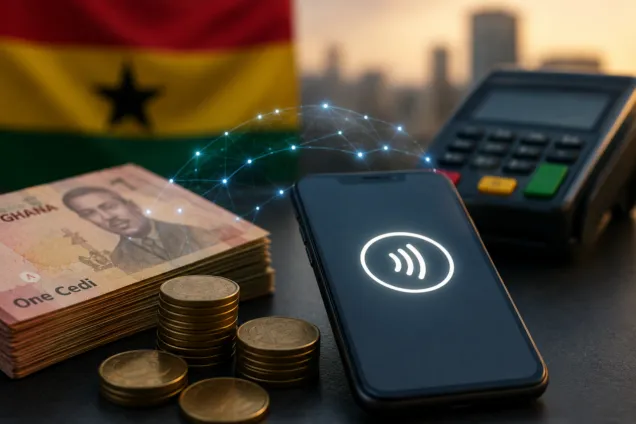
In a country where mobile money now accounts for over 60% of non-cash transactions, the way ordinary Ghanaians track their finances is undergoing a quiet revolution . From market traders who once recorded sales in notebooks to students managing daily expenses, fintech tools are replacing guesswork with transparency, and paper ledgers with real-time dashboards.
Part 1: The Problem Before Fintech — Why Tracking Was So Hard
For most Ghanaians, tracking money before the fintech boom meant one of two things: a worn notebook and a pen, or simply relying on memory. This system was fragile. A misplaced notebook meant lost records, and memory is rarely accurate when balancing daily expenses against income.

Mobile money, for all its convenience, initially complicated tracking. Funds moved from bank to wallet, wallet to merchant, and across different networks. Knowing your true balance across multiple channels required checking several phone apps or USSD menus . For many, this fragmentation was a barrier to truly understanding their financial health.
📢 GET A DETAILED ARTICLES + JOBS
Join ASJ's WhatsApp Channel and never miss a post or opportunity.

Part 2: The Fintech Solution — Consolidation, Automation, and Visibility
Fintech apps are solving the fragmentation problem by consolidating transaction histories into a single, accessible dashboard . The key advancements fall into three categories:
1. All-in-One Dashboards
Apps like mBanqer automate the recording of every transaction, eliminating the need for manual note-taking. For mobile money agents, the app automatically logs cash-ins, cash-outs, and transfers, providing graphical analytics on daily, weekly, and monthly performance .

TrustPay Wallet goes a step further by connecting mobile money wallets and credit cards to provide a comprehensive overview of all finances—incoming funds, spending patterns, and cash flow trends .
2. Smarter Business Tracking
Pocketi is specifically designed for Ghana’s mobile money ecosystem, allowing small business owners to send professional invoices, track daily sales, monitor outstanding payments, and access analytics on their business activity .
3. Goal-Oriented Tracking
Affinity Boost helps users track savings toward specific goals, such as buying a motorcycle or booking a trip. The app provides a clear dashboard showing savings progress, and users can automate deposits, making it easier to stay on track .
Part 3: The Literacy Challenge — Technology Alone Isn’t Enough
While fintech tools provide the infrastructure for better tracking, a 2026 study of tertiary students in Ghana found that fintech adoption has progressed faster than financial competence . The research revealed that 41.4% of students reported that the ease of digital payments encourages them to spend beyond their planned budget, while 50.7% experienced end-of-month financial shortfalls .
This highlights a critical tension: fintech apps can show you exactly where your money went, but they cannot stop you from spending it. The tools create the possibility of tracking, but building the habit of reviewing and adjusting requires financial literacy.
Part 4: The Trust Deficit — What Still Holds Users Back
Despite the benefits, trust remains a barrier. A survey cited at the 2025 Fintech Stakeholder Forum found that only 42% of mobile money users trust digital financial services . This is not an irrational fear; fraud, data breaches, and inadequate consumer protection are genuine concerns .
Ethel Coffie, CEO of Edel Technology Consulting, described this as an “infrastructure of trust” problem, involving not just consumers but also banks, regulators, and data centers . Until these layers of trust are strengthened, some users will remain hesitant to fully adopt digital money management.
ASJ Conclusion
Fintech has transformed money tracking in Ghana from a manual, fragmented, and often inaccurate process into a consolidated, automated, and transparent one. Apps like mBanqer, Pocketi, and Affinity provide users with a clear view of their financial health, helping them make more informed decisions.
But technology is only half the solution. As the 2026 UMaT study shows, digital literacy must keep pace with digital adoption . Fintech providers that combine powerful tracking tools with in-app education, and regulators who strengthen the “infrastructure of trust,” will be the ones that turn Ghana’s fintech potential into genuine financial wellbeing.

Quick Reference: How Fintech Apps Improve Money Tracking
| Feature | Benefit |
|---|---|
| Real-time transaction logging | Eliminates manual record-keeping; reduces errors |
| Consolidated dashboards | Shows all money movement across bank, mobile money, and cards in one place |
| Goal-based savings tracking | Visualises progress toward specific financial goals |
| Business analytics | Provides insights on revenue, outstanding payments, and customer activity |
| Automated reporting | Generates reports without manual compilation |
Source: Accra Street Journal
Last Updated on July 13, 2026 by Samuel Kwame Boadu
Disclaimer: Some content on Accra Street Journal may be aggregated, summarized, or edited from third-party sources for informational purposes. Images and media are used under fair use or royalty-free licenses. Accra Street Journal is a subsidiary of SamBoad Publishing Hub under SamBoad Business Group Ltd, registered in Ghana since 2014.
For concerns or inquiries, please visit our Privacy Policy or Contact Page.

Samuel Kwame Boadu is a Ghanaian media entrepreneur and storyteller with a passion for amplifying urban voices and uncovering everyday truths. He is the Editor-in-Chief and Founder of Accra Street Journal, a dynamic digital platform dedicated to capturing the pulse of Ghana’s capital—its people, culture, challenges, business, sports and innovations.