









EXECUTIVE INTRODUCTION
For generations of Ghanaian families, the experience of television was defined by a small set of shared, communal rituals. The evening news, watched together in the living room, a single voice of authority beamed into the home at a pre-ordained hour. The appointment with the Friday night movie, a cultural event around which the household’s schedule was organised. The Saturday morning children’s programming, a sacred window of animated joy. The family negotiated over the single, powerful box in the corner, and the broadcasters, a handful of powerful, state-sanctioned and later commercial stations, dictated the menu. The viewer was a passive, patient, and grateful recipient of a schedule they could not control. The channel was the king.

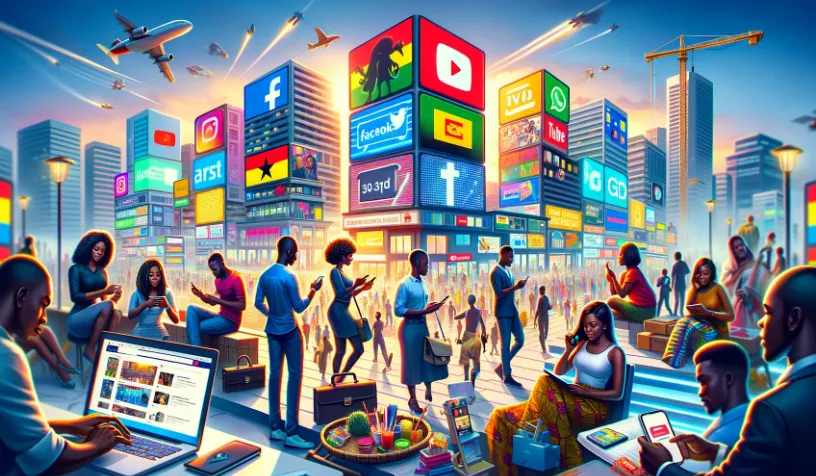
This ancient regime, which has structured the media consumption of the nation for decades, is now, quietly but irreversibly, being dismantled. A profound, multi-faceted revolution is underway in how Ghanaian audiences access, consume, and pay for video entertainment. The forces of digital terrestrial television, the burgeoning streaming services—both global giants and ambitious local players—and the radical personalisation of the smartphone screen are converging to create a new, fragmented, and intensely competitive landscape. This Accra Street Journal analysis is a clear-eyed examination of this great unbundling. We trace the shift in power from the rigid schedule of the broadcaster to the sovereign choice of the individual viewer, the new economics of content creation this is driving, and the fierce, ongoing battle for the Ghanaian eyeball. The box in the corner has not disappeared, but the world it once commanded has changed forever. The viewer has picked up the remote, and they are not putting it down.
THE DEATH OF THE SCHEDULE: POWER SHIFTS TO THE VIEWER
The most fundamental, and irreversible, shift brought about by the digital and streaming revolution is the death of the linear schedule’s tyranny. For the first time in the history of Ghanaian media, the viewer is no longer a passive subject of the broadcaster’s clock. The modern Ghanaian audience now commands their own time. The profound cultural shift began with Digital Terrestrial Television, commonly known as DTT or the “free-to-air” digital migration. While the content remained largely familiar, the technology was subtly revolutionary. DTT dramatically increased the number of available channels, offering a diversity of niche content that the old, limited analogue spectrum could never have supported. More importantly, it introduced the basic, essential mechanics of viewer control: the on-screen electronic programme guide, the simple ability to see what was showing now and next across all channels, and the foundational technology of the pause and the rewind.
📢 GET A DETAILED ARTICLES + JOBS
Join ASJ's WhatsApp Channel and never miss a post or opportunity.
These small conveniences were the training wheels for the true revolution. That revolution arrived with streaming. The global giants of subscription video on demand, most notably Netflix and Amazon Prime Video, along with the massively popular, advertising-driven YouTube, have now established a significant and growing presence in the Ghanaian market. These services introduced the Ghanaian viewer to a completely new paradigm. The concept of the all-you-can-watch, on-demand library. The freedom to watch an entire season of a show in a single, glorious, self-determined weekend, a practice known as binge-watching, free from the tyranny of the weekly, cliffhanger-based schedule. The empowering ability to start a movie, pause it to attend to a child, and resume it an hour later, or the next day, exactly where you left off. The power has fundamentally and permanently shifted. The viewer now decides exactly what to watch, when to watch it, and on which screen. The remote control is now a tool of audience sovereignty, and the old broadcast schedule, that once-dominant cultural clock, is increasingly an irrelevance, background noise for a generation that has grown up knowing they never have to wait.
THE GHANAIAN STREAMING FRONTIER: A BATTLE FOR THE LOCAL SOUL
The story of streaming in Ghana is not simply one of foreign giants imposing their global catalogue on a passive local market. It is, far more interestingly, a fierce and unresolved battle for the local soul of the Ghanaian viewer. The platforms themselves, recognising that a vast library of Hollywood content is not enough to win a mass, price-sensitive, and culturally proud audience, are now competing aggressively on local and African content. Netflix, in particular, has made significant, well-publicised investments in licensing and, crucially, funding the production of original Ghanaian and Nigerian films and series. The goal is clear: to make the global platform feel local and indispensable.
This competition from the global platforms, combined with the persistent structural challenges of the Ghanaian market, has created a fascinating and dynamic innovation landscape. The primary obstacles to mass streaming adoption are the same ones that confront every data-intensive digital service: the high cost of mobile data relative to disposable income, and the uneven, often frustratingly slow, reliability of the internet connection. In response, the market is innovating in uniquely Ghanaian ways. The mobile network operators have been instrumental, pioneering creative and deeply popular product bundles that offer heavily subsidised or effectively free data access for specific apps, including YouTube and other streaming services, directly integrated into the standard monthly airtime plan. The global platforms have responded with mobile-optimised versions of their apps that are ruthlessly efficient with data, and with the offer of lower-resolution, perfectly watchable video that does not consume a fortune in megabytes. And most brilliantly, the model of offline download, where a user on a cheaper, unlimited night-time data plan can schedule large downloads of movies and series while they sleep, ready to watch on the trotro or during the lunch break without spending a single additional byte, has become a sophisticated, everyday ritual for the data-conscious Ghanaian streamer. This is not a passive import of a foreign model; it is a uniquely Ghanaian adaptation, a technological workaround born of local constraints.
THE DEMOCRATISATION OF THE STUDIO: THE YOUTUBE AND SOCIAL MEDIA EFFECT
Perhaps the most radical, and the most culturally significant, dimension of the digital revolution is not the rise of the paid streaming giant, but the complete democratisation of video production and distribution brought about by platforms like YouTube, TikTok, and Instagram. The old, closed world of the professional television studio—with its intimidating, multi-million-dollar cameras, its complex editing suites, and its powerful, unaccountable gatekeepers who decided who got to be seen and heard—has been completely dismantled. Today, a young Ghanaian with a compelling, funny, or insightful idea and a cheap smartphone with a decent camera can record, edit, and publish a video that can reach an audience of millions. The barrier to entry, which was once an impossibly high, concrete wall, has collapsed to near zero.
This has unleashed a torrent of authentic, diverse, and previously unheard Ghanaian voices. The comedians who honed their craft not on a dark, smoky nightclub stage, but through the brutal, instant feedback of YouTube comments. The beauty gurus, fashion critics, and tech reviewers who have built vast, loyal, and profitable followings by reviewing products tailored specifically for the Ghanaian and African market, a niche the old, broad-brush broadcasters completely ignored. The independent filmmakers and documentarians who can now self-publish their work directly to a global audience, bypassing the traditional, and often risk-averse, commissioning editors of the established TV stations. Most powerfully, the faith leaders and motivational speakers whose sermons and messages now reach a global Ghanaian congregation, unbounded by the walls of a single church or the footprint of a terrestrial TV signal. This is not just a new distribution channel. It is a fundamental shift in who holds the power to create and shape Ghana’s cultural narrative. The old, centralised, and often deeply conservative media power is being challenged, and brilliantly, by the raw, unfiltered, and democratic creativity of the nation’s own people, one smartphone video at a time.
THE BIG SCREEN SURVIVES: LIVE SPORTS, NEWS, AND THE ENDURING COMMUNAL EVENT
In this headlong rush towards the personalised, on-demand, and mobile-first future, it is important to pause and recognise the specific, enduring citadels of the traditional, linear broadcast model that are not only surviving but, in some ways, thriving. The digital and streaming revolution is not a story of total, uniform disruption; it is a story of a great unbundling, where specific, high-value genres of content are being carved away from the old, monolithic bundle, while others remain stubbornly, and profitably, attached to the live, communal experience. The most powerful of these enduring citadels is live sports. The Ghana Premier League match, the Black Stars in a crucial World Cup qualifier, the UEFA Champions League final, the major boxing event—these are experiences whose entire value is in their liveness, their unpredictability, and their shared, communal consumption. The audience gathers, whether in a crowded, noisy drinking spot, in a family living room, or on Twitter, to experience the event together, in real-time. The delayed, on-demand stream is a pale, pointless imitation. Live sports, with its unique, time-sensitive, and powerfully communal pull, remains a formidable fortress for the traditional, scheduled broadcast model, and a fiercely contested and highly lucrative battleground for premium broadcasting rights.
The second great enduring pillar of the live broadcast is the breaking news event. During a national crisis, a major political event like the presentation of the budget or the declaration of election results, or a moment of collective celebration or tragedy, the audience instinctively turns to the trusted, authoritative, live voice of the established broadcaster. The curated, verified, and contextualised live feed, with the presence of a known and credible anchor, provides an anchor of certainty in a storm of chaotic, unverified, and often malicious social media noise. The third pillar is the social function of the scheduled broadcast, the “water cooler” effect of a show everyone watches at the same time and discusses the next day. While this is dramatically diminished from its historic peak, it still exists, powerfully, for major reality TV competition finales, for a particularly gripping episode of a local telenovela, or for major cultural and entertainment events. The big screen in the living room survives, not as the sole, unchallenged monarch it once was, but as an important, and still powerful, member of a new, diverse, and multi-screen royal family.
QUICK FACTS BOX: DIGITAL TV & STREAMING IN GHANA
-
The Core Shift: A fundamental, irreversible transfer of power from the rigid, time-bound schedule of the broadcaster to the sovereign, on-demand choice of the individual viewer.
-
The Streaming Landscape: A competitive arena featuring global giants (Netflix, YouTube), ambitious local platforms, and mobile operators, all battling for market share with aggressive local content investments and innovative data bundles.
-
The Democratisation of Creation: Platforms like YouTube and TikTok have dismantled the old, expensive barriers to video production and distribution, unleashing a wave of diverse, authentic, and uniquely Ghanaian content creators.
-
The Enduring Live Event: Specific genres, most critically live sports and breaking news, retain immense value in their real-time, communal nature, remaining powerful citadels for the traditional, scheduled broadcast model.
-
The Hybrid Future: The Ghanaian media landscape is not shifting from one single model to another, but is evolving into a permanently hybrid, multi-screen, and intensely competitive ecosystem.
FAQ SECTION
1. Is Netflix actually popular in Ghana, given the cost of data?
Yes, it has a growing and significant audience, particularly among the urban middle class. Its popularity is heavily enabled by the creative data bundles offered by mobile networks, which often include free or heavily subsidised data for specific streaming apps, and by the common practice of downloading content on cheaper night-time data.
2. What happened to the old, free-to-air TV channels after the digital migration?
They did not disappear; they became more numerous. The digital migration, or DTT, dramatically increased the number of free-to-air channels available to anyone with a simple, affordable decoder, and it introduced basic viewer controls like the electronic programme guide.
3. Can a young person in Ghana really make a living just from creating videos on YouTube?
Yes, and a growing number are doing exactly that. Once a creator builds a large enough, loyal audience and meets the platform’s monetisation thresholds, they can generate significant income from the advertising revenue YouTube shares with them, as well as from direct brand sponsorships.
4. Are there any Ghanaian-owned streaming platforms trying to compete with the global giants?
Yes, there are several local players in the market, often competing by offering content that is more intensely focused on Ghanaian and West African culture, language, and stories, a unique selling point that the global platforms, despite their investments, can struggle to match with the same authenticity.
5. How do people manage to stream video with the high cost of internet data in Ghana?
This is the key local innovation. They use specific, cheaper data plans from mobile networks that are designed for social media and video apps. They also heavily rely on offline download, scheduling large downloads of content overnight when cheaper, unlimited data plans are active.
6. Is traditional, scheduled TV going to die out completely in Ghana?
Probably not entirely. Live, unscripted events, particularly sports and breaking news, have an enduring value in their real-time, communal experience. The old, single screen in the living room is becoming a secondary screen, but it still holds a place for these specific, shared moments.
7. Why are the big, global streaming services now making Ghanaian and African movies and series?
Because they have realised that to truly win a mass-market, long-term audience in a country like Ghana, they cannot just offer a catalogue of foreign content. They must invest in telling local stories that reflect the culture, the humour, and the specific lived experience of the Ghanaian viewer.
8. Has the rise of the smartphone as a TV screen changed what kind of videos people watch?
Yes, profoundly. It has driven a massive demand for shorter, vertical video formats, perfectly optimised for the phone held in one hand, which is the native language of platforms like TikTok, Instagram Reels, and YouTube Shorts. This is the new frontier of video creation.
9. How did the shift to digital change the quality of the TV picture itself?
The move from old, analogue signals to digital terrestrial television was a massive leap in picture quality, from a standard, often fuzzy, and ghost-ridden image to a crystal-clear, high-definition picture, a change as dramatic as the shift from a worn, scratchy vinyl record to a pristine compact disc.
10. What is the single biggest change the digital and streaming age has brought to the Ghanaian viewer?
Absolute control. The Ghanaian viewer has been liberated from the tyranny of the broadcast schedule. For the first time in history, the individual, not the TV station, decides exactly what to watch, when, where, and on which device. The remote control is now a tool of personal sovereignty.
Source: Accra Street Journal
Last Updated on August 8, 2026 by Samuel Kwame Boadu
Disclaimer: Some content on Accra Street Journal may be aggregated, summarized, or edited from third-party sources for informational purposes. Images and media are used under fair use or royalty-free licenses. Accra Street Journal is a subsidiary of SamBoad Publishing Hub under SamBoad Business Group Ltd, registered in Ghana since 2014.
For concerns or inquiries, please visit our Privacy Policy or Contact Page.

Samuel Kwame Boadu is a Ghanaian media entrepreneur and storyteller with a passion for amplifying urban voices and uncovering everyday truths. He is the Editor-in-Chief and Founder of Accra Street Journal, a dynamic digital platform dedicated to capturing the pulse of Ghana’s capital—its people, culture, challenges, business, sports and innovations.