






3 min read
Ghana is on the cusp of unlocking a critical financial injection as the International Monetary Fund’s Executive Board (IMF) convenes in Washington, D.C. today to assess the country’s fourth review under its $3 billion Extended Credit Facility (ECF) programme.
The stakes are high. A successful review would unlock a $370 million disbursement, offering a vital boost to Ghana’s gross international reserves and reinforcing efforts by the Bank of Ghana to stabilise the cedi, which has faced sustained pressure in recent months.
Key Takeaways
- “This disbursement, if approved, could land in the Bank of Ghana’s account as early as Thursday, July 11,” noted one central bank official, speaking on condition of anonymity.
- The cedi has shown signs of renewed fragility amid tightening global conditions, fluctuating commodity prices, and persistent post-pandemic fiscal constraints.
- The anticipated $370 million injection is expected to ease dollar demand pressures, give the central bank additional room to manage liquidity, and shore up confidence in the broader macroeconomic framework.
Following staff-level approval last month, which concluded that Ghana had broadly met its fiscal, structural, and reform benchmarks, today’s Board meeting is expected to result in a green light — barring any late-stage surprises.
“This disbursement, if approved, could land in the Bank of Ghana’s account as early as Thursday, July 11,” noted one central bank official, speaking on condition of anonymity.
Should that timeline hold, Ghana would have received more than $2.3 billion in IMF funding since the programme commenced in May 2023, underlining the country’s continued adherence to reform targets despite global and domestic economic headwinds.
The timing could not be more strategic. The cedi has shown signs of renewed fragility amid tightening global conditions, fluctuating commodity prices, and persistent post-pandemic fiscal constraints. The anticipated $370 million injection is expected to ease dollar demand pressures, give the central bank additional room to manage liquidity, and shore up confidence in the broader macroeconomic framework.
Also in the pipeline is a $360 million disbursement from the World Bank, expected by the end of July — a dual support cushion that analysts say could materially improve Ghana’s foreign reserve cover through Q3.
“This is a critical moment for Ghana,” said a senior economist at a regional investment firm. “Beyond the cash, today’s approval would send an important market signal — that Ghana is committed to structural reform and disciplined fiscal management.”
If the IMF’s Board gives the nod, it would mark the fourth consecutive successful review, reinforcing Ghana’s credibility among multilaterals, bondholders, and capital market participants. Such consistency is rare in IMF programmes globally and strengthens the case for Ghana’s potential re-entry into global debt markets when conditions improve.
Analysts add that enhanced reserves will also aid the central bank’s inflation-fighting strategy and reduce the economy’s vulnerability to external shocks.
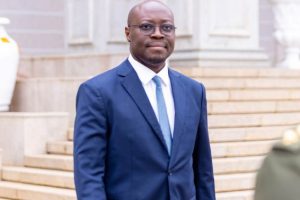
Ghana’s Finance Minister, Dr. Cassiel Ato Forson, and Bank of Ghana Governor, Dr. Johnson Asiama, are watching closely from Accra, aware that today’s decision could be pivotal in shaping investor sentiment heading into the final quarter of 2025.
For Ghana, today’s Board verdict represents more than a funding release. It is a litmus test for policy credibility, economic resilience, and long-term recovery prospects in a post-debt-restructuring era.
Last Updated on July 7, 2025 by Samuel Kwame Boadu

Disclaimer: Some content on Accra Street Journal may be aggregated, summarized, or edited from third-party sources for informational purposes. Images and media are used under fair use or royalty-free licenses. Accra Street Journal is a subsidiary of SamBoad Publishing Hub under SamBoad Business Group Ltd, registered in Ghana since 2014.

For concerns or inquiries, please visit our Privacy Policy or Contact Page.

Samuel Kwame Boadu is a Ghanaian media entrepreneur and storyteller with a passion for amplifying urban voices and uncovering everyday truths. He is the Editor-in-Chief and Founder of Accra Street Journal, a dynamic digital platform dedicated to capturing the pulse of Ghana’s capital—its people, culture, challenges, business, sports and innovations.
Use the following reference when citing or referencing this article.
Your feedback helps us improve our journalism.
Report an Error
Help us maintain accuracy. Let our editorial team know if you spot an issue in this article.
Report a problem with this article