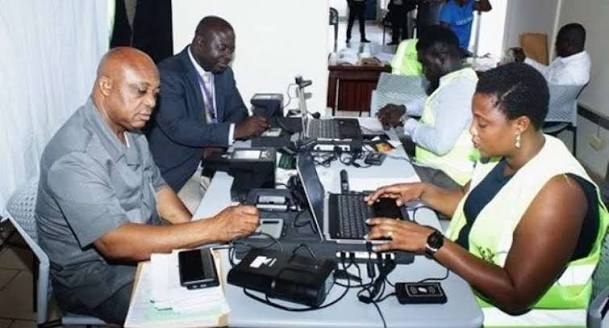
For much of Ghana’s post-independence history, economic growth has often been framed around large state projects, multinational corporations, and foreign investment flows. While these forces remain important, a quieter but more enduring driver of Ghana’s economy has taken centre stage: local companies. From small enterprises and family-owned firms to fast-scaling Ghanaian brands, indigenous businesses are now shaping the structure, resilience, and future direction of the national economy.
Local companies are no longer peripheral actors. They are embedded across value chains, employing millions, sustaining domestic demand, and anchoring economic activity in both urban and rural communities. Their influence is visible not only in headline sectors such as trade and services, but also in agriculture, manufacturing, logistics, construction, finance, and technology.

Understanding how local companies drive Ghana’s economy requires moving beyond size and revenue figures to examine their systemic role in employment, innovation, capital circulation, and economic stability.
📢 GET A DETAILED ARTICLES + JOBS
Join ASJ's WhatsApp Channel and never miss a post or opportunity.

Job Creation and Employment Stability
One of the most significant contributions of local companies is employment. Indigenous businesses collectively employ a far larger share of Ghana’s workforce than foreign firms. Small and medium-sized enterprises alone account for the majority of private-sector jobs, absorbing labour across skill levels and regions.
Local companies tend to employ from within their communities, reducing migration pressures and supporting household incomes. In urban centres such as Accra, Kumasi, and Takoradi, local enterprises provide jobs in retail, transport, hospitality, construction, and professional services. In rural areas, they anchor livelihoods in farming, agro-processing, trading, and distribution.

While multinational firms often operate with lean staffing models, local businesses prioritise labour-intensive operations. This makes them especially important in a country with a youthful and growing population where employment creation is a persistent policy challenge.
Circulating Capital Within the Domestic Economy
Local companies play a crucial role in keeping money circulating within Ghana’s economy. Profits generated by indigenous firms are more likely to be reinvested locally—through expansion, procurement, wages, and community spending—rather than repatriated abroad.
This domestic circulation of capital strengthens multiplier effects. When a local company pays wages, sources raw materials locally, and contracts Ghanaian service providers, the economic benefits extend across multiple layers of society. Markets remain active, suppliers stay afloat, and consumer demand is sustained.
In contrast, economies that rely heavily on external firms often experience capital leakage, where profits exit the system. Ghana’s growing base of local companies helps counter this effect, supporting long-term economic stability.
Building and Strengthening Value Chains
Local companies are central to the development of domestic value chains. In agriculture, Ghanaian firms operate across production, aggregation, processing, transportation, and retail. In manufacturing, local companies assemble, process, and package goods for domestic consumption, reducing reliance on imports.
These value chains are essential for economic diversification. They create linkages between sectors and reduce vulnerability to external shocks such as global price fluctuations or supply chain disruptions. When local firms dominate value chains, the economy becomes more resilient and adaptive.
The growth of agro-processing, local manufacturing, and logistics companies demonstrates how indigenous enterprises are moving Ghana beyond raw material exports toward value-added production.
Innovation Rooted in Local Reality
Innovation in Ghana is increasingly driven by local companies responding to everyday challenges. Unlike imported business models that may struggle to fit local conditions, Ghanaian firms design solutions around real constraints—unreliable infrastructure, price sensitivity, informal markets, and regulatory complexity.
This has led to practical innovation across sectors. Financial services companies have adapted mobile money and digital payments to reach underserved populations. Logistics firms have built last-mile delivery solutions suited to congested urban areas. Retailers have combined formal and informal distribution models to reach diverse consumers.

Local innovation is often incremental rather than disruptive, but its impact is profound because it is grounded in lived experience. These adaptations improve efficiency, accessibility, and inclusion across the economy.
Supporting Economic Resilience During Shocks
Economic shocks—whether global downturns, currency volatility, or public health crises—often expose structural weaknesses. In Ghana, local companies have repeatedly demonstrated resilience during such periods.
Because they operate close to consumers and communities, local firms adjust quickly. They modify product sizes, pricing, sourcing strategies, and distribution methods to survive changing conditions. This flexibility allows economic activity to continue even under pressure.
While some foreign firms scale back or exit during downturns, local businesses tend to remain, absorbing shocks and sustaining employment. Their presence provides a stabilising effect that cushions the broader economy.
Deepening Financial Inclusion and Informality Transition
Local companies are key players in Ghana’s gradual transition from informality to semi-formality and formalisation. Many businesses begin informally but grow into registered entities, opening bank accounts, paying taxes, and adopting digital tools.
This process expands the tax base and improves financial inclusion. Local enterprises engage with mobile money platforms, microfinance institutions, savings groups, and banks, creating pathways into the formal financial system for owners and employees alike.
As more local companies formalise operations, they contribute to improved data, planning, and policy effectiveness at the national level.
Cultural Alignment and Consumer Trust
Local companies benefit from cultural understanding and social alignment. They speak local languages, understand community norms, and operate within familiar social frameworks. This fosters trust and loyalty, especially in sectors such as retail, food, transport, and services.
Consumers often perceive local businesses as more approachable, flexible, and accountable. This trust enables sustained patronage, even in competitive markets. Cultural alignment also allows local companies to respond sensitively to changing consumer preferences and social trends.
In an economy where relationships still matter, this embeddedness is a strategic advantage.
Driving Urban and Regional Development
Local companies are not confined to major cities. They drive economic activity in secondary cities and towns, supporting balanced regional development. Construction firms, traders, transport operators, and service providers extend economic opportunity beyond Accra and Kumasi.

This decentralised growth reduces pressure on urban centres and spreads income across regions. It also strengthens local economies, making them less dependent on central government spending or external investment.
By operating across geographies, local companies knit together Ghana’s economic landscape.
Challenges That Shape Their Impact
Despite their importance, local companies operate under significant constraints. Access to affordable credit remains limited. High operating costs, infrastructure gaps, regulatory complexity, and currency volatility affect profitability and growth.
Yet these challenges also shape the character of local enterprises. They encourage efficiency, adaptability, and innovation. The ability to survive in such conditions is itself a form of economic strength.
Policy support, infrastructure investment, and improved access to finance could significantly amplify the contribution of local companies to national growth.
The Quiet Backbone of the Economy
Local companies may not always dominate headlines, but they form the backbone of Ghana’s economy. They create jobs, circulate capital, strengthen value chains, and anchor growth in communities. Their impact is cumulative rather than spectacular—but it is durable.
As Ghana looks toward long-term economic transformation, the role of indigenous businesses will only grow. Supporting their expansion, formalisation, and innovation is not just an economic strategy; it is a foundation for inclusive and sustainable development.
FAQs
Why are local companies important to Ghana’s economy?
They create the majority of jobs, circulate capital domestically, and anchor economic activity in communities.
Do local companies contribute more than multinationals?
While multinationals bring investment and technology, local companies employ more people and retain value within the economy.
Which sectors are dominated by local companies in Ghana?
Retail, agriculture, construction, transport, services, manufacturing, and emerging technology sectors.
How do local companies support economic resilience?
They adapt quickly to shocks, maintain employment, and continue operations during economic downturns.
What limits the growth of local companies in Ghana?
Access to finance, infrastructure gaps, high costs, and regulatory challenges remain key constraints.
Source: Accra Street Journal
Last Updated on March 14, 2026 by Samuel Kwame Boadu
Disclaimer: Some content on Accra Street Journal may be aggregated, summarized, or edited from third-party sources for informational purposes. Images and media are used under fair use or royalty-free licenses. Accra Street Journal is a subsidiary of SamBoad Publishing Hub under SamBoad Business Group Ltd, registered in Ghana since 2014.
For concerns or inquiries, please visit our Privacy Policy or Contact Page.

Samuel Kwame Boadu is a Ghanaian media entrepreneur and storyteller with a passion for amplifying urban voices and uncovering everyday truths. He is the Editor-in-Chief and Founder of Accra Street Journal, a dynamic digital platform dedicated to capturing the pulse of Ghana’s capital—its people, culture, challenges, business, sports and innovations.