







For seven years, the Ghana Stock Exchange was the quiet corner of the national balance sheet. While politicians argued about the cedi and economists obsessed over inflation, the GSE sat in its modest offices on Independence Avenue, processing trades that rarely made front-page news. The average Ghanaian knew the price of a bag of rice. They could not name a single listed company beyond MTN.
That silence has been shattered. The GSE’s market capitalization has surged to a record GH¢279 billion, propelled by a frenzy of buying that has pushed MTN Ghana (MTNGH) to an all-time high of GH¢6.59 per share and lifted GCB Bank to its best levels since the domestic debt exchange of 2022. Trading volumes have spiked. Brokers are reporting backlogs. And for the first time in years, ordinary Ghanaians are asking not about the cedi or fuel prices, but about equities.

The immediate drivers are not mysterious. The Bank of Ghana’s aggressive easing cycle—culminating in a 14% policy rate—has made fixed income less attractive. Treasury bill yields, which were paying 28% a year ago, have fallen toward 19%. Pension funds, fund managers, and high-net-worth individuals are rotating out of government paper and into stocks. The GSE is the primary beneficiary of that rotation. MTN Ghana, with its dominant market position and reliable dividend history, has been the star. GCB, riding a wave of post-restructuring optimism, has followed.
📢 GET A DETAILED ARTICLES + JOBS
Join ASJ's WhatsApp Channel and never miss a post or opportunity.

But the Accra Street Journal is paid to ask the uncomfortable question. A rally driven by falling interest rates is not the same as a rally driven by rising profits. One is a speculative trade. The other is a fundamental investment. And the difference between them will determine whether the GH¢279 billion market cap is a foundation for lasting prosperity or a peak from which a painful correction awaits.
This is an analytical deep dive into the engine room of the GSE rally—with a hard look at who is buying, why they are buying, and what happens when the music stops.

The Key ASJ Developments: More Than Just MTN
Let us break down the numbers with the precision they deserve.
The GH¢279 billion market capitalization represents a 34% increase from December 2025. In nominal cedi terms, the GSE has never been larger. Adjusted for inflation—which stands at 3.2%—the real gain is still an impressive 30%. This is not a nominal illusion. The exchange is genuinely delivering value.
MTN Ghana (MTNGH) closed at GH¢6.59, surpassing its previous peak of GH¢6.20 set in early 2025. The mobile telecommunications giant now accounts for approximately 38% of the GSE’s total market cap, making it the undisputed heavyweight. The rally has been fueled by three factors: falling interest rates (which make MTN’s 10% dividend yield more attractive), strong operational performance (data revenues grew 22% year-on-year), and the absence of regulatory overhang (the National Communications Authority has signaled no new taxes on the sector).
GCB Bank, the other significant gainer, traded up 15% over the past month. The bank has benefited from the same interest rate dynamic, but also from a fundamental improvement in its loan book. Non-performing loans, which spiked to 18% in the aftermath of the DDEP, have fallen to 11% as the economy recovers. Investors are betting that GCB will return to its pre-crisis profitability within two years.
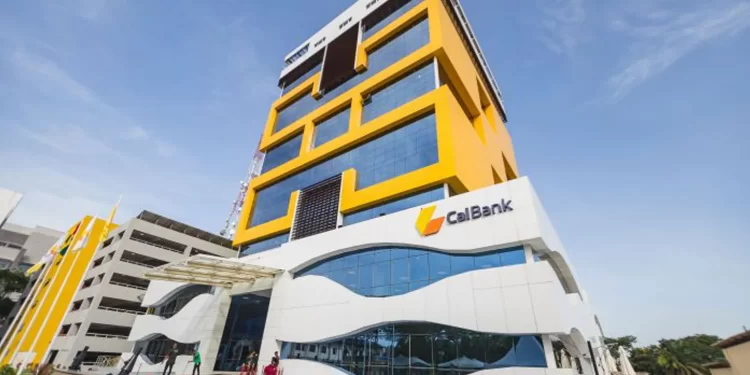
Other notable performers include CalBank, which has seen its share price double from its 2025 lows, and Benso Oil Palm Plantation, which has benefited from rising global vegetable oil prices. The rally is broad, but it is not uniform. Some stocks have merely recovered. Others have genuinely broken new ground.
Deep ASJ Analysis: The Interest Rate Rotation Is Real—But Is It Done?
To understand the GSE rally, one must understand the portfolio substitution effect. In Ghana, pension funds and collective investment schemes are required to hold a minimum of 30% of their assets in government securities. For years, that was not a burden; it was a privilege. Treasury bills yielded 25% to 30% with zero credit risk. Why would any rational investor buy an equity with a 10% dividend yield and significant downside risk when they could earn triple that from the state?
The policy rate cut has changed that calculation. At 19% treasury bill yields, the equity risk premium—the extra return an investor demands for taking on stock market volatility—has narrowed. If MTN offers a 10% dividend yield plus potential capital appreciation of 10% to 15%, the total expected return of 20% to 25% begins to compete with the risk-free return of 19%. Investors are now being compensated for taking equity risk. They were not compensated at 28%.
But here is the analytical rub. The rotation into equities is a one-time adjustment. Pension funds and fund managers do not have infinite liquidity to reallocate. Once they have shifted their portfolios to the desired equity weighting—say, from 10% to 18%—the flow of new money into the GSE slows dramatically. The marginal buyer disappears. Prices stop rising.
The question, then, is whether the rotation is complete. The Accra Street Journal’s analysis of fund manager positioning suggests that most large institutional investors have already reached their target equity allocations. The recent surge in volumes may be driven not by institutions but by retail investors—individual Ghanaians who have seen the headlines and are rushing in. Retail investors are historically the last to enter a rally and the first to panic when it reverses.

This is not a prediction of a crash. It is a warning about the composition of the buyer base. Rallies built on retail euphoria are fragile. Rallies built on earnings growth are durable. The GSE has elements of both. The question is which force dominates.
What This Means for Ghana: The Investor, the Company, and the Economy
Let us translate the market movements into concrete implications for different Ghanaians.
For the retail investor: If you bought MTN shares a year ago at GH¢4.20, you are sitting on a 57% capital gain plus dividends. That is life-changing money for a small investor. But if you are buying today at GH¢6.59, your upside is more limited. MTN is a wonderful company, but it is no longer cheap. The price-to-earnings ratio has expanded from 8x to 12x. You are paying for optimism. That is fine. Just know what you are paying for. Do not confuse a momentum trade with a long-term investment.
For the pension fund contributor: The rally is good news for your retirement savings. The SSNIT and Tier 2 funds both have significant equity exposure. Every cedi of GSE appreciation increases the value of your future benefits. However, the flip side is that future contributions will buy fewer shares at current prices. Dollar-cost averaging—the practice of buying regularly regardless of price—is your friend. Do not stop contributing because the market is high. Do not increase contributions because the market is rising. Stay the course.
For the listed company: A higher share price is not just a vanity metric. It lowers your cost of capital. MTN Ghana, GCB, and others can now raise fresh equity at more attractive valuations if they need to fund expansion. They can also use their shares as acquisition currency. A strong stock market strengthens the entire corporate sector. The GH¢279 billion market cap is a tool, not a trophy.
For the economy: A rising stock market creates a wealth effect. Ghanaians who feel richer spend more. That spending circulates through the economy, supporting jobs and tax revenues. The GSE rally is not disconnected from the real economy; it is a transmission mechanism for monetary policy. The Bank of Ghana’s rate cut is reaching households not just through cheaper loans, but through higher stock prices. That is how modern economies work. Ghana is becoming a modern economy. The GSE is proof.
For the Bank of Ghana: The rally presents a delicate communications challenge. If the central bank takes credit for the stock market boom, it will be blamed for a bust. The BoG should remain silent on equity valuations. Its mandate is price stability and financial stability, not asset prices. A 14% policy rate was the right decision for inflation. If stocks rise as a side effect, fine. If they fall, that is not the central bank’s problem. The worst outcome would be a BoG that feels responsible for the GSE. That path leads to bad policy.
Wider Context: The African Bourse Landscape
To assess the GSE’s performance, one must place it in the continental context.
The Nigerian Exchange (NGX) has a market capitalization of approximately $40 billion (roughly GH¢550 billion at current exchange rates), making it nearly twice the size of the GSE. But the NGX has been flat over the past year, weighed down by naira devaluation and regulatory uncertainty. Ghana’s 34% rally is exceptional by regional standards.
The Casablanca Stock Exchange, the largest in North Africa, has grown 12% over the same period. The Nairobi Securities Exchange has fallen 5% amid Kenyan political unrest. The Johannesburg Stock Exchange, the continent’s giant, has delivered a modest 8% return in rand terms.
Ghana is currently the best-performing bourse in sub-Saharan Africa outside of South Africa. That distinction matters for foreign portfolio investment. International funds that benchmark against African indices will need to increase their Ghana weightings. That creates a self-reinforcing cycle: foreign buying drives prices higher, which increases Ghana’s index weight, which triggers more foreign buying.

The risk, of course, is reversal. Foreign portfolio flows are famously fickle. They arrived in Ghana in 2021 and fled in 2022. They are returning now. They will leave again when global conditions shift or when Ghana’s politics turn sour. The GSE must build a base of domestic institutional investors—pension funds, insurance companies, sovereign wealth—to buffer against these outflows. That base is growing, but it is not yet large enough.
Outlook: What Happens Next (The 18-Month Horizon)
The Accra Street Journal projects three distinct phases for the GSE between now and December 2027.
Phase One (April to August 2026): The Peak of Euphoria. Retail investors, encouraged by the MTN and GCB headlines, pour in. New accounts at the Central Securities Depository rise 40% year-on-year. Penny stocks and speculative names rally sharply. The GSE Composite Index touches 5,500 points, a 45% gain from its 2025 lows. Veteran investors begin taking profits. The Accra Street Journal advises caution. The best time to buy was a year ago. The best time to sell may be now.
Phase Two (September 2026 to March 2027): The Reality Check. Two things happen. First, the Bank of Ghana pauses its easing cycle as inflation stabilizes at 4% to 5%. Treasury bill yields stop falling, removing the immediate catalyst for the equity rotation. Second, the district-level elections inject fiscal uncertainty. The government spends heavily, and investors worry about the deficit. The GSE corrects 10% to 15%. MTN falls back to GH¢5.80. GCB gives up half its gains. Weak holders panic. Strong holders add to their positions.
Phase Three (April to December 2027): The Fundamental Test. By early 2027, the noise of the election will have faded. Investors will focus on earnings. Companies that grew their profits during the recovery—banks with expanding loan books, telcos with rising data revenues, manufacturers with stable input costs—will see their share prices recover and exceed the 2026 peak. Companies that rode the tide without improving their operations will stagnate. The GSE will bifurcate. Quality will be rewarded. Speculation will be punished.
The ASJ’s Verdict
The GH¢279 billion market capitalization is a milestone worth celebrating. After the devastation of the domestic debt exchange—which erased GH¢60 billion in bondholder wealth and forced pension funds to take losses—the GSE’s recovery is a testament to the resilience of Ghanaian capitalism. MTN Ghana at GH¢6.59 is not a fluke. It is the market’s judgment that a well-managed company operating in a stable regulatory environment can thrive even in a challenging macroeconomic context.
But milestones are not destinations. The GSE’s next challenge is to convert the interest rate rally into an earnings rally. That requires the real economy to grow. It requires banks to lend. It requires manufacturers to produce. It requires consumers to spend. The stock market is a mirror of the economy, not a substitute for it.
The Accra Street Journal advises investors to do what professional fund managers do: ignore the daily noise, focus on valuation, and remember that the price you pay determines the return you earn. MTN is a great company. It is not a great company at any price. GCB is a recovering bank. It is not a sure thing.
The rally has been fun. The work starts now.
Source: Accra Street Journal
Last Updated on April 25, 2026 by Samuel Kwame Boadu
Disclaimer: Some content on Accra Street Journal may be aggregated, summarized, or edited from third-party sources for informational purposes. Images and media are used under fair use or royalty-free licenses. Accra Street Journal is a subsidiary of SamBoad Publishing Hub under SamBoad Business Group Ltd, registered in Ghana since 2014.
For concerns or inquiries, please visit our Privacy Policy or Contact Page.

Samuel Kwame Boadu is a Ghanaian media entrepreneur and storyteller with a passion for amplifying urban voices and uncovering everyday truths. He is the Editor-in-Chief and Founder of Accra Street Journal, a dynamic digital platform dedicated to capturing the pulse of Ghana’s capital—its people, culture, challenges, business, sports and innovations.