









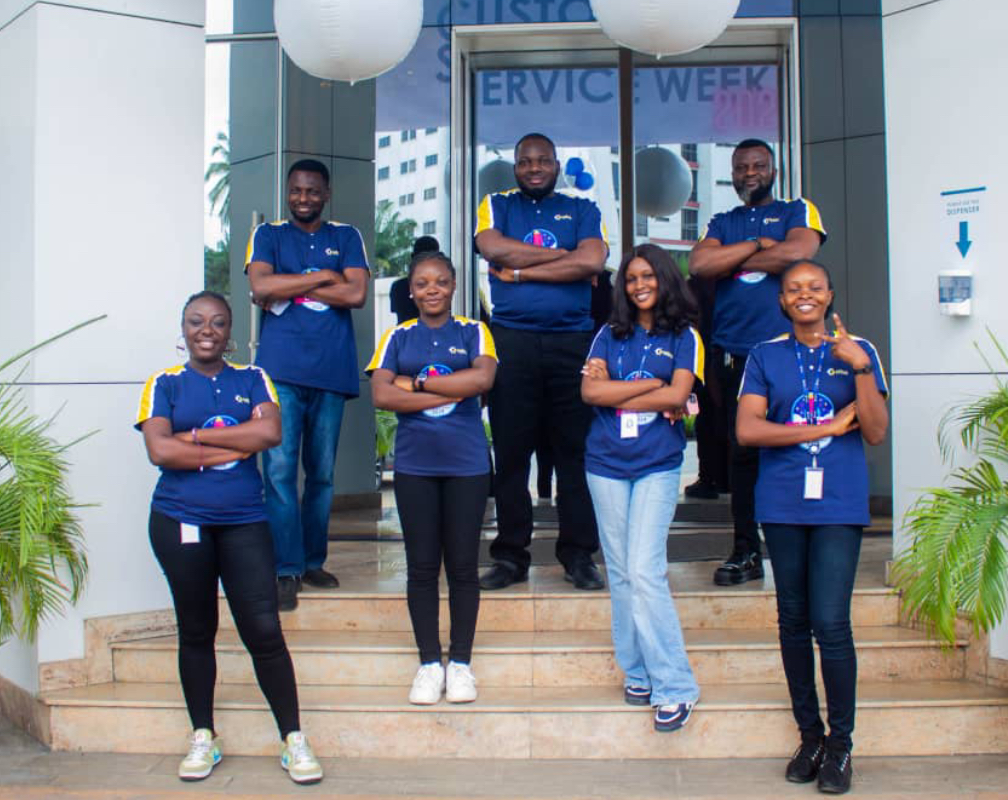

After acquiring CDH Insurance in 2010 and spending over a decade in relative silence, this Pan-African powerhouse has emerged as a quiet titan with a BBB+ investment grade rating, a 14.1% non-life market share in its home market, and a formidable bancassurance blueprint that is now being systematically exported to Accra.

Executive Introduction
In the competitive theatre of Ghanaian insurance, where Enterprise Insurance boasts a 102-year heritage and Activa leads claims payouts, there is a unique player that breaks every mould of the “local giant.”
NSIA Insurance Ghana Ltd is not Ghanaian-owned. It does not have a century of local brand recognition. Yet, it is arguably one of the best-positioned insurers in the country, backed by the sheer financial horsepower of Groupe NSIA, the Ivorian financial services behemoth.
📢 GET A DETAILED ARTICLES + JOBS
Join ASJ's WhatsApp Channel and never miss a post or opportunity.
Founded in 1995 in Abidjan, Groupe NSIA has grown into a Pan-African empire operating across 12 countries in Western and Central Africa, employing over 2,800 people, and controlling 20 insurance subsidiaries, 3 banks, real estate, asset management, and IT firms .
NSIA entered Ghana in 2010—not by launching a greenfield operation, but through a strategic acquisition of CDH Insurance, a well-known local non-life player. For 14 years, the brand operated under the radar, integrating systems and establishing a beachhead. That quiet period is ending.
In 2025, the parent group received a massive external validation: GCR Ratings upgraded the outlook on Groupe NSIA’s entities to Positive, while affirming a BBB+ (Investment Grade) rating for its Ivorian operations . In the Ivorian home market, the group dominates with a 14.1% market share in non-life insurance and 11.1% in life insurance .
Now, with the appointment of Linda Osei-Akoto as CEO of the Ghana operations trading as NSIA Insurance Ghana to replace former MD Mabel Porbley , the company is executing a disciplined, capital-efficient growth strategy rooted in bancassurance .
For corporate risk managers, insurance analysts, and investors, NSIA Ghana represents a study in strategic patience. It refuses to participate in expensive price wars for market share. Instead, it leverages the balance sheet of a diversified Pan-African parent, targets high-value partnerships, and maintains an exceptionally lean cost structure.
This ASJ profile examines the 2010 entry via acquisition, the formidable backing of Groupe NSIA, the 2025 GCR rating upgrade, the leadership of Linda Osei-Akoto, the bancassurance blueprint, and the critical question: Can an Ivorian-owned insurer with a low local profile successfully challenge the entrenched Ghanaian incumbents?
Company Overview
The Genesis of a Pan-African Empire
Groupe NSIA was founded in 1995 in Abidjan, Côte d‘Ivoire. Over nearly three decades, it has grown into one of the most diversified financial services groups on the continent .
Group Footprint:
-
Countries: 12 (spanning West and Central Africa)
-
Employees: 2,800+
-
Subsidiaries: 20 Insurance companies, 3 Banks, Real Estate, Asset Management, Stock Brokerage, Foundation, IT
Unlike many multinational insurers that treat Africa as a peripheral market, NSIA is an African institution that understands the local nuances of risk, regulation, and distribution.
The Ghana Entry: The CDH Acquisition (2010)
NSIA Insurance Ghana Ltd commenced operations in 2010 as a general insurer. Its entry was not a startup; it was an acquisition of CDH Insurance, a leading non-life insurer at the time .
This was a strategic land grab. By acquiring CDH, NSIA instantly obtained:
-
An existing policyholder base
-
Established broker relationships
-
A physical presence and operating license
-
A shortcut past the painful early years of building brand trust
Since the acquisition, the company has remained conservatively managed. It operates as an unfunded company (no external debt or venture capital), relying on the capital injections and reinsurance capacity of the parent group .
Leadership: The Executive Transition
Linda Osei-Akoto – Chief Executive Officer & Managing Director
As of the most recent available data, Linda Osei-Akoto serves as the CEO & Managing Director of NSIA Ghana Insurance Co. Ltd .
Her credentials are substantial:
-
Educational Background: Graduate of Université Félix Houphouët-Boigny (1986)
-
Professional Memberships: Insurance Institute of America, American Institute for Chartered Property Casualty Underwriters (CPCU), Insurance Institute for Applied Ethics
Previous Role:
She previously served as an Independent Non-Executive Director at UT Bank Ltd. (which was later consolidated into GCB Bank during the financial sector cleanup). This banking experience is critical, as NSIA Ghana‘s primary distribution strategy relies heavily on Bancassurance (selling insurance through bank branches).
Outgoing Leadership:
The previous Managing Director was Mabel Nana Nyarkoa Porbley . In 2016, Porbley was a vocal advocate for insurance-bank partnerships, representing NSIA at the Bancassurance Conference in Accra .
The Significance of the Transition:
The shift from Porbley to Osei-Akoto signals a potential tightening of operations. Ms. Osei-Akoto‘s strong technical background (CPCU) and her history with UT Bank (lending) suggest that the current strategy focuses on tight underwriting controls and capital preservation, rather than aggressive retail expansion.
Many of the executive appointments in Ghana, including the transition from Porbley to Osei-Akoto, are part of a routine realignment by the Ivorian parent to ensure that the Ghana entity strictly adheres to the group‘s continental risk standards.
Operations and Footprint
NSIA Insurance Ghana Ltd is headquartered in Kumasi, Ashanti, Ghana . This geographic distinction is notable. Most major insurers are based in Accra (the capital). NSIA‘s presence in Kumasi places it in the commercial heart of the Ashanti Region—Ghana‘s second-largest economic hub.
Company Profile:
-
Founded: 2010
-
Industry: Non-Life (General) Insurance / P&C
-
Ownership: Subsidiary of Groupe NSIA (Abidjan, Côte d‘Ivoire)
-
Employees: Estimated 51–200
-
Annual Revenue (Est.): $10 – 49 Million
-
Tech Stack: AngularJS, Azure DNS
The Power Behind the Throne: Groupe NSIA
To understand NSIA Ghana, one must look at the parent company in Abidjan. In late 2025, GCR Ratings provided a sweeping validation of the group‘s financial health.
GCR Rating Upgrade (2025)
Global Credit Rating (GCR) affirmed the national scale financial strength rating of BBB+(CI) for NSIA‘s main Ivorian operations, while revising the Outlook to Positive .
Why this matters:
-
Investment Grade: The BBB+ rating is a significant threshold, indicating that the group has adequate capacity to meet financial commitments. In volatile African markets, this rating signals stability to corporate clients and reinsurers.
-
Positive Outlook: This suggests that GCR expects the rating to potentially improve in the medium term, driven by strong capitalisation and performance.
Market Dominance in Côte d‘Ivoire
The GCR report provides hard data on NSIA‘s position in its home market:
-
Non-Life Market Share: 14.1% (2023)
-
Life Market Share: 11.1% (2023)
NSIA is a dominant force in the Ivorian market. The question for the Ghana operation is whether it can replicate this 14%+ market share in a more crowded, more Anglophone market traditionally dominated by Enterprise and SIC.
The Group‘s Business Segments: The “Bancassurance Blueprint”
NSIA‘s Ivorian operations are structured into clear business lines that serve as a blueprint for Ghana:
| Segment | Contribution to Insurance Revenue | Gross Written Premium (2023) |
|---|---|---|
| Non-Life | 69.0% | CFA 42,068 million |
| Life | 31.0% | CFA 18,902 million |
Total Insurance Revenue: CFA 60,970 million
Bancassurance Leadership:
The group has a significant competitive advantage in bancassurance through its sister company, NSIA Banque. This vertical integration—owning both the bank and the insurer—is a superpower that most Ghanian insurers (who only partner with banks) do not have.
NSIA has successfully replicated this model in other Francophone markets. It is now leveraging this expertise in Ghana, albeit through partnership models rather than direct ownership, given Ghana‘s stricter separation of banking and insurance licenses.
Business Model: The High-Efficiency, Bancassurance-First Engine
NSIA Ghana operates a general insurance model, focusing on non-life products. It does not appear to underwrite Life business in Ghana (this is handled by other group entities), allowing it to remain highly specialised.
The Product Portfolio
NSIA Ghana offers a comprehensive suite of non-life products :
-
Motor Insurance
-
Travel Insurance
-
Homeowners / Home Insurance
-
Personal Accident
-
Marine Insurance
-
Fire Insurance
-
Engineering Insurance
-
Assets All Risks
-
Commercial Insurance
Distribution Strategy: The Bancassance Playbook
The company‘s primary distribution channel is Bancassurance. This is not merely a sideline; it is the core strategy.
In 2016, then-MD Mabel Porbley described the bank-insurer partnership as key to maximizing sales. She argued that banks bring “geographical spread” and “insights into client lifestyles,” while insurers bring “client stickiness”—meaning customers are less likely to leave a bank if they have an insurance policy there .
How it works in Ghana:
While NSIA does not own a bank in Ghana (as it does in Côte d‘Ivoire), it partners with local banks to offer insurance products to bank customers. When a customer takes a loan, they are offered Credit Life. When they open a savings account, they are offered Accident cover.
Advantages of this model:
-
Low Customer Acquisition Cost (CAC): NSIA does not need to pay thousands of commission-based agents.
-
Quality Leads: Bank customers are pre-vetted and have a higher propensity to pay premiums.
-
Lean Operating Model: NSIA relies on a small staff of 51-200 , eliminating the massive payroll associated with a direct sales force .
Revenue Model
Premium Income:
Revenue is estimated between 10M–49M . This ranks NSIA in the mid-tier of Ghanaian general insurers (well below Activa‘s GHS 223M in claims, but solid).
Efficiency Metrics:
The parent group in Côte d‘Ivoire reported a combined ratio of 103.7% in 2023 . This is slightly loss-making on underwriting alone (meaning they pay out more in claims and expenses than they collect in premiums). However, they rely on investment income from their float to turn an overall profit.
Estimated Size (Implied):
If we use the rule-of-thumb that revenue is roughly equivalent to Gross Written Premium (GWP), NSIA Ghana is likely in the range of GHS 100M – GHS 500M in GWP. This places them firmly in the top 15 insurers in Ghana, but outside the “Top 5” heavyweights (Activa, Star, Enterprise, SIC, Hollard).
Market Position and Competition
NSIA Ghana operates in the upper-mid tier of Ghana‘s crowded non-life market. It is a “specialist” player, using capital efficiency and parent-group backing as its shield, rather than raw claims volume.
The Competitive Matrix
| Competitor | Claim to Fame | NSIA‘s Strategy |
|---|---|---|
| Activa | #1 Claims Payer (GHS 223M) | Avoid price war; focus on quality |
| Enterprise | AAA Rating, 102-yr History | Compete on corporate trust |
| Star | AI-driven, A+ Rating | Compete on bancassurance relationships |
| GLICO | Group synergies | Similar strategy; competes directly for bank deals |
| Allianz/Sanlam | German/South African scale | Similar bancassurance focus |
Competitive Advantages
1. The Groupe NSIA Capital Shield
Unlike mid-tier local insurers that rely on retained earnings, NSIA Ghana can draw on the capital of a Pan-African group that generates billions of CFA in premiums. This allows them to retain large risks (less reinsurance cost) and absorb economic shocks.
2. Bancassurance Expertise (Cross-Selling Machine)
NSIA has perfected the art of the “sticky” bank customer . Because their sister companies also own banks in other jurisdictions, they have refined the data analytics and product bundling techniques needed to make bancassurance work effectively.
3. Investment Grade Rating (BBB+)
The rating affirmation in 2025 is a powerful marketing tool for corporate clients . When NSIA Ghana approaches a multinational mining firm or a large construction company, they can point to a BBB+ rating.
4. Lean Operations
With an estimated 51-200 employees , NSIA likely has a significantly better cost-to-income ratio (expense ratio) than Enterprise or SIC, which are burdened by huge legacy pension funds and branch networks .
5. The Kumasi Advantage
Headquartering in Kumasi rather than Accra differentiates them from the Accra-centric elite. They are closer to the Ashanti Gold Belt and the commercial trading hubs of the middle belt.
Competitive Disadvantages
1. Brand Recognition
Most Ghanaians have never heard of NSIA. Enterprise, SIC, and Star are household names. In insurance, trust is everything. NSIA has a mountain to climb in terms of brand advertising and public awareness.
2. Claims Volume (The “Honesty” Metric)
NSIA‘s revenue (~$10-49M) is a fraction of what the top players pay out in claims. When a broker asks “How much did you pay last year?”, NSIA cannot match the GHS 200M+ figures of Activa, Star, or Enterprise.
3. Parental Dependence
Changes in the Ivorian regulatory environment or a financial crisis in the Francophone West African region could lead the parent group to restrict capital flow to Ghana.
4. Exposure to the Cedi
While the parent reports in CFA (pegged to the Euro), NSIA Ghana operates in Cedis. The volatility of the Cedi against the Euro presents translation and inflation risks for the parent company‘s balance sheet .
Technology and Innovation
NSIA Ghana operates a modern tech stack. According to data aggregators, the company utilizes AngularJS for its web applications and Azure DNS for hosting .
The “Silent” Operator:
Unlike competitors such as Star Assurance (Pokuaa AI) or Hollard (ChatInsure), NSIA Ghana does not heavily market digital gimmicks. Their technology is focused on backend efficiency—enabling the integration of their systems with partner banks‘ APIs and ensuring quick quote generation for brokers.
Potential Growth: Cross-Border Digital
Given that Groupe NSIA owns IT subsidiaries , there is potential for them to introduce a unified digital wallet or app that works across all 12 of their markets (a Ghana-Côte d‘Ivoire corridor app), which would be a revolutionary feature that Ghanaian-only insurers cannot match.
Economic and Industry Impact
The “Silent” Stabilizer
NSIA Ghana is an important player in the Ghanaian reinsurance market. By placing reinsurance treaties through the Groupe NSIA network, they help retain some premium within West Africa and build local capacity.
Formalizing the Informal Sector
Through bancassurance (selling policies via bank tellers), NSIA captures customers who might otherwise go uninsured. When a financially excluded customer finally opens a bank account to receive mobile money, they are suddenly exposed to insurance offers from NSIA.
Employment & Skills Transfer
With 51-200 employees , NSIA provides high-skilled jobs in underwriting, risk engineering, and claims management. Furthermore, the appointment of a highly technical CEO like Linda Osei-Akoto demonstrates a commitment to building local actuarial capacity .
Challenges and Risks
1. The Frankenstein Factor
NSIA Ghana was built by acquiring CDH Insurance. If the integration of CDH‘s legacy systems and culture is incomplete, NSIA could be paying claims based on risks that were mispriced years ago.
2. Economic Headwinds
NSIA‘s reliance on investment income to offset underwriting losses (combined ratio of 103.7% at the group level ) is risky . If Ghana‘s bond yields drop, their profits evaporate.
3. The Competition With Local Banks’ Own Insurance
While NSIA sells via banks, many banks are now acquiring their own insurance licenses or partnering exclusively with one giant (e.g., CBG with Allianz). NSIA must constantly renegotiate access to the banking hall.
4. The “Foreigner” Label
In a market where “Buy Ghana First” and “Indigenisation” policies are popular, NSIA‘s Ivorian ownership is a soft liability for government contracts and SOE business, which often flows to SIC or Enterprise.
Future Outlook
As of 2026, NSIA Insurance Ghana is executing a strategy of capital efficient growth.
The Immediate Agenda (2026-2027)
-
Deepening Bank Ties: Leveraging the expertise of CEO Linda Osei-Akoto (former banker) to secure exclusive bancassurance deals with Tier 2 banks that feel underserved by Enterprise.
-
Corporate Client Acquisition: Using the GCR BBB+ rating of the parent group to pitch against Enterprise for large industrial risks (mining, energy).
-
Tech Integration: Launching a robust API gateway to allow fintechs to embed NSIA‘s motor and travel insurance into their apps.
The Bull Case (Optimistic)
-
The “Ivorian Tiger” Leaps: The parent group aggressively injects capital to price competitive fire policies, undercutting SIC and Enterprise in the Accra commercial real estate market.
-
Cross-Border Synergy: A Ghanaian cocoa exporter buying shipping insurance from NSIA Ghana can seamlessly get health cover for their family in Abidjan via the same portal.
-
Rating Upgrade: If Ghana‘s economy stabilises and NSIA Ghana performs, the BBB+ rating could be extended directly to the Ghana entity, making them a darling of international investors.
The Bear Case (Pessimistic)
-
The “Invisible” Trap: NSIA remains too quiet. The Ghanaian public continues to buy from Star (Pokuaa) and Enterprise (Trust). NSIA is relegated to silent reinsurance and niche corporate accounts, shrinking to a negligible retail presence.
-
Parental Distraction: Groupe NSIA faces a banking crisis in the Francophone region, forcing a retreat from Ghana to preserve capital.
-
CEO Turnover: The insurance industry is plagued by high leader turnover. If Osei-Akoto leaves abruptly, the lack of a visible figurehead further erodes their brand presence.
The Verdict
NSIA Insurance Ghana is arguably the most undervalued asset in the Ghanaian insurance sector. It possesses the strategic patience of an Ivorian elephant, the capital efficiency of a tech startup, and the financial backing of a Pan-African banking empire.
The 2025 rating upgrade from GCR was a loud signal to the market . While Activa and Star slug it out for the “Claims King” title, spending millions on commissions, NSIA is quietly sitting on a pile of investment-grade capital, waiting for the right moment to scale.
For the discerning corporate client, NSIA offers the safety of a BBB+ rating without the ego of a “market leader.” For the retail customer, they offer the convenience of purchasing cover at their local bank branch.
NSIA Insurance Ghana is not trying to be the loudest or the largest. It is trying to be the most reliable. In Ivorian business culture, reliability beats hype—and in the long run, that may prove to be a winning formula in Accra.
FAQ SECTION
1. Is NSIA Insurance Ghana a Ghanaian-owned company?
No. NSIA Insurance Ghana is a wholly-owned subsidiary of Groupe NSIA, a Pan-African financial services group headquartered in Abidjan, Côte d‘Ivoire . The group operates across 12 countries in Western and Central Africa .
2. When did NSIA Insurance start operations in Ghana?
NSIA Insurance Ghana commenced operations in 2010 . It entered the market by acquiring CDH Insurance, a leading non-life insurer at the time .
3. Who is the CEO of NSIA Insurance Ghana?
The current Chief Executive Officer and Managing Director is Linda Osei-Akoto. She is a graduate of Université Félix Houphouët-Boigny and a member of the prestigious American Institute for Chartered Property Casualty Underwriters (CPCU) .
4. Who was the former Managing Director?
Prior to Linda Osei-Akoto, Mabel Nana Nyarkoa Porbley served as the Managing Director. She was a prominent advocate for bancassurance in Ghana .
5. What is the GCR rating of NSIA Insurance?
While the specific rating applies to the parent group, GCR affirmed the national scale financial strength rating of BBB+(CI) for NSIA‘s Ivorian operations with a Positive Outlook in November 2025. This signifies investment-grade financial strength .
6. How many employees does NSIA Insurance have in Ghana?
NSIA Insurance Ghana employs between 51 and 200 people .
7. What is NSIA Insurance‘s annual revenue?
The estimated annual revenue for NSIA Insurance Ghana is between 10millionand49 million .
8. What insurance products does NSIA offer?
NSIA offers a wide range of non-life (general) insurance products including Motor, Travel, Homeowners, Fire, Marine, Engineering, Personal Accident, Assets All Risks, and Commercial Insurance .
9. Why is NSIA Insurance located in Kumasi?
NSIA Insurance is headquartered in Kumasi, Ashanti Region . This strategic location places the company at the centre of Ghana‘s second-largest economic hub and closer to the commercial and mining activities of the middle belt .
10. What is the “Bancassurance” strategy NSIA uses?
Bancassurance is the partnership between an insurance company and a bank to sell insurance products to the bank‘s customers. NSIA believes this brings “geographical spread” and “client stickiness,” allowing customers to do their banking and buy insurance in one place .
QUICK FACTS BOX
| Item | Details |
|---|---|
| Founded | 2010 (Acquired CDH Insurance) |
| Headquarters | Kumasi, Ashanti Region, Ghana |
| Industry | General / Non-Life Insurance (P&C) |
| Services | Motor, Fire, Marine, Travel, Engineering, Home, Accident |
| Ownership | Subsidiary of Groupe NSIA (Abidjan, Côte d‘Ivoire) |
| Parent Founded | 1995 |
| Parent Employees | 2,800+ |
| Parent Countries | 12 (West & Central Africa) |
| CEO (MD) | Linda Osei-Akoto |
| Outgoing CEO | Mabel Nana Nyarkoa Porbley |
| Employees | 51 – 200 |
| Revenue (Est.) | $10 – 49 Million |
| Parent GCR Rating | BBB+(CI) / Positive Outlook (Nov 2025) |
| Parent Non-Life Market Share | 14.1% (Côte d‘Ivoire) |
| Parent Life Market Share | 11.1% (Côte d‘Ivoire) |
| Tech Stack | AngularJS, Azure DNS |
| Key Distribution | Bancassurance (Bank Partnerships) |
| Regulator | National Insurance Commission (NIC) |
| Website | nsiainsurance.com.gh |
Source: Accra Street Journal
Last Updated on May 5, 2026 by Samuel Kwame Boadu
Disclaimer: Some content on Accra Street Journal may be aggregated, summarized, or edited from third-party sources for informational purposes. Images and media are used under fair use or royalty-free licenses. Accra Street Journal is a subsidiary of SamBoad Publishing Hub under SamBoad Business Group Ltd, registered in Ghana since 2014.
For concerns or inquiries, please visit our Privacy Policy or Contact Page.

Samuel Kwame Boadu is a Ghanaian media entrepreneur and storyteller with a passion for amplifying urban voices and uncovering everyday truths. He is the Editor-in-Chief and Founder of Accra Street Journal, a dynamic digital platform dedicated to capturing the pulse of Ghana’s capital—its people, culture, challenges, business, sports and innovations.