





12 min read
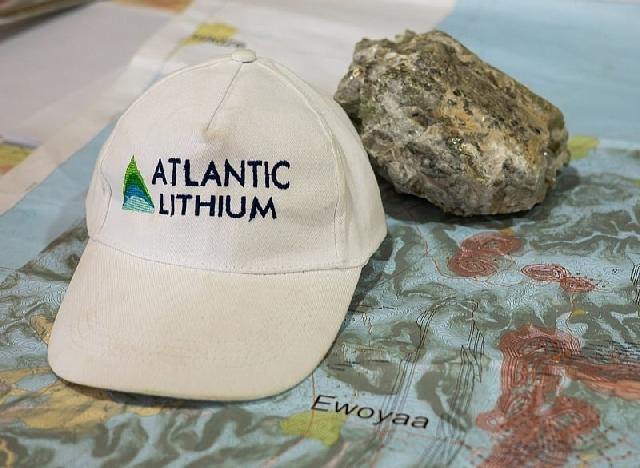
Just two months after Ghana’s parliament approved the mining lease for the country’s first lithium mine, the asset has been sold. On May 7, 2026, Atlantic Lithium—an Australian and London-listed company behind the Ewoyaa project in Ghana’s Central Region—announced a binding deal for Zhejiang Huayou Cobalt to acquire all its issued shares in an all-cash transaction worth about $1.9 billion. The acquisition gives Huayou a second African lithium foothold alongside Zimbabwe’s Arcadia Lithium project. For Ghana, the sale sparks pressing questions: what does sovereignty mean when a company holding such a lease is acquired without prior government consent? And what’s next for a nation that spent years negotiating, debating, and legislating its first lithium mine, only to see it change hands in mere months?
Key Developments: The Deal, the Asset, and the Regulatory Window
The transaction is straightforward in structure but complex in implications. Huayou will acquire 100% of Atlantic Lithium’s issued shares, giving it indirect control of Atlantic’s Ghanaian subsidiary, which holds the Ewoyaa mining lease. The lease itself was ratified by the Ghanaian parliament in March 2026 following years of delays and political controversy over terms, including the government’s right to a 10% free-carried interest, a sliding-scale royalty rate (starting at 5% and increasing with profitability), and local content requirements.
Key Takeaways
- Just two months after Ghana’s parliament approved the mining lease for the country’s first lithium mine, the asset has been sold.
- Huayou will acquire 100% of Atlantic Lithium's issued shares, giving it indirect control of Atlantic's Ghanaian subsidiary, which holds the Ewoyaa mining lease.
- The Minerals Commission should urgently review Act 703 and recommend amendments to require government consent for any acquisition of a foreign parent company that holds a mining lease through a Ghanaian subsidiary.
Under Ghanaian law, the transfer of a mining lease requires ministerial consent. However, the structure of this transaction—a share purchase of the foreign parent company rather than an assignment of the lease itself—may not trigger the same review thresholds. This is not a loophole but a feature of international mining finance. Parent companies are acquired all the time; the subsidiary’s lease remains technically unchanged. The question is whether Ghana’s Minerals and Mining Act, 2006 (Act 703), as amended, adequately addresses change of beneficial ownership.
The deal must clear several regulators: the ECOWAS Regional Competition Authority (which reviews mergers with regional impact), Ghana’s Securities and Exchange Commission (SEC), and potentially the Minerals Commission (if the change in beneficial ownership is deemed material). A shareholder vote is expected in November, with completion targeted for December 2026. That window—approximately seven months—gives Ghana time to negotiate the terms of its participation or, at minimum, to extract commitments on local processing, technology transfer, and employment.
Huayou’s rationale is clear. The company is one of China’s largest producers of battery materials, including cobalt, nickel, and lithium chemicals. It already controls Zimbabwe’s Arcadia Lithium project, which began trial production in 2026, and has investments in the Democratic Republic of Congo’s cobalt sector. Acquiring Ewoyaa gives Huayou a diversified African lithium portfolio and a direct supply line into the EV and energy storage markets that are reshaping global industry. The premium paid—26.6% above market—reflects the strategic urgency.
Atlantic Lithium’s rationale is equally clear. The company was a junior explorer with a single advanced asset. Developing Ewoyaa to production would have required additional capital raises, offtake agreements, and construction risk. The Huayou offer provides a clean exit for shareholders and certainty for the project’s future. The company’s board unanimously recommended the deal.
Ghana’s position is more ambiguous. The country stands to gain construction activity, jobs, and royalty revenues under the sliding-scale structure parliament ratified. The deal is expected to accelerate the socioeconomic benefits anticipated for host communities. But the transfer of ownership to a Chinese state-linked industrial group, at a moment when Western governments are already scrutinizing China’s grip on African critical minerals, will attract attention. The United States, European Union, and United Kingdom have all designated lithium as a critical mineral and are seeking to diversify supply chains away from China. Ghana, as a new entrant to the lithium market, now finds its first mine controlled by a Chinese buyer.
Analysis & Implications: Sovereignty, Beneficial Ownership, and the Limits of Local Content
Ghana’s sovereignty narrative around mineral resources has been consistent: the country owns its subsoil resources, foreign investors operate under leases, and the government retains the right to regulate. Parliament’s ratification of the Ewoyaa mining lease included provisions for local content, technology transfer, and value addition. The government also secured a 10% free-carried interest—a stake that does not require capital contribution but entitles the state to dividends.
These provisions remain in place. The mining lease is attached to the subsidiary, not to the parent’s shareholding. Huayou will inherit the same obligations: the same royalty rate, the same local content requirements, the same environmental standards. In strictly legal terms, Ghana’s position has not worsened.
But in practical terms, the deal changes the relationship. The counterparty to Ghana’s negotiated terms is now a vertically integrated Chinese industrial giant, not a junior explorer dependent on Ghanaian goodwill for its social license. Huayou has the capital, the technical expertise, and the downstream processing facilities to develop Ewoyaa quickly. It also has the bargaining power to revisit terms—not through legal challenge, but through the quiet leverage of being the only credible developer.
The more profound question is whether Ghana’s regulatory framework adequately addresses beneficial ownership changes. Act 703 requires ministerial consent for the “transfer, assignment, or disposal” of a mining lease. It is less clear on share transactions at the foreign parent level. This gap is not unique to Ghana; it exists in most mining jurisdictions. International mining companies routinely structure their holdings through holding companies in low-tax jurisdictions precisely to facilitate share transactions without triggering host country consent. The Ewoyaa deal is legal. The question is whether it is desirable.

Accra Street Journal notes that the timing of the deal—barely two months after parliamentary ratification—suggests that the acquisition was contemplated during the lease negotiation process. If Atlantic Lithium knew or should have known that a sale was imminent, did it have an obligation to disclose that to Ghanaian negotiators? Not legally. But ethically, the question hangs in the air.
For Ghana’s critical minerals strategy, the Ewoyaa takeover is a wake-up call. The country has spent years negotiating terms for its first lithium mine, focusing on royalty rates, local content, and environmental standards. It has spent less time considering who ultimately controls the asset and to whom that controlling entity is accountable. A sovereign nation has the right to approve or reject a change in beneficial ownership. Ghana may choose to exercise that right or may choose to accept the deal as negotiated. Either choice is valid. But the choice must be deliberate, not passive.
What This Means for Ghana: Negotiating Leverage, Local Processing, and Long-Term Value
The immediate implication is that Ghana must decide how to respond. The government has three options.
First, accept the deal as structured, focus on enforcing the existing lease terms, and seek to maximize local benefits through implementation. This is the path of least resistance. Huayou is a credible developer; Ewoyaa will almost certainly reach production faster under Chinese ownership than under a junior explorer. Royalties, taxes, and jobs would materialize sooner rather than later.
Second, seek to renegotiate certain terms in light of the change in ownership. Ghana could argue that the risk profile of the project has changed—a large, vertically integrated buyer is different from a junior explorer—and that the government’s 10% free-carried interest should be increased, or that the sliding-scale royalty should start higher. Huayou would resist, but Ghana has leverage: the mining lease is in force, but operational permits, environmental approvals, and export licenses are still under government control.
Third, block the deal or refer it for a full competition and sovereignty review. This would be unprecedented and legally risky. Blocking a share purchase of a foreign parent company would signal that Ghana views changes in beneficial ownership as triggering full lease renegotiation. Foreign investment would likely freeze. But it would also send a message: Ghana’s critical minerals are not for sale to the highest bidder without government oversight.
The likely outcome is a middle path: Ghana accepts the deal but extracts additional commitments on local processing. Huayou operates lithium hydroxide conversion facilities in China. If it could be persuaded to build a conversion plant in Ghana—even a modest 50,000-tonne-per-year facility—the value addition would be transformative. Instead of exporting spodumene concentrate (which contains approximately 6% lithium oxide), Ghana would export battery-grade lithium hydroxide (which sells for many times more per tonne). The government should make local processing the centerpiece of any post-acquisition negotiation.
For host communities in the Central Region, the deal accelerates the timeline for promised benefits: roads, schools, health clinics, and employment. Huayou has deeper pockets than Atlantic Lithium and a stronger incentive to maintain good community relations. Communities should hold the company to the commitments made in the social responsibility agreement negotiated as part of the lease approval.
For Ghana’s broader critical minerals strategy, the Ewoyaa takeover is a stress test. Ghana has identified lithium, graphite, manganese, and rare earths as strategic resources. It has developed a framework for negotiating leases, but not for managing changes in beneficial ownership. The Minerals Commission should urgently review Act 703 and recommend amendments to require government consent for any acquisition of a foreign parent company that holds a mining lease through a Ghanaian subsidiary. This would not deter investment—it would simply require disclosure and approval, bringing practice into line with sovereignty rhetoric.
Wider Context: China’s African Lithium Strategy and Western Responses
China’s acquisition of African lithium assets is not new. Huayou’s purchase of Ewoyaa follows a pattern: identify advanced exploration assets, acquire at a premium, develop rapidly, and integrate into the parent’s downstream processing. The Democratic Republic of Congo’s cobalt sector is now overwhelmingly Chinese-controlled as a result of similar strategies. Zimbabwe’s lithium sector is heading in the same direction.
Western governments are waking up to the implications. The United States has designated lithium a critical mineral and offers tax credits under the Inflation Reduction Act for EVs that source battery materials from US free-trade agreement partners. Ghana is not a US free-trade agreement partner. The European Union’s Critical Raw Materials Act sets targets for domestic processing and diversification; Ghana could become a supplier to Europe if Chinese control does not deter European buyers. The United Kingdom’s Critical Minerals Intelligence Centre tracks Chinese acquisitions but has no regulatory power to block them.
The reality is that China is winning the race for African critical minerals because Chinese companies move faster, offer better terms (to sellers, not necessarily to host governments), and face less scrutiny from their own government. Western mining companies are slowed by environmental, social, and governance (ESG) requirements, shareholder demands, and competition for capital. A junior explorer like Atlantic Lithium, facing a long road to production, will rationally sell to the highest bidder. That bidder is increasingly Chinese.
For African governments, the challenge is to capture value from this wave of investment without being captured by it. Ghana’s negotiation of the Ewoyaa lease—years of debate, parliamentary ratification, local content provisions—was a model of thoroughness. But that thoroughness was directed at the wrong entity. The lease was negotiated with a junior explorer that was always going to sell to a major. The government should have anticipated this and negotiated terms that would bind successors in interest, including change-of-control provisions that require government consent. The fact that it did not is a governance failure.
Outlook / What Happens Next
The shareholder vote is scheduled for November 2026. Completion is targeted for December. In the intervening months, Ghana has time to negotiate. The government should establish a multi-ministerial task force (Ministry of Lands, Ministry of Finance, Ministry of Trade, Minerals Commission, and Attorney-General’s office) to assess the deal and recommend a negotiating position.
The key negotiating points should be: local processing (a lithium hydroxide conversion plant of at least 50,000 tonnes per year), technology transfer (training for Ghanaian engineers and technicians), expanded local content (higher thresholds for local procurement and employment), and community development (accelerated delivery of social infrastructure).
Huayou will resist binding commitments on local processing because its business model is to ship concentrate to China for conversion. But Ghana has leverage: the mining lease requires ministerial consent for major operational changes, including export permits. Ghana could simply refuse to issue spodumene concentrate export permits unless a conversion plant is built. This would be aggressive but not unprecedented—Indonesia used a similar ban on nickel ore exports to force the construction of smelters, transforming its nickel sector.
The risk is that Huayou walks away, or litigates under investment treaties. Ghana’s BIT with China (signed 1989, updated 2010) contains investor-state dispute settlement provisions. A ban on concentrate exports would likely be challenged. Ghana would need to defend it as a legitimate environmental or value-addition measure—a defense that has succeeded in other contexts but is not guaranteed.
The more realistic path is a negotiated timeline: Huayou agrees to conduct a feasibility study for a conversion plant within 12 months, and to commence construction within 36 months, in exchange for a phased export permit regime for concentrate. This is a classic compromise: Huayou gets interim cash flow; Ghana gets a binding commitment to downstream processing.
For Ghanaian citizens, the Ewoyaa takeover is a test of whether their government can protect national interests in a globalized mining industry. The deal is done, but the terms are not final. The next seven months will determine whether Ghana is a passive observer of its critical minerals future, or an active shaper. The lithium is in the ground. The question is who benefits, and how much.
Source: Accra Street Journal
Last Updated on May 10, 2026 by Samuel Kwame Boadu
Disclaimer: Some content on Accra Street Journal may be aggregated, summarized, or edited from third-party sources for informational purposes. Images and media are used under fair use or royalty-free licenses. Accra Street Journal is a subsidiary of SamBoad Publishing Hub under SamBoad Business Group Ltd, registered in Ghana since 2014.
For concerns or inquiries, please visit our Privacy Policy or Contact Page.

Samuel Kwame Boadu is a Ghanaian media entrepreneur and storyteller with a passion for amplifying urban voices and uncovering everyday truths. He is the Editor-in-Chief and Founder of Accra Street Journal, a dynamic digital platform dedicated to capturing the pulse of Ghana’s capital—its people, culture, challenges, business, sports and innovations.
Use the following reference when citing or referencing this article.
Your feedback helps us improve our journalism.
Report an Error
Help us maintain accuracy. Let our editorial team know if you spot an issue in this article.
Report a problem with this article