

16 min read
Executive Introduction
After five years of sluggish prices, the value of Africa’s largest listed companies has bounced back impressively. The total market capitalization of the continent’s top 250 firms jumped by an impressive 34% over the past year to $795 billion—up from $595 billion in 2025 and a sharp turnaround from the $503 billion low in 2024.
This rebound is not a mirage. It is driven by three structural forces that investors cannot afford to ignore:
Key Takeaways
- The digital transformation across Africa – Data revenue at MTN Group grew 36.1% in Q1 2026, while Safaricom’s M-Pesa revenue hit KSh 182.7 billion, growing 13.4% year-on-year.
- The story: Last year’s sixth-ranked listed company now takes top spot in Africa’s Top 250, more than doubling its market capitalisation to just under $50 billion.
- Risks: Intense competition in South Africa’s prepaid market; regulatory risk (tariff approvals, data pricing); currency volatility across 19 markets.
-
The commodity supercycle – Gold prices have jumped from $3,000 to $4,400 an ounce since March 2025, while platinum has more than doubled to $2,700 an ounce. The AI boom and the shift to clean energy are fueling demand for copper, cobalt, lithium, and rare earths.
-
The digital transformation across Africa – Data revenue at MTN Group grew 36.1% in Q1 2026, while Safaricom’s M-Pesa revenue hit KSh 182.7 billion, growing 13.4% year-on-year.
-
Market reforms and currency stability – Nigeria’s greater currency stability has boosted share attractiveness, while tariff adjustments for Nigerian telecoms have turned losses into profits.
This Stock Street Journal report identifies the best African stocks for long-term growth across three key themes: mining (the commodity supercycle), telecoms and digitalisation (Africa’s structural growth story), and banking and infrastructure (the economic backbone). For each stock, we provide current fundamentals, growth drivers, and the specific risks that justify the opportunity.
Part 1: The Macro Picture—Why African Stocks Now
The Recovery by the Numbers
Africa’s top 250 companies have seen a 34% increase in combined market capitalisation over the past year. The mining sector leads the charge (17.79% of total value, up from 14.36%), followed by banking (26.42%, up slightly) and telecoms (11.17%).
| Sector | Share of Top 250 Value | Trend |
|---|---|---|
| Banking | 26.42% | ↑ from 25.68% |
| Mining | 17.79% | ↑ from 14.36% |
| Telecoms | 11.17% | Stable |
| Construction materials | 3.67% | Expanding |
| Oil industry | Poorly represented | Dominated by foreign/state-owned firms |
The Performance of African Exchanges
African stock markets have delivered remarkable returns in a global environment of near-stagnation in developed markets:
| Market | Performance (Dec 2025–Apr 2026) |
|---|---|
| Ghana | ~50% |
| Nigeria | 30%+ |
| BRVM (West Africa) | 15–18% |
| Egypt | 15–18% |
| Tunisia | 15–18% |
Source: Financial Afrik analysis
But analysts caution that these performances reflect less a structural superiority than a catch-up phase. African markets still operate in environments characterised by limited liquidity, reduced depth, and a relatively narrow base of institutional investors. In these conditions, even modest capital flows can lead to significant index variations.
Part 2: Mining—The Commodity Supercycle
AngloGold Ashanti (South Africa/JSE)
The story: Last year’s sixth-ranked listed company now takes top spot in Africa’s Top 250, more than doubling its market capitalisation to just under $50 billion.
The numbers that matter:
-
Headline earnings surged from 954millionin2024to2.7 billion last year
-
16% increase in production to 3.1 million ounces
-
Major production from Sukari gold mine in Egypt
-
Operates in Ghana, Tanzania, Guinea, and DRC
Growth drivers: Higher gold prices (up from 3,000to4,400 an ounce since March 2025) and production expansion. The company has identified 4.9 million ounces of reserves on its Arthur Gold Project in Nevada.
Risks: Gold price volatility; geopolitical risks in operating jurisdictions; rising royalty rates (Ghana more than doubled gold royalties in response to high prices).

Verdict: A core holding for investors seeking exposure to the gold supercycle.
Gold Fields (South Africa/JSE)
The story: Gold Fields’ market capitalisation jumped from 19.7billionto39.8 billion over the past 12 months.

The numbers that matter:
-
Profits increased from 1.25billionin2024to3.57 billion last year
-
18% rise in annual gold production to 2.4 million ounces
-
45% rise in average gold price
-
A fifth of output (475,000 ounces) comes from Tarkwa mine in Ghana
The Ghana factor: Ghana produced a record 6 million ounces of gold in 2025—2.9 million ounces from large producers and 3.1 million ounces from artisanal and small-scale mining.
Risks: CEO Mike Fraser warned governments to be “measured” about creating “structural, uncompetitive situations” after Ghana increased royalties. “While we understand the deep social needs in-country, we are trying to be clear… governments should be really measured”.
Valterra Platinum (formerly Anglo American Platinum)
The story: Following its de-merger from parent company Anglo American in May 2025, Valterra is now the world’s biggest primary producer of platinum, listed on the JSE with a secondary listing in London.
The numbers that matter:
-
Market capitalisation increased from 10.6billionto21.7 billion over the past year
-
Platinum prices more than doubled to $2,700 an ounce in early 2026
Why platinum is rising: Limited supply from South Africa (which accounts for at least 70% of global output) is driving prices. Impala Platinum’s headline earnings reached 9.3 billion rand ($554 million) in H2 2025, up from just 1.9 billion rand in the same period in 2025.
The threat: CEO Nico Muller warned that the growing use of electric vehicles poses a big threat to platinum miners, as they do not need catalytic converters—one of the main uses for the precious metal.
Verdict: A high-risk, high-reward play on the platinum cycle, with a clear long-term threat from EV adoption.
Part 3: Telecoms and Digitalisation—Africa’s Structural Growth Story
MTN Group (South Africa/JSE)
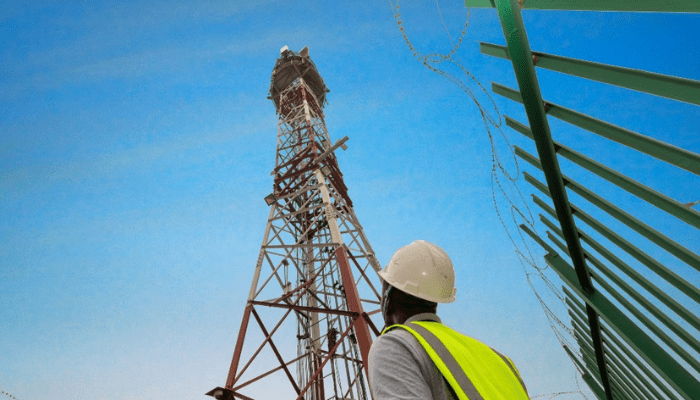
The story: MTN Group is Africa’s largest mobile operator by subscribers, with 312.7 million customers across 19 markets. The company is executing its “Ambition 2030” strategy focused on data and fintech growth.
The numbers that matter (Q1 2026):

| Metric | Q1 2026 | YoY Change (constant currency) |
|---|---|---|
| Group service revenue | R56.9 billion | +21.1% |
| Data revenue | – | +35.4% |
| Fintech revenue | – | +20.0% |
| EBITDA margin | 47.6% | +3.0pp |
| Active data subscribers | 175.6 million | +8.7% |
| MoMo monthly active users | 67.4 million | +8.2% |
| Fintech transaction value | $163 billion | +32.8% |
Source: MTN Group Q1 2026 results
Geographic breakdown:
-
MTN Nigeria: Service revenue up 41.7% constant currency; EBITDA margin 55.3%
-
MTN Ghana: Service revenue up 35.7% constant currency; EBITDA margin 61.2%
-
MTN South Africa: Service revenue up just 0.7%; EBITDA margin 32.6% (pressured by prepaid market competition)
The IHS transaction: MTN is progressing with the acquisition of IHS Towers, which made MTN Nigeria the biggest listed company in Nigeria.
Balance sheet strength: Group leverage at 0.2x; HoldCo liquidity headroom at R42.6 billion.
Risks: Intense competition in South Africa’s prepaid market; regulatory risk (tariff approvals, data pricing); currency volatility across 19 markets.
Verdict: The most liquid, diversified telecom play on the continent. A core long-term holding.
Safaricom (Kenya/NSE)
The story: Safaricom has delivered its strongest financial performance in 25 years of operation, posting attributable profit of KSh 95.6 billion—the highest by any corporate in East and Central Africa.
The numbers that matter (FY26):
| Metric | FY26 Actual | YoY Change |
|---|---|---|
| Total revenue | KSh 427.6 billion | +10.0% |
| Group service revenue | KSh 414.1 billion | +11.5% |
| EBITDA | KSh 220.3 billion | +27.9% |
| EBITDA margin | 51.5% | +720 bps |
| EBIT | KSh 146.3 billion | +40.6% |
| Net income attributable | KSh 95.6 billion | +37.0% |
| Earnings per share | KSh 2.39 | Highest in history |
| Dividend per share | KSh 2.00 | +67% |
Source: Safaricom FY26 results
Kenya operations:
-
M-Pesa revenue: KSh 182.7 billion (+13.4%) – 45.6% of Kenya service revenue
-
Mobile data revenue overtook voice for the first time: KSh 83.35 billion, 42.1% vs voice at 41.3%
-
Merchant base expanded 71.0% to 3.1 million
-
M-Pesa transaction volumes rose 25.1% to 46.4 billion
-
Kadogo micro-transactions accounted for 36.8% of total M-Pesa volumes at 17.1 billion
The Ethiopia turnaround story:
-
Ethiopia service revenue grew 58.3% to KSh 14.1 billion
-
M-Pesa adoption surged 119.4% to 5.2 million active customers
-
Full-year EBITDA loss narrowed sharply by 64.8% to KSh 15.1 billion
-
H2 EBITDA loss was only KSh 2.7 billion against KSh 12.4 billion in H1
-
On track for EBITDA breakeven by March 2027
Forecast beat: Safaricom beat analyst consensus on revenue (by KSh 6.3 billion), EBITDA (by KSh 12.2 billion), and net income (by KSh 9.5 billion).
The market reaction: Shares surged 8.15% to KSh 32.50 in opening minutes, lifting the broader NSE All Share Index 3.15%, adding approximately KSh 100 billion in market value.
Risks: The Kenya government is selling a 15% stake to Vodacom for about $1.6 billion, pending regulatory approval. Ethiopia remains a cash burn, though narrowing rapidly. Handset and connection revenue collapsed 47.4%—a trend management must address.
Verdict: The best-performing large-cap stock in East Africa. Ethiopia breakeven will be the next major catalyst.
Part 4: Infrastructure and Construction
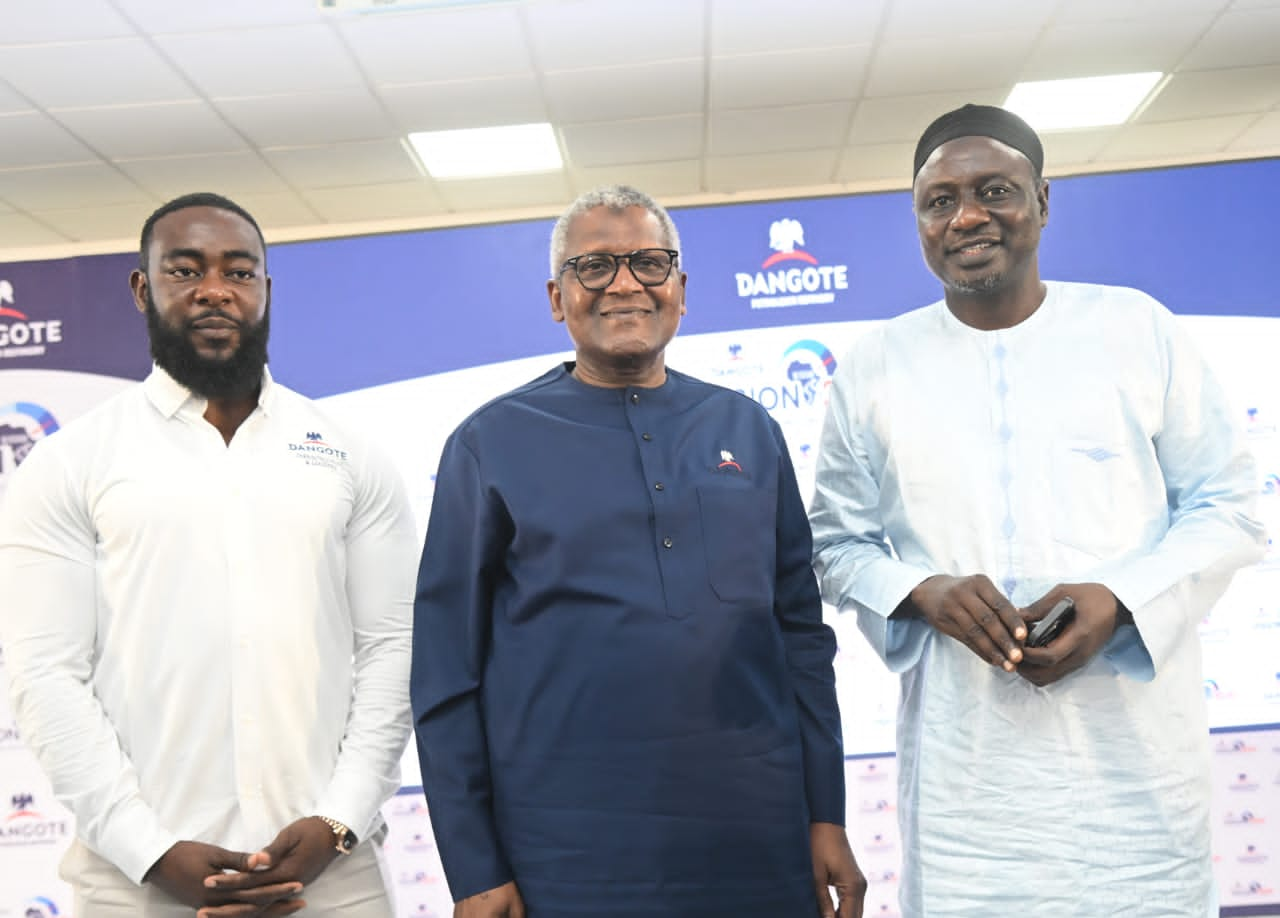
Dangote Cement (Nigeria/NGX)
The story: Dangote Cement is Africa’s largest cement producer, with installed capacity of 55 million tonnes per annum across the continent. The company has eliminated Nigeria’s dependence on imported cement and positioned the country as a net exporter.
The numbers that matter (Q1 2026):
| Metric | Q1 2026 | YoY Change |
|---|---|---|
| Revenue | N1.20 trillion | +20.4% |
| Gross profit | N788.8 billion | +24.1% |
| Gross margin | 65.8% | +193 bps |
| EBITDA | N566.9 billion | +22.8% |
| EBITDA margin | 47.3% | +92 bps |
| Profit before tax | N421.2 billion | +35.0% |
| Profit after tax | N320.7 billion | +55.7% |
| Earnings per share | N19.14 | +55.7% |
| Net debt-to-equity | 0.10x | Down from 0.80x |
Source: Dangote Cement Q1 2026 results
Export growth: Cement and clinker exports from Nigeria rose 71.6% year-on-year, with 10 clinker shipments completed in the quarter. The company completed clinker shipments to neighbouring African markets.
Expansion pipeline:
-
Installed capacity now 55MTA
-
Commissioned 3MTA grinding plant in Côte d’Ivoire
-
Progress on Itori (Ogun State) and Ethiopia expansion projects
-
Target of 80 million tonnes capacity by 2030
Balance sheet strength: Net debt-to-equity declined from 0.80x to 0.10x; net debt-to-EBITDA improved from 1.50x to 0.40x.
Analyst view: FDC named Dangote Cement a “strong buy” for 2026, citing Nigeria’s highly consolidated cement industry as a major advantage. The sector benefits from pricing discipline and earnings visibility.
Risks: FX loss of N17.5 billion in Q1 2026 (compared to a gain of N29.0 billion in Q4 2025) impacted finance costs. Cement remains sensitive to infrastructure spending cycles and construction sector health.
Verdict: A defensive infrastructure play with pricing power, export growth, and a strengthening balance sheet.
Bua Cement (Nigeria/NGX)
The story: Bua Cement has been on a remarkable growth trajectory, with its share price gaining 50% in the first ten weeks of 2026 alone, following a 92% increase across 2025.
The numbers that matter:
-
Revenues rose from 257 billion naira ($187 million) in 2021 to 1.18 trillion naira last year
-
Market cap increased 6.1billionoverthepastyearto8 billion
Growth drivers:
-
Resumed exports to Burkina Faso and Niger following political and security stabilisation
-
Added 500 bulk cement tankers to fleet
-
Ramping up production to expected 20 million tons per year later this year
Verdict: Higher risk, higher growth potential than Dangote Cement, with a smaller market cap and more aggressive expansion.
Part 5: Banking—The Economic Backbone
Standard Bank (South Africa/JSE)
The largest bank in Africa by assets, Standard Bank has enjoyed a positive year with an increase of $7.7 billion in market capitalisation. It remains a core holding for investors seeking exposure to the South African economy and the bank’s significant presence across the continent.
FirstRand (South Africa/JSE)
FirstRand’s market cap increased by $6.3 billion over the past year. The bank has benefited from South Africa’s economic recovery and its strong position in retail and business banking.
Capitec Bank (South Africa/JSE)
Capitec—the fastest-growing major retail bank in South Africa—also saw its market capitalisation increase by $6.3 billion. The bank continues to gain market share from traditional incumbents.
Attijariwafa Bank (Morocco/Casablanca)
The only non-South African bank in the top 10, Attijariwafa Bank’s value is little changed at $15.7 billion. It remains North Africa’s leading banking institution.
Part 6: The Analysts’ Picks for 2026
FDC’s “Strong Buy” List (December 2025)
Financial Derivatives Company, led by Bismarck Rewane, identified four standout Nigerian stocks for 2026 based on “scale, earnings visibility, and pricing power”:
| Stock | Projected Revenue Growth | Projected PAT Growth | Est. P/E | Investment Thesis |
|---|---|---|---|---|
| MTN Nigeria | +58% to N7.8tn | +44% to N1.44tn | 14x | Scale, data growth, tariff adjustments |
| Dangote Cement | +27% to N5.3tn | +44% to N1.4tn | 13.5x | Infrastructure spend, export growth, pricing power |
| Okomu Oil Palm | +62% to N351bn | +121% to N161bn | 16.4x | Strong commodity pricing, policy support, vertical integration |
| Guinness Nigeria | +42% to N704bn | +35% to N21.6bn | 12.2x | Pricing power, premium product mix, strong distribution |
FDC cautions that “timing and entry price remain critical, as FX stability and interest rate direction will largely determine how much of the projected upside is ultimately realised”.
Part 7: Risks and the Investor’s Checklist
The Structural Vulnerabilities of African Markets
As one analyst noted, “African markets still operate in environments characterised by limited liquidity, reduced depth, and a relatively narrow base of institutional investors. In these conditions, even modest flows can lead to significant index variations”.
The five key risks:
| Risk | What to Watch |
|---|---|
| Currency volatility | Naira and cedi fluctuations directly impact reported returns for foreign investors |
| Liquidity constraints | Some exchanges have thin trading volumes; exit positions may require patience |
| Regulatory uncertainty | Tariff approvals, royalty increases, and tax changes can shift fundamentals overnight |
| Political risk | 12 African countries held elections in 2025/26; contested outcomes may trigger volatility |
| Debt sustainability | Sub-Saharan nations face an $83 billion financing shortfall; debt servicing costs remain high |
The Investor’s Checklist
Before committing capital, ask:
-
Currency hedge? Are you comfortable with local currency exposure, or do you need hedging instruments?
-
Liquidity profile? Can you exit the position when you need to?
-
Regulatory track record? Has the company navigated regulatory changes successfully in the past?
-
Dividend history? For income-focused investors, does the stock pay consistent dividends?
-
Valuation relative to peers? Is the growth already priced in?
Conclusion: Three Themes, One Portfolio
The best African stocks for long-term growth fall into three distinct themes, each driven by a different structural force:
Theme 1: The commodity supercycle. AngloGold Ashanti, Gold Fields, and Valterra Platinum offer leveraged exposure to rising gold and platinum prices. The AI revolution and energy transition are also driving demand for copper, cobalt, and rare earths. But commodity stocks are cyclical—position them for a multi-year trend, not a quick trade.
Theme 2: The digital transformation. MTN Group and Safaricom are not just telecom companies—they are digital financial services platforms. With 312.7 million customers, 67.4 million active MoMo users, and fintech transaction values of $163 billion in a single quarter, MTN Group has built a second financial system within its network. Safaricom’s M-Pesa now accounts for 45.6% of Kenya service revenue, and Ethiopia is on the cusp of breakeven.
Theme 3: Infrastructure and consumption. Dangote Cement, Bua Cement, Okomu Oil Palm, and Guinness Nigeria ride Africa’s urbanisation, population growth, and rising consumer spending. These stocks offer pricing power in consolidated industries, but they are sensitive to currency movements and interest rates.
The disciplined investor’s approach:
-
Core holdings in MTN Group and Dangote Cement (scale, liquidity, diversified operations)
-
Satellite positions in Safaricom (Ethiopia upside) and Gold Fields (gold supercycle)
-
Smaller, higher-risk positions in Valterra Platinum and Bua Cement for growth potential
-
Monitor banking stocks (Standard Bank, FirstRand, Capitec) for exposure to South Africa’s recovery
As FDC’s Bismarck Rewane cautioned, “timing and entry price remain critical”. But for investors with a 3–5 year horizon, these stocks combine earnings visibility, pricing power, and exposure to Africa’s most powerful structural trends.
The continent’s stock markets have recovered. The question now is not whether African stocks will grow, but which companies will capture the growth and which investors will have the discipline to hold them.
Quick Facts Box
| Company | Market | Primary Sector | Market Cap (USD) | Key Metric |
|---|---|---|---|---|
| AngloGold Ashanti | JSE | Gold mining | ~$50bn | Profits $2.7bn, up 183% |
| Gold Fields | JSE | Gold mining | $39.8bn | Production 2.4m oz, up 18% |
| Naspers | JSE | Tech/media | $39bn | Holds 57% of Prosus |
| MTN Group | JSE | Telecoms | $21bn | 312.7m customers, 36% data revenue growth |
| Valterra Platinum | JSE | Platinum mining | $21.7bn | World’s largest primary platinum producer |
| Standard Bank | JSE | Banking | ~$20bn | Largest bank in Africa |
| Attijariwafa Bank | Casablanca | Banking | $15.7bn | North Africa’s leading bank |
| MTN Nigeria | NGX | Telecoms | $11.5bn | Biggest listed company in Nigeria |
| Dangote Cement | NGX | Cement | $9.9bn | 55MTA capacity, 71.6% export growth |
| Bua Cement | NGX | Cement | $8bn | Share price up 50% in 10 weeks |
| Safaricom | NSE | Telecoms | ~$10bn | KSh 95.6bn profit, Ethiopia nearing breakeven |
FAQ Section
Q1: Which African stock is best for long-term growth right now?
A: MTN Group offers the best balance of scale (312.7 million customers, 19 markets), growth (data revenue up 36%, fintech up 22%), and diversification. Safaricom offers higher potential upside if Ethiopia reaches breakeven, but with higher single-country concentration risk.
Q2: Is now a good time to invest in African mining stocks?
A: Gold prices have surged from 3,000to4,400 an ounce since March 2025, and platinum has more than doubled to $2,700 an ounce. However, mining stocks are cyclical. The current commodity supercycle is real, but investors should position for volatility. AngloGold Ashanti and Gold Fields offer the most liquidity and operational diversification.
Q3: What are the risks of investing in African stocks?
A: Key risks include currency volatility (naira, cedi fluctuations), limited liquidity (thin trading on some exchanges), regulatory uncertainty (tariff changes, royalty increases), political risk (election outcomes), and debt sustainability concerns (Sub-Saharan nations face an $83 billion financing shortfall).
Q4: What is the outlook for Safaricom’s Ethiopia investment?
A: Ethiopia’s EBITDA loss narrowed sharply from KSh 61.1 billion to KSh 30.1 billion year-on-year. H2 EBITDA loss was only KSh 2.7 billion, placing the operation within striking distance of management’s guided FY27 EBITDA breakeven. This is the single most important catalyst for Safaricom’s share price.
Q5: Why is MTN Nigeria’s performance so strong?
A: MTN Nigeria’s service revenue grew 41.7% in constant currency in Q1 2026, with an EBITDA margin of 55.3%. The regulator approved a 50% rise in tariffs and a 74.5% increase in data volumes, while MTN Nigeria secured 53 million active data users. The acquisition of IHS Towers made it the biggest listed company in Nigeria.
Q6: Are there good banking stocks to watch in Africa?
A: Yes. Standard Bank, FirstRand, and Capitec Bank (South Africa) have all seen significant market cap increases over the past year. Attijariwafa Bank (Morocco) is North Africa’s leading banking institution. Banking is the largest sector in Africa’s Top 250 by value (26.42%).
Q7: What is the investment case for Dangote Cement?
A: Dangote Cement has 55 million tonnes of installed capacity across Africa, with exports from Nigeria up 71.6% in Q1 2026. Net debt-to-equity fell from 0.80x to 0.10x, and profit after tax surged 56%. The company targets 80 million tonnes capacity by 2030.
Q8: What is Naspers and why is it in the top three?
A: Naspers is a South African tech and media conglomerate that holds a 57% controlling stake in Amsterdam-listed Prosus, which in turn owns a 26% stake in Chinese tech giant Tencent. This global reach reduces Naspers’ reliance on the South African economy. Its value is $39 billion.
Q9: How should a beginner start investing in African stocks?
A: Start with the most liquid, well-regulated markets: the Johannesburg Stock Exchange (JSE) for South African stocks, the Nigerian Exchange (NGX) for Nigerian stocks, and the Nairobi Securities Exchange (NSE) for Kenyan stocks. For most retail investors, ETFs tracking African indices offer better diversification than individual stocks.
Q10: Are African stocks undervalued compared to developed markets?
A: According to the African Business Top 250 analysis, “investors come to view African stocks as undervalued and so a source of better growth opportunities than are available in Western markets.” The combined market cap of Africa’s top 250 companies is still below the 2015 peak of $948 billion, suggesting room for further recovery
Source: Accra Street Journal | Stock Street Journal
Last Updated on May 19, 2026 by Samuel Kwame Boadu
Disclaimer: Some content on Accra Street Journal may be aggregated, summarized, or edited from third-party sources for informational purposes. Images and media are used under fair use or royalty-free licenses. Accra Street Journal is a subsidiary of SamBoad Publishing Hub under SamBoad Business Group Ltd, registered in Ghana since 2014.
For concerns or inquiries, please visit our Privacy Policy or Contact Page.

Samuel Kwame Boadu is a Ghanaian media entrepreneur and storyteller with a passion for amplifying urban voices and uncovering everyday truths. He is the Editor-in-Chief and Founder of Accra Street Journal, a dynamic digital platform dedicated to capturing the pulse of Ghana’s capital—its people, culture, challenges, business, sports and innovations.
Use the following reference when citing or referencing this article.
Your feedback helps us improve our journalism.
Report an Error
Help us maintain accuracy. Let our editorial team know if you spot an issue in this article.
Report a problem with this article