





7 min read
The investment thesis for Africa has fundamentally shifted. The conversation is no longer about aid, volatility, or extractive commodities alone. It is about industrialisation, energy transition, digital leapfrogging, and a rapidly growing consumer class.
While the global economy faces headwinds, the International Monetary Fund (IMF) projects Africa to be the fastest-growing region globally through 2026, with five economies expected to grow at over 7% . This growth is driven by a massive demand for infrastructure (with a financing gap of up to $170 billion annually), the world’s youngest population (median age of 19), and the implementation of the African Continental Free Trade Area (AfCFTA).
Key Takeaways
- While the global economy faces headwinds, the International Monetary Fund (IMF) projects Africa to be the fastest-growing region globally through 2026, with five economies expected to grow at over 7% .
- AI & Local Innovation: The 2026 Africa Forward Summit emphasized "Digital Sovereignty," funding African language models and AI startups .
- Why now: Africa spends approximately 75 billion annually importing food.
Here is the definitive ranking of the best sectors for investment, backed by the latest deal flows, policy shifts, and market data.
Executive Summary: Where the Money is Flowing
In Q1 2026 alone, Africa attracted $16.1 billion in private capital. While the number of deals fell, the size of investments surged, showing a shift toward “mega-deals” in essential infrastructure. Notably, two transactions—the $6.2 billion MTN–IHS towers deal and the $4 billion Dangote Refinery financing—accounted for two-thirds of this total.
The Top Investment Sectors for 2026:
-
Renewable Energy & Green Industrialisation (The Urgent & The Strategic)
-
Technology & Digital Infrastructure (The AI & Data Revolution)
-
Critical Minerals & Mining (The Raw Materials of the Future)
-
Agribusiness & Agro-Processing (The Food Security Mega-Trend)
-
Infrastructure & Logistics (The Engine of the AfCFTA)
-
Manufacturing & Light Industry (Import Substitution)
1. Renewable Energy & Green Industrialisation
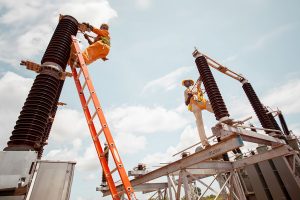
Why now: The continent faces an acute power crisis, yet holds 60% of the world’s best solar resources. The African Development Bank estimates that by 2030, Africa will require up to $200 billion annually to meet its energy and climate goals. This is not just an environmental play; it is a productivity play.
The Investment Case:
Investors are moving beyond simple electrification toward Green Industrialisation. This involves coupling cheap renewable energy with manufacturing.
-
Green Hydrogen: Namibia, Morocco, and Mauritania are leading multi-billion dollar projects aimed at exporting green fuels to Europe.
-
Data Center Power: The explosion of digital services requires reliable, clean power for cooling, creating a symbiotic demand for renewables .
-
Key Deals: Major players like ACWA Power (Saudi) and Scatec (Norway) are scaling up utility-scale solar and wind, supported by long-term Power Purchase Agreements (PPAs) .
Hotspots: South Africa (grid reform), Morocco (green hydrogen), Kenya (geothermal), and Nigeria (C&I solar for businesses).
2. Technology, Digital Infrastructure, and AI
Why now: Africa is the last great digital frontier. With a projected $700 billion contribution to GDP by 2050 from the digital economy, the sector is attracting massive infrastructure spending .
The Investment Case:
The current wave is Infrastructure-First. Before the apps can scale, the physical hardware must exist.

-
Data Centres: Demand for cloud computing and local data hosting (sovereignty) is exploding. Less than 2% of global data centre capacity is in Africa, creating a massive gap .
-
Connectivity: The $6.2 billion MTN/IHS deal highlights the consolidation happening in telecom towers to support 5G rollout and fibre expansion .
-
AI & Local Innovation: The 2026 Africa Forward Summit emphasized “Digital Sovereignty,” funding African language models and AI startups . The Africa Finance Corporation recently committed $100 million to tech funds like Lightrock and Future Africa to scale local unicorns .
Hotspots: Nigeria (fintech hub), Kenya (Silicon Savannah), Egypt (data centre corridor), Mauritius (regulatory haven).
3. Critical Minerals & Mining
Why now: The global energy transition is mineral intensive. Africa holds over 30% of the world’s reserves of cobalt, lithium, copper, and manganese—essential for EV batteries and renewable storage .

The Investment Case:
The strategic shift is moving away from exporting raw rocks to Local Beneficiation (processing minerals in-country before export).
-
Value Addition: Countries are demanding that miners build refineries locally. The DRC and Zambia are establishing Special Economic Zones for battery precursor manufacturing .
-
Commodity Prices: Gold and copper prices remain historically high, driving exploration in West Africa.
-
Geopolitics: As global powers (US, China, EU) compete for supply chain security, African mineral assets have become strategic geopolitical tools .
Hotspots: DRC (cobalt/copper), Zambia (copper), Ghana (gold/lithium), South Africa (manganese/platinum).
4. Agribusiness & Agro-Processing
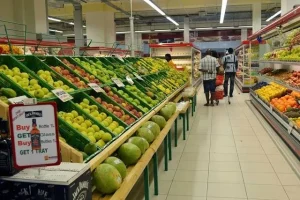
Why now: Africa spends approximately 75 billion annually importing food. The AfCFTA is a game-changer, aiming to create a 1 trillion regional agricultural market by 2030.
The Investment Case:
The opportunity lies in Processing, not just farming.
-
Cold Chains: Massive demand for logistics to reduce post-harvest waste (currently 30-40%).
-
Packaging: A booming local manufacturing sector needs paper, plastics, and glass to package food for regional trade .
-
Fintech for Farmers: Digital platforms providing solar-powered irrigation and carbon credits are attracting impact investors .
Hotspots: Côte d’Ivoire/Ghana (cocoa processing), Nigeria (rice and cassava), Ethiopia (horticulture).
5. Infrastructure & Logistics
Why now: The infrastructure financing gap is estimated to be between 130 billion and 170 billion annually. Without essential roads, ports, and railways, the AfCFTA cannot operate effectively..
The Investment Case:
-
Ports & Rail: Major concessions are happening in West and East Africa (e.g., Kenya’s Lamu Port).
-
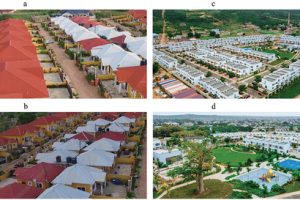
Real Estate: As urbanization accelerates (4.5% per year), demand for affordable housing and commercial real estate is booming. Egypt and Nigeria saw massive mid-tier M&A activity in real estate in Q1 2026 .
Hotspots: Nigeria (Dangote Refinery and port infrastructure), Egypt (urban development), Tanzania (railway corridors).
6. Manufacturing & Light Industry
Why now: The era of importing everything from China is ending. High global shipping costs and the “Made in Africa” policy drive are fueling a local manufacturing renaissance .
The Investment Case:

-
Import Substitution: Cement (driven by BUA/Dangote), textiles, and furniture.
-
Automotive: Morocco is exporting EVs to Europe; South Africa remains a hub for heavy trucks; Rwanda is pushing electric motorcycle assembly .
-
Building Materials: With a construction boom across the continent, local production of tiles, roofing sheets, and plumbing materials is highly lucrative .
Hotspots: Morocco (automotive), Ethiopia (garment/industrial parks), Nigeria (cement/consumer goods).
The Final Verdict: Risk vs. Reward
While the returns are lucrative, the risks are real. Investors are acutely aware of the $83 billion financing shortfall for Sub-Saharan Africa and the rising cost of capital due to high public debt levels .
| Veteran Investors (DFIs, Private Equity) | New Entrants (Retail/SME) |
|---|---|
| Focus: Energy, Infrastructure, Critical Minerals. | Focus: Agritech, Logistics, Data Hosting. |
| Strategy: Direct investment in mega-projects. | Strategy: Passive via ETFs, incubators, or digital assets. |
| Time Horizon: 10-15 years. | Time Horizon: 3-7 years. |
| Risk Mitigation: Blended finance (guarantees). | Risk Mitigation: Partnering with local distributors. |
The consensus is clear: Africa is no longer a “frontier” to be ignored, but a core component of a diversified global portfolio. The specific play is technology-enabled industrialisation. Investors are betting on the convergence of green energy, digital connectivity, and a rising population demanding better services.
Data Tables: Visualising the Investment Landscape
Table 1: Africa’s Fastest Growing Economies (2026)
| Country | Projected GDP Growth (2026) | Key Economic Driver |
|---|---|---|
| Ethiopia | 9.2% | Industrial Parks / Public Infrastructure |
| Guinea | 8.7% | Bauxite & Critical Minerals Boom |
| Uganda | 7.5% | Oil Sector Development & Agriculture |
| Rwanda | 7.2% | Services, Finance, & Technology Hub |
| Benin | 7.0% | Port Activity & Regional Trade Reforms |
Table 2: Top Sectors by Investment Activity (Q1 2026)
| Sector | Key Drivers & Hotspots | Investment Vehicles |
|---|---|---|
| Renewables & Green H2 | Drivers: Power deficit, ESG mandates. Hotspots: Namibia, Morocco, SA. |
Utility-scale PPAs, Green Bonds. |
| Critical Minerals | Drivers: EV battery demand. Hotspots: DRC, Zambia, Ghana. |
Private Equity (Mining), Royalty financing. |
| Digital Infra (AI/Datacenters) | Drivers: Cloud adoption, 5G. Hotspots: Nigeria, Kenya, Egypt. |
Venture Capital, Debt for tower rollout. |
| Agro-Processing | Drivers: Import substitution, waste reduction. Hotspots: Côte d’Ivoire, Nigeria. |
Impact funds, Trade finance. |
Table 3: The Top 10 Lucrative Import Sectors (For Traders/SMEs)
Based on 2026 trade data analysis .
| Rank | Product Category | Opportunity Rationale | Key Market |
|---|---|---|---|
| 1 | Electric Vehicle (EV) Motorcycles | Gas-to-EV transition (Kenya/Rwanda). | East Africa |
| 2 | Lithium-Ion Batteries | Storage for solar home systems. | Sub-Saharan Africa |
| 3 | Plastic Raw Materials (PET/PVC) | Local packaging manufacturing boom. | West Africa |
| 4 | Wheat & Vegetable Oils | Staple food deficit. | Regional |
| 5 | Pharmaceuticals (Generics) | Health Sovereignty” drive. | Regional |
| 6 | Refined Sugar | Domestic processing capacity gap. | Regional |
| 7 | Smartphones (Budget/Refurb) | Youth demographic, digital access. | All regions |
| 8 | Used Vehicles & Spare Parts | Mobility demand (Logistics). | West/East Africa |
| 9 | Construction Steel & Cement | Infrastructure boom. | Regional |
| 10 | Second-hand Clothing (Mitumba) | Affordability for low-income segment. | East Africa |
Final Takeaway:
For the long-term institutional investor, Energy and Infrastructure offer the best risk-adjusted returns due to sovereign backing and massive supply deficits. For the agile entrepreneur or SME, Agro-Processing and Digital Services offer the fastest growth, capitalizing on the daily consumption habits of the rising African consumer.
Source: Accra Street Journal
Last Updated on May 19, 2026 by Samuel Kwame Boadu
Disclaimer: Some content on Accra Street Journal may be aggregated, summarized, or edited from third-party sources for informational purposes. Images and media are used under fair use or royalty-free licenses. Accra Street Journal is a subsidiary of SamBoad Publishing Hub under SamBoad Business Group Ltd, registered in Ghana since 2014.
For concerns or inquiries, please visit our Privacy Policy or Contact Page.

Samuel Kwame Boadu is a Ghanaian media entrepreneur and storyteller with a passion for amplifying urban voices and uncovering everyday truths. He is the Editor-in-Chief and Founder of Accra Street Journal, a dynamic digital platform dedicated to capturing the pulse of Ghana’s capital—its people, culture, challenges, business, sports and innovations.
Use the following reference when citing or referencing this article.
Your feedback helps us improve our journalism.
Report an Error
Help us maintain accuracy. Let our editorial team know if you spot an issue in this article.
Report a problem with this article