









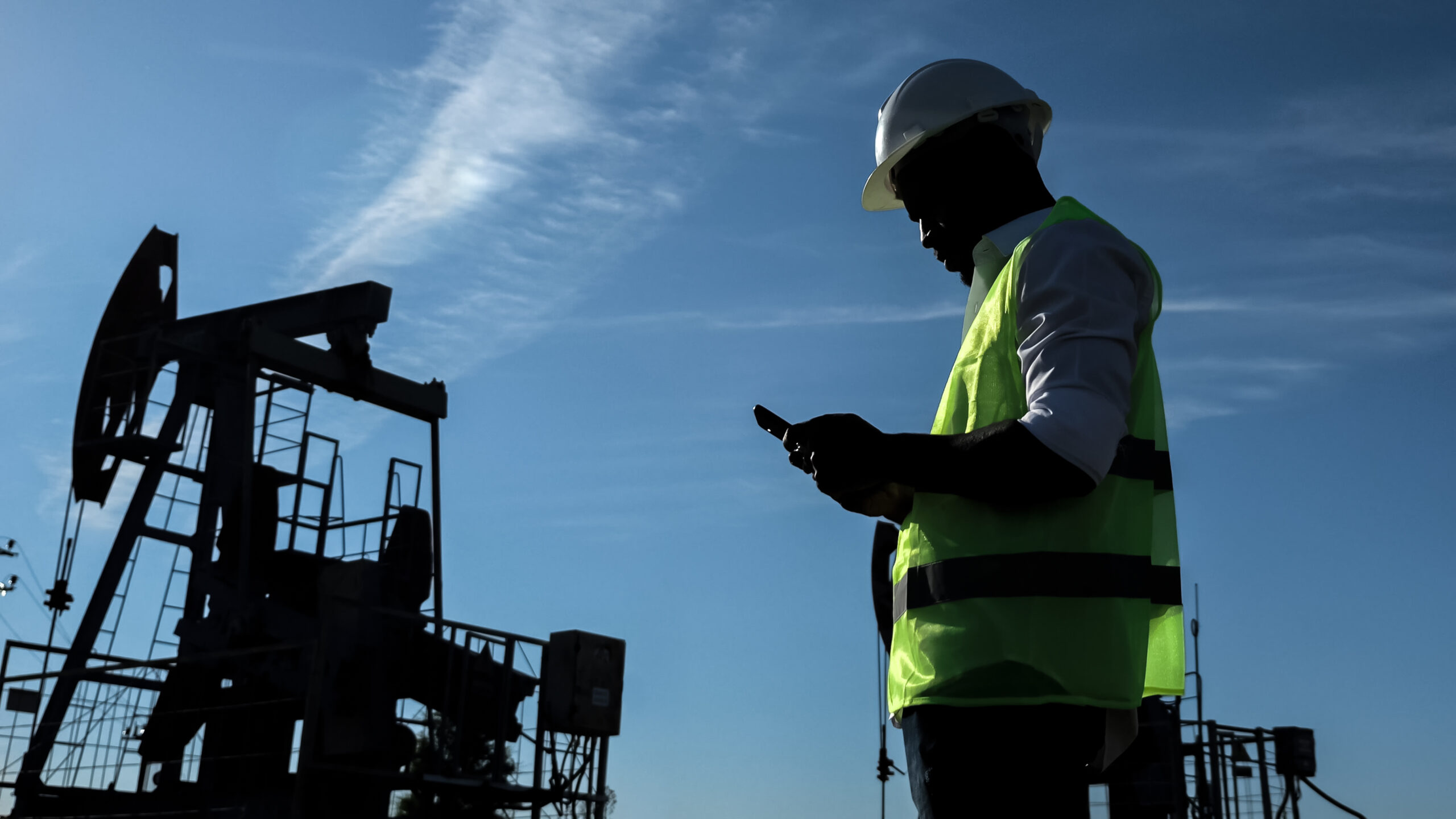
From diesel prices to sovereign risk, the intricate pathways connect crude markets with financial services and global connectivity.
Executive Summary
When the US and Israel launched strikes on Iran in late February 2026, the shockwave did not stop at the Strait of Hormuz. Within weeks, Africa’s largest stock market had lost $182 billion in value, diesel prices had surged across the continent, and the financial stability of banking systems from Nigeria to Kenya was being stress-tested by a scenario most regulators had not modelled .

Oil prices matter to African banking and telecom stocks not through a single channel but through a complex web of transmission mechanisms. For banks, the impact flows through inflation (which triggers monetary tightening and raises non-performing loans), currency depreciation (which strains foreign-currency liquidity), and the sovereign-bank nexus (where government debt distress becomes banking system distress). For telecoms, the impact is more direct but equally severe: energy costs account for up to 35% of operating expenses, and with over 70% of network sites in some countries operating off-grid, diesel price spikes translate immediately into margin compression .
📢 GET A DETAILED ARTICLES + JOBS
Join ASJ's WhatsApp Channel and never miss a post or opportunity.

The 2026 geopolitical crisis put these relationships to the test. The JSE’s R3.4 trillion ($182 billion) loss in March 2026 marked its worst monthly decline since 2008. Major Nigerian banks saw their stock prices drop by 11–15%, while oil prices fell to $107 per barrel.
This ASJ report examines the transmission channels linking oil markets to banking and telecom equities, analyzes the differentiated impacts across countries and institutions, and provides a framework for investors to assess exposure to oil price risk in their African portfolios.
Part 1: The Banking Channel — How Oil Prices Move Through Financial Systems
The relationship between oil prices and banking stocks is indirect but powerful. It operates through four primary transmission channels, each with different implications for different types of banks.
Channel 1: Inflation and Monetary Policy Tightening
Sustained high oil prices reignite inflationary pressures across major African economies, particularly oil-importing countries such as South Africa, Kenya, Morocco, and Tunisia . The mechanism is straightforward: higher fuel costs feed into transport, food, and production prices, eroding disinflation gains and forcing central banks to respond.
The monetary policy transmission: When central banks tighten to fight inflation, they raise interest rates. Higher rates slow economic growth, increase borrowing costs for households and businesses, and weaken loan repayment capacity. The result is rising non-performing loans (NPLs) and higher impairment charges — both of which directly reduce bank profitability and trigger stock price declines .
The March 2026 oil shock provided a vivid illustration. Following the US-Israel strikes on Iran, oil prices surged to approximately $107 per barrel . The International Energy Agency described the resulting supply disruption — including the near-total closure of the Strait of Hormuz, through which roughly 20% of global oil supply normally flows — as the largest in the history of the global oil market .
For South Africa, a net oil importer, the impact was immediate and severe. April 2026 saw the largest fuel price increases in the country’s history as both global oil prices and a weakening rand worked against local motorists simultaneously . For banks, this translated into tightening financial conditions, falling asset valuations, and rising risk premiums — all of which dampened demand and raised the prospect of higher loan defaults .
Channel 2: Currency Depreciation and Foreign-Exchange Liquidity
Higher oil import bills worsen terms of trade for oil-importing countries, weakening currencies and dampening foreign investor appetite . This creates a vicious cycle: weaker currencies make imported goods — including fuel and equipment — more expensive, fueling further inflation and putting additional pressure on central banks to tighten.
For banks, currency depreciation poses specific risks:
| Risk | Transmission Mechanism |
|---|---|
| Foreign-currency liquidity strain | Banks in vulnerable economies may face pressure on their foreign-currency positions as importers scramble for dollars to pay for fuel |
| Sovereign-bank nexus intensification | Weaker currencies increase the local-currency cost of servicing foreign debt, straining government finances and, by extension, banks holding government securities |
| Capital outflows | Deteriorating risk sentiment triggers foreign investor withdrawals, reducing liquidity in local markets and pressuring bank funding |
The oil-exporting exception: Countries such as Nigeria and Angola can see some upside from elevated crude prices. Improved foreign-currency inflows strengthen liquidity in their banking sectors and enhance the credit quality of loans to oil and gas firms . However, this benefit is not automatic. Nigeria’s reliance on foreign portfolio inflows could limit the full benefits if global risk sentiment deteriorates under a prolonged conflict .
Channel 3: The Sovereign-Bank Nexus
Perhaps the most critical transmission channel identified by Fitch Ratings is the tight link between African banks and their sovereigns. Banks across the continent hold large volumes of domestic government securities, making their balance sheets highly sensitive to sovereign stress .
How oil prices trigger sovereign stress: Higher oil import bills worsen fiscal positions through increased debt servicing costs (if interest rates rise) and reduced access to international markets (if risk sentiment sours). Governments may then rely more heavily on domestic financing — borrowing from local banks — which deepens the sovereign-bank nexus and heightens systemic risk .
The adverse scenario: Fitch warns that sovereign ratings themselves could come under pressure in a severe oil shock scenario, with outcomes varying depending on policy responses, fiscal adjustments, and the durability of price shocks . For banks, a sovereign downgrade would directly impact the value of their government securities holdings and could trigger broader funding pressures.
Channel 4: Differential Impact by Bank Ownership Type
Not all banks respond to oil shocks in the same way. Academic research examining the impact of declining oil prices on banks in sub-Saharan African oil-exporting countries has identified three distinct response patterns :
| Bank Type | Response to Oil Shock | Key Finding |
|---|---|---|
| Domestic banks | Most adversely impacted | Experience deterioration in asset quality and liquidity |
| Foreign-owned banks | Most resilient | Improve asset quality and attract deposits, but decelerate credit growth |
| Pan-African banks | Stabilizing effect on overall credit | Large banks in this segment experience reduced asset quality |
These differentiated results suggest a tradeoff between maintaining credit growth and safeguarding financial stability during an oil slump. For investors, this implies that bank stock selection during oil price volatility should consider ownership structure as a key factor.
The counterintuitive finding: Foreign-owned banks actually improve asset quality during oil shocks — possibly because they become more selective in lending, retreating from riskier segments. However, this comes at the cost of slower credit growth, which can amplify economic downturns .
Part 2: The Telecom Channel — Energy Costs as Operational Leverage
If the banking channel is indirect, the telecom channel is direct and immediate. Telecommunications companies in Africa are uniquely vulnerable to energy price swings, and oil price shocks translate almost instantly into margin pressure.
The Diesel Dependency
The numbers are staggering. According to the Nigerian Communications Commission (NCC), operators in Nigeria consume over 40 million litres of diesel every month — roughly 480 million litres annually . With over 70% of network sites in some countries operating off-grid or with limited grid reliability, energy costs make up a significant portion of telcos’ operational expenditure (OpEx) .
At a pre-crisis unit price of N1,050 per litre, the industry’s annual diesel bill was approximately N504 billion . For individual operators:
-
MTN Nigeria incurs roughly N30 billion in monthly diesel expenses to power its base stations
-
Airtel Nigeria spends approximately N28 billion monthly on diesel
When oil prices spike — as they did to $107 per barrel in March 2026 — these costs rise proportionally, squeezing margins in an industry where passing costs to consumers is difficult given that the majority of users are prepaid customers .
The Dangote Refinery as a Mitigating Factor
The arrival of the 650,000-barrel-per-day Dangote Refinery has provided some near-term relief. By supplying diesel locally, the refinery reduces import dependence, helps ease dollar demand, and stabilises operator budgets .
The NCC expects this forex breathing space to allow telcos to redirect scarce foreign exchange into essential imports of radios, fibre equipment, and core software — investments critical for the planned $1 billion network expansion in 2025 .
However, industry leaders acknowledge that local refining is only a stopgap. The longer-term solution lies in renewables and hybrid energy systems that cut operating costs while advancing climate targets .
The Green Transition as Strategic Imperative
The oil price volatility of 2026 has accelerated the telecom industry’s shift away from diesel dependency. Major operators are pursuing parallel strategies:
MTN Nigeria’s ‘Project GreenCycle’: The company has already reduced Scope 1 & 2 emissions by 11% against its 2021 baseline, with targets to cut 50.3% by 2030 and achieve net zero by 2040 .
Airtel Nigeria’s grid connection focus: “Our first goal is to connect all of our sites to the grid. Once we achieve this, our diesel consumption and reliance on generators will fall drastically,” the company stated .
IHS Towers’ solar-hybrid solutions: Independent tower companies are rolling out solar-hybrid solutions and gas mini-grids, leveraging falling costs of solar panels and batteries to improve uptime economics in underserved regions .
The Equipment Cost Challenge
Beyond direct energy costs, telcos face secondary pressure from equipment price inflation. Global tariffs and supply chain disruptions have increased the cost of key imports — lithium batteries, inverters, and solar panels — that are essential for the green transition .
While African countries are not directly targeted by most tariffs, the globalised nature of supply chains means that when demand for Chinese equipment decreases in the US, Chinese manufacturers may reprice or reallocate inventory. African telcos, many of which rely on Chinese suppliers for solar, battery, and network components, often see these effects in the form of increased lead times, constrained supply, or moderate price inflation .
Part 3: The March 2026 Crisis — A Real-World Stress Test
The geopolitical crisis that began in late February 2026 provides a real-world laboratory for understanding how oil shocks transmit to African banking and telecom stocks.
The JSE Rout: $182 Billion in Losses
In March 2026, Africa’s largest stock market, the Johannesburg Stock Exchange (JSE), saw its worst monthly drop since the 2008 global financial crisis. A sharp sell-off wiped out more than R3.4 trillion ($182 billion) in market value, with total market capitalization falling from a record R26.6 trillion ($1.42 trillion) in February to R23.2 trillion ($1.24 trillion) by the end of March.
The JSE’s performance in the first quarter starkly illustrates the before-and-after of the oil shock:
-
Early Q1 (pre-crisis): Resource counters and banks provided good support to domestic equities. Performance had broadened beyond the narrow US mega-cap concentration that dominated the previous cycle .
-
March (post-crisis): The JSE ended the quarter slightly down (-0.5%), as the geopolitical shock overwhelmed earlier gains. Interest-rate-sensitive assets ended the period in negative territory, with bonds selling off as inflation risks were abruptly repriced .
Bank Stock Declines
Major Nigerian banks saw significant stock price declines in the weeks following the crisis escalation. According to Fitch’s analysis, the knock-on effect for banks included rising non-performing loans and higher impairment charges as households and businesses struggled under tighter financial conditions .
The mitigating factor: African banks generally maintain strong pre-impairment operating profits and capital buffers above regulatory minimums, providing a cushion against moderate shocks, including currency depreciation and asset quality deterioration .
Telecom Cost Pressures
For telecom operators, the oil shock translated directly into higher operating costs. The NCC had already been pushing for energy reform as a survival strategy given the industry’s N504 billion annual diesel bill . The March price surge made this imperative even more urgent.
Notably, the crisis also triggered a 5% depreciation of the rand against the US dollar, consistent with South Africa’s vulnerability as a net oil importer . This currency movement compounds the impact on telcos, as equipment imports become more expensive in local currency terms even before any direct oil price effect.
Part 4: The Importers vs. Exporters Divide
The impact of oil prices on banking and telecom stocks varies significantly depending on whether a country is a net oil importer or exporter. Understanding this divide is essential for portfolio construction.
Oil-Importing Countries: The Vulnerability Profile
Countries such as South Africa, Kenya, Morocco, Tunisia, and the WAEMU region face elevated risks during oil price spikes . The transmission sequence is:
-
Higher oil import bills → currency depreciation
-
Currency depreciation → imported inflation
-
Inflation → monetary tightening
-
Tightening → slower growth, higher NPLs
-
Fiscal pressure → sovereign risk → bank balance sheet risk
For these countries, both banking and telecom stocks are negatively correlated with oil prices. When crude rises, these stocks tend to fall.
South Africa’s specific vulnerability: As a net oil importer, South Africa faces the dual shock of higher oil prices and a weakening currency. April 2026 saw the largest fuel price increases in the country’s history . For banks, this translates into tighter financial conditions and higher risk premiums. For telecoms, it means higher diesel costs and more expensive imported equipment.
Oil-Exporting Countries: The Mixed Blessing
Countries such as Nigeria and Angola can see some upside from elevated crude prices. Improved foreign-currency inflows strengthen liquidity in their banking sectors and enhance the credit quality of loans to oil and gas firms .
However, Fitch cautions that the gains may be uneven:
-
Nigeria: Reliance on foreign portfolio inflows could limit the full benefits of higher oil prices if global risk sentiment deteriorates under a prolonged conflict .
-
Limited transmission to banking stocks: Even when oil prices rise, the benefit to bank stock prices may be muted if the broader economic environment remains challenging.
Ghana’s near-neutral position: Ghana is expected to see limited direct gains from oil price spikes due to its near-neutral oil trade position, although stronger gold export earnings and improved reserves provide a buffer against external shocks .
Part 5: The Telecom Sector’s Strategic Adaptation
Faced with persistent oil price volatility, African telecom operators are not passive victims. They are actively restructuring their energy strategies to reduce vulnerability.
The Dual-Track Strategy
Industry leaders are pursuing what analysts describe as a “dual-track strategy”:
| Track | Focus | Timeline |
|---|---|---|
| Immediate relief | Leverage local diesel production (Dangote Refinery) to cushion forex strain | Short-term (2025-2026) |
| Structural transformation | Scale up renewable and grid-based alternatives for sustainable savings | Medium-to-long term (2026-2030) |
This balance is critical for ensuring continued investment in rural expansion and service quality .
The Community Stakeholder Model
One innovative approach highlighted by the NCC involves turning local communities into stakeholders in telecom infrastructure. When operators deploy renewable-powered stations and extend benefits like community charging points, “the local population becomes a stakeholder in protecting the infrastructure. It reduces conflict, reduces theft, and ensures services are more reliable” .
This model addresses two problems simultaneously: energy cost reduction and infrastructure protection.
TowerCo Strategies
Many operators are accelerating TowerCo strategies, offloading energy and infrastructure risk to specialised third parties . By carving out tower assets into separate entities, telcos can focus on customer-facing services while specialists manage the energy-intensive infrastructure.
The investor implication: For telecom investors, the structure matters. Companies that have successfully offloaded tower assets may be less exposed to oil price volatility than those that retain full ownership of energy-intensive infrastructure.
Part 6: Investment Implications and Portfolio Strategy
For investors seeking to understand and manage oil price exposure in African banking and telecom stocks, several strategic considerations emerge.
Implication 1: The Import-Export Divide Determines Correlation Direction
| Country Type | Oil Price Correlation (Banking Stocks) | Oil Price Correlation (Telecom Stocks) |
|---|---|---|
| Oil importers (SA, Kenya, Morocco) | Negative | Negative |
| Oil exporters (Nigeria, Angola) | Positive (muted) | Neutral to negative (via equipment costs) |
| Near-neutral (Ghana) | Limited direct impact | Limited direct impact |
For portfolios with exposure to South African financials, oil price spikes signal potential weakness. For Nigerian banking exposure, oil price strength may provide some support — but the effect is less direct than often assumed.
Implication 2: Telecom Margin Sensitivity Matters More Than Oil Price Direction
For telecom stocks, the relationship with oil prices is primarily through operating costs rather than demand. Companies with:
-
Higher proportion of grid-connected sites (lower diesel dependency)
-
Advanced renewable energy adoption
-
Successful TowerCo structures
-
Strong hedging programmes
…will be less sensitive to oil price shocks than peers that remain heavily dependent on diesel generators.
Implication 3: The Sovereign-Bank Nexus Amplifies Risk
Fitch’s warning about the sovereign-bank nexus is critical for investors. Banks that hold large concentrations of domestic government securities are more vulnerable to oil-driven sovereign stress than those with more diversified asset bases .
When evaluating bank stocks, consider:
-
Government securities as a percentage of total assets
-
The sovereign’s credit rating and fiscal trajectory
-
The bank’s capital buffers relative to regulatory minimums
Implication 4: The Currency Hedge
For foreign investors, currency movements are a critical consideration. Oil-importing countries typically see currency depreciation during oil spikes, which can erode returns even if local currency stock prices hold up.
Conversely, oil-exporting countries may see currency appreciation — but this benefit may be offset by broader risk-off sentiment that affects all emerging market assets.
Implication 5: Differentiation by Bank Ownership Type
The academic research on bank responses to oil shocks provides a framework for stock selection :
-
Foreign-owned banks may offer more stability during oil shocks (improved asset quality, deposit attraction) but slower credit growth limits upside
-
Domestic banks are most vulnerable and should be avoided during severe oil shocks
-
Pan-African banks offer credit stabilisation but large players may see asset quality deterioration
Part 7: Future Outlook — Oil Prices and African Markets in 2026-2027
Analyst projections for oil prices remain uncertain, with geopolitical developments as the primary variable.
Base Case vs. Adverse Scenario
| Scenario | Oil Price Assumption | Implications for African Banks | Implications for African Telcos |
|---|---|---|---|
| Base case (Fitch) | $70 per barrel average in 2026 | Little immediate threat to bank ratings | Continued pressure but manageable |
| Adverse scenario (Fitch) | $100 per barrel average (Hormuz closure until mid-2026) | Significant ripple effects; sovereign ratings pressure; rising NPLs | Severe margin compression; delayed infrastructure rollout |
The Iran Conflict Contingency
Fitch warns that under an adverse case where the Strait of Hormuz remains effectively closed until mid-2026 and oil prices average $100 per barrel, the ripple effects across African economies and financial systems would be significant, particularly for oil-importing countries .
Central banks, in response, may be forced to tighten monetary policy beyond current expectations, raising borrowing costs, slowing economic growth, and weakening loan repayment capacity .
The Decarbonisation Countertrend
Longer-term, the structural shift toward renewable energy in the telecom sector could reduce sensitivity to oil price volatility. MTN’s net-zero target by 2040 and Airtel’s grid connection focus represent a strategic realignment that, over time, will make telecom stocks less correlated with crude markets .
The 2027 Outlook
UBS analysts maintain medium-term projections of $65 per barrel in 2026, $70 in 2027, and $75 in 2028. If these lower price levels materialize, the pressure on oil-importing countries would likely ease, potentially boosting both banking and telecom valuations.
However, as the first quarter of 2026 demonstrated, geopolitical risk can upend even the most careful projections within weeks. Diversification across countries and sectors remains the most prudent strategy for managing oil price exposure in African portfolios.
Quick Reference: Oil Price Impact Summary
| Transmission Channel | Banking Impact | Telecom Impact | Time Horizon |
|---|---|---|---|
| Inflation → Monetary tightening | Higher NPLs, slower credit growth | Higher borrowing costs for capex | Medium (3-6 months) |
| Currency depreciation | Foreign-currency liquidity strain | More expensive imported equipment | Immediate to short (1-3 months) |
| Direct energy costs | Minimal (banks have low direct energy exposure) | Significant (diesel powers base stations) | Immediate (monthly) |
| Sovereign-bank nexus | Government securities at risk; sovereign downgrade transmission | Indirect via sovereign creditworthiness | Medium to long (6-12 months) |
| Supply chain disruption | Trade finance impacts | Equipment delays; higher component costs | Medium (3-6 months) |
Key Statistics:
-
Nigerian telecom operators consume 40 million litres of diesel monthly (480 million litres annually)
-
Industry’s pre-crisis annual diesel bill: N504 billion
-
MTN Nigeria’s monthly diesel expense: ~N30 billion
-
JSE market cap loss in March 2026: R3.4 trillion ($182 billion)
-
Oil price during March 2026 crisis: ~$107 per barrel
-
JSE’s Q1 2026 return: -0.5% (vs strong gains pre-crisis)
-
South Africa’s April 2026 fuel price increase: Largest in history
FAQ Section
Q1: Why do oil prices affect African bank stocks?
A: Through multiple channels: higher oil prices fuel inflation, forcing central banks to raise interest rates, which slows growth and increases non-performing loans. Oil-importing countries also see currency depreciation, straining bank foreign-currency liquidity, and the sovereign-bank nexus means government debt distress becomes banking system distress .
Q2: How directly do oil prices affect telecom stocks?
A: Very directly. Telecom operators in Africa rely heavily on diesel generators — with over 70% of network sites off-grid in some countries. Energy costs account for up to 35% of operating expenses, and Nigerian operators alone consume 40 million litres of diesel monthly. When oil prices spike, diesel costs rise immediately, compressing margins .
Q3: Which African banks are most vulnerable to oil price shocks?
A: Domestic banks in oil-importing countries are most adversely impacted, experiencing deterioration in asset quality and liquidity. Foreign-owned banks are most resilient — they improve asset quality and attract deposits during shocks but decelerate credit growth. Pan-African banks help stabilise overall credit but large players may see reduced asset quality .
Q4: How did the March 2026 oil shock affect African markets?
A: The JSE, Africa’s largest stock market, lost R3.4 trillion (182 billion) in value in March 2026—its worst monthly decline since 2008. Major Nigerian banks saw stock price drops of 11–15%, while oil prices fell to $107 per barrel.
Q5: Are Nigerian banks beneficiaries of higher oil prices?
A: Partially. Nigeria, as an oil exporter, sees improved foreign-currency inflows that strengthen banking sector liquidity and enhance credit quality of loans to oil and gas firms. However, reliance on foreign portfolio inflows can limit benefits if global risk sentiment deteriorates .
Q6: What is the sovereign-bank nexus and why does it matter for oil price analysis?
A: African banks hold large volumes of domestic government securities, making their balance sheets highly sensitive to sovereign stress. Higher oil import bills worsen fiscal positions, pushing governments to rely more on domestic financing — deepening the sovereign-bank link and heightening systemic risk .
Q7: How are telecom operators reducing diesel dependency?
A: Through a dual-track strategy: immediate relief from local diesel production (Dangote Refinery) and structural transformation via renewable energy, grid connections, and solar-hybrid solutions. MTN targets net-zero by 2040; Airtel aims to connect all sites to the grid .
Q8: What is the difference between oil-importing and oil-exporting country impacts?
A: Oil-importing countries (South Africa, Kenya, Morocco) see negative impacts from oil spikes — currency depreciation, inflation, monetary tightening, and NPL increases. Oil-exporting countries (Nigeria, Angola) may see some banking sector benefits, though these are uneven .
Q9: How did South Africa’s fuel prices respond to the March 2026 oil shock?
A: April 2026 saw the largest fuel price increases in South Africa’s history, as both global oil prices and a weakening rand (down ~5% against the dollar) worked against local motorists simultaneously .
Q10: What is the investment implication of oil price sensitivity for African portfolios?
A: Investors should differentiate by country (importers vs exporters), by bank ownership type (foreign-owned banks offer more stability during shocks), and by telecom energy strategy (companies with renewables and grid access are less sensitive). Diversification across countries and sectors remains essential
Source: Accra Street Journal
Last Updated on May 23, 2026 by Samuel Kwame Boadu
Disclaimer: Some content on Accra Street Journal may be aggregated, summarized, or edited from third-party sources for informational purposes. Images and media are used under fair use or royalty-free licenses. Accra Street Journal is a subsidiary of SamBoad Publishing Hub under SamBoad Business Group Ltd, registered in Ghana since 2014.
For concerns or inquiries, please visit our Privacy Policy or Contact Page.

Samuel Kwame Boadu is a Ghanaian media entrepreneur and storyteller with a passion for amplifying urban voices and uncovering everyday truths. He is the Editor-in-Chief and Founder of Accra Street Journal, a dynamic digital platform dedicated to capturing the pulse of Ghana’s capital—its people, culture, challenges, business, sports and innovations.