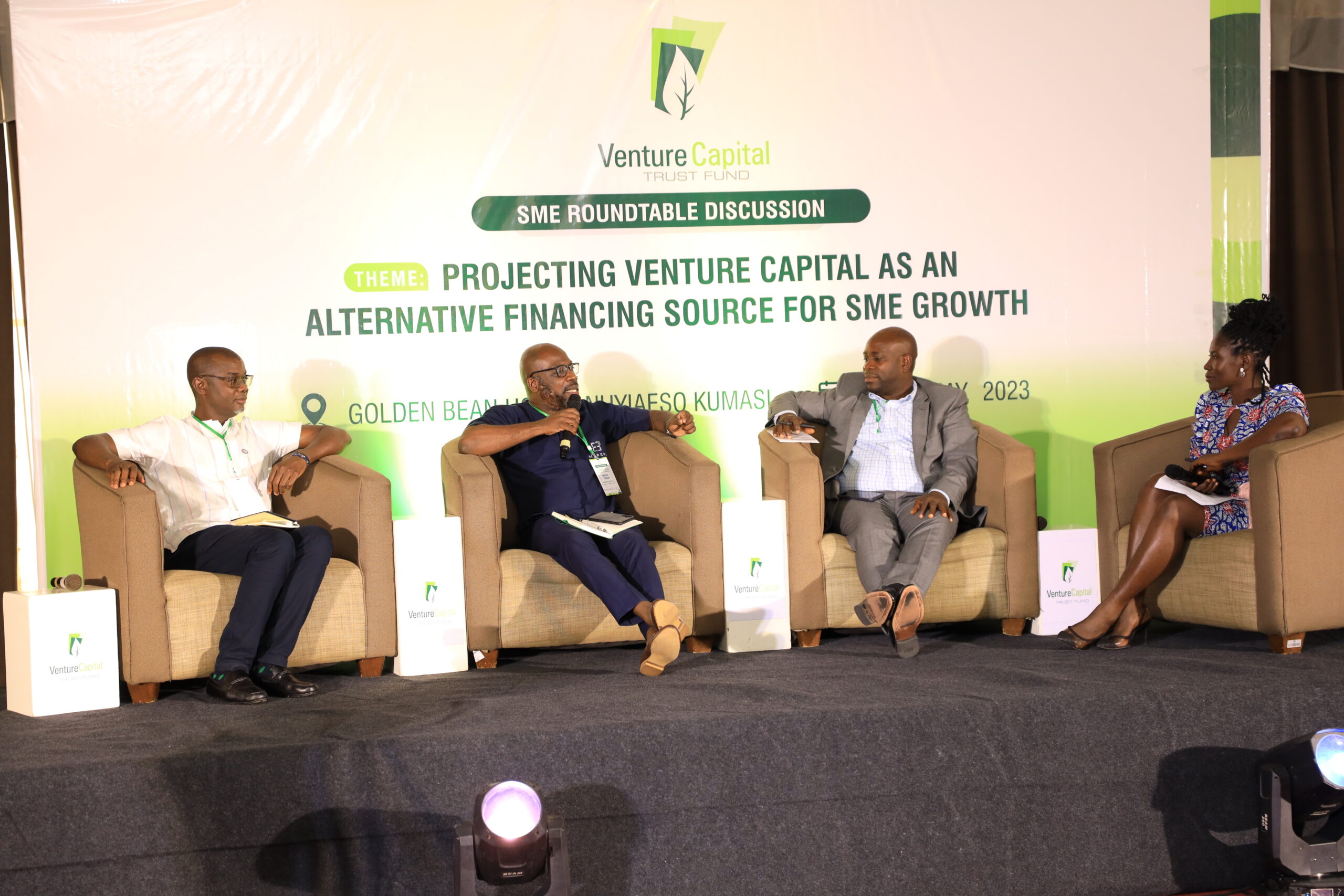









Ghana’s venture capital landscape has matured over two decades, but founders still face a funding environment where over 95% of available capital is in foreign currency, and local institutional capital remains largely untapped. Here is what you need to know before you start pitching.
The Current State of Play
Ghana’s venture capital and private equity industry has grown significantly since the Venture Capital Trust Fund (VCTF) was established in 2004. The sector has deployed over GHS2 billion in leveraged capital, created more than 28,000 jobs, and supported over 77 companies .

But the structure of the market matters. According to the State of Venture Capital and Private Equity in Ghana report, there are currently only five locally domiciled fund managers, while 63 are domiciled in other jurisdictions . Over 95% of the VC/PE funding available to SMEs in Ghana is in foreign currency—a reality that creates exchange-rate risk for businesses earning in cedis .
📢 GET A DETAILED ARTICLES + JOBS
Join ASJ's WhatsApp Channel and never miss a post or opportunity.

The Ghana Venture Capital and Private Equity Association (GVCA) is the industry’s foremost voice, connecting investors, fund managers, and founders. Its annual conference brings together over 450 participants from across the ecosystem .
Key Venture Capital Firms Active in Ghana
Mustard Capital Partners
Mustard Capital Partners is an Accra-headquartered firm that invests across early-stage, expansion, and late-stage growth rounds, supporting companies from post-seed traction through to pre-IPO scale-ups . The firm focuses on consumer-facing businesses, financial technology, and agribusiness—sectors aligned with West Africa’s demographic tailwinds, where rapid urbanization and mobile penetration are reshaping shopping, payments, and food supply chains .
Unlike Development Finance Institutions (DFIs) that structure large-ticket investments of $10 million or more, Mustard Capital targets the growth-stage equity gap below that threshold. It takes direct board positions and operates as a hands-on investor rather than a passive capital allocator .
Oasis Capital Ghana
Oasis Capital Ghana operates as a growth and venture capital fund manager targeting SMEs that deliver essential services across West Africa . The firm manages over $60 million across two funds and focuses on education, healthcare, real estate, and consumer goods, with tagged interests in FinTech, InsurTech, EdTech, and PropTech .
Oasis Capital deploys capital through a mix of equity, quasi-equity, and profit-sharing instruments, combining venture-stage risk appetite with the structural flexibility more common in development-finance institutions. This approach allows it to accommodate businesses in markets with less developed financial infrastructure .
Sahara Impact Ventures
Sahara Impact Ventures is a female-led and majority-owned investment advisory and venture capital fund management firm based in Accra. The firm is dedicated to bridging the gender financing gap in Sub-Saharan Africa, supporting African entrepreneurs with patient capital and a gender-lens investment approach .
Fearless Fund
The Fearless Fund has launched a microfinance fund in Ghana that will provide $100,000 in Ghanaian Cedis to women entrepreneurs through a pitch competition. The fund also allocates loans ranging from GHS 10,000 to GHS 30,000 to boost job creation and economic growth .
The Venture Capital Trust Fund: The Anchor of Local Capital
The VCTF is the cornerstone of Ghana’s venture capital ecosystem. Established by the Government of Ghana in 2004, it has:
-
Invested over GHS359.6 million into venture funds
-
Leveraged more than GHS2 billion from other investors
-
Created 28,486 jobs (direct and indirect)
-
Supported 14 venture funds and 7 portfolio companies
-
Contributed to the creation of the Ghana Alternative Exchange (GAX), the Ghana Angel Investor Network (GAIN), the GVCA, and Impact Investing Ghana (IIGh)
VCTF has anchored funds including Oasis Capital (which grew from an $11 million fund to $100 million across three funds), the Injaro Ghana Venture Fund, the Zinari Women’s Enterprise Fund, and Wangara Green Ventures .
In 2025, VCTF announced two new funds: the Adwumawura Fund for early-stage businesses and startups, and the 24-Hour Economy SME Fund to support enterprises scaling around-the-clock operations .
The Local Currency Shift: Ci Gaba and Cedi-Denominated Funds
One of the most significant developments for founders is the emergence of cedi-denominated funds.
Historically, most VC/PE funding in Ghana was in foreign currency, exposing cedi-earning businesses to exchange-rate risk. GVCA CEO Amma Gyampo has argued that this model is unsustainable: “If a business earns in cedis, it needs to be nurtured and funded in cedis by our domestic institutional capital and specialist private equity firms” .
The Ci Gaba Fund of Funds, managed by Savannah Impact Advisory, reached a $70 million first close with commitments from Ghanaian pension investors. It is structured in local currency and includes a 30% first-loss layer from catalytic capital to de-risk pension investment .
Earlier funds, including the Injaro Ghana Venture Capital Fund and the Mirepa Capital SME Fund I, were also structured in cedis to match domestic liabilities .
What Founders Should Know About the Funding Environment
The Pension Capital Opportunity
Ghana’s pension funds manage over GH¢86 billion, but barely 1% is invested in private equity or venture capital . The GVCA’s 5% Pension and Insurance Industry Compact, launched in April 2025, aims to raise that to 5% by 2026, potentially unlocking more than $1 billion for domestic businesses .
Ghana’s pension investment guidelines permit up to 25% of assets in alternative investments—one of the most permissive frameworks in Africa . If the compact succeeds, it represents a significant new source of local capital for founders.
The Limited Partnership Gap
A key regulatory gap is the absence of a Limited Partnership (LP) framework. GVCA is pushing for legislation to create this structure, which is the global standard for private equity and venture capital funds. Without it, Ghana is “uncompetitive compared to some of our neighbors” for fund domiciliation .
An interagency committee including the Ministry of Finance, SEC, NPRA, and Office of the Registrar of Companies is working to expedite the bill .
Sector Focus Areas
GVCA discussions and fund manager strategies point to several priority sectors:
-
Agribusiness and food production
-
Manufacturing
-
Digital services
-
Financial technology
-
Consumer-facing businesses
Particular attention is being paid to growth-stage SMEs that have struggled to access long-term financing through banks, as well as women-led enterprises .
What Founders Should Do
Understand the currency question. Ask potential investors whether their fund is denominated in cedis or foreign currency. If it is foreign currency, understand the exchange-rate risk you are taking on.
Target the right stage. Mustard Capital invests from post-seed through pre-IPO . Oasis Capital targets SMEs delivering essential services . Know where you fit.
Build bankability, not just growth. PE and VC investors look for credible financial records, the right management team, appropriate governance structures, documented risk management systems, and evidence of market traction.
Engage with the GVCA ecosystem. The GVCA Annual Conference brings together investors, fund managers, and founders. It is a platform for building relationships and understanding what capital providers are looking for .
Consider the VCTF-backed funds. VCTF has anchored 14 funds since its inception. These funds have a track record of deploying capital to Ghanaian SMEs .
Quick Facts
| Topic | Details |
|---|---|
| Locally Domiciled Fund Managers | 5 (vs 63 foreign-domiciled) |
| Foreign Currency Share of Funding | Over 95% |
| VCTF Total Investment | GHS359.6 million |
| VCTF Leveraged Capital | GHS2 billion+ |
| VCTF Jobs Created | 28,486 |
| Pension AUM | GH¢86 billion+ |
| Current PE Allocation | ~1% |
| GVCA 5% Compact Target | 5% by 2026 |
| Ci Gaba First Close | $70 million |
Frequently Asked Questions
1. What venture capital firms are active in Ghana?
Key VC firms include Mustard Capital Partners (consumer-facing, fintech, agribusiness), Oasis Capital Ghana (essential services), Sahara Impact Ventures (gender-lens investing), and Fearless Fund (women entrepreneurs) .
2. What is the Venture Capital Trust Fund (VCTF)?
VCTF is a government-established fund created in 2004 to catalyse SME growth through venture capital. It has invested over GHS359.6 million, leveraged GHS2 billion, and created 28,486 jobs .
3. How much funding is available for startups in Ghana?
The VCTF has anchored 14 funds. GVCA’s 5% Compact aims to unlock over $1 billion from pension funds for domestic businesses .
4. What sectors do VC firms in Ghana focus on?
Priority sectors include agribusiness, healthcare, manufacturing, digital services, fintech, and consumer-facing businesses .
5. What is the Ci Gaba Fund of Funds?
Ci Gaba is a $70 million fund of funds managed by Savannah Impact Advisory. It is structured in local currency and designed to mobilise pension capital into private equity.
6. What is the GVCA 5% Compact?
It is an initiative launched in April 2025 committing pension funds and insurers to allocate 5% of assets under management to VC/PE by 2026 .
7. What challenges do founders face in accessing VC funding in Ghana?
Challenges include over 95% of funding being in foreign currency, the absence of a Limited Partnership framework, and pension fund allocation remaining below 1% despite regulatory headroom.
8. What is the Limited Partnership (LP) framework?
The LP structure is the global standard for private equity and venture capital funds. Ghana currently lacks this framework, making it less competitive for fund domiciliation. GVCA is pushing for legislation
Source: Accra Street Journal
Last Updated on October 8, 2026 by Samuel Kwame Boadu
Disclaimer: Some content on Accra Street Journal may be aggregated, summarized, or edited from third-party sources for informational purposes. Images and media are used under fair use or royalty-free licenses. Accra Street Journal is a subsidiary of SamBoad Publishing Hub under SamBoad Business Group Ltd, registered in Ghana since 2014.
For concerns or inquiries, please visit our Privacy Policy or Contact Page.

Samuel Kwame Boadu is a Ghanaian media entrepreneur and storyteller with a passion for amplifying urban voices and uncovering everyday truths. He is the Editor-in-Chief and Founder of Accra Street Journal, a dynamic digital platform dedicated to capturing the pulse of Ghana’s capital—its people, culture, challenges, business, sports and innovations.