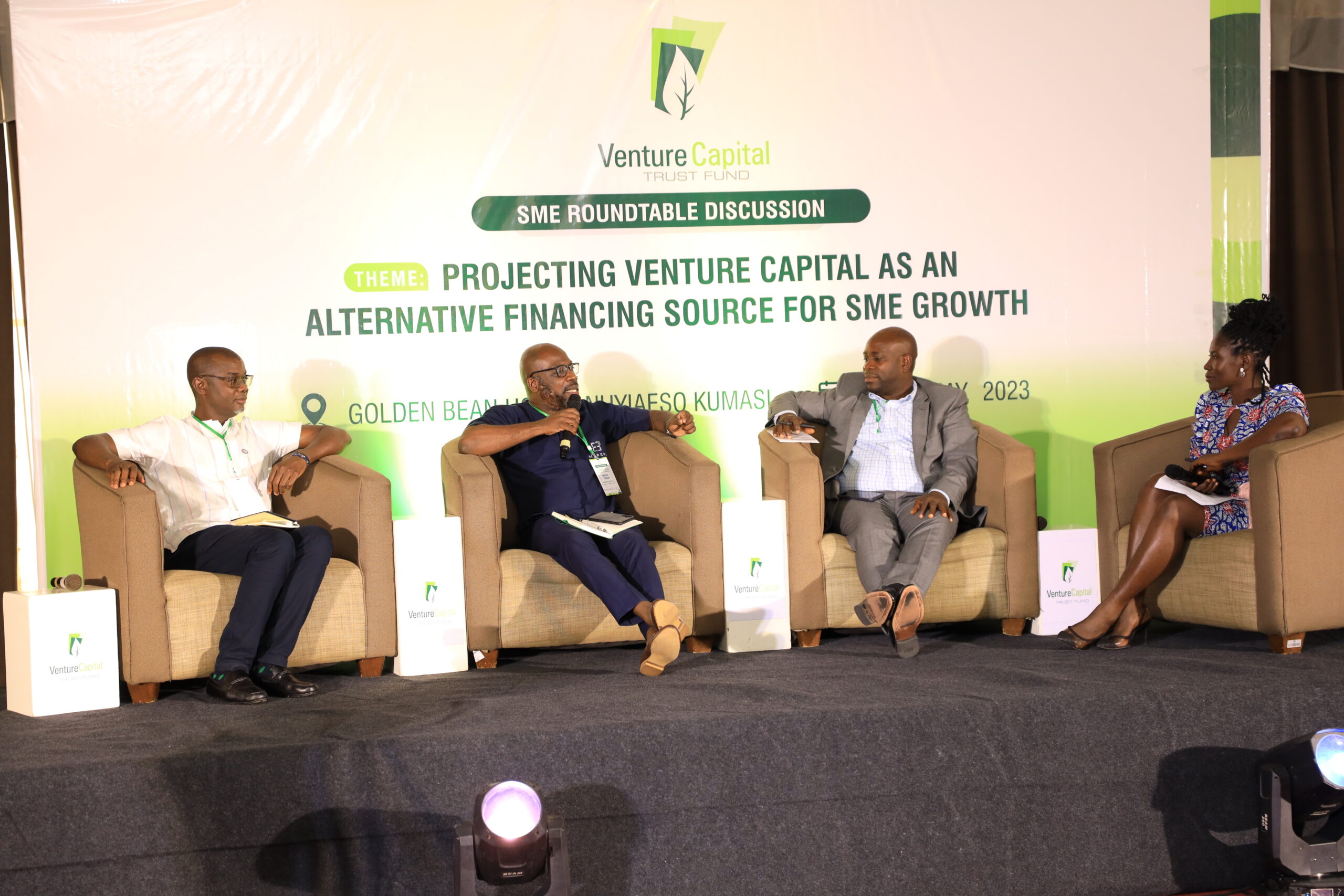









A private equity fund can buy a company, improve it, and grow its value. But none of that matters until the fund sells. The exit is where the money is actually made—and in Ghana, the exit environment is more constrained than in mature markets.
Why Exits Matter
Private equity is a closed-end investment. Investors commit capital for a fixed period, typically 7 to 10 years. The fund manager deploys that capital into companies, works to increase their value, and then sells them. The proceeds from those sales—called distributions—flow back to investors.

As one analysis put it, exit planning is not an afterthought. It is the defining discipline of the asset class. “The fund is not a charity; investors expect their money back with a return” .
📢 GET A DETAILED ARTICLES + JOBS
Join ASJ's WhatsApp Channel and never miss a post or opportunity.

In Ghana, the exit question is particularly urgent. Funds that invested between 2018 and 2022 are now approaching or exceeding their expected exit horizons, creating pressure to deliver liquidity .
The Main Exit Routes
Private equity funds use several methods to sell their stakes. Each has different implications for timing, valuation, and returns.
Trade Sales: The Dominant Route
A trade sale is when the fund sells its stake to a strategic buyer—typically a larger corporation in the same industry or an adjacent one. This is the most common exit route in Ghana and across Africa.
In 2025, trade sales accounted for 38% of all African private capital exits . The buyer is usually a pan-African or Asian strategic player seeking market entry or consolidation .
Trade sales are favoured because they offer a clean break and full value realisation. But they depend on finding the right buyer—and in Ghana, the pool of strategic buyers is limited.
A notable example: Five35 Ventures exited its investment in Ghanaian agritech company Complete Farmer in 2026, generating a 3.5x return—a 38% internal rate of return over four years. Complete Farmer’s valuation rose from $6 million to $49 million during the holding period .
Secondary Sales: Selling to Another Investor
A secondary sale is when the fund sells its stake to another private equity firm or financial investor, rather than a strategic buyer. In 2025, secondaries accounted for 26% of African exits, their highest share on record .
In Ghana, the exit of Adenia Partners from Outdoor Holdings Limited to Injaro Ghana Venture Capital Fund was structured as a secondary buyout . However, secondary buyouts remain uncommon locally due to a limited buyer pool .
Initial Public Offerings: The Dream That Rarely Happens
An IPO is when a portfolio company lists on a stock exchange and its shares become publicly traded. It is the dream exit because it can generate the highest returns and provides a liquid market for the fund’s stake.
But IPOs are rare in Ghana. The Ghana Alternative Market (GAX) was established to help SMEs list, but few PE-backed companies have gone public. Across Africa, IPOs accounted for only 5% of total exits in 2025, with just four recorded on the continent .
The challenge is preparation and scale. As one analysis noted, stock exchange listings “require extensive preparation and patient execution” .
Buybacks: The Fallback
Sometimes, the company’s founders or management buy back the PE firm’s shares. This is often a fallback when other exits are not available. Private sales (including management buyouts) accounted for 19% of African exits in 2025 .
Write-Offs: When Things Go Wrong
Not every exit succeeds. In 2025, 6.2% of African private capital exits resulted in full write-offs—where the fund recovers nothing. This is broadly in line with global benchmarks of 3–8% .
The Structural Challenge: A Clogged Exit Pipeline
Africa’s exit numbers have improved. A record 81 exits were recorded in 2025, a 27% year-on-year increase and the second-highest total on record . Early 2026 data shows venture-backed exits holding above the three-year average.
But headline numbers mask a deeper problem. For limited partners—the pension funds, DFIs, and family offices that invest in PE funds—the liquidity is not flowing as expected.
The issue is the nature of exits, not their number. Trade sales dominate, and almost every exit is a negotiated bilateral sale rather than a market-clearing transaction . This takes longer, caps upside, and creates a backlog. IPOs, which would provide full value realisation and liquid marks, are practically non-existent.
The investor base compounds the problem. Development Finance Institutions (DFIs) anchored 64% of the $2.7 billion raised across 16 African funds in 2025. But DFIs are often barred from secondary trading and reluctant to sell at a discount, leaving capital locked in ageing funds rather than recycling into new ones .
The consequence: investors like the returns—double-digit net IRRs are increasingly reported—but they doubt the exit pipes will deliver cash on time. AVCA’s 2026 Investor Sentiment survey found that 27% of LPs expect to slow commitments, even though 87% still plan to maintain or grow African allocations over the next 36 months .
How Distributions Reach Investors
When a fund exits an investment, the proceeds do not immediately flow to investors. They pass through a distribution waterfall—a structured process that determines who gets paid, and in what order.
The standard waterfall has three stages :
Stage 1: Return of Capital. Investors receive distributions until they have received back 100% of their original capital contribution.
Stage 2: Preferred Return. Investors then receive a hurdle rate—typically around 8%—on their capital before the fund manager shares in profits.
Stage 3: Carried Interest. Once investors have received their capital and the preferred return, the fund manager takes carried interest, typically 20% of the excess profits.
This structure ensures that the fund manager only gets paid after investors have been made whole.
Distributions are lumpy. Research shows that around half of all funds make their first distribution about 1.5 years into the fund’s life, but the largest distributions typically occur in years six, seven, and eight—after value creation plans have been executed and assets are ready for sale . The average size of a distribution is about 5% of fund size, though the largest single distribution during a fund’s life can be around 32% .
GP-Led Secondaries: The Emerging Solution
One structural response to exit constraints is the GP-led secondary. This is where the General Partner (the fund manager) initiates a transaction to provide liquidity for existing investors, rather than waiting for a traditional exit.
The most common form is a continuation fund. A new vehicle is set up with secondary investors to acquire one or more assets from the existing fund. Existing LPs are given the choice to cash out, roll over into the new vehicle, or a hybrid of both .
Continuation funds are typically characterised by lower management fees and are viewed as carrying lower risk than primary funds, since the GP brings the benefit of time, information, and operational involvement with the asset .
In Ghana, however, there is no record of GP-led secondaries using structures such as continuation funds . The market remains reliant on trade sales and secondary buyouts.
The Chambers 2026 M&A guide notes that continuation vehicles “are likely to emerge as a structural response to exit constraints” in Ghana . But that emergence has not yet happened.
What Makes a Successful Exit in Ghana
The evidence points to a consistent pattern: managers who can demonstrate operational value creation, rather than reliance on financial structuring alone, are best positioned for successful exits .
Buyers in Ghana apply consistent valuation discipline and detailed scrutiny. They are not paying for promises. They are paying for businesses that have been formalised, professionalised, and positioned for growth.
The widening valuation gap between formalised and under-formalised businesses is a key dynamic. Sellers who have clean title, up-to-date tax filings, registered intellectual property, and audited financials enjoy negotiation leverage. Buyers apply discounts to reflect remediation costs and regulatory risk .
For fund managers, the implication is clear: value creation must start early and continue throughout the holding period. Research shows that value creation is often back-loaded—concentrated in the final year before exit—but the most successful funds execute value creation levers consistently from start to finish .
Quick Facts
| Topic | Details |
|---|---|
| Typical Fund Life | 7–10 years |
| Most Common Exit (Africa, 2025) | Trade sales (38%) |
| Second Highest Exit | Secondaries (26%) |
| IPO Share of Exits (Africa) | 5% (4 IPOs in 2025) |
| Write-Off Rate (Africa, 2025) | 6.2% |
| Hurdle Rate (Typical) | ~8% |
| Carried Interest | ~20% |
| First Distribution (Typical) | ~1.5 years into fund life |
| GP-Led Secondaries in Ghana | No record of continuation fund structures |
Frequently Asked Questions
1. How do private equity investors get their money back?
Investors get their money back through exits—when the PE fund sells its stake in a portfolio company. The proceeds are distributed through a waterfall: first return of capital, then preferred return, then carried interest to the fund manager .
2. What is the most common exit route for private equity in Ghana?
Trade sales to strategic buyers are the most common and viable exit route, accounting for 38% of African PE exits in 2025 . Secondary buyouts remain uncommon due to a limited buyer pool .
3. What is a distribution waterfall in private equity?
A distribution waterfall is the structured process for returning capital to investors. Stage 1 returns the original capital. Stage 2 pays a preferred return (hurdle rate, typically 8%). Stage 3 pays carried interest to the fund manager (typically 20% of excess profits) .
4. Why are private equity exits difficult in Africa?
Exits are difficult because IPOs are rare, the pool of strategic buyers is limited, and almost every exit is a negotiated bilateral sale rather than a market-clearing transaction. DFIs, which anchor most African PE fundraising, are often barred from secondary trading, leaving capital locked in ageing funds .
5. What is a GP-led secondary?
A GP-led secondary is a transaction initiated by the fund manager to provide liquidity for investors. The most common form is a continuation fund—a new vehicle set up to acquire assets from the existing fund, giving existing LPs the choice to cash out or roll over .
6. Have GP-led secondaries been used in Ghana?
No. There is no record of GP-led secondaries using structures such as continuation funds in the Ghanaian market. The market remains reliant on trade sales and secondary buyouts .
7. What was the Five35 Ventures exit from Complete Farmer?
Five35 Ventures exited its investment in Ghanaian agritech company Complete Farmer in 2026, generating a 3.5x return—a 38% IRR over four years. Complete Farmer’s valuation rose from $6 million to $49 million .
8. What makes a successful exit in Ghana?
Managers who demonstrate operational value creation—not just financial structuring—are best positioned. Buyers apply consistent valuation discipline and detailed scrutiny. Formalised businesses with clean title, tax compliance, and audited financials command premiums .
9. What happens if a private equity fund cannot exit an investment?
If a fund cannot find a buyer, it may extend the holding period, transfer the asset to a continuation vehicle, or ultimately write it off. In 2025, 6.2% of African PE exits resulted in full write-offs .
10. When do investors typically receive distributions?
Around half of all funds make their first distribution about 1.5 years into the fund’s life. The largest distributions typically occur in years six, seven, and eight. The average distribution is about 5% of fund size, though the largest can be around 32%
Source: Accra Street Journal
Last Updated on October 8, 2026 by Samuel Kwame Boadu
Disclaimer: Some content on Accra Street Journal may be aggregated, summarized, or edited from third-party sources for informational purposes. Images and media are used under fair use or royalty-free licenses. Accra Street Journal is a subsidiary of SamBoad Publishing Hub under SamBoad Business Group Ltd, registered in Ghana since 2014.
For concerns or inquiries, please visit our Privacy Policy or Contact Page.

Samuel Kwame Boadu is a Ghanaian media entrepreneur and storyteller with a passion for amplifying urban voices and uncovering everyday truths. He is the Editor-in-Chief and Founder of Accra Street Journal, a dynamic digital platform dedicated to capturing the pulse of Ghana’s capital—its people, culture, challenges, business, sports and innovations.