










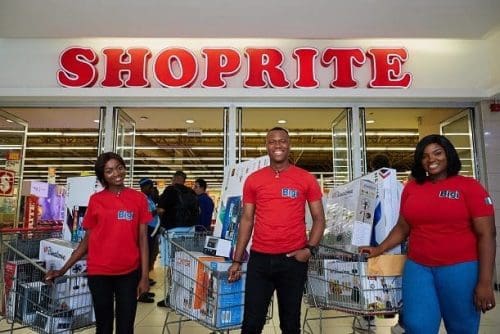
Once the anchor tenant of Ghana‘s most prestigious malls, the South African supermarket giant finalised its exit after two decades, selling its seven hypermarkets and warehouse to Brands For All in a deal that formally closed in November 2025. As Carrefour rebrands these stores by April 2026 and opens five new outlets by 2028, the story of Shoprite’s departure is not merely a corporate retreat—it is a case study in how currency volatility, import dependency, and the rise of local champions like Melcom and China Mall fundamentally altered the arithmetic of African expansion.
Executive Introduction
For nearly two decades, the bright red Shoprite logo was a fixture of Ghanaian retail. From the Achimota Retail Centre to the West Hills Mall, the South African giant was the anchor tenant that drew crowds, the benchmark for pricing, and the symbol of modern grocery shopping in Accra and beyond . Its presence signalled that Ghana had arrived as a destination for serious multinational investment.

In August 2025, that era came to an end. Shoprite Holdings announced its decision to discontinue operations in Ghana and Malawi, accepting a binding offer for its seven trading stores and one warehouse . The sale was completed by November 2025, with the acquiring entity—Brands For All, a distributor already partnered with Decathlon and Yves Rocher in Sub-Saharan Africa and the Middle East—taking possession of the hypermarkets . By April 2026, these stores will be rebranded to Carrefour, the French retail giant, with plans to open five additional outlets by 2028 .
📢 GET A DETAILED ARTICLES + JOBS
Join ASJ's WhatsApp Channel and never miss a post or opportunity.

For investors, policymakers, and competitors, the Shoprite Ghana exit is not an isolated failure. It is the final chapter in a years-long strategic retreat from West and East Africa that has seen the retailer exit the Democratic Republic of Congo, Kenya, Madagascar, Nigeria, and Uganda . The proximate causes—currency volatility, double-digit inflation, restrictive import regulations, and dollar-pegged leases —are well documented. But the deeper story is about the limits of a South African supply chain in a West African environment, the unexpected resilience of local competitors, and the strategic calculus that led Shoprite to double down on its SADC stronghold while cutting losses elsewhere.
This ASJ profile examines Shoprite‘s two-decade presence in Ghana, the financial performance of its local subsidiary, the macroeconomic forces that made its model unsustainable, the local competition that accelerated its decline, the sale to Brands For All and the Carrefour rebranding, and the critical question: What does Shoprite’s exit reveal about the future of formal retail in Ghana?

The Two Decades of Shoprite Ghana (c. 2005-2025)
The Flagship Anchor Tenant
Shoprite‘s arrival in Ghana was part of a broader wave of South African retail expansion across the continent. The company, founded in Cape Town in 1979 and now Africa’s largest food retailer by market capitalisation (R158 billion as of May 2026) , brought a formula that had worked across Southern Africa: large-format stores, high-volume grocery and household goods, competitive pricing, and a supply chain optimised for regional distribution .
In Ghana, Shoprite secured prime real estate. It anchored the Achimota Retail Centre (an R800 million development by South Africa‘s Atterbury Property), the West Hills Mall, the Accra Mall, the Kumasi City Mall, and other key shopping destinations . Its presence was so significant that competition economist Appiah Kusi Adomako warned that the exit of a major competitor like Shoprite would remove a “significant benchmark for pricing and service standards” .
The Operational Footprint
At the time of its exit, Shoprite Ghana operated:
-
Seven trading stores
-
One warehouse
The stores were located in prime retail destinations across Accra and Kumasi, making Shoprite one of the most visible foreign brands in the country.
The Business Model: Import Dependency
Shoprite‘s Ghana model was characterised by a critical vulnerability: import dependency. The chain relied heavily on South African suppliers for its product range, shipping goods across the continent rather than sourcing locally .
As one analysis noted, “Almost all of Shoprite‘s products were imported, even fruits and veges” . This model worked in Southern Africa, where supply chains were integrated and borders were fewer. In West Africa, it created a structural disadvantage:
-
High import costs: Freight, logistics, and customs duties added significant expense.
-
Currency risk: Most imports were priced in South African rand or US dollars, while revenue was in Ghanaian cedis.
-
Local sourcing gap: Shoprite could not easily pivot to local suppliers when currency volatility made imports prohibitively expensive.
This import dependency became the chain‘s Achilles‘ heel when the cedi began its prolonged depreciation.
The 2025 Exit: Announcement, Sale, and Completion
The August 5, 2025 Announcement
On August 5, 2025, Shoprite Holdings announced that it would discontinue operations in Ghana and Malawi . The company disclosed that it had received a binding offer during June 2025 to dispose of the assets and liabilities of its Ghana operations, which consisted of seven trading stores and one warehouse .
The sale was deemed “highly probable,” and the operations were classified as discontinued under IFRS 5 . This accounting classification meant that from June 2025 onward, Shoprite Ghana‘s financial performance would be reported separately from continuing operations.

Financial Performance of Discontinued Operations
Shoprite Holdings‘ 2025 annual report provides a detailed view of the Ghana subsidiary‘s financial performance in its final year .
Shoprite Ghana Ltd – Key Financials (2025, Rm):
| Metric | 2025 | 2024 | Change |
|---|---|---|---|
| Sale of merchandise | 1,243 | 766 | +62% |
| Gross profit | 330 | 251 | +31% |
| Alternative revenue | 4 | 2 | +100% |
| Employee benefits | 63 | 35 | +80% |
| Other operating expenses | 181 | 112 | +62% |
| Trading profit | 4 | 168 | -98% |
| Items of a capital nature | 66 | — | N/A |
| Operating (loss)/profit | (63) | (63) | — |
| Finance costs | 17 | — | N/A |
| Loss after income tax | (110) | (N/A) | N/A |
Sources: The High Street Business
Analysis of the 2025 Numbers:
1. Revenue Growth (62%) vs. Profit Collapse (98% Decline):
Shoprite Ghana‘s sale of merchandise grew 62% year-over-year, to R1.24 billion . This suggests that the stores were still attracting customers and generating sales. However, trading profit collapsed from R168 million in 2024 to just R4 million in 2025 —a 98% decline.
2. Escalating Costs:
Employee benefits rose 80%, from R35 million to R63 million . Other operating expenses rose 62%, from R112 million to R181 million . These increases likely reflect inflationary pressures, minimum wage adjustments, and the cost of maintaining operations during the sale process.
3. Items of a Capital Nature (R66 million):
This line item, absent in 2024, likely represents the costs associated with the sale transaction—legal fees, restructuring charges, and employee severance.
4. Final Loss:
After income tax, Shoprite Ghana recorded a loss of R110 million in its final year of operation .
5. Cash Flow Deterioration:
The discontinued operations segment (including Ghana, Nigeria, and other exited markets) saw a net cash outflow of R563 million in 2025, compared to an outflow of R104 million in 2024 . This reflects the cash burn associated with winding down operations.
The Buyer: Brands For All (November 2025)
Following the August announcement, the sale process was completed by November 2025 . The acquiring entity was Brands For All, a distributor already operating as a franchise partner for Decathlon and Yves Rocher in Sub-Saharan Africa and the Middle East .
Brands For All took possession of the seven Shoprite hypermarkets and the associated warehouse . Importantly, the company had no intention of operating them as Shoprite stores. Instead, it initiated a partnership with Carrefour International—the French global retail giant—to rebrand and transform the entire network under the Carrefour banner .
The Carrefour Takeover: A New Era Begins (December 2025 – April 2026)
On December 15, 2025, Carrefour Group officially announced that it was taking over Shoprite‘s franchise in Ghana . The agreement was between Carrefour International and Brands For All, which had acquired the Shoprite stores.
The Rebranding Timeline
-
December 2025: Announcement of the takeover.
-
By April 2026: The first stores will be rebranded to Carrefour.
-
By 2028: Five new stores will be opened, in addition to the rebranded seven hypermarkets .
Carrefour‘s Strategic Rationale
Patrick Lasfargues, Executive Director of Carrefour International, stated:
*“We are delighted to initiate this collaboration with a leading retail player in Ghana. Beyond the rapid transformation of the 7 Shoprite Ghana hypermarkets, the Brands For All and Carrefour International Partnership teams are already working hand-in-hand on the future growth of our activities in the country: by 2028, we project the opening of 5 additional stores.”*
Carrefour‘s entry into Ghana is part of a broader international franchise expansion strategy. The company passed the 3,000 franchised store mark in October 2025 and has an objective to expand into 10 new countries under franchise as part of its 2026 strategic plan .
Implications of the Carrefour Takeover
For Ghanaian consumers, Carrefour‘s arrival means that the physical store locations will remain operational—but under a new brand, with new supply chains, and potentially new pricing.
For the Ghanaian retail market, Carrefour‘s entry introduces a new global competitor at the very moment when Shoprite‘s exit was expected to reduce competition. However, Carrefour operates a different model: it is a French multinational with global supply chains, but it also has experience adapting to African markets through its existing presence in Morocco, Egypt, Tunisia, and other countries.
For local retailers like Melcom, Palace, and MaxMart, Carrefour represents a new challenger—one that may avoid the import dependency trap by leveraging Carrefour‘s global sourcing network.
For Shoprite, the sale marks the end of a costly chapter. The proceeds from the sale, while not publicly detailed, allow the company to focus capital on its core SADC markets, where it is listed on the Namibian and Lusaka stock exchanges and where its supply chain is seamlessly integrated .
Why Shoprite Failed in Ghana: A Post-Mortem
The reasons for Shoprite‘s exit are multifaceted, but they cluster around three themes: macroeconomic headwinds, an inflexible business model, and the rise of local competition.
Macroeconomic Headwinds
1. Currency Volatility:
The cedi‘s sustained depreciation against the US dollar and South African rand was perhaps the single most important factor. Shoprite‘s cost base (imported goods) was largely in foreign currency, while its revenue was in cedis. As the cedi fell, margins compressed inexorably .
2. Double-Digit Inflation:
Ghana‘s inflation rate, which peaked at over 50% in late 2023 before moderating, eroded consumer purchasing power. Shoppers had less disposable income, and those who still shopped at Shoprite were increasingly price-sensitive .
3. Dollar-Pegged Leases:
Many of Shoprite‘s mall leases were pegged to the US dollar . As the cedi depreciated, the cedi cost of rent rose automatically—even as consumer spending declined.
4. Restrictive Import Regulations:
Shoprite faced difficulties importing goods into Ghana, with customs procedures and regulatory requirements adding cost and complexity .
The Inflexible Business Model
1. Import Dependency:
Unlike local competitors who could pivot to local suppliers, Shoprite was locked into a South African-centric supply chain . As one observer noted, “Almost all of Shoprite‘s products were imported, even fruits and veges” .
2. Lack of Local Sourcing Agility:
When the cedi crashed, Shoprite could not easily replace imported goods with locally sourced alternatives. It did not have the relationships, the distribution network, or the processing infrastructure to source fresh produce, meats, and other perishables from Ghanaian farmers.
3. The South African Model Did Not Translate:
As Shore Africa noted, “In Nigeria and Kenya, the retailer struggled to adapt its South African business model to local consumption patterns” . The same was true in Ghana. Consumer preferences, shopping habits, and price sensitivities differed significantly from the SADC region where Shoprite had perfected its formula .
The Rise of Local Competition
While macroeconomic factors were the immediate trigger, the competitive landscape had fundamentally shifted during Shoprite‘s tenure.
1. Melcom:
The Indian-Ghanaian retail giant (65+ stores, 1.7 million square feet of retail space) expanded aggressively, adding grocery sections to its department store model and leveraging its local manufacturing (plastics, electronics) to control costs .
2. China Mall:
The arrival of Chinese-owned hypermarkets with aggressive low pricing disrupted the value segment of the market. China Mall‘s vertically integrated model—importing directly from Chinese manufacturers and operating its own logistics—allowed it to undercut Shoprite on price .
3. Palace Hypermarket:
As the anchor tenant of the Achimota Retail Centre alongside Shoprite, Palace was a direct competitor under the same roof. Palace‘s Lebanese-Ghanaian ownership gave it unique access to Arab and Middle Eastern product lines, and its hypermarket format directly competed with Shoprite for household shopping trips .
4. MaxMart:
The 100% Ghanaian-owned supermarket chain, a subsidiary of Kwatsons Ghana Limited, grew its footprint and built a loyal following through its in-house bakery and focus on value .
5. Online and Informal Retail:
While formal supermarkets account for only about 15% of FMCG volume in West Africa (with informal retail controlling 73% ), the growth of online grocery delivery (Jumia Food, Bolt Food, Glovo) and the convenience of China Mall‘s physical locations further fragmented the market .
The Economist‘s Warning: Reduced Competition May Hurt Consumers
Appiah Kusi Adomako, a competition economist, warned that Shoprite‘s exit could have negative consequences for Ghanaian consumers:
“At a time when competition helps keep prices in check, the departure of a multinational such as Shoprite removes a significant benchmark for pricing and service standards. If a dominant player such as Melcom steps into former anchor spots without equivalent competitive pressure, consumers could see higher prices and less incentive for innovation.”
This concern—that reduced competition will lead to higher prices—is now a live question for Ghana‘s retail market. However, the entry of Carrefour may partially offset this effect.
Shoprite‘s Continental Retreat: A Strategic Pivot
Shoprite Ghana‘s exit was not an isolated event. It was part of a coordinated strategic retreat from non-SADC markets.
The Exited Markets (2020-2026)
Shoprite has exited:
-
Democratic Republic of Congo
-
Kenya
-
Madagascar
-
Nigeria
-
Uganda
-
Ghana
-
Malawi
In total, the retailer has pulled out of seven African countries beyond the SADC region .
The SADC Stronghold
By contrast, Shoprite has maintained a firm foothold in:
| Country | Listing Status | Significance |
|---|---|---|
| South Africa | JSE (primary) | Home market; 84.5% of group sales |
| Namibia | NSX | Regional hub |
| Zambia | LuSE | Second-largest valuation: $9.24 billion |
| Angola | — | Proximity to supply chain |
| Botswana | — | Integrated transport corridor |
| Eswatini | — | SADC proximity |
| Lesotho | — | SADC proximity |
| Mozambique | — | Regional hub |
Source: The High Street Business
Shoprite is listed on the Namibian Stock Exchange and the Lusaka Securities Exchange, providing investors broader access and enhancing liquidity. Its Lusaka valuation of $9.24 billion sits close to its Johannesburg valuation of R159 billion ($9.88 billion), underscoring investor confidence in its streamlined regional strategy .
Why SADC Works
The key difference between SADC markets and West/East Africa is supply chain integration. Proximity to South Africa allows Shoprite to leverage:
-
Established supply chains
-
Shared infrastructure
-
Integrated transport corridors
-
Predictable consumer demand
-
Stable currencies
-
Manageable operating costs
As Shore Africa concluded: “By concentrating on SADC, Shoprite strengthens its core operations, safeguards shareholder value, and positions itself to exploit regional growth opportunities” .
Shoprite Group Performance (2025): The Home Market Thrives
While Shoprite Ghana was winding down, the parent group was experiencing robust growth in its home market.
Group Financials (FY2025, continuing operations)
| Metric | 2025 | 2024 | Change |
|---|---|---|---|
| Sale of merchandise | R252.7 billion | R232.1 billion | +8.9% |
| Trading profit | R15.0 billion | R12.8 billion | +16.6% |
| DEPS | R13.67 | R11.80 | +15.8% |
| Market share gain | R8 billion | — | 5th consecutive year |
| Like-for-like sales growth | 4.8% | — | — |
Sources: The High Street Business
Segment Performance
Supermarkets RSA (84.5% of group sales):
-
Sales growth: +9.5%
-
Checkers & Checkers Hyper: +13.8%
-
Shoprite & Usave: +5.9%
-
Sixty60 online sales: +47.7%
Non-RSA (including discontinued operations):
-
Trading profit decreased due to currency devaluations and hyperinflation in regions like Ghana
Market Capitalisation
As of May 2026, Shoprite Holdings‘ market capitalisation stood at R158 billion . GuruFocus rates the stock as “Fairly Valued,” with a GF Score™ of 100/100 . The company trades at R291.87, approximately 6.3% below its estimated fair value of R311.53 .
Competitive Landscape: Who Filled the Vacuum?
Shoprite‘s exit created opportunities for local and regional players.
Melcom: The Prime Beneficiary
Melcom, with 65+ stores and 1.7 million square feet of retail space, is well-positioned to capture former Shoprite customers, particularly in the grocery and household goods segments . Melcom‘s local manufacturing (plastics, electronics) gives it cost advantages that Shoprite lacked .
China Mall: The Disruptor
China Mall‘s aggressive low pricing and vertically integrated supply chain have made it a formidable competitor in the value segment . Its outlets in Accra, Tema, and Kumasi directly compete for the price-sensitive customers who might have previously shopped at Shoprite .
Palace Hypermarket: The Co-Location Survivor
Palace, which co-anchored the Achimota Retail Centre with Shoprite, retains its prime location and may benefit from the absence of direct competition under the same roof. However, Carrefour will soon occupy the same space, restoring competitive tension.
Carrefour: The New Challenger
Carrefour‘s entry is the most significant development. By rebranding the seven former Shoprite stores and opening five new outlets by 2028 , Carrefour is making a substantial commitment to the Ghanaian market. Carrefour‘s global supply chain, experience in North and West Africa (Morocco, Egypt, Tunisia, Côte d‘Ivoire), and franchise model (leveraging Brands For All‘s local knowledge) may succeed where Shoprite struggled.
Implications for Ghana‘s Retail Sector
The Shift from Foreign Anchors to Local Champions
Shoprite‘s exit, combined with Game‘s earlier struggles, marks a shift away from reliance on South African anchors. Melcom‘s expansion into mall anchor positions signals that local retailers are now considered capable of driving foot traffic.
The Rise of Chinese Retail
China Mall‘s expansion has fundamentally altered pricing expectations. Ghanaian consumers now have access to a hypermarket that competes aggressively on price, even if quality concerns persist .
The Carrefour Wild Card
Carrefour‘s entry introduces a new variable. If Carrefour can successfully adapt to the Ghanaian market—sourcing locally where possible, leveraging global supply chains where necessary, and pricing competitively—it could capture the premium grocery segment that Shoprite once dominated.
The Consumer Welfare Question
The departure of Shoprite removes a “significant benchmark for pricing and service standards” . Whether Carrefour provides equivalent competitive pressure—or whether local players fill the gap—will determine whether Ghanaian consumers face higher prices in the coming years.
Challenges and Risks
No analysis of Shoprite‘s exit is complete without acknowledging the ongoing challenges for Ghana‘s formal retail sector.
Risk 1: Currency Volatility Persists
The cedi remains volatile. Any retailer dependent on imports—including Carrefour, which will source many products globally—faces the same currency risk that crippled Shoprite.
Risk 2: Local Sourcing Gap
If Carrefour fails to develop local supply chains, it may replicate Shoprite‘s import dependency and suffer the same fate.
Risk 3: Competition from Informal Retail
Formal supermarkets account for only about 15% of FMCG volume in West Africa . The majority of Ghanaian consumers still shop at open markets, kiosks, and provision shops. The growth of formal retail may be capped by consumer preference for informal channels.
Risk 4: Real Estate Concentration
Shoprite‘s exit has raised questions about the viability of mall anchor tenants. If Carrefour succeeds, the model is validated. If it struggles, mall owners may find themselves with large vacancies and declining foot traffic.
Risk 5: Carrefour Integration Risk
Brands For All has no prior experience operating a supermarket chain. Its success will depend on how effectively Carrefour International transfers expertise, systems, and supply chain capabilities to the local partner.
Risk 6: Competition Economist‘s Warning
If Melcom captures too much anchor space without equivalent competitive pressure, prices could rise . This is a legitimate concern that regulators should monitor.
Future Outlook
As of June 2026, the transformation is underway. Shoprite is gone. Carrefour is arriving.
The Immediate Agenda (2026-2027)
-
Carrefour Rebranding (April 2026): The seven former Shoprite stores will be rebranded to Carrefour.
-
Supply Chain Transition: Brands For All and Carrefour must establish local sourcing and global logistics.
-
Consumer Education: Shoppers accustomed to Shoprite must be reoriented to the Carrefour brand.
-
Competitive Response: Melcom, Palace, MaxMart, and China Mall will adjust pricing and assortment in response to Carrefour‘s arrival.
The Bull Case (Optimistic)
-
Carrefour Succeeds Where Shoprite Failed: By leveraging global supply chains while developing local sourcing, Carrefour achieves profitability. The brand resonates with Ghanaian consumers.
-
Competition Intensifies: Carrefour‘s entry restores competitive tension. Prices remain stable or decline.
-
Local Sourcing Develops: Carrefour‘s demand for fresh produce catalyses investment in Ghanaian agriculture, creating a virtuous cycle of local sourcing.
The Bear Case (Pessimistic)
-
Carrefour Repeats Shoprite‘s Mistakes: The French chain imports too heavily, suffers from currency volatility, and exits within five years.
-
Reduced Competition, Higher Prices: Melcom captures the anchor positions without effective challenge. Prices rise.
-
Informal Retail Dominance Persists: Formal retail never captures more than 20% of FMCG volume. The economics of large-format supermarkets in Ghana remain marginal.
The Verdict
Shoprite‘s exit from Ghana is the end of an era—but not the end of formal retail. The South African giant‘s departure is a case study in how currency volatility, import dependency, and local competition can defeat even the most established multinational.
The Carrefour takeover offers a second act for these seven store locations. Whether Carrefour succeeds where Shoprite failed will depend on one variable: supply chain agility. If Carrefour can source locally, manage currency risk, and price competitively, it may thrive. If it merely replicates Shoprite‘s import-dependent model, it will face the same headwinds.
For Ghanaian consumers, the immediate impact may be neutral—the stores remain open, now under a French brand. For the Ghanaian retail sector, the long-term lesson is clear: local champions like Melcom and China Mall have demonstrated that understanding the market, controlling costs, and sourcing appropriately are more valuable than global scale.
Shoprite‘s retreat from Ghana is not a retreat from Africa—it is a strategic concentration on SADC. The company has protected shareholder value, strengthened its core operations, and positioned itself to exploit regional growth opportunities where the conditions are favourable .
For Ghana, the challenge is to ensure that the departure of one multinational does not lead to reduced competition and higher prices. The arrival of Carrefour is a hopeful sign—but only time will tell whether the French giant can crack the code that eluded its South African predecessor.
Last Updated on June 1, 2026 by Samuel Kwame Boadu
Disclaimer: Some content on Accra Street Journal may be aggregated, summarized, or edited from third-party sources for informational purposes. Images and media are used under fair use or royalty-free licenses. Accra Street Journal is a subsidiary of SamBoad Publishing Hub under SamBoad Business Group Ltd, registered in Ghana since 2014.
For concerns or inquiries, please visit our Privacy Policy or Contact Page.

Samuel Kwame Boadu is a Ghanaian media entrepreneur and storyteller with a passion for amplifying urban voices and uncovering everyday truths. He is the Editor-in-Chief and Founder of Accra Street Journal, a dynamic digital platform dedicated to capturing the pulse of Ghana’s capital—its people, culture, challenges, business, sports and innovations.





