










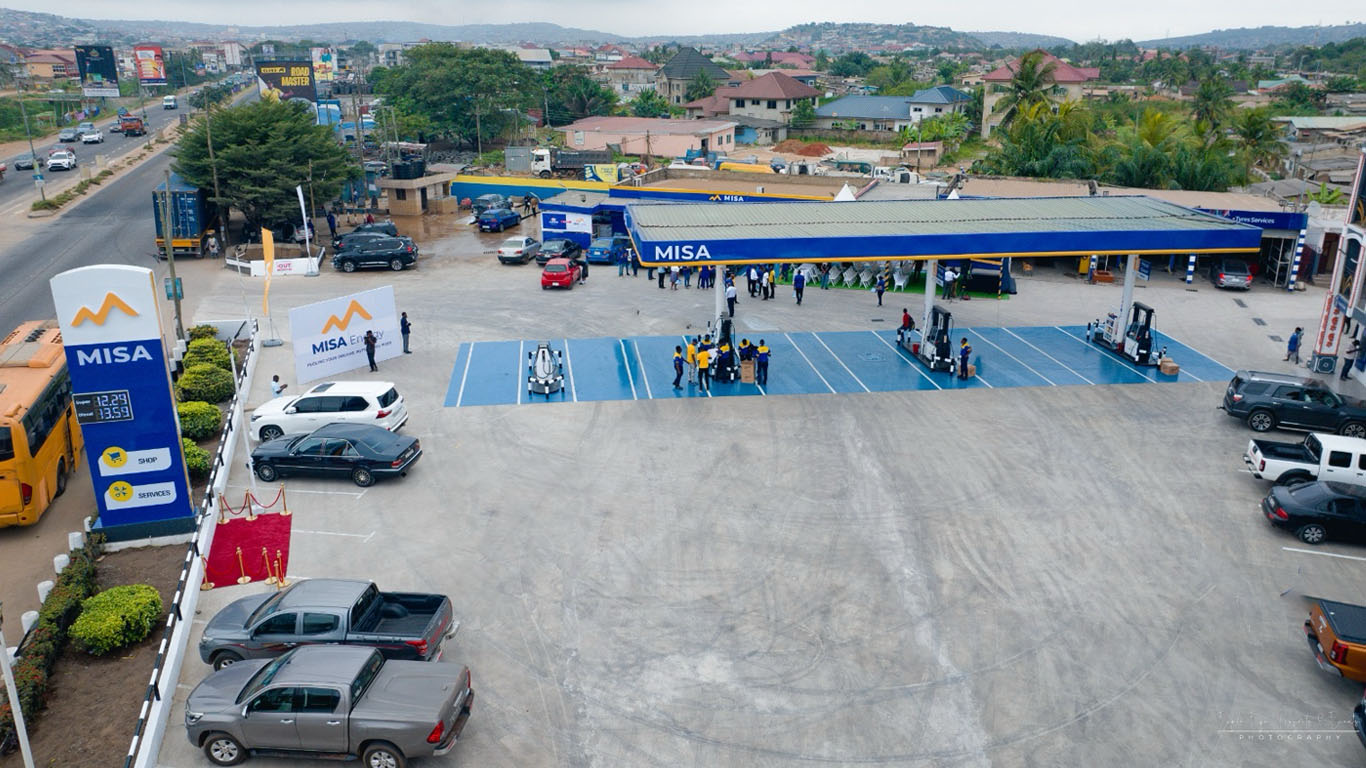
From its founding in 1998 to its 2019 acquisition by Mocoh, through the seismic 2024 Vivo Energy-Engen merger, and culminating in the August 2025 rebrand to MISA Energy, this Ghanaian downstream player has undergone three corporate transformations in a single decade. Now helmed by award-winning CEO Brent Nartey, armed with a network of strategically expanded stations (Azulenoano, Dawhenya, Bibiani, Asasetre, Nsawam), and repositioned as a “distinctly African energy brand rooted in Ghanaian leadership,” the company formerly known as Engen is executing the most ambitious reinvention in Ghana‘s downstream petroleum sector.
Executive Introduction
In the volatile arena of Ghana‘s downstream petroleum sector—where nearly 200 oil marketing companies (OMCs) compete for market share, where GOIL and Star Oil wage a brutal price war for the top spot, and where multinational giants like TotalEnergies and Shell defend premium positions—Engen Ghana Ltd has been a steady, if understated, presence since 1998.

But the past three years have brought a cascade of changes that have fundamentally reshaped the company. In 2024, Engen‘s South African parent was acquired by Vivo Energy, creating a pan-African energy champion with over 3,900 service stations and $2.1 billion litres of storage capacity across 28 markets. For the Ghana subsidiary, the immediate effect was minimal—operations continued “business as usual.”
📢 GET A DETAILED ARTICLES + JOBS
Join ASJ's WhatsApp Channel and never miss a post or opportunity.

The real transformation arrived in August 2025. Engen Ghana announced its official rebrand to MISA Energy Ghana Limited, shedding the international Engen name for a “distinctly African energy brand rooted in Ghanaian leadership and global standards.” The new identity is positioned as more innovative, more customer-focused, and more aligned with the future.
Under the leadership of Managing Director Brent Nartey—a two-time consecutive winner of the Leadership Excellence Award at the Ghana CEO Summit and a recognised thought leader in human capital management—the company has been quietly expanding its footprint. In May 2025, Engen (pre-rebrand) launched five new service stations in Azulenoano, Dawhenya, Bibiani, Asasetre, and Nsawam, reinforcing its commitment to bringing quality fuel closer to Ghanaians.

For investors, energy sector analysts, and competitors, the Engen-to-MISA transition represents a strategic bet: that a Ghanaian-led, African-branded OMC can carve out a distinctive position in a market dominated by state-owned giants (GOIL), French multinationals (TotalEnergies), and Shell-backed Vivo Energy.
This ASJ profile examines the company‘s history, its 2024 acquisition by Vivo Energy (and the 2019 Mocoh acquisition before that), the 2025 rebrand to MISA Energy, the leadership of Brent Nartey, the strategic station expansions, and the critical question: Can MISA Energy, with its new identity and expanded network, compete effectively against the established hierarchy of GOIL, Shell, and TotalEnergies?
Company Overview: From 1998 to MISA Energy
The Genesis: 1998 and the South African Parent
Engen Ghana was founded in 1998 as a subsidiary of the South African energy group Engen Petroleum . For over two decades, the company operated as a mid-tier OMC, offering services including marine bunkering, lubricants, engine card services, bulk fuel supply for commercial businesses, and fuel retail through a network of service stations across Ghana .
The company is headquartered at 89 Lagos Avenue, East Legon, Accra .
The 2019 Acquisition by Mocoh
In March 2019, Engen Ghana was acquired by Mocoh, a Swiss-based commodities trading and investment firm focused on the downstream petroleum sector in Africa . This acquisition transitioned the company from its South African parentage to a Swiss-owned entity, while maintaining the Engen brand and operations.
Mocoh‘s ownership provided Engen Ghana with:
-
Access to global commodity trading networks
-
Supply chain flexibility
-
Capital for network expansion
The 2024 Vivo Energy Merger (Parent Level)
In February 2023, Vivo Energy announced a transaction to acquire a 74% stake in Engen from PETRONAS (Malaysia‘s national oil company) . The transaction was completed in 2024, creating a pan-African energy champion with:
| Metric | Post-Merger Value |
|---|---|
| Service stations | 3,900+ |
| Storage capacity | 2.1 billion litres |
| Markets | 28 African countries |
| Employees | Approximately 6,000 |
The South African Commitment:
As part of the transaction, Vivo Energy committed to:
-
A five-year capital expenditure plan for Engen‘s South African operations
-
Major investments in renewable solar power generation projects
-
A worker ownership trust (5% stake rising to 9% by 2031)
-
Minimum annual dividends of R10,500 per employee for five years
Impact on Ghana:
Crucially, the 2024 merger did not immediately affect the operations of Engen in Ghana . The Ghana subsidiary continued to operate under the Engen brand while the parent-level integration proceeded.

The 2025 Rebrand: MISA Energy Ghana Limited
On August 5, 2025, Engen Ghana officially announced its transition to MISA Energy Ghana Limited .
Leadership Comments:
CEO Brent Nartey explained the rationale:
“Our new brand represents who we are becoming—more innovative, more customer-focused, and more aligned to the future we are building together. It‘s a promise to our customers to fuel their dreams and put them first. MISA Energy is a symbol of the trust we‘ve earned over the years and the ambition that drives us forward.”
The Deputy Minister of Energy and Green Transition, Richard Gyan-Mensah, commended the company‘s leadership for their “seamless dedication to the growth of the petroleum downstream sector” .
The CEO of the National Petroleum Authority (NPA), Godwin Kudzo Tameklo, tasked MISA Energy to “embrace innovation to thrive in the ever-evolving petroleum industry” and to “prioritise premium quality services that meet the demands of customers” .
MISA‘s Core Values:
According to the Chamber of Oil Marketing Companies (COMAC), MISA Energy must lead with:
-
Integrity
-
Passion
-
Ownership
-
Winning Mindset
-
Excellence
-
Respect
The Strategic Rationale:
The rebrand is more than cosmetic. It reflects an ambitious quest to build a “distinctly African energy brand rooted in Ghanaian leadership and global standards” . By shedding the Engen name, MISA Energy positions itself as a Ghanaian-led, African-focused brand, distinct from the South African and Swiss ownership layers above it.
As Dr. Riverson Oppong, CEO of COMAC, noted:
“A renewed identity is a chance to re-centre your purpose, re-energise your company and reconnect with the communities you serve; it‘s about how you stay relevant and trusted.”
Leadership: Brent Nartey
Mr. Brent Nartey serves as the Managing Director and Chief Executive Officer of Engen Ghana / MISA Energy Ghana Limited .
Two-Time Consecutive Leadership Excellence Award Winner
At the 9th Ghana CEO Summit, Brent Nartey was awarded the Leadership Excellence 2024 Award in the oil marketing sector. This marked his second consecutive win at the summit, “further solidifying his position as a visionary leader” .

Thought Leadership in People Management
At the HR Focus Conference 2024, Nartey delivered an electrifying address on “Strategies for Charting New Paths in People Management,” redefining HR‘s role in driving business success .
His philosophy emphasises inclusive, lifelong learning:
“We must do all we can to promote inclusive, lifelong learning opportunities for all, so that the ‘future‘ has a future.”
Commitment to Innovation and Customer Focus
At the MISA Energy brand launch, Nartey articulated the company‘s renewed focus:
“MISA Energy is more than a new name; it reflects who we are becoming: more innovative, more customer-focused, and dedicated to fuelling our customers‘ dreams while always putting them first.”
Leadership Authority
Nartey has the authority to speak on behalf of the company across media, policy, and industry platforms .
The 2025 Station Expansion: Five New Locations
In May 2025—just three months before the rebrand—Engen Ghana announced the launch of five new filling stations across the country .
New Station Locations
| Station Name | Region | Strategic Significance |
|---|---|---|
| Azulenoano | – | Located along key transit routes; convenience for commuters and local residents |
| Dawhenya | Greater Accra | Community-centered station; launched with ceremony attended by local leaders and the Chief Imam |
| Bibiani | Western North | Expands Engen‘s presence in a fast-growing town |
| Asasetre | – | Serves local population and surrounding rural communities; supports regional connectivity |
| Nsawam | Eastern | Strategically positioned along major highway; serves thousands of commuters and transport operators daily |
Strategic Significance of the Expansion
1. Geographic Diversification:
The new stations extend Engen/MISA‘s footprint into Western North (Bibiani), Eastern (Nsawam), and rural communities (Asasetre), complementing its existing presence in Greater Accra.
2. Community Engagement:
The Dawhenya station‘s launch included a heartfelt ceremony attended by the Chief Imam, demonstrating the company‘s commitment to community relations.
3. Highway Capture:
The Nsawam station, positioned along a major highway, is designed to capture thousands of daily commuters and transport operators.
4. Growth Momentum:
The expansion demonstrates that, despite the corporate restructuring, the company continued to invest in its physical footprint.
Pre-Rebrand Activity
Significantly, the expansion was announced under the Engen brand, prior to the August 2025 rebrand. This suggests that the network growth strategy was independent of—or perhaps preparatory for—the transition to MISA Energy.
The company described the launches as marking “a significant milestone in Engen Ghana‘s strategic growth plan, aimed at delivering exceptional service and investing in the country‘s economic development through job creation, local partnerships, and infrastructure expansion” .
MISA Energy: The New Brand Identity
The “Distinctly African Energy Brand” Positioning
MISA Energy‘s positioning is explicitly Ghanaian and African. The brand is “rooted in Ghanaian leadership and global standards” . This contrasts with competitors:
| OMC | Brand Identity |
|---|---|
| GOIL | Ghanaian national champion |
| MISA Energy (ex-Engen) | Ghanaian-led, African brand |
| TotalEnergies | French multinational |
| Vivo Energy (Shell) | South African / Global |
| Star Oil | Ghanaian challenger |
By positioning as a “distinctly African energy brand,” MISA Energy appeals to consumers who prioritise local ownership and African identity.
Commitment to Innovation and Service Excellence
MISA Energy has reaffirmed its commitment to service excellence, a core value that has defined the brand over the years. While its name and identity have changed, the company assured stakeholders of its “unwavering dedication to excellence, industry partnership and seamless service delivery” .
Alignment with Ghana‘s Green Transition
The Deputy Minister of Energy, Richard Gyan-Mensah, urged MISA Energy to take advantage of the government‘s green transition agenda in line with the commitment to net zero carbon emissions .
MISA Energy has indicated it will align with this agenda, though specific renewable energy investments have not been publicly detailed.
Core Values (I-POWER)
MISA Energy has published its core values under the acronym I-POWER :
| Value | Description |
|---|---|
| Integrity | Doing the right thing, always |
| Passion | Energy and enthusiasm for the customer |
| Ownership | Taking responsibility for outcomes |
| Winning Mindset | Striving for excellence |
| Excellence | Delivering quality |
| Respect | Valuing people and partnerships |
Source:
Engen Ghana‘s Historical Operations (Pre-MISA)
While the company has rebranded, its historical operations as Engen Ghana provide context for its current capabilities.
Services Offered (as Engen Ghana)
The company offered a range of downstream services :
-
Marine bunkering: Fuel supply for ships
-
Lubricants: Engine oils and industrial lubricants
-
Engine 1 Card: Fleet management and payment card
-
Bulk fuel supply: For commercial and industrial customers
-
Fuel retailing: Service station network
Corporate Status
-
Ownership Status: Acquired/Merged (as of PitchBook data)
-
Financing Status: Corporate backed or acquired
-
Primary Industry: Distributors/Wholesale
-
Parent Company (as of 2019): Mocoh
Revenue
PitchBook indicates revenue data is not publicly available . As a private subsidiary of a Swiss commodity trading firm, MISA Energy is not required to publish its financial statements.
Employee Count
The company‘s employee count is not publicly disclosed. However, given its service station network and distribution operations, it likely employs hundreds of Ghanaians directly and supports many more through dealer networks.
Office Address
-
Headquarters: 89 Lagos Avenue, East Legon, Accra, Ghana
-
Phone: +233 030
Competitive Landscape: MISA Energy vs. The Top Tier
The NPA Market Share Hierarchy (January–February 2026)
| Rank | OMC | Market Share | Positioning |
|---|---|---|---|
| 1 | GOIL PLC | 11.93% | National champion, price competitive |
| 2 | Star Oil | ~10% (est.) | Aggressive challenger |
| 3 | Vivo Energy (Shell) | 6.98% | Premium (Shell brand) |
| 4 | Zen Petroleum | ~5% (est.) | Fast-growing indigenous |
| 5 | TotalEnergies Ghana | 4.13% | Premium, margin-focused |
| — | MISA Energy (ex-Engen) | Not ranked in top 5 | Mid-tier |
Engen/MISA Energy does not appear in the top 5 of the NPA‘s January–February 2026 market share data. This indicates that, despite its expansion efforts, the company remains a mid-tier player in a highly concentrated market where the top five OMCs capture the majority of volume.
The Regional Strongholds Question
While GOIL dominates the northern regions, Vivo Energy leads in Bono, Bono East, and Ahafo, and TotalEnergies has the densest network (273 stations), MISA Energy‘s strategic position is less clearly defined. The company‘s expansion into Bibiani (Western North) and Nsawam (Eastern) suggests a strategy of targeting underserved regions rather than competing head-on in Accra.
Competitive Positioning
| Competitor | Advantage | MISA Energy‘s Response |
|---|---|---|
| GOIL | 400+ stations, state backing | MISA cannot compete on scale |
| Star Oil | Aggressive pricing, volume growth | MISA focuses on service quality |
| Shell | Premium brand, 244 stations | MISA rebrand emphasises African identity |
| TotalEnergies | 273 stations, high efficiency | MISA expands into underserved regions |
MISA Energy‘s competitive positioning is mid-tier: not the largest, not the cheapest, not the most premium. Its differentiation strategy appears to rest on:
-
Ghanaian leadership and African identity
-
Community engagement (e.g., Dawhenya station launch with Chief Imam)
-
Service excellence (core value)
-
Strategic expansion into underserved areas
The 2024 Vivo Energy-Engen Merger: A Pan-African Champion
The Transaction
In June 2024, Vivo Energy announced the completion of its transaction to acquire a 74% stake in Engen from PETRONAS . The deal created a pan-African energy champion with:
-
3,900+ service stations across 28 African markets
-
2.1 billion litres of fuel storage capacity
-
6,000 employees
-
Operations spanning transport, aviation, construction, and agriculture
Leadership Comments
Stan Mittelman, CEO of Vivo Energy Group, and Seelan Naidoo, MD and CEO of Engen, stated:
“We are delighted to conclude the transaction, and will now work together to take the ‘best of both‘ from Engen and Vivo Energy, positioning the combined organisation well for growth and success in the years to come.”
The Vivo Energy Rebrand (February 2025)
In February 2025, Vivo Energy unveiled a new corporate identity—the “Dynamic V“ logo—following the merger with Engen . The rebrand was designed to unify the company‘s operations under a cohesive corporate banner while allowing Shell and Engen to retain their consumer-facing identities .
Key elements of the Vivo rebrand:
-
Dynamic V logo: Symbolising momentum, leadership, and unity
-
Bold colour palette: Energy, innovation, and growth
-
Unified visual strategy: Across 28 African markets
Stan Mittelman explained:
“Our new brand is a reflection of our future. This brand signals our readiness to lead.”
Implications for MISA Energy
The Vivo Energy rebrand and the Engen-to-MISA transition are related but distinct. Vivo Energy‘s corporate rebrand unifies the parent entity. MISA Energy‘s rebrand transforms the Ghana subsidiary into a distinctly African brand.
Crucially, the Engen name—which MISA Energy has now replaced—was one of Vivo Energy‘s two primary consumer brands (alongside Shell). With the Ghana subsidiary moving away from Engen, the relationship between MISA Energy and Vivo Energy is now less clear. Is MISA Energy still operating under Vivo Energy‘s umbrella, or has the Ghana entity achieved greater independence?
The available sources do not explicitly clarify MISA Energy‘s current ownership. The 2024 Vivo Energy-Engen merger involved the South African Engen entity, not necessarily the Ghana subsidiary directly. Engen Ghana was already owned by Mocoh (Switzerland) after the 2019 acquisition. The merger likely affected the Engen brand at the African level, with the Ghana subsidiary‘s subsequent rebrand to MISA Energy reflecting a negotiated separation or repositioning.
The 2019 Mocoh Acquisition Context
Engen Ghana was acquired by Mocoh in March 2019 . Mocoh is a Swiss-based commodity trading and investment firm focused on Africa‘s downstream petroleum sector. This ownership layer between the Ghana subsidiary and the South African Engen parent likely provided MISA Energy with the flexibility to rebrand independently when the Engen name was subsumed into Vivo Energy.
Challenges and Risks
No analysis of Engen Ghana / MISA Energy is complete without acknowledging the headwinds it faces.
Risk 1: Brand Identity Transition
Rebranding from Engen (an established name with brand recognition) to MISA Energy (a new, unfamiliar name) carries significant risk. Customers who were loyal to the Engen brand may not automatically transfer their loyalty to MISA. The company must invest in marketing and customer education to build recognition for the new name.
Risk 2: Market Share Concentration
The top five OMCs (GOIL, Star Oil, Vivo Energy, Zen Petroleum, TotalEnergies) dominate the market. MISA Energy does not appear in the top five by NPA data. Breaking into the top tier will require significant volume growth—difficult in a price-sensitive market.
Risk 3: Price War Compression
The aggressive price competition between GOIL and Star Oil inevitably compresses margins across the entire sector. MISA Energy‘s mid-tier positioning means it cannot compete on price with GOIL or Star Oil, nor does it have the premium brand cachet of Shell or TotalEnergies.
Risk 4: Currency Volatility
Like all OMCs, MISA Energy imports refined petroleum products, paying in US dollars, but sells in cedis. The cedi‘s volatility directly affects landed costs. When the cedi depreciates, the company faces a choice: raise pump prices (risking customer defection) or absorb costs (compressing margins).
Risk 5: Station Economics
The company has expanded its station network, but without market share data, it is unclear whether the new stations are profitable. Low throughput per station puts pressure on unit economics.
Risk 6: Parent Relationships
The ownership structure of MISA Energy post-rebrand is unclear. The company was originally acquired by Mocoh in 2019. The 2024 Vivo Energy-Engen merger affected the Engen brand, but the Ghana subsidiary‘s current relationship with Vivo Energy or Mocoh is not publicly defined. Unclear ownership relationships can affect credit terms, supply security, and strategic direction.
Risk 7: Regulatory Changes
The National Petroleum Authority (NPA) sets pricing benchmarks, enforces quality standards, and issues operating licences. Changes in regulatory policy could affect margins or impose new compliance costs.
Risk 8: The Green Transition
The government has encouraged OMCs to align with its green transition agenda. MISA Energy will need to invest in renewable energy solutions, EV charging infrastructure, or other green initiatives to remain compliant and competitive.
Future Outlook
As of June 2026, MISA Energy (formerly Engen Ghana) is executing a strategy of brand repositioning, network expansion, and customer focus.
The company has successfully navigated multiple ownership changes: from South African Engen to Swiss Mocoh (2019), through the Vivo Energy-Engen merger (2024), and culminating in its rebrand to MISA Energy (August 2025). The leadership of Brent Nartey—a two-time consecutive Leadership Excellence Award winner—has provided stability and vision through these transitions.
The Immediate Agenda (2026-2027)
-
Build MISA Brand Awareness: Invest in marketing and customer education to establish MISA Energy as a trusted brand.
-
Optimise the Expanded Network: Ensure the five new stations (Azulenoano, Dawhenya, Bibiani, Asasetre, Nsawam) achieve target throughput and profitability.
-
Clarify Ownership and Strategic Direction: Publicly define MISA Energy‘s relationship with Vivo Energy, Mocoh, or other partners.
-
Deepen Community Engagement: Build on the Dawhenya model—partnering with local leaders and religious institutions—to establish MISA as a community-focused brand.
-
Align with Green Transition: Explore solar-powered stations, EV charging, or other renewable energy investments.
-
Improve Market Share Metrics: Aim to enter the NPA‘s top five OMCs by volume.
The Bull Case (Optimistic)
-
MISA Brand Resonates: Ghanaian consumers embrace the “distinctly African energy brand rooted in Ghanaian leadership” positioning. MISA Energy gains market share from competitors perceived as foreign.
-
Network Expansion Pays Off: The five new stations achieve strong throughput. MISA Energy becomes a recognised regional player in Western North, Eastern, and rural communities.
-
Price War Fatigue Sets In: Consumers tired of the GOil-Star Oil price war seek a reliable mid-tier alternative. MISA Energy captures the “value” segment with competitive pricing and service quality.
-
Leadership Continuity: Brent Nartey‘s award-winning leadership continues to drive innovation and employee engagement.
-
Green Transition First-Mover: MISA Energy becomes the first mid-tier OMC to solarise its stations, attracting environmentally conscious consumers and favourable policy treatment.
The Bear Case (Pessimistic)
-
Brand Transition Failure: Customers loyal to the Engen name do not transition to MISA. Market share erodes as consumers switch to more recognisable brands.
-
Expansion Overreach: The five new stations operate below break-even throughput. The company struggles with working capital pressure.
-
Price War Intensifies: GOIL and Star Oil continue aggressive discounting. MISA Energy loses price-sensitive customers.
-
Currency Crisis: The cedi depreciates sharply. Import costs spike. MISA Energy lacks the balance sheet strength of larger competitors to absorb the shock.
-
Ownership Confusion: Unclear relationships with Vivo Energy or Mocoh affect supply security. Credit terms from suppliers worsen.
The Verdict
MISA Energy Ghana Limited, the company formerly known as Engen Ghana, is a mid-tier oil marketing company in transition. It has weathered a decade of ownership changes—from South African Engen (1998-2019) to Swiss Mocoh (2019-2024) to the Vivo Energy-Engen merger (2024) —and has now taken the bold step of rebranding to a distinctly African identity .
The company‘s strengths are clear. It is led by Brent Nartey, a two-time consecutive Leadership Excellence Award winner who has demonstrated vision and stability through turbulent times . It has expanded its network with five new stations, extending its reach into Western North, Eastern, and rural communities . Its rebrand to MISA Energy positions it as a Ghanaian-led, African-focused alternative to foreign-owned competitors.
Yet, the challenges are equally clear. MISA Energy does not appear in the top five OMCs by NPA market share data for early 2026 . The company faces intense competition from GOIL (11.93% share), Star Oil, Shell (6.98%), and TotalEnergies (4.13%). Its market position is mid-tier, squeezed between the price warriors and the premium players.
The ownership structure post-rebrand remains ambiguous. The 2024 Vivo Energy-Engen merger created a pan-African champion, but the Ghana subsidiary‘s current relationship with Vivo Energy—or with Mocoh—is not publicly defined. This lack of clarity could affect supply security, credit terms, and strategic direction .
The rebrand from Engen to MISA is a high-stakes gamble. Engen had brand recognition, built over 27 years in Ghana (1998-2025). MISA Energy must build that recognition from scratch. The company‘s success will depend on marketing investment, customer education, and the resonance of its “Ghanaian leadership, African brand” positioning .
For the Ghanaian consumer, MISA Energy offers an alternative—a Ghanaian-led, African-focused OMC that prioritises customer service and community engagement . For the Ghanaian economy, MISA Energy contributes through employment, local partnerships, and infrastructure investment . For the investor, the company remains private, with no publicly available financials, but its survival through multiple ownership transitions suggests underlying resilience.
MISA Energy is not trying to be the largest OMC in Ghana—GOIL holds that crown with 400+ stations and 11.93% market share. It is not trying to be the most premium—Shell and TotalEnergies occupy that territory. It is trying to be the most authentic, the most community-connected, and the most distinctively African.
With an award-winning CEO, an expanded station network, and a brand-new identity, MISA Energy has the pieces in place. The next three years will determine whether Ghanaian consumers embrace the new African brand—or whether the Engen name, and the brand equity it carried, was the company‘s most valuable asset.
FAQ SECTION
1. Is Engen Ghana still operating under the Engen name?
No. In August 2025, Engen Ghana officially rebranded to MISA Energy Ghana Limited. The company now operates under the MISA Energy brand, positioning itself as a “distinctly African energy brand rooted in Ghanaian leadership and global standards“ .
2. Who is the CEO of Engen Ghana / MISA Energy?
The Managing Director and CEO is Mr. Brent Nartey. He was awarded the Leadership Excellence Award at the 9th Ghana CEO Summit, marking his second consecutive win in the oil marketing sector .
3. When was Engen Ghana founded?
Engen Ghana was founded in 1998 .
4. Where is Engen Ghana / MISA Energy headquartered?
The company is headquartered at 89 Lagos Avenue, East Legon, Accra, Ghana .
5. What is the 2024 Vivo Energy-Engen merger?
In 2024, Vivo Energy completed the acquisition of a 74% stake in Engen from PETRONAS, creating a pan-African energy champion with over 3,900 service stations and 2.1 billion litres of storage capacity across 28 African markets .
6. Did the 2024 Vivo Energy-Engen merger affect Engen Ghana?
According to the company, the 2024 merger did not immediately affect the operations of Engen in Ghana. However, the subsequent rebrand to MISA Energy in August 2025 transformed the Ghana subsidiary‘s identity .
7. What are the five new stations launched in May 2025?
Engen Ghana launched five new filling stations in Azulenoano, Dawhenya, Bibiani, Asasetre, and Nsawam as part of its strategic growth plan .
8. Does MISA Energy have a market share ranking?
Based on NPA data for January–February 2026, MISA Energy (formerly Engen) does not appear in the top five OMCs by market share. The top five are GOIL, Star Oil, Vivo Energy (Shell), Zen Petroleum, and TotalEnergies [citation:5?].
9. What services does MISA Energy offer?
The company offers marine bunkering, lubricants, engine card services, bulk fuel supply for commercial customers, and fuel retail through its service station network .
10. What are MISA Energy‘s core values?
MISA Energy operates under the I-POWER values: Integrity, Passion, Ownership, Winning Mindset, Excellence, and Respect .
11. Who owns MISA Energy?
Engen Ghana was acquired by Mocoh (Switzerland) in March 2019. The current ownership structure of MISA Energy post-rebrand is not publicly detailed. The 2024 Vivo Energy-Engen merger involved the South African Engen parent, not necessarily the Ghana subsidiary directly .
12. Where can I find MISA Energy‘s financial statements?
MISA Energy is a private company, and its financial statements are not publicly available. PitchBook indicates revenue data is not disclosed .
QUICK FACTS BOX
| Item | Details |
|---|---|
| Founded | 1998 |
| Headquarters | 89 Lagos Avenue, East Legon, Accra, Ghana |
| Industry | Downstream Petroleum / Oil Marketing |
| Services | Marine bunkering, lubricants, engine card, bulk fuel supply, fuel retail |
| Ownership | Acquired by Mocoh (Switzerland) in 2019; relationship with Vivo Energy post-merger unclear |
| Managing Director | Brent Nartey (two-time consecutive Leadership Excellence Award winner) |
| Market Position (2026) | Mid-tier (not in NPA top 5) |
| Station Network | Expanded with 5 new stations (Azulenoano, Dawhenya, Bibiani, Asasetre, Nsawam) |
| Rebrand | Engen Ghana → MISA Energy Ghana Limited (August 2025) |
| Core Values | I-POWER (Integrity, Passion, Ownership, Winning Mindset, Excellence, Respect) |
| Key Differentiator | “Distinctly African energy brand rooted in Ghanaian leadership“ |
| Parent Company (2019–2025) | Mocoh (Switzerland) |
| Group Merger (2024) | Vivo Energy acquired 74% of Engen from PETRONAS |
| Phone | +233 030 |
| Website | engen.com.gh (redirecting to MISA Energy) |
| Regulator | National Petroleum Authority (NPA) |
Source: Accra Street Journal
Last Updated on June 3, 2026 by Samuel Kwame Boadu
Disclaimer: Some content on Accra Street Journal may be aggregated, summarized, or edited from third-party sources for informational purposes. Images and media are used under fair use or royalty-free licenses. Accra Street Journal is a subsidiary of SamBoad Publishing Hub under SamBoad Business Group Ltd, registered in Ghana since 2014.
For concerns or inquiries, please visit our Privacy Policy or Contact Page.

Samuel Kwame Boadu is a Ghanaian media entrepreneur and storyteller with a passion for amplifying urban voices and uncovering everyday truths. He is the Editor-in-Chief and Founder of Accra Street Journal, a dynamic digital platform dedicated to capturing the pulse of Ghana’s capital—its people, culture, challenges, business, sports and innovations.





