As Ghana‘s first and largest Independent Power Producer (IPP), with 560MW of thermal capacity, a 15% share of dependable national generation, and a 200MW wind farm in development, Sunon Asogli has been both the saviour and the saboteur of Ghana’s energy stability. From a 2024 shutdown over $259 million ECG arrears to a 2026 bid to export power to Burkina Faso and Cameroon, the Chinese-Ghanaian joint venture is executing the most ambitious regional expansion strategy in the country‘s independent power history. The question is whether its future lies in stabilising Ghana’s grid or bypassing it entirely.
Executive Introduction
On October 8, 2024, the lights in thousands of Ghanaian homes flickered—not because of a technical fault or a fuel shortage, but because a single company decided to pull the plug. Sunon Asogli Power (Ghana) Limited, the country‘s largest Independent Power Producer (IPP), announced the indefinite shutdown of its 560MW combined-cycle gas plant. The reason was stark: the Electricity Company of Ghana (ECG) owed the company a staggering $259 million in arrears, and Sunon Asogli could no longer afford to keep the turbines spinning.

The shutdown lasted only weeks—a government bailout of “emergency funds” and a personal intervention by Vice President Dr. Mahamudu Bawumia brought the plant back online by November 2024. But the incident was a watershed moment for Ghana‘s energy sector. It exposed the fragility of the IPP model: even the most efficient, best-capitalised generators cannot survive if the state-owned off-taker refuses to pay.
📢 GET A DETAILED ARTICLES + JOBS
Join ASJ's WhatsApp Channel and never miss a post or opportunity.

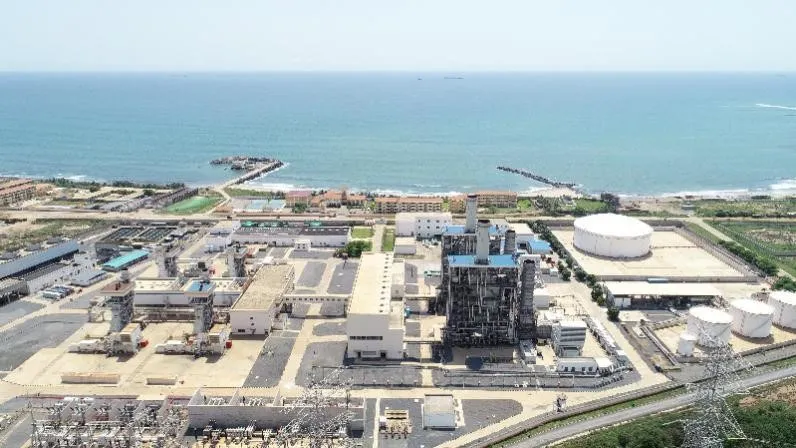
Sunon Asogli is not a typical IPP. It is a joint venture between Shenzhen Energy Group (60%, a Chinese state-owned enterprise listed on the Shenzhen Stock Exchange) and the China-Africa Development Fund (40%). The company was the first successful IPP in Ghana‘s history, commissioning its first 200MW phase in 2010 and completing the full 560MW combined-cycle facility in January 2017. Today, it contributes approximately 15% of Ghana’s dependable generation capacity, making it a cornerstone of national energy security.
For policymakers, energy sector analysts, and investors, Sunon Asogli represents a case study in the contradictions of African independent power. It is a technical success: a modern, efficient, environmentally-friendly gas plant that operates under a Power Purchase Agreement (PPA) with the government. It is also a commercial hostage: dependent on ECG‘s unreliable payments, vulnerable to currency depreciation, and increasingly looking beyond Ghana‘s borders for growth.

This profile examines Sunon Asogli‘s ownership structure, its 560MW plant, its 2024 shutdown and bailout, its planned third phase (508MW), its 200MW wind farm in Ada, its regional expansion into Cameroon and Burkina Faso, and the critical question: Is Sunon Asogli Ghana’s most important energy asset—or is it becoming the one that got away?
Company Overview: The Chinese-Ghanaian Joint Venture
Ownership: A State-Owned Chinese Giant and an African Development Fund
Sunon Asogli Power (Ghana) Limited is a joint venture between two Chinese state-backed entities:
| Shareholder | Ownership % | Nature |
|---|---|---|
| Shenzhen Energy Group Co., Ltd. | 60% | Chinese state-owned enterprise (Shenzhen SASAC majority), listed on Shenzhen Stock Exchange (000027) |
| China-Africa Development Fund (CADFund) | 40% | Private equity fund wholly funded by China Development Bank, a Chinese government policy bank |
Shenzhen Energy Group is a major player in China‘s energy industry, specialising in low-carbon electricity, environmental protection, gas supply, and digital services. The company is partly owned by the Shenzhen Municipal State-owned Assets Supervision and Administration Commission (SASAC), holding 43.91%, while Huaneng Power International, Inc. holds 25.02%.
The China-Africa Development Fund is a policy vehicle designed to stimulate Chinese investment in African power generation, transportation, natural resources, and manufacturing.
This ownership structure gives Sunon Asogli access to:
-
Chinese state capital
-
Shenzhen Energy‘s technical expertise in combined-cycle gas generation
-
CADFund‘s political risk mitigation (as a Chinese policy fund)
Leadership: Togbe Afede XIV, the Traditional Ruler–Entrepreneur
The company‘s co-founder and public face is Togbe Afede XIV, the Paramount Chief of the Asogli Traditional Area in the Volta Region. Togbe Afede is a unique figure in Ghana‘s business landscape: a traditional ruler, an economist, a chartered financial analyst, and a serial entrepreneur.
Speaking in February 2026, Togbe Afede outlined Sunon Asogli‘s ambitious expansion plans:
-
A 200MW wind farm in Ada West
-
The third phase of its thermal project (850MW)
-
Export power supply to Burkina Faso starting March 2026
-
A 350MW gas plant in Cameroon (awarded August 2025)
His dual role as traditional ruler and corporate leader gives Sunon Asogli a distinctive cultural and political influence. Togbe Afede has been a vocal critic of ECG‘s payment practices, using his traditional authority to amplify the IPP‘s grievances.
The “First Successful IPP“ Status
Sunon Asogli holds a unique place in Ghana‘s energy history. It was the first independent power producer to successfully develop, finance, and commission a thermal plant in the country. Before Sunon Asogli, Ghana‘s power sector was dominated by state-owned VRA. The company‘s entry marked the beginning of private sector participation in generation.

Key Milestones:
| Year | Milestone |
|---|---|
| 2010 | First phase commissioned: 200MW |
| 2017 | Second phase commercialised: 360MW |
| 2017 | Total capacity: 560MW (combined-cycle gas) |
| 2024 | Proposed third phase: +508MW, total >1,000MW |
| 2025 | Cameroon 350MW gas plant award |
| 2025 | 200MW wind farm announced (Ada West) |
| 2026 | Export to Burkina Faso scheduled |
The 560MW Plant: Technical Specifications and Performance
Combined-Cycle Gas Technology
Sunon Asogli operates a combined-cycle gas turbine (CCGT) plant in Kpone, Greater Accra Region. Combined-cycle technology uses two thermodynamic cycles:
| Cycle | Process |
|---|---|
| Gas cycle | Natural gas combustion drives a turbine to generate electricity |
| Steam cycle | Waste heat from gas turbine exhaust generates steam, driving a second turbine |
This configuration achieves higher efficiency than simple-cycle gas plants, reducing fuel consumption per megawatt-hour generated.
Capacity and Significance
| Metric | Value |
|---|---|
| Installed Capacity | 560 MW |
| Phase 1 (2010) | 200 MW |
| Phase 2 (2017) | 360 MW |
| Share of dependable capacity | ~15% |
| Location | Kpone, Greater Accra |
The plant is among the top five power plants in Ghana by capacity, alongside the VRA‘s Akosombo Dam (1,000MW) and Kpone Thermal Power Station.
Environmental and Efficiency Claims
Sunon Asogli markets itself as a “modern high efficient, environmentally-friendly, natural gas fuel combine cycle power plant“. The environmental benefits include:
-
Lower carbon emissions per megawatt-hour compared to liquid fuel plants
-
Reduced air pollution relative to heavy fuel oil alternatives
-
Use of natural gas (cleaner than coal or crude oil)
The company promotes its Health, Safety and Environment (HSE) culture, with a stated commitment to “adhering to the strictest safety and environmental standards“.
The 2024 Shutdown: A Watershed Moment
The Trigger: $259 Million in ECG Arrears
In September 2024, Sunon Asogli issued a stark warning: the Electricity Company of Ghana (ECG) owed the company $259 million in net receivables (fuel not included). This debt had grown 23% since January 2024, despite the Cash Waterfall Mechanism designed to prioritise IPP payments.
Key payment data:
| Period | Payment Rate |
|---|---|
| Jan–Sept 2024 | Only 22.6% of invoices paid through Cash Waterfall Mechanism |
On October 8, 2024, Sunon Asogli announced the indefinite shutdown of its 560MW plant. The company stated it could no longer afford to purchase natural gas or operate the plant without payment from ECG.
The Economic Impact
The shutdown of a 560MW plant—15% of dependable capacity—triggered immediate load-shedding warnings. Ghana, which had largely eliminated rolling blackouts after the 2014–2016 energy crisis, faced the prospect of returning to “dumsor.“ Businesses, hospitals, and households braced for disruption.
The Government Intervention
Within weeks, the government responded. Energy Minister Herbert Krapa and Finance Minister Dr. Mohammed Amin Adam facilitated the release of “emergency funds“ to Sunon Asogli. Vice President Dr. Mahamudu Bawumia personally intervened to ensure payment was processed.

On November 25, 2024, Sunon Asogli announced that its plant was back in operation. The company expressed confidence that a “win-win solution“ would be achieved, noting:
“We have submitted our final version of the Restructuring Terms Sheet to the Ministry of Finance and ECG in August for finalisation and signing soon. We are confident that a win-win solution that will ensure the stability and reliability of Ghana‘s energy will be achieved.“
The Deeper Lesson
The 2024 shutdown was not an isolated incident. It was a symptom of a structural crisis: ECG‘s inability—or unwillingness—to pay IPPs on time, despite the Cash Waterfall Mechanism designed to prevent exactly this scenario.
For Sunon Asogli, the episode was a wake-up call. The company began looking beyond Ghana for growth—to Burkina Faso, Cameroon, and a regional export strategy that would reduce its dependence on ECG‘s unreliable payments.
The Expansion Pipeline: 508MW More, 200MW Wind, and Phase 3
Phase 3: 508MW Combined-Cycle Plant
In July 2024, even before the shutdown, Sunon Asogli had submitted proposals to the Ministry of Energy for additional generation capacity of 508MW at its Kpone site.
| Project | Capacity | Status |
|---|---|---|
| Phase 3 Combined-Cycle Plant | 508 MW | Proposed, short-term development |
| Total from Kpone site (if approved) | 1,000MW+ | Awaiting government approval |
According to Principal Project Engineer Agyemang Rocky Prempeh:
“Asogli wants to continue to do more, and soon, we want to establish the phase three, which will add around 508 megawatts to what we do here. So, in total, we‘ll be generating more than 1,000MW from this site.“
The proposal was submitted to the government through the Ministry of Energy, alongside a 100MW wind power plant in Ada and a 200MW utility-scale solar plant in the north.
200MW Wind Farm in Ada West
In February 2026, Togbe Afede XIV announced that Sunon Asogli is at an “advanced stage“ of developing a 200MW wind farm in the Ada West district (specifically the Sege area).
Key details:
| Metric | Value |
|---|---|
| Capacity | 200 MW |
| Location | Sege area, Ada West district, Greater Accra Region |
| Status | Advanced stage |
| Strategic context | Part of 200MW target (initial) |
The wind farm forms part of a broader renewable energy strategy. The company has also acquired four sites for solar power projects, with an initial target of 200MW.
The 1,000MW Vision
If all proposed projects are approved and constructed, Sunon Asogli‘s total generation portfolio would exceed 1,000MW:
| Project | Capacity | Status |
|---|---|---|
| Existing thermal plant | 560 MW | Operational |
| Phase 3 thermal | 508 MW | Proposed |
| Wind farm | 200 MW | Advanced stage |
| Solar (4 sites) | 200 MW initial target | Early stage |
| Total potential | ~1,468 MW | — |
Regional Expansion: Burkina Faso, Cameroon, and a West African Export Strategy
The 2024 shutdown appears to have accelerated Sunon Asogli‘s shift from a Ghana-focussed IPP to a regional energy exporter.
Burkina Faso: Power Supply from March 2026
In February 2026, Togbe Afede disclosed that Sunon Asogli Power will start supplying power to Burkina Faso from March 2026. This marks the company‘s first foray into cross-border electricity exports.
Strategic implications:
-
Reduced dependence on ECG: Export revenue is not subject to ECG‘s payment arrears.
-
Regional integration: Aligns with ECOWAS‘s vision of a West African power pool.
-
Leverage on Ghana‘s grid: Exports will use Ghana‘s transmission infrastructure (GRIDCo), generating transmission fees for the national utility.
The Burkina Faso export arrangement may also involve the establishment of a local power plant in Burkina, as Togbe Afede mentioned that the company intends to “begin establishing a power plant in Burkina Faso in March 2026“.
Cameroon: 350MW Gas Plant (Awarded August 2025)
In August 2025, Cameroon awarded Sunon Asogli Power (in consortium with China Energy Engineering Corporation) the contract to build a 350MW combined-cycle gas plant in the southwest city of Limbe.
Project details:
| Metric | Value |
|---|---|
| Capacity | 350 MW |
| Location | Limbe, Southwest Cameroon |
| Project cost | CFA 176 billion ($312 million) |
| Financing structure | Government 15% (CFA 26bn), Consortium 85% |
| Expected completion | 2029 |
| Primary gas supplier | Société Nationale des Hydrocarbures (SNH) |
The selection process:
The award followed a comprehensive prequalification and bidding process, with SNH serving as the primary gas supplier. In July 2025, an SNH delegation visited Shenzhen Energy Group‘s facilities in China, including the Shenzhen Dongbu Power Plant and the Longgang Energy Ecological Park, to observe cutting-edge power generation technologies.
Strategic significance for Cameroon:
-
The plant is designed to ease electricity shortages in Cameroon‘s southwest, coastal, and western regions.
-
Cameroon currently generates around 2,000 MW, leaving large areas facing chronic blackouts that have stifled industrial growth.
-
By harnessing natural gas, the project will diversify Cameroon‘s hydropower-heavy energy mix (currently vulnerable to climate shocks).
The Regional Export Thesis
Sunon Asogli‘s regional expansion reflects a calculated strategic shift. By developing generation assets and export arrangements in neighbouring countries, the company:
-
Diversifies its off-taker risk: No single sovereign customer can hold the company hostage.
-
Leverages Ghana‘s strategic location: Ghana can serve as a power trading hub for West Africa.
-
Accesses faster-growing markets: Burkina Faso and Cameroon have lower electrification rates and faster demand growth.
For Ghana, this presents a dilemma. Sunon Asogli‘s 560MW plant is 15% of dependable capacity. If the company prioritises exports over domestic supply—or if ECG‘s arrears drive the company to shift capacity to export markets—Ghana could face a supply deficit.
Financial Performance and Payment Disputes
The PPA and the Cash Waterfall Mechanism
Sunon Asogli operates under a Power Purchase Agreement (PPA) with the Government of Ghana, under which ECG is the designated off-taker. The PPA entitles the company to receive timely payments for power dispatched.
The Cash Waterfall Mechanism (CWM) was designed to prioritise payments to IPPs and other value chain participants. In practice, however, the mechanism has failed to ensure timely payments.
As of September 2024:
| Metric | Value |
|---|---|
| ECG arrears to Sunon Asogli | $259 million (net, fuel excluded) |
| Debt growth (Jan–Sept 2024) | +23% |
| CWM payment rate (Jan–Sept 2024) | Only 22.6% of invoices |
The 2025 Restructuring Terms
Following the November 2024 bailout, Sunon Asogli submitted a “Restructuring Terms Sheet“ to the Ministry of Finance and ECG in August 2024. As of mid-2025, the terms remained under negotiation. The company expressed confidence in achieving a “win-win solution that will ensure the stability and reliability of Ghana‘s energy.“
The LNG Supply Context
Sunon Asogli‘s thermal plant depends on natural gas. Historically, Ghana relied on piped gas from Nigeria via the West African Gas Pipeline (WAGP), which delivered only 30 million standard cubic feet per day (mmscfd) against a contracted 120 mmscfd, creating chronic fuel shortages.
In 2017, the government facilitated a Liquefied Natural Gas (LNG) agreement with Equatorial Guinea, enabling Asogli to scale up production from 120MW to 580MW. This gas deal was critical to the plant‘s expansion to full capacity.
Currency Risk
Sunon Asogli‘s costs—including LNG imports and equipment maintenance—are largely denominated in US dollars. Its revenue is in Ghanaian cedis, indexed to the dollar under the PPA (typically). However, the cedi‘s sharp depreciation in 2022–2024 eroded the real value of dollar-linked payments, contributing to the arrears crisis.
The Cameroon Project: A Deeper Dive
Why Sunon Asogli Won the Bid
Sunon Asogli‘s selection as preferred bidder for Cameroon‘s 350MW plant was not accidental. The company brought:
-
A track record of successful IPP development in Ghana (560MW)
-
The technical backing of Shenzhen Energy Group (state-owned, experienced in gas generation)
-
Financing access through CADFund (Chinese policy fund)
-
A proven ability to operate under challenging payment environments (as demonstrated by its continued operation in Ghana despite ECG arrears)
Project Financing
| Component | Amount |
|---|---|
| Total cost | CFA 176 billion (~$312 million) |
| Government contribution (15%) | CFA 26 billion |
| Consortium financing (85%) | CFA 150 billion |
The government‘s 15% contribution reduces the financing burden on Sunon Asogli and China Energy, while the consortium retains majority control.
Timeline
-
June 2025: Prime Minister Joseph Dion Ngute announces Sunon Asogli/China Energy as the successful bidder.
-
July 2025: SNH delegation visits Shenzhen Energy Group in China.
-
August 2025: Formal award confirmed.
-
Expected completion: 2029.
Challenges and Risks
No analysis of Sunon Asogli is complete without acknowledging the headwinds—both those it shares with other IPPs and those unique to its regional expansion strategy.
Risk 1: ECG Arrears Could Trigger Another Shutdown
The $259 million arrears that triggered the October 2024 shutdown have not been fully resolved. The Restructuring Terms Sheet is still under negotiation. If ECG‘s payment discipline does not improve, Sunon Asogli could suspend operations again—with even more severe consequences for Ghana‘s grid.
Risk 2: The 1,000MW Investment Is Not Yet Approved
Sunon Asogli‘s Phase 3 proposal (508MW) and its renewable energy projects (200MW wind, 200MW solar) are awaiting government approval. Without a clear signal from the Ministry of Energy and a revised PPA that addresses payment concerns, these investments may not proceed.
Risk 3: Regional Expansion Could Drain Domestic Capacity
If Sunon Asogli prioritises exports to Burkina Faso and Cameroon over supply to ECG, Ghana could face a capacity deficit. The company‘s 560MW plant is 15% of dependable capacity; any diversion of gas or output to export markets would require replacement generation from other IPPs or VRA.
Risk 4: Currency Depreciation
Sunon Asogli‘s dollar-denominated costs (LNG, equipment) and cedi-denominated revenue continue to create currency mismatch. The cedi‘s volatility affects the company‘s working capital and profitability.
Risk 5: Cameroon Execution Risk
The Cameroon project is a large, complex infrastructure undertaking in a different regulatory and political environment. Construction delays, cost overruns, or disputes with the Cameroonian government could strain Sunon Asogli‘s financial resources.
Risk 6: Gas Supply Security
Ghana‘s gas supply depends on the West African Gas Pipeline (Nigeria) and LNG imports. Pipeline vandalism, geopolitical tensions, or global LNG price spikes could disrupt fuel supply to Sunon Asogli‘s plant.
Risk 7: The Cash Waterfall Mechanism‘s Failure
The CWM was designed to prevent IPP payment arrears. Its failure to protect Sunon Asogli (only 22.6% of invoices paid through the mechanism) suggests a deeper governance problem. If the CWM is not reformed, no amount of restructuring will prevent future crises.
Economic and Industry Impact
15% of Dependable Capacity
Sunon Asogli‘s 560MW plant provides approximately 15% of Ghana‘s dependable generation capacity. Its shutdown in October 2024 demonstrated just how vulnerable the grid is to the financial distress of a single IPP.
First-Mover in Independent Power
As the first successful IPP in Ghana, Sunon Asogli paved the way for subsequent independent power projects, including Cenpower, Karpowership, and others. Its success—and its struggles—have shaped Ghana‘s IPP framework.
Employment and Local Content
Sunon Asogli directly employs engineers, technicians, and administrative staff at its Kpone plant. The company also supports local jobs through its supply chain (fuel procurement, maintenance contracts).
Regional Energy Hub Ambition
Sunon Asogli‘s planned exports to Burkina Faso and its development of a plant in Cameroon align with Ghana‘s aspiration to become a regional energy hub. If successful, the company could become a model for cross-border IPP development in West Africa.
Future Outlook
As of June 2026, Sunon Asogli is executing a three-pronged strategy: expand domestic capacity, diversify into renewables, and export power regionally.
The Immediate Agenda (2026-2028)
-
Commence Power Supply to Burkina Faso (March 2026): Initiate cross-border exports; establish operational presence in Burkina.
-
Develop 200MW Wind Farm in Ada West: Advance the Sege wind project to financial close and construction.
-
Secure Government Approval for Phase 3 (508MW): Finalise PPA amendments and financing for the Kpone expansion.
-
Progress Cameroon 350MW Plant: Complete engineering and procurement; begin site preparation (target 2029 completion).
-
Resolve ECG Arrears: Finalise the Restructuring Terms Sheet with Ministry of Finance and ECG.
The Bull Case (Optimistic)
-
ECG Reform Succeeds: The government implements structural reforms at ECG, improving collections and enforcing the Cash Waterfall Mechanism. Sunon Asogli receives timely payments. The threat of another shutdown recedes.
-
Phase 3 and Renewables Approved: The Ministry of Energy approves Sunon Asogli‘s 508MW expansion and 200MW wind farm. Construction begins by 2027. Sunon Asogli becomes a 1,000MW+ generator, the largest IPP in Ghana.
-
Regional Export Strategy Delivers: Power exports to Burkina Faso and Cameroon generate reliable, dollar-denominated revenue. Sunon Asogli reduces its dependence on ECG from 100% to 50% or less.
-
Cameroon Plant Completed on Schedule: The 350MW Limbe plant is commissioned by 2029. Sunon Asogli becomes a recognised Pan-African IPP developer, bidding for projects across the continent.
-
Gas Supply Secured: LNG supply agreements are long-term and stable. The West African Gas Pipeline is repaired and delivers contracted volumes.
The Bear Case (Pessimistic)
-
Another Shutdown: ECG arrears remain unresolved. Sunon Asogli suspends operations again. Load-shedding returns. Investor confidence in Ghana‘s IPP framework collapses.
-
Phase 3 Stalled: The government delays approval of the 508MW expansion. Sunon Asogli invests its capital in Cameroon and Burkina Faso instead, leaving Ghana‘s capacity deficit unaddressed.
-
Currency Crisis Worsens: The cedi depreciates sharply. Sunon Asogli‘s dollar-denominated costs spike. The company faces insolvency despite a functional plant.
-
Cameroon Delays: Land acquisition disputes, regulatory hurdles, or financing delays push the Cameroon plant to 2031 or beyond. Sunon Asogli‘s regional expansion stalls.
-
Gas Supply Shocks: Nigeria reduces pipeline gas flows. Global LNG prices spike. Sunon Asogli cannot afford fuel. The plant operates at reduced capacity.
The Verdict
Sunon Asogli Power (Ghana) Limited is the most successful—and the most vulnerable—independent power producer in Ghana‘s history. It is a technical marvel: a 560MW combined-cycle gas plant that provides 15% of the nation‘s dependable capacity, built and operated by a Chinese state-owned enterprise and a Ghanaian traditional ruler. It is a pioneer: the first IPP to break ground, the first to commission, and now the first to export power to neighbouring countries.
But it is also a hostage. The October 2024 shutdown was not caused by a technical failure or a fuel shortage. It was caused by ECG‘s $259 million debt—a debt that grew 23% in nine months, despite a Cash Waterfall Mechanism designed to prevent exactly this scenario. The government‘s emergency bailout kept the lights on, but it did not solve the underlying problem.
The company‘s response has been strategic and, in some ways, audacious. Instead of waiting for ECG to reform, Sunon Asogli is looking beyond Ghana‘s borders. It will start supplying power to Burkina Faso in March 2026. It has won a $312 million contract to build a 350MW plant in Cameroon. It has proposed a 508MW third phase at Kpone and a 200MW wind farm in Ada West.
For Ghana, this presents a paradox. Sunon Asogli‘s domestic investments are essential to meeting rising demand. But if ECG‘s arrears persist, the company will continue shifting its focus—and its capital—to regional markets where the off-taker pays on time.
The government must decide: reform ECG and enforce the Cash Waterfall Mechanism, or watch its largest IPP become primarily an exporter of power to other nations.
Sunon Asogli is not trying to be Ghana‘s most generous IPP. It is trying to be a profitable, sustainable business. If ECG cannot pay, the company will find customers who can.
FAQ SECTION
1. Is Sunon Asogli a Ghanaian-owned company?
No. Sunon Asogli Power (Ghana) Limited is a joint venture between Shenzhen Energy Group (60%, Chinese state-owned enterprise) and the China-Africa Development Fund (40%, Chinese policy fund). The company is Ghana-incorporated but Chinese-owned.
2. Who is the founder of Sunon Asogli?
The co-founder and public face of Sunon Asogli is Togbe Afede XIV, the Paramount Chief of the Asogli Traditional Area. He is also an economist, chartered financial analyst, and serial entrepreneur.
3. How much power does Sunon Asogli generate?
Sunon Asogli operates a 560MW combined-cycle natural gas power plant in Kpone, Greater Accra Region. The plant was commissioned in two phases: 200MW in 2010 and 360MW in January 2017.
4. What is Sunon Asogli‘s share of Ghana‘s generation capacity?
The plant contributes approximately 15% of Ghana‘s dependable generation capacity, making it one of the largest single power plants in the country.
5. Why did Sunon Asogli shut down in October 2024?
Sunon Asogli suspended operations on October 8, 2024, citing $259 million in arrears owed by the Electricity Company of Ghana (ECG). The debt had grown 23% since January 2024, and only 22.6% of invoices were paid through the Cash Waterfall Mechanism.
6. How was the shutdown resolved?
The government released “emergency funds“ following intervention by Energy Minister Herbert Krapa, Finance Minister Dr. Mohammed Amin Adam, and Vice President Dr. Mahamudu Bawumia. The plant resumed operations on November 25, 2024.
7. What are Sunon Asogli‘s expansion plans?
Sunon Asogli has proposed:
-
A 508MW Phase 3 thermal plant at Kpone (total >1,000MW from the site)
-
A 200MW wind farm in Ada West (Sege area)
-
Four solar sites with an initial target of 200MW
-
Power supply to Burkina Faso from March 2026
-
A 350MW gas plant in Limbe, Cameroon (awarded August 2025, completion 2029)
8. Who owns Shenzhen Energy Group?
Shenzhen Energy Group (stock code: 000027) is a Chinese state-owned enterprise listed on the Shenzhen Stock Exchange. The Shenzhen Municipal State-owned Assets Supervision and Administration Commission (SASAC) holds 43.91%, and Huaneng Power International holds 25.02%.
9. What is the Cameroon project?
Sunon Asogli (in consortium with China Energy Engineering Corporation) was awarded a contract to build a 350MW combined-cycle gas plant in Limbe, Cameroon, at a cost of $312 million. The project is a public-private partnership with the government contributing 15%.
10. How can I contact Sunon Asogli?
Sunon Asogli‘s customer support line is +233 54 433 9576 / 030 274 0130. Email: [email protected]. The company is located in Kpone, Greater Accra Region.
11. What is the Cash Waterfall Mechanism?
The Cash Waterfall Mechanism (CWM) is a payment prioritisation system designed to ensure that revenues collected by ECG are distributed fairly to generators, transmitters, and distributors. Between January and September 2024, only 22.6% of Sunon Asogli‘s invoices were paid through the CWM.
12. Is Sunon Asogli involved in renewable energy?
Yes. Sunon Asogli is developing a 200MW wind farm in Ada West and has acquired four sites for solar power projects with an initial target of 200MW. These form part of the company‘s commitment to clean energy.
QUICK FACTS BOX
| Item | Details |
|---|---|
| Founded | 2000s (first phase commissioned 2010) |
| Headquarters | Kpone, Greater Accra Region, Ghana |
| Industry | Electricity Generation / Independent Power Producer |
| Primary Asset | 560MW combined-cycle natural gas plant |
| Phase 1 (2010) | 200 MW |
| Phase 2 (2017) | 360 MW |
| Share of dependable capacity | ~15% |
| Ownership | Shenzhen Energy Group (60%), China-Africa Development Fund (40%) |
| Co-founder | Togbe Afede XIV |
| Shareholder (Shenzhen Energy) | Chinese state-owned enterprise (Shenzhen SASAC 43.91%) |
| ECG Arrears (Sept 2024) | $259 million |
| 2024 Payment Rate (CWM) | 22.6% |
| Proposed Phase 3 | 508 MW |
| Proposed Wind Farm | 200 MW (Ada West / Sege) |
| Proposed Solar | 200 MW initial target (4 sites) |
| Cameroon Project | 350 MW gas plant (Limbe, $312m, due 2029) |
| Burkina Faso Export | Starting March 2026 |
| Primary Off-taker | Electricity Company of Ghana (ECG) |
| Regulator | Public Utilities Regulatory Commission (PURC) |
| Line Ministry | Ministry of Energy and Green Transition |
| Website | sunonasogli.com |
Source: Accra Street Journal
Last Updated on June 5, 2026 by Samuel Kwame Boadu
Disclaimer: Some content on Accra Street Journal may be aggregated, summarized, or edited from third-party sources for informational purposes. Images and media are used under fair use or royalty-free licenses. Accra Street Journal is a subsidiary of SamBoad Publishing Hub under SamBoad Business Group Ltd, registered in Ghana since 2014.
For concerns or inquiries, please visit our Privacy Policy or Contact Page.

Samuel Kwame Boadu is a Ghanaian media entrepreneur and storyteller with a passion for amplifying urban voices and uncovering everyday truths. He is the Editor-in-Chief and Founder of Accra Street Journal, a dynamic digital platform dedicated to capturing the pulse of Ghana’s capital—its people, culture, challenges, business, sports and innovations.