From assessment to action — a practical framework for taking control of your money
Executive Introduction
The end of the year is more than a calendar milestone. For many Ghanaians, it is a financial reckoning. The school fees are paid, the holidays are over, and the new year brings new financial demands. The question is not whether you will need money—it is whether you will be prepared.
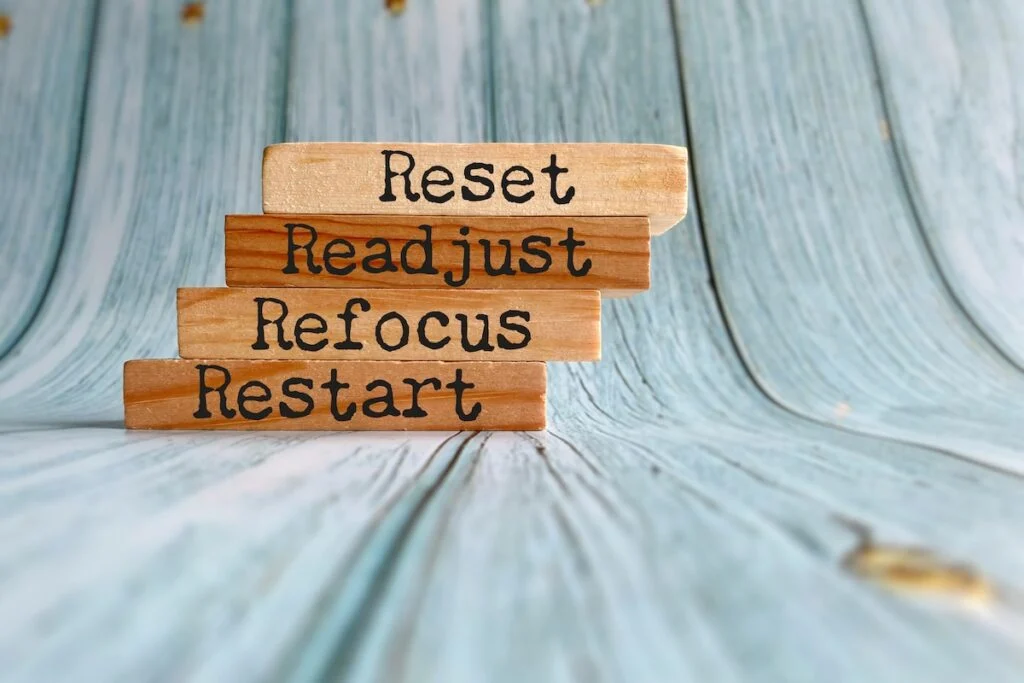
A financial reset is not about fixing everything at once. It is about taking stock, identifying what is not working, and building a plan that works for the year ahead. This ASJ guide provides a practical framework for resetting your finances before the new year, grounded in the realities of the Ghanaian economy: the assessment, the goals, the systems, and the habits that sustain financial health.

Part 1: The Assessment — Know Where You Stand
The Starting Point
Before you plan where you are going, you need to know where you are. A financial reset begins with an honest assessment of your current situation.
📢 GET A DETAILED ARTICLES + JOBS
Join ASJ's WhatsApp Channel and never miss a post or opportunity.

What to do:
-
Gather your bank statements, mobile money records, and loan balances.
-
Calculate your total income for the past year (salary, side income, remittances).
-
Calculate your total expenses for the past year—fixed (rent, utilities, school fees) and variable (food, transport, entertainment, data).
-
Calculate your total debt—what you owe, to whom, and at what interest rate.
-
Calculate your net worth—what you own minus what you owe.
The Honest Question
Look at the numbers and ask yourself the questions you have been avoiding:

-
Am I living within my means?
-
Am I saving regularly?
-
Am I accumulating debt faster than I am paying it off?
-
Am I making progress toward any financial goal?
If the answers are not what you want, that is not a failure. It is data. It is the starting point for change.
Part 2: The Debt Review — The First Priority
Why Debt Comes First
Before you can save, invest, or build wealth, you need to address high-interest debt. A mobile money loan at 10% interest per month is an emergency. Credit card debt, payday loans, and money lender advances are financial leaks that drain your income.
The principle: Paying off debt is a guaranteed return. If you pay 10% interest on a loan, paying it off is equivalent to earning a 10% return on that money—tax-free, risk-free.
Steps to Address Debt
-
List all debts by interest rate (highest to lowest)
-
Pay the minimum on all debts
-
Put any extra money toward the highest-interest debt
-
Once the highest-interest debt is cleared, move to the next
-
Avoid taking on new debt while repaying old debt
If you have a GHS 500 loan at 20% interest, pay it off before you save. The interest you save is greater than the interest you would earn.
Part 3: The Savings Reset — Emergency Fund First
The Emergency Fund Principle
An emergency fund is money set aside for unexpected expenses. It is not for holidays, not for shopping, not for investments. It is for the unexpected: a medical bill, a car repair, a loss of income.
The target: 3–6 months of essential expenses (rent, food, utilities, transport). For most Ghanaians, that is between GHS 3,000 and GHS 10,000. Start with a smaller target if necessary.
How to Build It
-
Set up automatic transfers from your main account to a separate savings account.
-
Start small—even GHS 50 a week is better than nothing.
-
Use unexpected income—tax refunds, gifts, bonuses, side hustle earnings.
-
Keep it separate—do not touch it for non-emergencies.
Part 4: The Budget Reset — Making Your Money Work for You
The 50-30-20 Framework
Many budgeting guides are designed for Western contexts that do not match Ghana’s reality. A practical framework for Ghana looks like this:
| Category | Allocation | What It Covers |
|---|---|---|
| Needs | 50% | Rent, food, transport, utilities (including airtime and data), school fees |
| Life | 30% | Entertainment, religious/social contributions, gifts, dates |
| Future | 20% | Savings, investments, emergency fund, debt repayment |
The Empty Envelope Method
For those who struggle with cashless spending, the envelope method works:
-
Divide your monthly spending into categories
-
Assign a specific amount of cash to each category
-
When the envelope is empty, you stop spending
Digital alternatives include separate mobile money accounts or tracking apps.

Part 5: The Expense Audit — Cutting What You Do Not Need
The Hidden Leaks
Many people lose money to expenses they have forgotten about: subscriptions, automatic renewals, unnecessary data bundles, unused memberships.
What to do:
-
Review your mobile money transactions for the past 3 months
-
Identify recurring payments you no longer use
-
Cancel subscriptions you do not need
-
Review data bundles—are you buying more than you need?
-
Review insurance policies—do you have duplicate coverage?
The “Needs vs. Wants” Distinction
A simple but powerful tool: before spending, ask yourself:
-
Is this a need or a want?
-
Can I live without this?
-
Is there a cheaper alternative?
Part 6: The Income Reset — Exploring New Sources
Why Income Matters
You cannot save your way out of structural poverty. If your expenses consistently outpace your income, you need to increase the income side of the equation.
Options to Consider
| Option | How to Start |
|---|---|
| Side hustle | Use your skills—tutoring, consulting, graphic design, writing |
| Small business | Sell products online, offer a service, buy and sell |
| Skill development | Take a course, learn a new skill, increase your earning potential |
| Negotiation | Ask for a raise—the worst that can happen is you are told no |
Part 7: The Habit Reset — Building Sustainable Financial Behaviour
The Discipline Challenge
Saving is not about doing it perfectly. It is about doing it consistently. The money you set aside, no matter how small, is a vote for your future self.
The “Pay Yourself First” Principle
When your salary arrives, the first payment should be to yourself. Not to a creditor. Not to a shop. Not to a family member. To yourself—through savings, an investment, or debt repayment. The amount is less important than the consistency.
The “No-Spend Week” Reset
A no-spend week is a reset for spending habits. For one week, commit to spending nothing on non-essentials. No eating out, no shopping, no delivery. The exercise reveals how much of your spending is habitual.
Conclusion: The Reset Is Not a One-Time Event
A financial reset is not a one-time event. It is a practice. The end of the year is a useful checkpoint, but the habits you build now will serve you throughout the year.
The key takeaways:
-
Know where you stand—assess your income, expenses, debt, and savings
-
Address high-interest debt first
-
Audit your spending for hidden leaks
-
Explore additional income sources
-
Build habits that last
The goal is not perfection—it is progress.
Quick Reference: The Financial Reset Checklist
| Category | Action |
|---|---|
| Assessment | Track income, expenses, debt, and savings for the past year |
| Debt | List debts by interest rate; pay off highest interest first |
| Savings | Set up automatic transfers to an emergency fund |
| Budget | Create a 50-30-20 budget or use the envelope method |
| Expenses | Audit subscriptions, data bundles, and recurring payments |
| Income | Explore side hustles, skill development, and negotiation |
| Habits | Commit to “pay yourself first” and regular reviews |
Source: Accra Street Journal

Last Updated on July 23, 2026 by Samuel Kwame Boadu
Disclaimer: Some content on Accra Street Journal may be aggregated, summarized, or edited from third-party sources for informational purposes. Images and media are used under fair use or royalty-free licenses. Accra Street Journal is a subsidiary of SamBoad Publishing Hub under SamBoad Business Group Ltd, registered in Ghana since 2014.
For concerns or inquiries, please visit our Privacy Policy or Contact Page.

Samuel Kwame Boadu is a Ghanaian media entrepreneur and storyteller with a passion for amplifying urban voices and uncovering everyday truths. He is the Editor-in-Chief and Founder of Accra Street Journal, a dynamic digital platform dedicated to capturing the pulse of Ghana’s capital—its people, culture, challenges, business, sports and innovations.