










EXECUTIVE INTRODUCTION
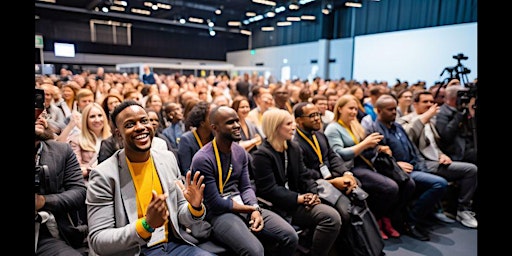
In an age of ubiquitous digital connectivity, where a business owner can theoretically reach a customer through a WhatsApp broadcast, close a sale via an Instagram DM, and attend a webinar from a laptop in their bedroom, the persistence and, indeed, the dramatic surge of physical, in-person business networking events in Accra might seem like an anachronism. The smartphone has put the global marketplace in every entrepreneur’s pocket. Why, then, are the conference rooms of Accra’s hotels, the co-working spaces of the Airport Residential Area, and the open-air gardens of East Legon’s restaurants filling up, with increasing frequency, with gatherings of professionals, founders, and investors, all paying a fee to be in the same physical space, exchanging handshakes and business cards? The phenomenon demands an explanation that goes beyond the simple, dismissive label of “hustle culture.

This Accra Street Journal analysis argues that the rise of the business networking event in the capital is not a nostalgic return to a pre-digital past. It is a rational, strategic, and deeply logical response to the specific structural conditions of the Ghanaian business environment. The networking event has become a critical commercial institution precisely because the formal, digital, and impersonal mechanisms of business development—the cold email, the online advertisement, the social media algorithm—have proven to be insufficient, inefficient, and often untrustworthy in the Accra context. The event serves a set of interconnected, high-value functions that the screen cannot replicate. It is a high-efficiency trust accelerator in a low-trust market. It is a discovery platform for opportunities that exist only in the informal, un-Googleable word-of-mouth economy. It is an accessible, low-barrier classroom for the skills and knowledge not taught in any formal curriculum. And it is a theatre of personal branding and social proof, where the entrepreneur’s reputation is built and displayed not through a digital profile, but through the powerful, irreplaceable medium of physical presence, articulate speech, and confident, memorable interaction. The networking event is not competing with the digital economy; it is solving the specific problems that the digital economy, in the Ghanaian context, has left unsolved.
THE TRUST ACCELERATOR: CONDENSING MONTHS INTO MINUTES
The foundational, and most commercially valuable, function of the physical networking event in Accra is its unique capacity to accelerate the development of trust between potential business partners. In a market environment characterised, as we have repeatedly documented, by a profound and entirely rational deficit of trust in transactions between strangers, the process of building the confidence required to enter into a significant commercial relationship—a joint venture, a major supply contract, a referral of a prized client—is normally slow, painstaking, and reliant on repeated, low-stakes interactions over an extended period. The digital introduction, the LinkedIn connection, the WhatsApp message from an unknown number—these are thin, low-bandwidth signals that carry very little weight in the trust economy of Accra. The risk of fraud, misrepresentation, and simple unreliability is too high.
📢 GET A DETAILED ARTICLES + JOBS
Join ASJ's WhatsApp Channel and never miss a post or opportunity.
The physical networking event compresses this trust-building process dramatically. In the space of a single evening, a business owner can engage in dozens of brief, face-to-face encounters. In each of those encounters, a vast amount of non-verbal, high-fidelity, and difficult-to-fake information is transmitted and received. The quality of the handshake, the directness of the eye contact, the coherence and confidence of the spoken word, the way an individual is dressed and carries themselves, the subtle social cues of respect, humour, and emotional intelligence—these are the data points upon which the Ghanaian businessperson makes a rapid, intuitive, and often remarkably accurate assessment of character and credibility. The event allows an entrepreneur to “triangulate” a potential contact, observing how they interact with others, checking for mutual acquaintances in the room, and forming a holistic, sensory judgment that is simply impossible to achieve through a screen. A relationship that might take months of cautious, intermittent digital communication to develop can be kickstarted in a single, positive, five-minute conversation over a cup of coffee at a networking mixer. The event is a trust accelerator, a machine for manufacturing the initial, fragile, but essential spark of personal confidence that is the necessary prerequisite for any significant commercial collaboration in Accra.
THE INFORMAL OPPORTUNITY ENGINE: DISCOVERING THE DEALS THAT ARE NOT ADVERTISED
A vast and economically significant portion of the business opportunities in Accra—the lucrative contract, the reliable supplier, the potential strategic partner, the high-value client—are never formally advertised. They exist in the informal, word-of-mouth economy, circulating within trusted personal networks, whispered between colleagues, and decided upon in private conversations long before any formal tender is issued or any public announcement is made. The entrepreneur who relies solely on formal channels—the newspaper tender notice, the online job board, the corporate website’s procurement portal—is only seeing a fraction, and often the most competitive and least profitable fraction, of the available opportunities. The real deals are in the room, not on the board.
The networking event is the primary discovery platform for this informal, unlisted economy. It is the physical marketplace where opportunity meets ambition in a fluid, conversational, and pre-formal environment. A casual chat by the buffet table can reveal that a major construction firm’s procurement manager is dissatisfied with their current supplier of a specific material. A comment made during a panel Q&A can alert an IT consultant to a specific, painful operational problem a bank’s executive is facing. An introduction made by a mutual friend over drinks can connect a small, high-quality food producer with the buyer for a new hotel that is quietly looking for local suppliers. These are not transactions that close on the spot. They are the planting of a seed. The event provides the fertile, informal ground in which these seeds are sown. The follow-up is formal, but the opportunity was discovered not through a search engine, but through the serendipitous, human, and deeply efficient mechanism of structured, intentional conversation in a room full of the right people. The networking event is the search engine for Accra’s informal economy.
THE MICRO-LEARNING CLASSROOM: THE SKILLS THE SYSTEM DOES NOT TEACH
A third, and often underestimated, function of the rising networking event culture in Accra is its role as an accessible, low-cost, and highly practical micro-learning platform. The formal education system and the traditional business training programmes often provide theoretical frameworks and case studies that are valuable but disconnected from the granular, rapidly evolving, and intensely practical realities of running a small business in the Ghanaian capital today. How, specifically, do you set up an effective WhatsApp Business catalogue? What is the exact, current process for clearing a small consignment through the new ICUMS customs system without paying exorbitant facilitation fees? Which digital lender is currently offering the most reasonable terms for a short-term inventory loan, and what are the hidden traps in their terms and conditions? This is the kind of operational, survival-level knowledge that is not in any textbook.
The modern Accra networking event—the industry meetup, the founder’s fireside chat, the sector-specific workshop—fills this knowledge gap with remarkable efficiency. The knowledge is transferred peer-to-peer, from a practitioner who has just successfully navigated the specific challenge, often in a brief, focused presentation followed by candid, off-the-record Q&A. The value of this peer learning is immense. It saves the entrepreneur from having to learn every painful lesson through their own expensive mistakes. It provides a template, a contact, a shortcut, and a warning. The price of the event ticket is not just for the opportunity to meet potential clients; it is a tuition fee for a compressed, highly relevant, and immediately actionable business education, taught by the people who are actually doing the work on the ground, not by a consultant with a generic PowerPoint presentation. The networking circuit has become a vital, informal, and decentralised business school for the city’s entrepreneurial class.
THE THEATRE OF PERSONAL BRANDING: THE PERFORMANCE OF COMPETENCE
Finally, the networking event serves a crucial function as a theatre of personal branding and social proof. In a crowded market where every entrepreneur claims expertise, reliability, and success, the curated digital profile—the glossy Instagram grid, the polished LinkedIn summary—is losing its differentiating power. It is too easy to manufacture a convincing digital facade. The physical event, by contrast, is a forum for a far more costly, and therefore far more credible, signal of competence. The entrepreneur who stands up in a room full of their peers and asks a penetrating, insightful question of a panel of experts is performing their intelligence and their engagement in a way that cannot be faked or outsourced. The professional who delivers a concise, confident, and memorable summary of their business in a thirty-second “elevator pitch” is demonstrating a mastery of communication and clarity of thought that a beautifully designed website cannot convey. The individual who works the room with grace, warmth, and genuine curiosity, making others feel seen and heard, is building a reputation for emotional intelligence and trustworthiness that is the bedrock of long-term commercial relationships.
Consistent, visible, and positive participation in the networking circuit builds a powerful, cumulative form of social proof. The entrepreneur becomes a familiar, trusted face. They are seen. They are known. Their name becomes attached to a positive, in-person memory. This personal brand equity, built through repeated, face-to-face, positive interactions, is a far more durable and valuable asset than any number of digital followers. When a need arises in their industry, their name is the one that comes to mind, not because of a Google search, but because of a remembered conversation, a recalled impression of competence and character. The networking event is the stage upon which the entrepreneur performs their own capability and builds the irreplaceable, personal, trust-based reputation that is the ultimate competitive advantage in the Accra economy.
QUICK FACTS BOX: BUSINESS NETWORKING EVENTS IN ACCRA
-
Primary Function 1: The Trust Accelerator. Compresses months of cautious digital vetting into minutes of high-fidelity, face-to-face character assessment, solving the critical trust deficit of the impersonal market.
-
Primary Function 2: The Informal Opportunity Engine. Serves as the primary discovery platform for the vast, un-advertised economy of contracts, partnerships, and client referrals that circulate only through personal networks.
-
Primary Function 3: The Micro-Learning Classroom. Provides a low-cost, peer-to-peer platform for acquiring the specific, current, and practical operational knowledge not taught in formal education or generic training programmes.
-
Primary Function 4: The Theatre of Personal Branding. A forum for the costly, credible, and memorable performance of personal competence, intelligence, and character that builds an irreplaceable, trust-based professional reputation.
-
Core Strategic Insight: The surge in networking events is a rational market response to the specific structural failures of formal advertising, digital trust-building, and traditional business education in the Accra commercial environment.
FAQ SECTION
1. Why are in-person business events growing in Accra when we have LinkedIn and WhatsApp?
Because digital connections are low-trust and easily faked. In Accra’s business environment, a face-to-face meeting allows for the rapid, intuitive assessment of a person’s character and credibility, which is essential before any major deal or partnership is discussed.
2. What is the single most valuable thing I can get from a networking event?
The acceleration of trust. You can condense months of cautious online vetting into a single, five-minute conversation, creating the personal spark of confidence that is the foundation of all serious business relationships in Ghana.
3. How do I find out about the best business networking events in Accra?
Beyond social media, the most reliable channel is through established business networks, industry associations, your alumni groups, and word-of-mouth from trusted peers. The most valuable events are often not broadly advertised to the general public.
4. Is it worth paying a fee to attend a networking event?
If the event is well-curated and attracts the right calibre of attendees, the fee is not a cost but an investment. It pays for access to a room full of pre-qualified potential clients, partners, and mentors, and for the condensed learning you gain from the speakers and your peers.
5. What is the biggest mistake people make at networking events in Accra?
Going in with a desperate, transactional mindset and trying to sell to everyone immediately. The goal is to start a relationship, make a positive, memorable impression, and identify a reason for a valuable follow-up conversation, not to close a deal on the spot.
6. How do I effectively prepare an “elevator pitch” for an Accra business event?
Don’t just state your job title. Clearly and concisely explain what specific problem you solve, for whom, and what makes your approach unique. End with a conversation starter, not a sales line, and practice it until it sounds natural and confident.
7. Is it just for big corporations and CEOs, or can a small shop owner benefit?
A small shop owner can benefit immensely. It is a chance to meet potential new suppliers, to learn from the direct experience of other successful small business owners, and to build a personal network that can provide support, referrals, and opportunities.
8. How important is the follow-up after the event?
It is everything. The event is just the beginning. A timely, personal, and specific follow-up message—referencing something from your conversation—is what transforms a brief meeting into a real, developing business relationship.
9. What should I bring with me to a business networking event in Accra?
Bring a charged smartphone, not just for contact exchange but to instantly connect on LinkedIn or WhatsApp. A physical business card is still a useful and professional touch. Most importantly, bring a genuine curiosity about others and a clear, concise way to describe what you do.
10. How can a quiet, introverted person successfully network?
Focus on quality, not quantity. Aim to have just two or three genuine, in-depth conversations rather than trying to work the whole room. Ask thoughtful questions and listen intently—being a great listener is a powerful and memorable networking skill.
Source: Accra Street Journal
Last Updated on August 4, 2026 by Samuel Kwame Boadu
Disclaimer: Some content on Accra Street Journal may be aggregated, summarized, or edited from third-party sources for informational purposes. Images and media are used under fair use or royalty-free licenses. Accra Street Journal is a subsidiary of SamBoad Publishing Hub under SamBoad Business Group Ltd, registered in Ghana since 2014.
For concerns or inquiries, please visit our Privacy Policy or Contact Page.

Samuel Kwame Boadu is a Ghanaian media entrepreneur and storyteller with a passion for amplifying urban voices and uncovering everyday truths. He is the Editor-in-Chief and Founder of Accra Street Journal, a dynamic digital platform dedicated to capturing the pulse of Ghana’s capital—its people, culture, challenges, business, sports and innovations.