








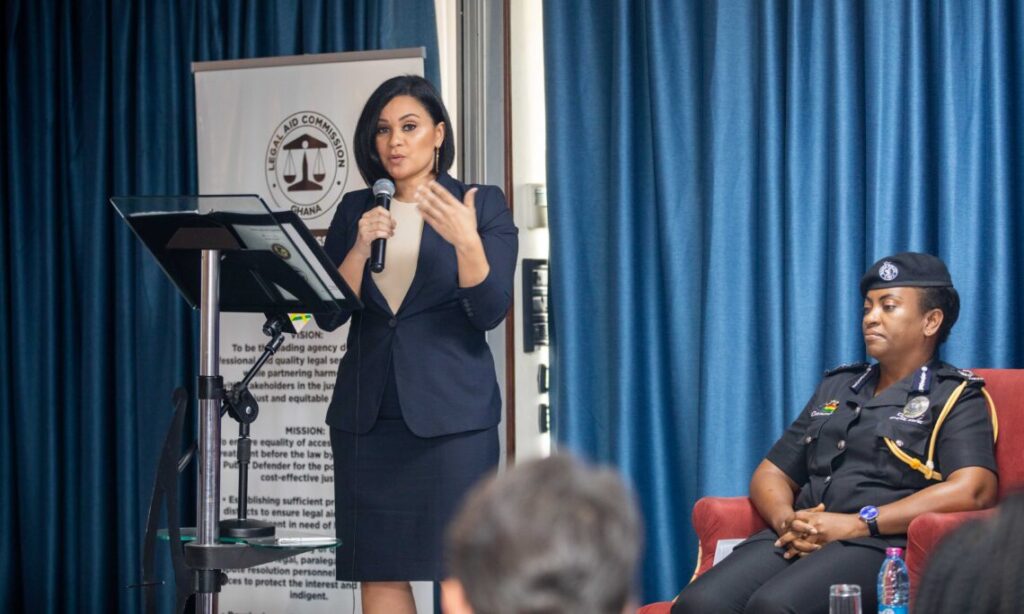
The law is supposed to protect everyone equally. But in practice, a person who cannot afford a lawyer is at a severe disadvantage in court, in a land dispute, or when facing a criminal charge. The Legal Aid Commission exists to close that gap. It provides free legal services to the poor and vulnerable, and it is funded by the state to ensure that justice is not reserved for those who can pay.
Here is how it works, who qualifies, what it covers, and where to find help.

What Is the Legal Aid Commission?
The Legal Aid Commission (LAC) is a statutory body established under the Legal Aid Commission Act, 2018 (Act 977) . Its mandate is to provide legal aid to the indigent—those who cannot afford legal representation—through representation in court, alternative dispute resolution, legal advice, and legal education .
📢 GET A DETAILED ARTICLES + JOBS
Join ASJ's WhatsApp Channel and never miss a post or opportunity.

The Commission’s goal is to “provide quality legal services to the poor and vulnerable in society and to bring justice to the doorstep of the people” .
It operates through three divisions :

-
Citizens Advisory Division – legal advice and education
-
Public Defenders’ Division – criminal representation
-
Alternative Dispute Resolution Division – mediation and settlement
Who Qualifies for Legal Aid?
The law uses the concept of an “indigent” person—someone who lacks the financial means to engage a lawyer. The 1987 Legal Aid Scheme Law defined eligibility as earning less than the government minimum wage. The 2018 Act modernised the framework but retains the focus on financial need.
The Commission applies a means test to determine whether an applicant qualifies . In practice, this means you must demonstrate that you cannot afford legal representation.
Important: The Commission’s published FAQ states that foreigners who qualify may also receive legal aid, not just Ghanaian citizens .
What Services Does Legal Aid Cover?
The Commission provides a range of services, not just courtroom representation :
Representation in court – for criminal and civil matters. The Public Defenders’ Division handles criminal cases for indigent accused persons .
Alternative Dispute Resolution (ADR) – mediation for landlord-tenant disputes, debt recovery, and family matters. In 2025, the Commission received 5,651 ADR cases and resolved 2,986 .
Legal advice and assistance with documents – even where a lawyer does not personally appear in court for every step, the Commission can help you understand your claim, prepare documents, and know what to do next .
Public education – radio, TV, and community outreach to inform the public of their rights and the Commission’s services .
How to Apply
What to Bring
Good documentation makes the assessment easier. Bring :

-
Any termination letters, correspondence, or WhatsApp messages relevant to the dispute
-
Photographs
-
Medical or supporting documents where relevant
-
Previous judgments or court orders
-
Any letters received from the opposing party or their lawyer
If you have received a court summons, do not ignore it. Take the court documents to Legal Aid as soon as possible. A court document should never be ignored because you do not have money for a lawyer .
The Process
Apply at any Legal Aid Commission office. The Commission will assess your means and the nature of your case. If you qualify, you will be assigned a lawyer or assisted with your legal needs.
The 2018 Act provides for Legal Aid Review Committees in each regional capital to hear appeals if the Commission refuses to grant legal aid .
Where to Find Legal Aid Offices
The Commission has offices across Ghana. Here are the key contacts :
Greater Accra (Head Office)
Opposite the Ministries Police Station, Accra
Phone: +233 303 975922 / +233 302 975749
Ashanti
Adjacent to the Court of Appeal Building Complex, Kumasi
Phone: +233 322 020583
Volta
Ho, behind the Regional Education Office
Phone: +233 362 027601
Eastern
Koforidua, in the High Court Building
Phone: +233 342 024238
Central
Cape Coast, Attorney General’s building and High Court Complex
Phone: +233 332 134579
Western
Takoradi, adjacent the E.P. Church/Twin City Radio, off the Effia Nkwanta bypass
Phone: +233 312 0214467
Northern
Tamale, at the High Court Premises
Phone: +233 372 023108

Upper East
Bolgatanga, at the Ministries Block-M
Phone: +233 382 023229
Upper West
Wa, at the Ministries Block D
Phone: +233 392 22586
Bono
Sunyani, near Ghana Library Board
Phone: +233 352 03370
Bono East
Techiman, Communication Center
Phone: +233 243 954 412
Western North
Sefwi Wiaso, beneath the High Court
Phone: +233 246 988 967
Public Defenders’ Hotline: 053 183 2813 / 020 456 6783 / 026 953 4016
General Contact: 0302 975 749 | [email protected]
A Critical Warning: Legal Aid Is Free
The Commission expressly states that once an applicant qualifies for legal aid, the applicant should not be charged for legal services by a Legal Aid officer. It is improper for a Legal Aid officer to demand money from a client before providing legal services to an eligible person .
Be cautious of anyone who says: “Pay me and I will get Legal Aid to handle your case.” Verify directly with the Commission .
Other Free Legal Resources
Beyond the Legal Aid Commission, several organisations provide free or subsidised legal services :
FIDA Ghana – free legal aid particularly for women and children, including counselling, mediation, and court representation.
CHRAJ – the Commission on Human Rights and Administrative Justice investigates complaints of human rights violations and can bring proceedings in court.
Legal Resource Center – human rights education, legal aid, and alternative dispute resolution.
HelpLaw Ghana – free legal services for indigent criminal defendants.
Quick Facts
| Topic | Details |
|---|---|
| Governing Law | Legal Aid Commission Act, 2018 (Act 977) |
| Mandate | Free legal aid to the indigent |
| Divisions | Citizens Advisory, Public Defenders, ADR |
| Eligibility | Financial need (means test) |
| Foreigners | May qualify |
| Cost | Free |
| Head Office | Opposite Ministries Police Station, Accra |
| Phone | 0302 975 749 |
| [email protected] |
Frequently Asked Questions
1. What is Legal Aid in Ghana?
Legal Aid is a free legal service provided by the Legal Aid Commission to indigent persons who cannot afford to hire a lawyer. It is established under the Legal Aid Commission Act, 2018 (Act 977) .
2. Who qualifies for Legal Aid in Ghana?
The Commission applies a means test to determine financial need. Those who cannot afford legal representation may qualify. Foreigners who meet the criteria may also receive legal aid .
3. Is Legal Aid really free?
Yes. The Commission expressly states that eligible applicants should not be charged for legal services by a Legal Aid officer. Beware of anyone demanding money to facilitate Legal Aid .
4. What types of cases does Legal Aid handle?
Criminal matters (through the Public Defenders’ Division), civil matters including landlord-tenant disputes, debt recovery, family matters, and constitutional cases. The Commission also uses Alternative Dispute Resolution (ADR) for mediation .
5. Where is the Legal Aid Commission located?
The Head Office is opposite the Ministries Police Station in Accra. Regional offices are in Kumasi, Ho, Koforidua, Cape Coast, Takoradi, Tamale, Bolgatanga, Wa, Sunyani, Techiman, and Sefwi Wiaso .
6. What should I bring when applying for Legal Aid?
Bring any relevant documents: termination letters, correspondence, WhatsApp messages, photographs, medical documents, previous court orders, and any letters from the opposing party .
7. I received a court summons but cannot afford a lawyer. What should I do?
Do not ignore the summons. Take the court documents to Legal Aid immediately. The Commission can assist with court documents, drafting, and representation where necessary .
8. Can foreigners get Legal Aid in Ghana?
Yes. The Commission’s FAQ states that foreigners who qualify for its services may also receive legal aid .
9. What is the Public Defenders’ Division?
It is the division of the Legal Aid Commission that provides free legal representation and advice to indigent individuals in criminal matters .
10. What other organisations provide free legal help in Ghana?
FIDA Ghana (for women and children), CHRAJ (human rights violations), Legal Resource Center, and HelpLaw Ghana all provide free or subsidised legal services
Source: Accra Street Journal
Last Updated on October 29, 2026 by Samuel Kwame Boadu
Disclaimer: Some content on Accra Street Journal may be aggregated, summarized, or edited from third-party sources for informational purposes. Images and media are used under fair use or royalty-free licenses. Accra Street Journal is a subsidiary of SamBoad Publishing Hub under SamBoad Business Group Ltd, registered in Ghana since 2014.
For concerns or inquiries, please visit our Privacy Policy or Contact Page.

Samuel Kwame Boadu is a Ghanaian media entrepreneur and storyteller with a passion for amplifying urban voices and uncovering everyday truths. He is the Editor-in-Chief and Founder of Accra Street Journal, a dynamic digital platform dedicated to capturing the pulse of Ghana’s capital—its people, culture, challenges, business, sports and innovations.