








14 min read
Introduction
Ghana’s economy is in a strange place right now. By the numbers, things are looking up. Inflation has fallen dramatically from the painful days of 2024. The cedi, while still weak, is nowhere near the levels that scared everyone two years ago. The government says debt is under control and growth is back.
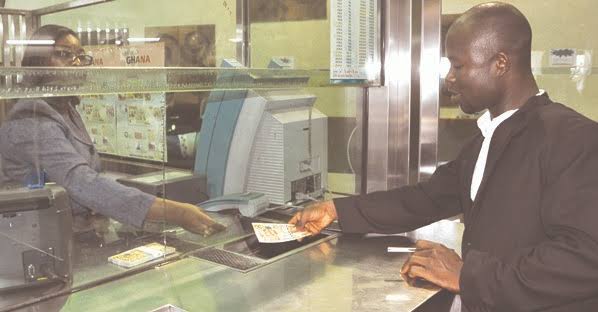
But talk to the ordinary trader in Accra or the small business owner in Kumasi, and you will hear a different story. Prices are still high. The cost of transport just went up again. The dollar is still expensive. And finding a good job is as hard as ever.
Key Takeaways
- Its 2026 Ghana Economic Update noted that while the recovery is real, "growth has not yet generated enough quality jobs to absorb Ghana's expanding working-age population" .
- The Bank of Ghana cut its policy rate to 11 percent in November 2026, citing the need to realign monetary conditions .
- Inflation (especially transport and utility costs), the cedi/dollar rate, and any news about jobs and government spending.
This is the reality of Ghana’s economic outlook in late 2026. The big picture is improving. But the improvement is uneven, and the forces shaping the nation’s future are a mix of good news and stubborn problems.
This ASJ article breaks down the key forces at play. It explains what is happening with growth, inflation, the cedi, government spending, and jobs. It looks at what the numbers mean and why they matter to ordinary Ghanaians. And it explains what could happen next.
Background: How Did We Get Here?
To understand where Ghana is now, you need to remember where it just came from.
In 2022 and 2023, Ghana went through one of its worst economic crises in decades. Inflation soared past 50 percent. The cedi lost massive value against the dollar. The government could not pay its debts and had to restructure them. Ghana went to the International Monetary Fund for help.
The pain was real. Prices of food, fuel, and transport shot up. Businesses closed. Jobs were lost. Many Ghanaians struggled to afford basic needs.
By 2025, things started to turn. The government, under President Mahama, pushed through reforms. Fiscal discipline became the mantra. Debt restructuring moved forward. Inflation began to fall.
By the end of 2025, the recovery was clear in the data. The African Development Bank reports that Ghana’s GDP grew by 5.8 percent in 2025, up from 5.6 percent in 2024 . Inflation fell from 22.9 percent to 14.6 percent . The fiscal deficit narrowed sharply. Public debt dropped from 61.8 percent of GDP to 45.3 percent .
These are impressive numbers. But they tell only part of the story. The recovery has not yet translated into better lives for most Ghanaians. And the forces that will shape 2027 and beyond are still in motion.

Force One: Growth Is Strong, But Not Creating Enough Jobs
Ghana’s economy is growing. That is a fact.
In the first quarter of 2026, the economy expanded by 6.4 percent, driven largely by mining and information technology . The services sector, which is the largest part of the economy, grew by 7.1 percent. ICT alone surged by 25.2 percent . These are healthy numbers by any standard.

The African Development Bank projects growth to moderate slightly to 5 percent in 2026, and then edge up to 5.4 percent in 2027 . The World Bank has a similar view, projecting 4.8 percent growth for 2026 .
So why does this not feel like a boom for ordinary people?
The answer is jobs. Growth is one thing. Jobs are another.
The World Bank has been clear about this. Its 2026 Ghana Economic Update noted that while the recovery is real, “growth has not yet generated enough quality jobs to absorb Ghana’s expanding working-age population” . Poverty remains elevated in parts of the country. The gains from growth are not reaching everyone.
This is a critical force shaping Ghana’s future. A growing economy that does not create jobs for young people is a recipe for social tension. The government knows this. The 2026 Budget Speech talks about a shift “from stability to jobs” and investing in a “24-Hour Economy” and the “Big Push” infrastructure program . But whether these programs will deliver the jobs needed is an open question.
Force Two: Inflation Is Falling, But Prices Are Still Rising
Inflation is one of the most important numbers in economics. It measures how fast prices are rising. When inflation falls, it does not mean prices are going down. It means prices are rising more slowly.
Ghana’s inflation story is remarkable. From over 50 percent in 2022, it fell to 14.6 percent in 2025 . By October 2026, headline inflation had dropped to 5.5 percent . This is within the Bank of Ghana’s target band of 8 percent, plus or minus two percentage points.
But look closer at the October 2026 numbers, and you see the problem.
Inflation has actually risen for three consecutive months. In July, it was lower. By October, it had climbed to 5.5 percent from 5.2 percent in September . The drivers of this increase are the things that hit ordinary people hardest: transport and services.
Transport inflation jumped to 14.1 percent in October, from 5.7 percent in September. Transport prices alone rose by 8 percent within that single month . Housing, water, and electricity inflation stood at 10.5 percent .

Meanwhile, food inflation was falling. Food inflation eased to 2.8 percent, with staples like maize and guinea corn actually becoming cheaper . This is good news for households. But it is cold comfort when transport and utility costs are eating up the savings.
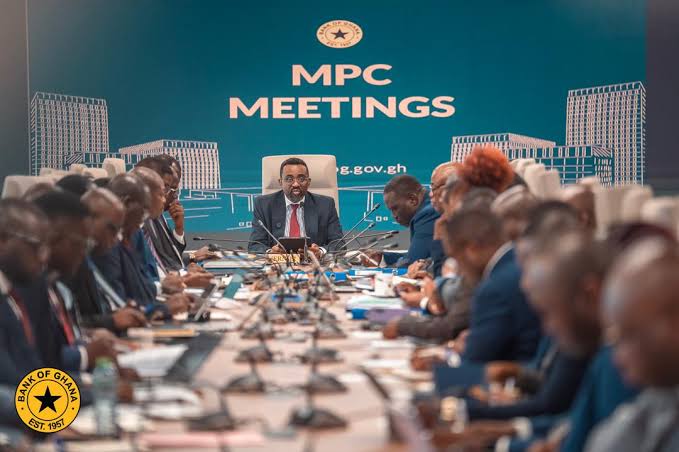
The Bank of Ghana cut its policy rate to 11 percent in November 2026, citing the need to realign monetary conditions . The policy rate is the rate at which the central bank lends to commercial banks, and it influences the interest rates that businesses and consumers pay. A lower rate is meant to encourage borrowing and spending. But with services inflation rising, the central bank must be careful not to ease too fast.
For ordinary Ghanaians, the message is this: inflation is much better than it was, but the cost of living is still a real struggle.
Force Three: The Cedi Is More Stable, But Still Under Pressure
The cedi’s value against the dollar matters to every Ghanaian. It affects the price of fuel, imported goods, medicine, and raw materials for factories. When the cedi falls, everything imported becomes more expensive.
In 2024, the cedi hit a painful low of 16.48 to the dollar . By November 2026, it had strengthened significantly, trading around 11.7 to the dollar . This is a major improvement.
But the cedi is not out of the woods. In fact, it has been weakening again in recent months. As of mid-November 2026, the cedi had depreciated by 10.6 percent against the dollar over the year . Traders in Accra report that corporate demand for dollars is outpacing supply, putting pressure on the currency .
The Bank of Ghana has spent reserves to support the cedi. Gross international reserves fell to $12.1 billion by November 17, 2026 . This is still a healthy level, but the decline shows that defending the currency is costly.
What does this mean for the future? The cedi is likely to remain under pressure as long as Ghana imports more than it exports and as long as global conditions remain uncertain. A weaker cedi feeds into inflation, making imported goods more expensive. This is a cycle that is hard to break.
For ordinary Ghanaians, the cedi’s stability is personal. It determines the price of the trotro fare when fuel costs rise. It determines the cost of the rice and cooking oil on the market table. It determines whether a small business can afford to import the goods it sells.
Force Four: Government Spending and Debt
The government’s fiscal position has improved dramatically.
The fiscal deficit, which is the gap between what government spends and what it earns, narrowed to 2.4 percent of GDP in 2025, down from 6.3 percent . Public debt fell from 61.8 percent of GDP to 45.3 percent . The government has restructured a massive portion of its debt, giving it breathing room.
But the pressure is not gone. Ghana still needs to pay interest on its remaining debt. It still needs to fund infrastructure, education, healthcare, and security. And it still needs to find ways to collect more revenue.
The 2026 Budget introduced several tax reforms aimed at making the system fairer and more efficient. The VAT registration threshold was raised to ease the burden on small businesses . VAT on mineral exploration was abolished to attract investment in mining . Digital solutions are being introduced to improve tax collection, including monitoring VAT on cross-border digital transactions .
At the same time, the government is spending big. The “Big Push” infrastructure program has been allocated GH₵30.8 billion for 2026, a massive increase from the previous year . The money will go into roads, rail, aviation, health, education, and agriculture. The hope is that this spending will create jobs and stimulate growth.
The risk is that if the spending is not managed well, it could undo the fiscal gains. The African Development Bank lists “high domestic debt rollover pressures” and “policy implementation delays” as key risks to the outlook . In simple terms: if the government borrows too much or spends poorly, the recovery could be threatened.
Force Five: The Global Environment
Ghana does not exist in a vacuum. Events far away shape what happens at home.
The African Development Bank specifically mentions “a prolonged Middle East conflict” as a risk . This is not abstract. Conflict in the Middle East affects global oil prices. Ghana imports most of its fuel. When oil prices rise, transport costs rise. When transport costs rise, food prices rise. The October 2026 jump in transport inflation is partly linked to these pressures.
Global financing conditions also matter. If international interest rates stay high, it becomes more expensive for Ghana to borrow money from abroad. Investors become more cautious about putting money into emerging markets like Ghana. This affects the cedi and the government’s ability to fund its budget.
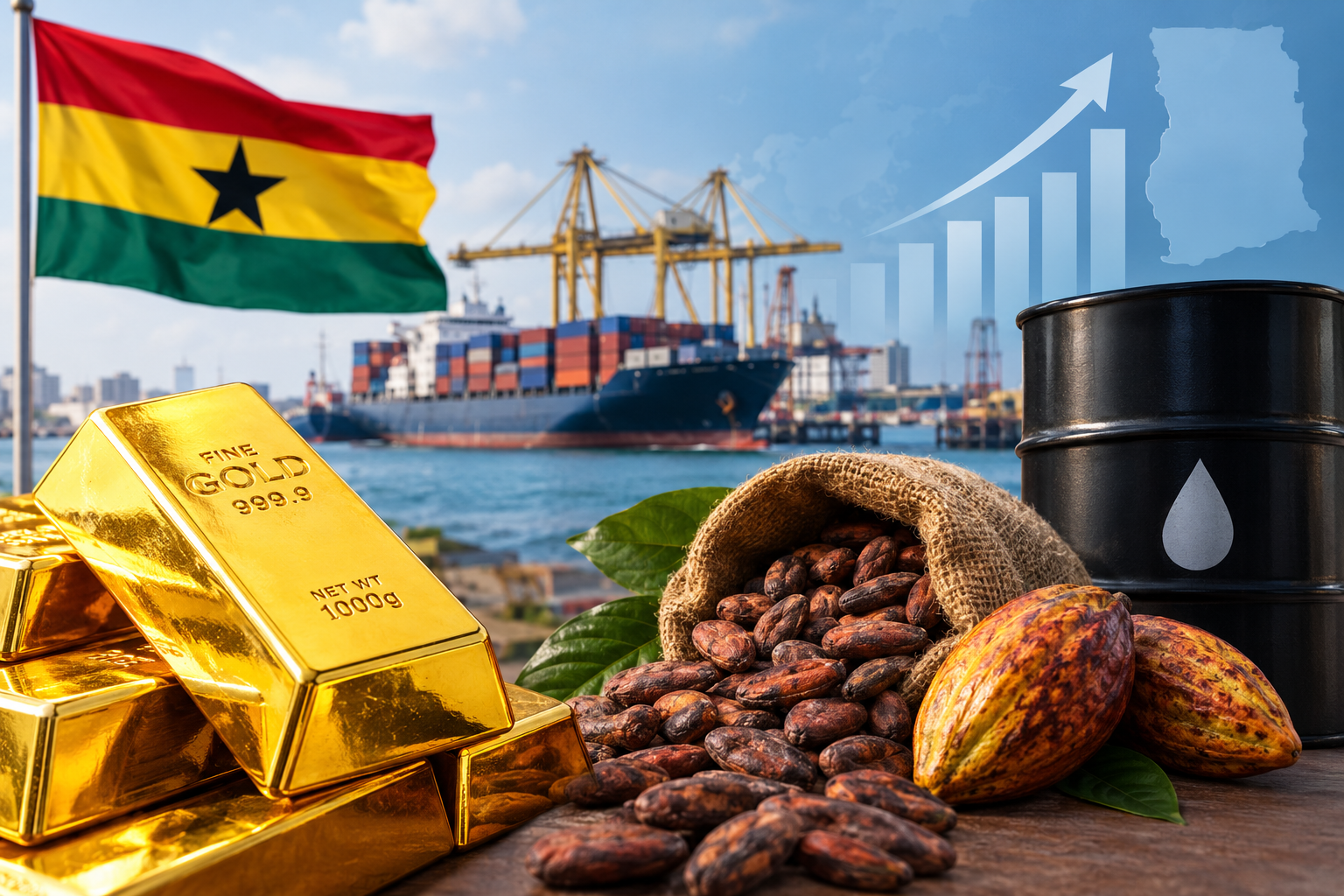
Ghana’s gold exports are a source of strength. Higher gold prices have supported the trade balance and brought dollars into the country . But commodity prices are volatile. A sharp fall in gold prices would hurt.
The point is simple: Ghana’s recovery is real, but it is vulnerable to shocks from outside. A business owner in Accra cannot control oil prices in the Middle East. But she can feel the effects when she fills her tank or pays for a delivery.
Why It Matters to Ordinary Ghanaians
All of this economics talk comes down to one question: how does it affect the person on the street?
For the market trader: Food inflation is falling, which is good. But transport costs are rising. If it costs more to bring tomatoes from the farm to the market, the trader must either absorb the cost or pass it on. Either way, her margin is squeezed.
For the young person looking for work: The economy is growing, but jobs are not growing fast enough. The Big Push and 24-Hour Economy programs promise jobs, but they will take time to deliver. In the meantime, many young Ghanaians will continue to hustle, start small businesses, or look for opportunities abroad.
For the small business owner: The cedi’s stability helps with planning. But if the cedi weakens again, imported materials become more expensive. The tax reforms may help, but compliance still takes time and money.
For the family: Inflation is lower, but prices are still high. The relief from cheaper maize and guinea corn is real, but it may be eaten up by higher transport fares and electricity bills. The recovery feels fragile.
For the government: The pressure is on to deliver visible improvements before the next election. The numbers look good on paper. But voters feel their lives, not the GDP figures.
Future Outlook: What to Watch
The outlook for Ghana’s economy depends on several factors.
If current trends continue: Growth will remain decent, inflation will stay within target, and the cedi will be relatively stable. The government will continue to spend on infrastructure, and the benefits will slowly spread.
The risks: A spike in oil prices, a fall in gold prices, or a delay in implementing reforms could derail the recovery. If inflation starts rising again, the Bank of Ghana may have to raise interest rates, which would make borrowing more expensive for businesses.
The opportunity: If the Big Push program is executed well, if the 24-Hour Economy creates real jobs, and if tax reforms bring in more revenue without burdening small businesses, Ghana could move from recovery to real transformation. The World Bank notes that the policy window is open, but it requires “sustained reforms that protect fiscal stability while removing structural bottlenecks” .
The wild card: Global events. A wider war, a global recession, or a sudden change in commodity prices could change everything. Ghana has limited control over these forces.
The most likely scenario is continued recovery, but at a slower pace than the government would like. Growth will moderate. Inflation will stay low but positive. The cedi will face pressure but not collapse. Jobs will be created, but not fast enough to solve youth unemployment. The feeling of improvement will be real but uneven.
ASJ Conclusion
Ghana’s economy is in a better place than it was two years ago. The numbers tell a story of recovery: strong growth, falling inflation, lower debt, and a more stable currency. The government deserves credit for the discipline it has shown.
But the recovery is not complete. Prices are still high. Jobs are still scarce. The cedi is still fragile. And ordinary Ghanaians are still waiting to feel the benefits in their daily lives.
The forces shaping Ghana’s future are a mix of domestic policy choices and global realities. The government’s spending plans, the central bank’s interest rate decisions, the price of oil and gold, and the confidence of investors all play a role. But the most important force is the one that is hardest to measure: whether the growth translates into better lives for the people who need it most.
For now, Ghana is on the right path. The question is whether it can stay on it, and whether the journey will be smooth enough for everyone to benefit.
Quick Facts
Topic: Ghana’s Economic Outlook 2026
GDP Growth (2025): 5.8% (AfDB estimate)
GDP Growth (2026 forecast): ~5% (AfDB), ~4.8% (World Bank)
Inflation (October 2026): 5.5%
Bank of Ghana Policy Rate: 11% (November 2026)
Cedi/Dollar Rate: ~11.7 (November 2026)
Public Debt (2025): 45.3% of GDP
Fiscal Deficit (2025): 2.4% of GDP
Key Risk: Global oil prices, job creation, cedi pressure
Biggest Opportunity: Infrastructure investment, ICT growth, agricultural productivity
FAQ Section
1. Is Ghana’s economy getting better?
Yes, by most measures. Growth is strong, inflation has fallen sharply, and the government has reduced its debt. But jobs are still scarce, and prices remain high for many people.
2. Why is inflation falling but prices are still high?
Falling inflation means prices are rising more slowly. It does not mean prices are going down. Most goods and services cost more than they did a year ago, just not as much more as before.
3. Why is the cedi still weak if the economy is growing?
The cedi is stronger than it was in 2024, but it still faces pressure. Ghana imports a lot, and demand for dollars often exceeds supply. Global conditions also affect the cedi.
4. Will the Big Push program create jobs?
It could, if it is well managed. Infrastructure spending creates construction jobs and can support businesses. But the impact depends on how quickly and efficiently the projects are executed.
5. What is the Bank of Ghana doing to help the economy?
The Bank of Ghana uses interest rates to control inflation and support growth. It has cut its policy rate to 11 percent, which should make borrowing cheaper. It is also taking steps to stabilize the cedi.
6. How does the global economy affect Ghana?
A lot. Ghana imports fuel, so global oil prices matter. Gold is a major export, so gold prices matter. Global interest rates affect how much it costs Ghana to borrow. A global slowdown could reduce demand for Ghana’s exports.
7. Is Ghana’s debt problem solved?
Not completely. The government has restructured much of its debt and reduced it significantly. But it still owes money and must pay interest. The risk of debt problems is lower than before, but not zero.
8. What should ordinary Ghanaians watch in the coming months?
Inflation (especially transport and utility costs), the cedi/dollar rate, and any news about jobs and government spending. These are the things that will most directly affect daily life.
9. Why are transport prices rising so fast?
Transport inflation jumped in late 2026, partly due to higher fuel costs and other pressures. Transport is a major cost for businesses and households, so it has a big impact on overall prices.
10. Will things get better for young people looking for work?
The government is investing in programs meant to create jobs. But job creation is slow. Young people should look for opportunities in growing sectors like ICT, agriculture, and small business. The recovery will help, but it will take time.
11. What is the 24-Hour Economy?
It is a government plan to extend business and productivity beyond normal working hours. The idea is to create more jobs and increase output. It is still being rolled out, so its impact is not yet clear.
Source: Accra Street Journal
Last Updated on November 19, 2026 by Samuel Kwame Boadu
Disclaimer: Some content on Accra Street Journal may be aggregated, summarized, or edited from third-party sources for informational purposes. Images and media are used under fair use or royalty-free licenses. Accra Street Journal is a subsidiary of SamBoad Publishing Hub under SamBoad Business Group Ltd, registered in Ghana since 2014.
For concerns or inquiries, please visit our Privacy Policy or Contact Page.

Samuel Kwame Boadu is a Ghanaian media entrepreneur and storyteller with a passion for amplifying urban voices and uncovering everyday truths. He is the Editor-in-Chief and Founder of Accra Street Journal, a dynamic digital platform dedicated to capturing the pulse of Ghana’s capital—its people, culture, challenges, business, sports and innovations.
Use the following reference when citing or referencing this article.
Your feedback helps us improve our journalism.
Report an Error
Help us maintain accuracy. Let our editorial team know if you spot an issue in this article.
Report a problem with this article