










3 min read
Mahama Targets 75% Poultry Self-Sufficiency with New National Initiative
President John Dramani Mahama has launched the Nkoko Nketenkete Poultry Project, an ambitious national initiative designed to lift Ghana’s poultry self-sufficiency from 12 percent to over 75 percent by 2028. The move marks a major step in the government’s broader Feed Ghana Programme, aimed at cutting food imports, empowering farmers, and revitalizing local agriculture.
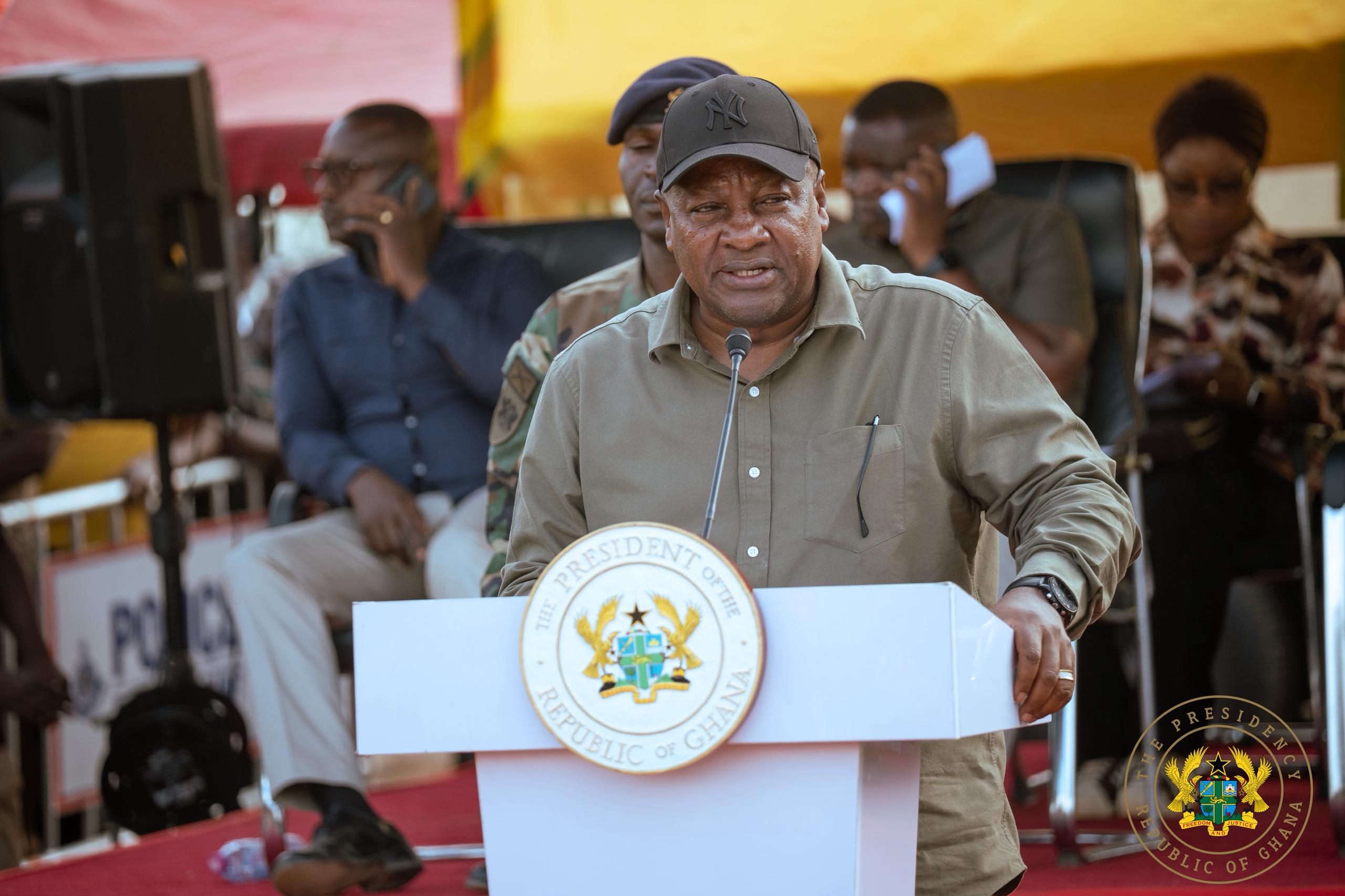
Speaking at the project’s official launch at the Jubilee Park in Kumasi, President Mahama described the initiative as a bold and practical response to Ghana’s persistent food import dependency and its implications for national resilience.
Key Takeaways
- President John Dramani Mahama has launched the Nkoko Nketenkete Poultry Project, an ambitious national initiative designed to lift Ghana’s poultry self-sufficiency from 12 percent to over 75 percent by 2028.
- Under the Nkoko Nketenkete Project, the government will distribute 10,000 day-old chicks to every constituency, reaching an estimated 60,000 households across the country.
- Additionally, 500 small and medium-scale poultry farmers will produce another three million birds under the Food Systems Resilience Programme.
“This initiative is not just a government intervention; it is a national movement — a courageous step toward restoring food self-sufficiency, strengthening household resilience, and creating sustainable livelihoods for women, youth, and vulnerable families,” he said.
Empowering Farmers, Strengthening Rural Livelihoods
Under the Nkoko Nketenkete Project, the government will distribute 10,000 day-old chicks to every constituency, reaching an estimated 60,000 households across the country. Each household will receive 50 birds, feed, and technical training to ensure sustainability and productivity.
The project’s community-driven approach is designed to build a grassroots foundation for national poultry recovery, encouraging household-level farming alongside commercial-scale production.
President Mahama said the initiative represents a “shift from policy to practice,” connecting rural empowerment with food security. “We are ensuring that Ghanaians not only grow what they eat but also benefit directly from value chains that sustain families and communities,” he added.
Tackling Import Dependence and Feed Constraints
Ghana’s poultry industry has struggled in recent years due to high feed costs, inconsistent access to improved breeds, and inadequate processing facilities. These challenges have led to heavy import dependence, with poultry imports exceeding US$350 million in 2023.
“In 2023 alone, Ghana spent over US$350 million importing poultry products — a drain on our foreign exchange and a missed opportunity for our farmers and entrepreneurs. We must, and we will, reverse this trend,” the President emphasized.
To address these challenges, the government is rolling out a three-pronged poultry value chain strategy under the Feed Ghana Programme:
-
The Poultry Farm-to-Table Project – improving domestic feed and production systems.
-
Anchor Farmers and Outgrower Support Scheme – empowering commercial farmers with access to finance, logistics, and improved breeds.
-
The Nkoko Nketenkete Initiative – supporting households and smallholders with birds, feed, and extension services.
Scaling Production and Processing Capacity
As part of the rollout, 50 anchor farmers will each receive 80,000 birds, equipment, and technical support to collectively produce four million birds. Additionally, 500 small and medium-scale poultry farmers will produce another three million birds under the Food Systems Resilience Programme.
To complement these efforts, government is constructing a modern poultry processing factory at Bechem in the Ahafo Region, expected to serve producers in the Bono, Bono East, and Ashanti Regions.

“The procurement process is underway, and once operational, the facility will link farmers directly to processors, ensuring value addition and market stability,” President Mahama disclosed.
A National Drive for Food Sovereignty
President Mahama reaffirmed his administration’s commitment to transforming agriculture into a driver of inclusive growth and job creation, emphasizing that food self-sufficiency is integral to national economic sovereignty.

“With the Nkoko Nketenkete Project, we are laying the foundation for a future where Ghana produces, processes, and consumes what it grows,” he said.
Regional leaders and traditional authorities, including Nana Edje Tete Kpase Brantuo VII, Jasikanhene and Adontenhene of the Buem Traditional Area, commended the initiative, calling it a “timely and strategic investment” in Ghana’s food future.
Source: Accra Street Journal
Last Updated on March 22, 2026 by Samuel Kwame Boadu
Disclaimer: Some content on Accra Street Journal may be aggregated, summarized, or edited from third-party sources for informational purposes. Images and media are used under fair use or royalty-free licenses. Accra Street Journal is a subsidiary of SamBoad Publishing Hub under SamBoad Business Group Ltd, registered in Ghana since 2014.
For concerns or inquiries, please visit our Privacy Policy or Contact Page.

Samuel Kwame Boadu is a Ghanaian media entrepreneur and storyteller with a passion for amplifying urban voices and uncovering everyday truths. He is the Editor-in-Chief and Founder of Accra Street Journal, a dynamic digital platform dedicated to capturing the pulse of Ghana’s capital—its people, culture, challenges, business, sports and innovations.
Use the following reference when citing or referencing this article.
Your feedback helps us improve our journalism.

Report an Error
Help us maintain accuracy. Let our editorial team know if you spot an issue in this article.
Report a problem with this article




