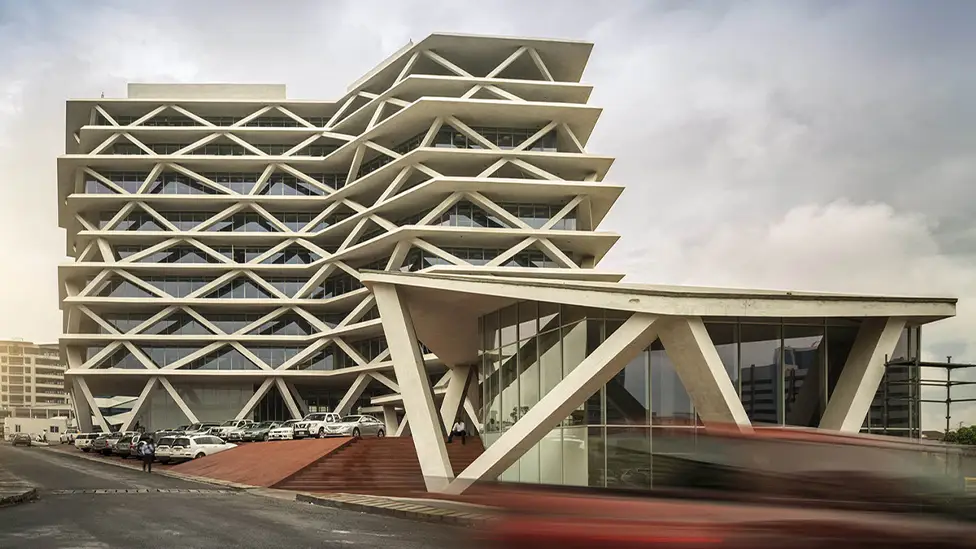
Innovation in Ghana does not happen in isolation, and it does not happen evenly across the country. While creativity and enterprise exist in every region, Accra continues to function as the nation’s primary engine of innovation. This dominance is not accidental. It is the product of economic concentration, institutional presence, talent aggregation, and a culture that rewards experimentation.
Despite rising costs and infrastructure pressures, Accra remains the place where ideas are most likely to be tested, funded, refined, and scaled. From technology startups to creative industries, the capital continues to define the pace and direction of Ghana’s innovation ecosystem.

Concentration of Talent and Human Capital
Accra attracts and retains a disproportionate share of Ghana’s skilled workforce. Graduates from universities across the country often relocate to the capital in search of opportunity, professional networks, and exposure.
📢 GET A DETAILED ARTICLES + JOBS
Join ASJ's WhatsApp Channel and never miss a post or opportunity.

This concentration of talent creates powerful spillover effects. Engineers, designers, marketers, financiers, and creatives operate in close proximity, increasing collaboration and knowledge exchange. Innovation thrives where people with complementary skills interact frequently, and Accra offers that density.
Over time, this accumulation of human capital reinforces itself, making Accra even more attractive to the next generation of innovators.

Access to Capital and Financial Infrastructure
Innovation requires funding, and Accra dominates Ghana’s financial landscape. Banks, venture capital firms, angel investors, development finance institutions, and fintech platforms are largely headquartered in the capital.
Startups and entrepreneurs benefit from easier access to credit, investment conversations, and financial services. Even when funding originates abroad, negotiations and deal-making typically pass through Accra-based offices and networks.
This financial centrality lowers barriers to entry for innovators and increases the likelihood that promising ideas will secure the resources needed to grow.
Technology Ecosystems and Startup Clusters
Accra hosts Ghana’s most active technology ecosystems. Innovation hubs, co-working spaces, accelerators, and incubators are concentrated in areas such as East Legon, Airport, Osu, and Dansoman.
These clusters provide more than office space. They offer mentorship, peer learning, access to investors, and exposure to global networks. For early-stage startups, proximity to these ecosystems can determine survival.
As digital infrastructure improves, these clusters will continue to anchor Accra’s role as Ghana’s startup capital.
Government, Policy, and Institutional Presence
Innovation is shaped not only by private initiative but also by policy and regulation. Accra’s role as Ghana’s political and administrative capital gives it an advantage in this regard.
Government ministries, regulatory bodies, and public agencies that influence technology, finance, trade, and education are headquartered in the city. Entrepreneurs in Accra can engage directly with policymakers, participate in pilot programmes, and respond quickly to regulatory changes.
This proximity reduces uncertainty and accelerates innovation cycles.

Digital Infrastructure and Connectivity
Reliable internet connectivity and telecommunications infrastructure are foundational to modern innovation. Accra consistently outperforms other regions in broadband availability, data speed, and network coverage.
This advantage enables remote work, software development, digital commerce, and online service delivery at scale. For startups and creatives operating in global markets, connectivity is not optional—it is essential.
As digital infrastructure continues to expand, Accra’s innovation advantage will deepen.
Creative Industries as Innovation Drivers
Innovation in Accra is not limited to technology. The city’s creative industries—music, film, fashion, design, and media—play a critical role in shaping new ideas and business models.
Accra’s cultural influence extends beyond Ghana’s borders. Artists and creatives leverage digital platforms to reach regional and global audiences, turning cultural expression into economic value.
This fusion of creativity and commerce strengthens Accra’s innovation identity and broadens the definition of innovation itself.
Market Size and Testing Ground Advantage
Accra offers innovators something invaluable: a large, diverse, and rapidly changing market. New products and services can be tested across different income levels, demographics, and consumer behaviours within a single metropolitan area.
This diversity allows startups to refine offerings quickly before scaling nationally or regionally. Accra functions as a living laboratory where ideas can be validated in real-world conditions.
Few cities in Ghana offer this testing ground advantage.
Education, Research, and Knowledge Institutions
Accra hosts a high concentration of universities, private colleges, research institutes, and professional training centres. These institutions supply talent, generate research, and support skills development.
Collaboration between academia and industry is more feasible in Accra due to geographic proximity and institutional density. Over time, these relationships contribute to applied research, product development, and innovation diffusion.

International Exposure and Global Linkages
As Ghana’s primary international gateway, Accra benefits from global exposure. Diplomatic missions, international organisations, multinational firms, and development partners maintain offices in the city.
This global presence facilitates knowledge transfer, funding opportunities, and partnerships. Innovators in Accra are more likely to engage with international markets, standards, and best practices.
Global linkages amplify local innovation capacity.
The Role of Informality in Innovation
Accra’s informal economy is often overlooked as an innovation engine. Yet many practical innovations—especially in logistics, payments, retail, and services—emerge from informal problem-solving.
Mobile money adoption, flexible distribution networks, and grassroots service models often originate in informal contexts before being formalised or scaled. Accra’s dense informal sector provides fertile ground for this type of adaptive innovation.
Challenges That Do Not Diminish Accra’s Role
Rising costs, traffic congestion, and infrastructure strain present real challenges. However, these pressures have not displaced Accra’s central role. Instead, they have encouraged efficiency, digital solutions, and new business models.
Innovation often thrives under constraint, and Accra’s challenges have become catalysts rather than barriers.
Conclusion From ASJ
Accra remains the heart of Ghana’s innovation because it concentrates the essential ingredients that innovation requires: talent, capital, infrastructure, institutions, markets, and culture. These factors reinforce one another, creating a self-sustaining ecosystem that continues to attract ideas and ambition.
While innovation will increasingly emerge from other regions, Accra’s role as the nation’s innovation anchor is unlikely to diminish in the foreseeable future. The city does not just host innovation—it shapes it.
Frequently Asked Questions (FAQs)
Why does innovation concentrate in Accra?
Because Accra combines talent, capital, infrastructure, policy access, and market size in one location.
Are other Ghanaian cities catching up?
Other cities are developing innovation capacity, but Accra remains the dominant hub.
Is innovation in Accra only about technology?
No. Creative industries, informal businesses, and service innovation play major roles.
Do high living costs threaten Accra’s innovation ecosystem?
They create challenges but have not reduced Accra’s dominance.
Will Accra remain Ghana’s innovation centre in the next decade?
All indicators suggest it will.
Source: Accra Street Journal
Last Updated on March 14, 2026 by Samuel Kwame Boadu
Disclaimer: Some content on Accra Street Journal may be aggregated, summarized, or edited from third-party sources for informational purposes. Images and media are used under fair use or royalty-free licenses. Accra Street Journal is a subsidiary of SamBoad Publishing Hub under SamBoad Business Group Ltd, registered in Ghana since 2014.
For concerns or inquiries, please visit our Privacy Policy or Contact Page.

Samuel Kwame Boadu is a Ghanaian media entrepreneur and storyteller with a passion for amplifying urban voices and uncovering everyday truths. He is the Editor-in-Chief and Founder of Accra Street Journal, a dynamic digital platform dedicated to capturing the pulse of Ghana’s capital—its people, culture, challenges, business, sports and innovations.