



5 min read
Accra’s rapid transformation into a modern African metropolis has brought with it towering buildings, expanding infrastructure, and a growing creative economy. Yet, amid this development, the preservation of cultural heritage remains a vital concern. Playing a central role in this effort are Accra’s cultural centers, institutions dedicated to safeguarding Ghana’s history, traditions, arts, and collective memory.
These centers function as bridges between the past and the present. Through exhibitions, performances, education, and archival work, they ensure that indigenous knowledge systems, artistic expressions, and historical narratives are not lost in the face of urbanisation and globalisation.
Key Takeaways
- Playing a central role in this effort are Accra’s cultural centers, institutions dedicated to safeguarding Ghana’s history, traditions, arts, and collective memory.
- Beyond national institutions, community cultural centers play a crucial role in preserving local traditions within Accra.
- Why are cultural centers important in Accra?They protect Ghana’s traditions, history, and artistic expressions amid rapid urbanisation.
The Importance of Cultural Centers in Accra
Cultural centers in Accra serve multiple purposes. They are repositories of heritage, platforms for artistic expression, and educational spaces for the public. They provide structured environments where traditions can be documented, interpreted, and shared with both local communities and international audiences.
In a city where many traditions were historically transmitted orally, cultural centers have become critical for formal documentation and long-term preservation.
National Theatre of Ghana
National Theatre, Accra
The National Theatre of Ghana, located in the heart of Accra, is one of the country’s most prominent cultural landmarks. Established to promote performing arts, the theatre plays a major role in preserving traditional music, dance, and drama.
Through regular performances, festivals, and rehearsals, the National Theatre keeps indigenous art forms such as traditional drumming, dance ensembles, and theatrical storytelling alive. Cultural troupes perform pieces rooted in folklore, historical events, and moral narratives, ensuring continuity across generations.
The theatre also serves as a training ground for young performers, blending traditional techniques with contemporary performance styles.
National Museum of Ghana
National Museum, Accra
The National Museum of Ghana is one of the most important institutions for heritage preservation in Accra. It houses collections that document Ghana’s archaeology, ethnography, colonial history, and artistic traditions.
Artifacts such as traditional regalia, musical instruments, ceremonial objects, and historical photographs provide tangible links to Ghana’s past. By preserving physical objects associated with cultural practices, the museum ensures that heritage is not only remembered but studied and understood in context.
Educational programmes, guided tours, and exhibitions make the museum a vital space for cultural learning.

Du Bois Memorial Centre for Pan-African Culture
W. E. B. Du Bois Memorial Centre
The W. E. B. Du Bois Memorial Centre for Pan-African Culture is both a cultural and historical institution in Accra. Dedicated to the life and legacy of Dr. W. E. B. Du Bois, the center promotes Pan-African thought, African identity, and cultural unity.
Beyond its historical focus, the center functions as a cultural hub hosting lectures, exhibitions, performances, and research activities. It plays a significant role in connecting Ghana’s heritage to the broader African and African-diaspora experience.

Arts Centre for National Culture
Arts Centre, Accra
The Arts Centre for National Culture, located near the central business district, is one of Accra’s most active cultural spaces. It is widely known for showcasing Ghanaian craftsmanship, including:
-
Wood carving
-
Bead making
-
Traditional textiles
-
Sculpture and painting
The Arts Centre supports heritage preservation by sustaining traditional crafts as viable livelihoods. Artisans pass down techniques through apprenticeship, ensuring that skills are preserved and adapted for modern markets.
The center also hosts cultural performances and festivals that celebrate Ghana’s diverse traditions.
Kwame Nkrumah Memorial Park
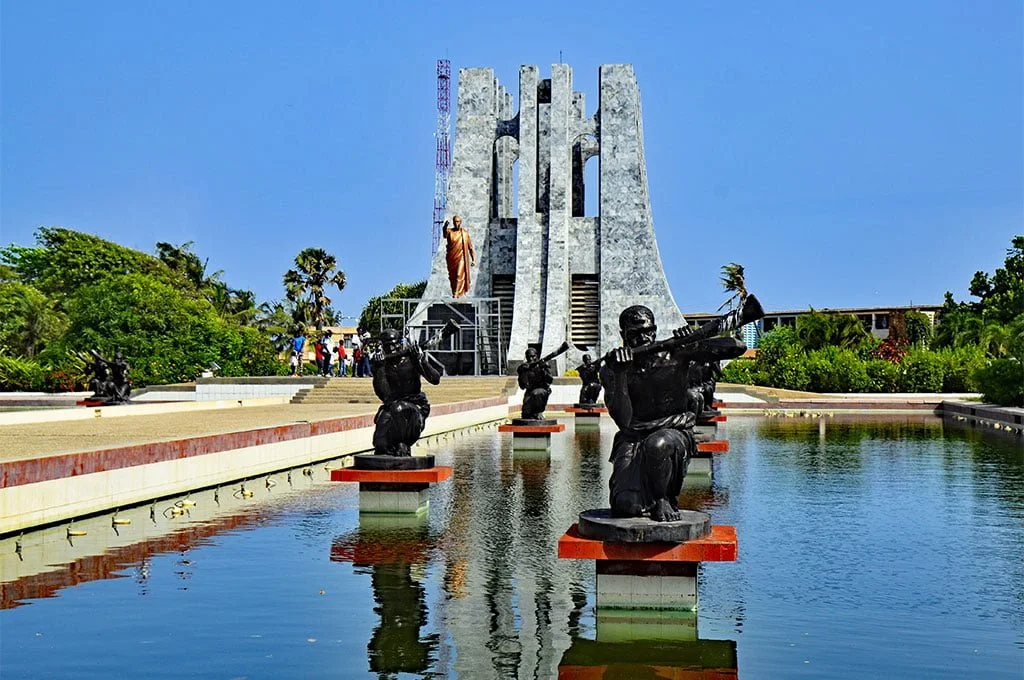
Kwame Nkrumah Memorial Park
While primarily a historical monument, the Kwame Nkrumah Memorial Park functions as a cultural preservation site. The park documents Ghana’s independence struggle and the life of the country’s first president.
Exhibitions, monuments, and archives preserve political heritage and national memory, reminding visitors of the historical foundations of modern Ghana. The park’s educational role contributes to heritage preservation by linking political history to national identity.
Community-Based Cultural Centers
Beyond national institutions, community cultural centers play a crucial role in preserving local traditions within Accra. These include cultural spaces maintained by traditional councils, youth groups, and creative collectives.
Such centers often focus on:
-
Local festivals
-
Traditional dance and music
-
Oral history documentation
-
Language preservation
These grassroots initiatives ensure that heritage preservation remains community-driven rather than purely institutional.
Role of Cultural Centers in Education
Cultural centers in Accra function as informal classrooms. Schools frequently organise visits, while workshops introduce young people to traditional arts, history, and values.
Through storytelling sessions, exhibitions, and live demonstrations, cultural centers help young Ghanaians develop cultural literacy and pride in their heritage.

Supporting Contemporary Culture Through Heritage
Heritage preservation does not exclude innovation. Many cultural centers in Accra encourage contemporary interpretations of tradition. Musicians, dancers, visual artists, and designers draw inspiration from heritage while addressing modern themes.
This dynamic relationship ensures that culture remains living and evolving rather than frozen in time.
Challenges Facing Cultural Centers
Despite their importance, cultural centers in Accra face challenges, including:
-
Limited funding and maintenance resources
-
Urban pressure and land constraints
-
Declining interest among younger generations
-
Inadequate documentation of oral traditions
Nevertheless, these institutions continue to adapt through partnerships, digital archiving, and community engagement.
The Future of Heritage Preservation in Accra
As Accra grows, cultural centers will remain essential to maintaining a sense of identity and continuity. Strengthening these institutions ensures that development does not erase history but builds upon it.
By preserving art, history, performance, and memory, Accra’s cultural centers safeguard the soul of the city.
FAQs
What are cultural centers?
They are institutions dedicated to preserving, showcasing, and promoting cultural heritage.
Why are cultural centers important in Accra?
They protect Ghana’s traditions, history, and artistic expressions amid rapid urbanisation.
Which is the most popular cultural center in Accra?
The Arts Centre and National Theatre are among the most visited.
Do cultural centers support artists?
Yes, they provide platforms, training, and exposure for traditional and contemporary artists.
How can the public support heritage preservation?
By visiting cultural centers, attending events, and supporting local artisans.
Source: Accra Street Journal
Last Updated on February 7, 2026 by Samuel Kwame Boadu
Disclaimer: Some content on Accra Street Journal may be aggregated, summarized, or edited from third-party sources for informational purposes. Images and media are used under fair use or royalty-free licenses. Accra Street Journal is a subsidiary of SamBoad Publishing Hub under SamBoad Business Group Ltd, registered in Ghana since 2014.
For concerns or inquiries, please visit our Privacy Policy or Contact Page.

Samuel Kwame Boadu is a Ghanaian media entrepreneur and storyteller with a passion for amplifying urban voices and uncovering everyday truths. He is the Editor-in-Chief and Founder of Accra Street Journal, a dynamic digital platform dedicated to capturing the pulse of Ghana’s capital—its people, culture, challenges, business, sports and innovations.
Use the following reference when citing or referencing this article.
Your feedback helps us improve our journalism.
Report an Error
Help us maintain accuracy. Let our editorial team know if you spot an issue in this article.
Report a problem with this article