








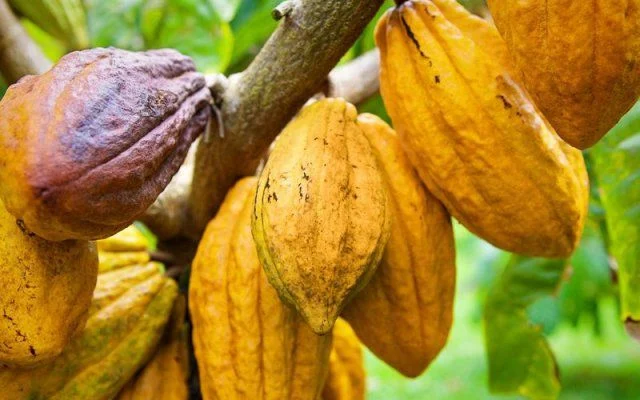
A growing financial crisis at Ghana Cocoa Board is disrupting one of the world’s most important cocoa supply chains, threatening bean purchases, squeezing traders and raising fresh concerns about global chocolate prices.
The regulator—commonly known as Cocobod—is reportedly struggling to settle more than $400 million in outstanding debt owed to licensed buying companies, creating a liquidity bottleneck that analysts say could affect cocoa procurement for the upcoming season.

The situation highlights mounting financial stress within Ghana’s cocoa sector, which for decades was considered one of the most stable commodity systems in the global agricultural market.
📢 GET A DETAILED ARTICLES + JOBS
Join ASJ's WhatsApp Channel and never miss a post or opportunity.

A Liquidity Chokehold
According to industry reports, the debt accumulated from financing arrangements used to support the 2023–24 and 2024–25 cocoa harvest seasons.
Licensed buying companies—private intermediaries responsible for purchasing cocoa beans from farmers—depend on timely payments from Cocobod to sustain their operations.

But delays in settling outstanding obligations have left many of these companies struggling to secure new financing.
Without access to working capital, traders face difficulty purchasing beans, which risks slowing the flow of cocoa from farms into international supply chains.
Analysts describe the situation as a liquidity chokehold affecting multiple layers of the cocoa economy.
An Audit That Froze Payments
Part of the delay stems from an administrative decision by Cocobod’s new leadership to audit previous contracts.
The regulator has reportedly placed a temporary freeze on payments while it reviews historical financing arrangements and procurement deals.
Officials say the audit is intended to ensure transparency and accountability in the management of cocoa sector finances.
But the move has inadvertently created a bottleneck across the supply chain, leaving both domestic traders and international commodity buyers uncertain about near-term supply flows.
A Funding Model Under Strain
For nearly three decades, Ghana’s cocoa sector relied on a well-established financing system.
Each year, Cocobod secured a large syndicated loan from international banks, which financed fertilizer purchases, logistics operations and bean procurement from farmers.

This arrangement helped stabilize the industry and ensured that cocoa farmers were paid promptly during each harvest season.
However, the model came under pressure in 2024, when Ghana’s cocoa output declined sharply due to factors including crop disease, aging plantations and adverse weather conditions.
Lower production made it difficult for the regulator to meet certain financial obligations, prompting international lenders to scale back their participation in the annual syndicated loan.
With traditional financing sources weakening, Cocobod turned to commodity traders for emergency funding.
The current $400 million deficit suggests that even this backup funding structure is under significant strain.
Missing the Global Cocoa Boom
The financial difficulties are unfolding at a time of extreme volatility in global cocoa markets.
Cocoa prices have surged over the past year due to supply shortages in major producing countries across West Africa.
At one point in 2024, global cocoa futures reached nearly $13,000 per metric ton, an unprecedented spike driven by falling production and strong global demand.
Yet Ghana was unable to fully benefit from the price surge.
Cocobod had previously rolled over 334,000 tonnes of cocoa from the 2023–24 season into forward sales agreements at around $2,660 per ton.
Because those contracts locked in lower prices before the rally, the country missed much of the historic price boom.

Recent trading has seen cocoa prices stabilize around $3,400 per metric ton, still historically strong but far below the peaks recorded last year.
Pressure at the Farm Gate
The financial strain is increasingly visible at the farm level.
Earlier this year, Cocobod temporarily halted cocoa bean purchases while it addressed the financing bottleneck.
When buying resumed, farmers faced a difficult adjustment.
The official farm-gate price was reduced from GH₵58,000 to GH₵41,392 per tonne, a cut of nearly one-third.
For thousands of cocoa farmers across Ghana, the price reduction has significantly reduced expected incomes.
Global Supply Implications
The ripple effects extend beyond Ghana’s borders.
Together with neighboring Côte d’Ivoire, Ghana supplies a large share of the world’s cocoa beans used in chocolate production.
Any disruption in bean purchases or export flows can tighten global supply conditions.
Commodity analysts warn that if Cocobod cannot resolve the current debt bottleneck quickly, cocoa shipments could slow further, potentially pushing global chocolate prices higher.
A Critical Moment for Ghana’s Cocoa Industry
For Ghana, cocoa remains one of the country’s most important export commodities and a critical source of rural livelihoods.
The sector supports hundreds of thousands of farmers while generating vital foreign exchange earnings.
Resolving the financing crisis will therefore be essential not only for maintaining supply stability but also for preserving Ghana’s reputation in global commodity markets.
Industry observers say the immediate priority will be restoring liquidity to the cocoa supply chain—allowing licensed buying companies to secure financing and resume normal purchasing operations.
Until then, the $400 million debt standoff risks prolonging uncertainty in a sector that has long been considered one of the pillars of Ghana’s economy.
Source: Accra Street Journal
Last Updated on March 16, 2026 by Samuel Kwame Boadu
Disclaimer: Some content on Accra Street Journal may be aggregated, summarized, or edited from third-party sources for informational purposes. Images and media are used under fair use or royalty-free licenses. Accra Street Journal is a subsidiary of SamBoad Publishing Hub under SamBoad Business Group Ltd, registered in Ghana since 2014.
For concerns or inquiries, please visit our Privacy Policy or Contact Page.

Samuel Kwame Boadu is a Ghanaian media entrepreneur and storyteller with a passion for amplifying urban voices and uncovering everyday truths. He is the Editor-in-Chief and Founder of Accra Street Journal, a dynamic digital platform dedicated to capturing the pulse of Ghana’s capital—its people, culture, challenges, business, sports and innovations.