






1. Cocoa and the Ghanaian Story
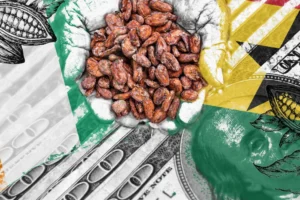
If gold gave Ghana its name, cocoa gave it its character. From the red soils of Akwapim to the green fields of Ashanti and Brong-Ahafo, cocoa has shaped livelihoods, built schools, and paid for generations of education.
Ghana’s relationship with cocoa is not merely economic — it’s cultural according to Accra Business News. It tells the story of perseverance, trade, and transformation. Every cocoa pod cracked open in a village is part of a national legacy that began over a century ago.

2. The Past: How Cocoa Built the Gold Coast
Cocoa first arrived in the then-Gold Coast in the late 19th century, introduced by Tetteh Quarshie, a blacksmith who returned from Fernando Po (now Bioko in Equatorial Guinea) with a few pods.
📢 GET A DETAILED ARTICLES + JOBS
Join ASJ's WhatsApp Channel and never miss a post or opportunity.

From his farm at Mampong, cocoa spread rapidly across the colony — thanks to its adaptability and profit potential. By the 1920s, Ghana (then the Gold Coast) had become the world’s largest cocoa producer, surpassing Brazil and Nigeria.
Cocoa earnings funded:
-
Infrastructure: Roads, railways, and ports connecting farms to export markets.
-
Education: Mission schools and scholarships for a new literate class.
-
Urbanization: Accra, Kumasi, and Sekondi-Takoradi flourished as trading hubs.
The Cocoa Marketing Board (now COCOBOD) was established in 1947 to stabilize prices and protect farmers from market volatility. Through cocoa, Ghana financed much of its early post-independence development — roads, hospitals, and public housing.
Cocoa was the bloodstream of the economy.
3. The Present: Challenges and Transformation
Today, cocoa remains one of Ghana’s most important exports, contributing between 20% and 30% of foreign exchange earnings and employing over 800,000 smallholder farmers.
Yet, the sector faces modern challenges:
-
Climate change threatens rainfall patterns.
-
Aging trees and low yields reduce output.
-
Child labour and sustainability concerns draw international scrutiny.
The Ghana Cocoa Board, in partnership with international buyers, has introduced reforms to sustain the sector:
-
Productivity programs such as mass spraying and fertilization.
-
Cocoa Rehabilitation Programme to replace old trees.
-
Living Income Differential (LID) — an initiative with Côte d’Ivoire ensuring farmers earn fairer prices.
Meanwhile, local processing is growing. Companies such as Niche Cocoa, Cargill Ghana, and Cocoa Processing Company (CPC) are turning more beans into chocolate, powder, and butter — keeping value in Ghana rather than exporting all raw materials.
4. The Future: Beyond the Bean
The future of Ghana’s cocoa sector lies in innovation, sustainability, and value addition. The global chocolate market is evolving, with consumers demanding ethical sourcing and traceable supply chains.
Ghana must position itself not just as a raw material supplier, but as a value-driven brand — “Ghana Cocoa” as a premium global standard.
The next phase will require:
-
Technology in farming: Drones, mobile payments, and digital monitoring for yield tracking.
-
Youth engagement: Making cocoa farming attractive to younger generations.
-
Processing and branding: From bean-to-bar chocolate made in Ghana for export.
-
Environmental protection: Reforestation and sustainable farming practices to preserve soil fertility.
If done right, cocoa can continue to finance Ghana’s dreams — from digital transformation to green growth — just as it financed its roads and schools a century ago.
5. Cocoa as Identity
Beyond economics, cocoa remains a symbol of Ghanaian identity. From the coin in a market woman’s hand to the cocoa beverage in a child’s cup, it reminds the nation of the value of patience, hard work, and cooperation.
The story of Ghana’s future may include oil, gold, or technology — but cocoa will always remain its sweetest legacy.
FAQs
1. Who introduced cocoa to Ghana?
Tetteh Quarshie brought the first cocoa pods from Fernando Po to Mampong in the late 1800s.
2. How important is cocoa to Ghana’s economy today?
Cocoa contributes around 20–30% of Ghana’s export earnings and supports nearly a million farmers.
3. What challenges face Ghana’s cocoa sector?
Climate change, aging trees, child labour issues, and fluctuating global prices.
4. What is the Living Income Differential (LID)?
A pricing mechanism introduced by Ghana and Côte d’Ivoire to ensure cocoa farmers earn fairer prices.
5. What is Ghana doing to add value?
Encouraging local processing, chocolate production, and cocoa-based manufacturing.
Accra Street Journal celebrates Ghana’s timeless industries and the people behind them. From the cocoa farms of Ahafo to the markets of Makola, every story is a reminder that progress grows from the ground up.
Source: Accra Street Journal
Last Updated on December 7, 2025 by Samuel Kwame Boadu
Disclaimer: Some content on Accra Street Journal may be aggregated, summarized, or edited from third-party sources for informational purposes. Images and media are used under fair use or royalty-free licenses. Accra Street Journal is a subsidiary of SamBoad Publishing Hub under SamBoad Business Group Ltd, registered in Ghana since 2014.
For concerns or inquiries, please visit our Privacy Policy or Contact Page.

Samuel Kwame Boadu is a Ghanaian media entrepreneur and storyteller with a passion for amplifying urban voices and uncovering everyday truths. He is the Editor-in-Chief and Founder of Accra Street Journal, a dynamic digital platform dedicated to capturing the pulse of Ghana’s capital—its people, culture, challenges, business, sports and innovations.