









4 min read
1. When Black Gold Was Found
On a bright day in June 2007, Ghana made headlines across the world. The discovery of the Jubilee Oil Field — estimated to hold nearly 1.8 billion barrels of oil — was celebrated as a turning point. For a country that had relied heavily on cocoa, gold, and remittances, oil promised new wealth, jobs, and global attention.
It was a discovery that stirred hope across fishing towns in the Western Region. From Takoradi to Axim, young people began to dream of offshore rigs and better wages. The media dubbed it “Ghana’s Black Gold Rush.”
Key Takeaways
- On a bright day in June 2007, Ghana made headlines across the world.
- The government established the Petroleum Revenue Management Act (PRMA) in 2011 to ensure transparency and responsible management of oil income.
- Ghana must learn from others — diversify beyond oil, invest revenue in education and manufacturing, and transition toward renewable energy as global demand changes.
But behind the celebration lay a quiet question: Would Ghana’s oil become a blessing or a curse?
2. The Pre-Oil Economy: A Nation of Gold, Cocoa, and Timber
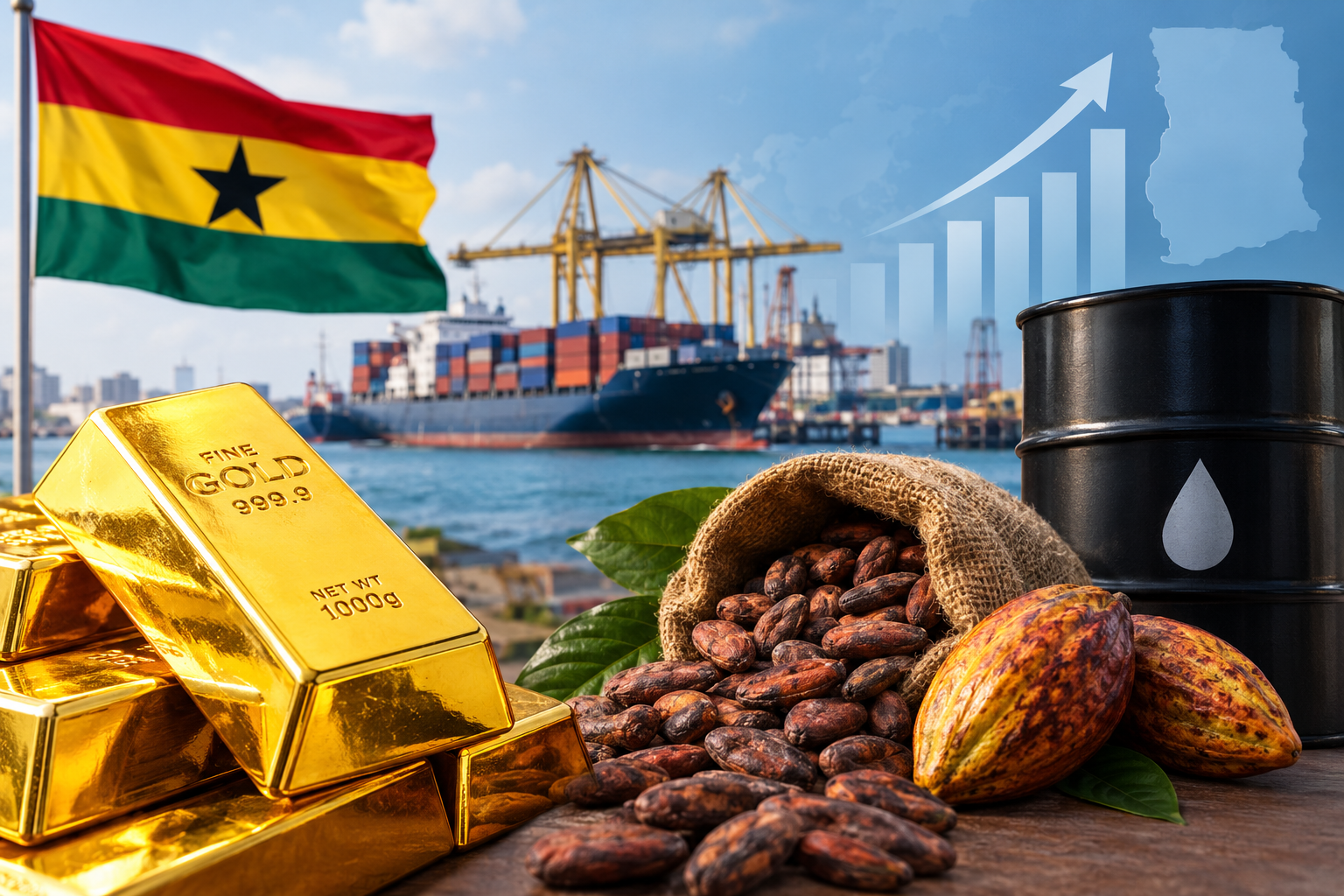
Before 2007, Ghana’s economy was anchored on agriculture and mining. Cocoa dominated exports, gold financed foreign reserves, and timber, bauxite, and manganese filled ships leaving Takoradi Harbour.
The discovery of oil was therefore not just economic news — it was emotional. It symbolized modernization and independence. Many Ghanaians saw oil as the missing piece that could finally propel the country into middle-income prosperity.
3. The Boom: Oil Begins to Flow
In December 2010, Ghana officially became an oil-producing country when crude started flowing from the Jubilee Field, operated by Tullow Oil in partnership with Kosmos Energy, Anadarko, and the Ghana National Petroleum Corporation (GNPC).
Production started at around 70,000 barrels per day and rose steadily, adding billions of dollars in export earnings.
The government established the Petroleum Revenue Management Act (PRMA) in 2011 to ensure transparency and responsible management of oil income. The act also created the Stabilization Fund and Heritage Fund — one to protect the economy from price shocks, and another for future generations.
4. Economic Impact: Growth, Jobs, and Infrastructure
Oil instantly changed Ghana’s macroeconomic picture. Between 2011 and 2013, the economy grew by over 14%, one of the fastest in the world. Roads were built, the cedi strengthened temporarily, and Ghana was reclassified as a middle-income economy.
The Western Region became an industrial hub, with new hotels, banks, and training centres emerging. Youth in Takoradi — once a quiet fishing city — called it “Oil City.”

The government’s revenue increased, helping fund social programs and energy projects. But not all benefits trickled down equally.
5. The Reality: The Challenges Beneath the Surface
With oil came new challenges. Prices on the global market fluctuated sharply, affecting government budgets. Ghana’s debt levels rose as the state borrowed against expected oil revenue.

Fishermen in coastal towns complained of reduced catches due to offshore activities. Environmentalists warned of oil spills and coastal erosion.
Then came the 2014 global oil price crash, which exposed Ghana’s overreliance on oil income. Growth slowed, the cedi depreciated, and the excitement of 2007 began to fade into realism.
6. The Future: Learning, Diversifying, and Innovating
Today, Ghana’s oil production has expanded to include new fields such as TEN (Tweneboa, Enyenra, Ntomme) and Sankofa-Gye Nyame, adding to national output.
The conversation, however, has shifted. Instead of asking how much oil Ghana has, the question now is how well Ghana can manage it.
Ghana must learn from others — diversify beyond oil, invest revenue in education and manufacturing, and transition toward renewable energy as global demand changes.
As the world moves toward cleaner power, Ghana’s challenge will be to balance economic growth with sustainability, ensuring oil becomes a foundation — not a crutch.
7. Oil and the Ghanaian Dream
Oil did not change Ghana overnight. But it expanded its ambition. From the street vendors in Takoradi selling to rig workers to the engineers studying petroleum at the University of Mines and Technology, the dream continues — that Ghana’s natural wealth can power human development.
Cocoa built the nation’s past. Oil is shaping its present. The future will depend on how wisely both are managed.
FAQs
1. When did Ghana start producing oil?
Ghana began oil production in December 2010 from the Jubilee Field.
2. Who are the main oil companies operating in Ghana?
Tullow Oil, Kosmos Energy, GNPC, Eni, and Vitol are major operators.

3. How has oil affected Ghana’s economy?
It boosted GDP, created jobs, and increased government revenue, though challenges remain with price volatility and debt.
4. What is the Petroleum Revenue Management Act?
A 2011 law ensuring transparency and equitable distribution of oil income through the Stabilization and Heritage Funds.
5. What is Ghana’s future in energy?
Ghana aims to balance oil development with renewable energy and economic diversification.
Accra Street Journal tells Ghana’s stories from the ground up — where industry meets identity and progress wears a human face.
Source: Accra Street Journal
Last Updated on December 7, 2025 by Samuel Kwame Boadu
Disclaimer: Some content on Accra Street Journal may be aggregated, summarized, or edited from third-party sources for informational purposes. Images and media are used under fair use or royalty-free licenses. Accra Street Journal is a subsidiary of SamBoad Publishing Hub under SamBoad Business Group Ltd, registered in Ghana since 2014.
For concerns or inquiries, please visit our Privacy Policy or Contact Page.

Samuel Kwame Boadu is a Ghanaian media entrepreneur and storyteller with a passion for amplifying urban voices and uncovering everyday truths. He is the Editor-in-Chief and Founder of Accra Street Journal, a dynamic digital platform dedicated to capturing the pulse of Ghana’s capital—its people, culture, challenges, business, sports and innovations.
Use the following reference when citing or referencing this article.
Your feedback helps us improve our journalism.
Report an Error
Help us maintain accuracy. Let our editorial team know if you spot an issue in this article.
Report a problem with this article