




22 min read
Introduction: A Workplace Revolution Unfolds
Across Accra, a quiet but profound transformation is reshaping how people work. The traditional office—with its fixed desks, rigid hours, and hierarchical structures—is giving way to more flexible, wellness-oriented, and digitally integrated models. From the expansion of co-working spaces to the adoption of hybrid work policies, from corporate wellness programmes to government-led AI literacy training, Accra’s workplaces are embracing new trends that reflect global shifts while adapting to local realities.
The pace of change is accelerating. The International Workplace Group (IWG)—the world’s largest platform for work, whose brands include Regus and Spaces—signed 899 new locations globally in the first half of 2025 alone, more than in its entire first decade of operations . And Accra is a key part of this expansion, with new Regus spaces opening in Airport City and Cantonments, and established co-working hubs like Impact Hub Accra, Workshed Africa, and Kukun operating at capacity .
Key Takeaways
- In March 2026, the National Health Insurance Authority (NHIA) officially commissioned a newly refurbished ultra-modern gym at its head office in Accra, reinforcing its dedication to staff wellness, productivity, and overall wellbeing .
- MMDCEs in Greater Accra have signed 2026 Performance Contracts, which promote disciplined planning, clear target-setting, and results-oriented leadership.
- The future is likely hybrid by default, with flexible work arrangements, co-working spaces, digital skills development, wellness programmes, and performance-based accountability becoming the norm.
Meanwhile, corporate wellness has moved from occasional health walks to institutionalised programmes, with OmniBSIC Bank recently celebrating the 10th edition of its Health Walk—an event that has grown from an internal staff initiative into a nationally recognised public gathering . The National Health Insurance Authority (NHIA) has commissioned an ultra-modern gym at its head office, reinforcing the commitment to staff wellness .
This ASJ article explores how workplaces in Accra are adopting new trends—from hybrid work and co-working spaces to wellness initiatives, digital transformation, and accountability frameworks—and what these changes mean for the future of work in Ghana’s capital.
The Rise of Co-Working Spaces: Flexible Work Takes Root
A Surge in Demand
On the 11th floor of Skyview Towers in Cantonments, a new Regus workspace is preparing to open its doors in March 2026 . In East Legon, Avery Scott’s dedicated desks are available from GH₵1,500 per month, offering freelancers and small teams a professional base . In Dzorwulu, The Enterprise Village continues to host founders and creatives, now expanding into venture studio services to support growing businesses . And across the city, Impact Hub Accra, Workshed Africa, and Kukun are operating at capacity, with waitlists for private offices .
The explosion of co-working spaces in Accra is one of the most visible manifestations of the shifting work culture. According to market research, key drivers of the co-working space market include increasing demand for flexible workspace solutions among startups and freelancers in Ghana and the growth of the digital economy and tech industry .
Why Co-Working Is Growing
1. The Global Shift to Hybrid Work
The expansion of co-working spaces in Accra is part of a global structural shift toward flexible and hybrid working models that accelerated dramatically during the pandemic and has since become permanent. Research commissioned by IWG shows that hybrid working can boost productivity by up to 11 per cent, while delivering average cost savings of $11,000 per employee for companies .
Mark Dixon, CEO and Founder of IWG, explains: “Our opening in Accra comes at a time when more and more companies are discovering that flexible and platform working is incredibly popular with employees, improving their work-life balance and satisfaction, while also providing a multitude of benefits to companies” .
2. Infrastructure Advantages

For many professionals and businesses, the cost of setting up a reliable home office—with consistent electricity, high-speed internet, and a professional environment—can be prohibitive. Co-working spaces solve this problem by providing backup generators that ensure uninterrupted power during outages, high-speed internet with redundant connections, professional environments that separate work from home life, and meeting rooms and event spaces that home offices cannot provide .
At Avery Scott in East Legon, facilities include a “standby fueled power generator, high speed Wi-Fi and DSTV, all at no extra cost” . Regus’s Skyview Tower location offers 24/7 access for private office and dedicated cowork customers, along with parking, roof terrace, on-site restaurant, and patio garden area .

3. Economic Benefits for Companies
The pay-as-you-go model offered by most co-working spaces allows businesses to align real estate costs with actual usage. For companies, the financial case for co-working is compelling: IWG’s research shows that flexible working arrangements can deliver average cost savings of $11,000 per employee . This is particularly significant for startups that need to conserve capital while establishing a professional presence, SMEs that want to scale up or down without being locked into long-term leases, large corporations testing new markets or needing satellite offices, and remote teams wanting to provide employees with professional workspaces .
Who Is Using Co-Working Spaces?
The user base for co-working spaces in Accra has diversified far beyond freelancers and startups :
| User Segment | Characteristics |
|---|---|
| Independent Professionals | Freelancers, consultants, remote workers seeking professional environments |
| Startup Teams | Early-stage companies needing flexible, scalable space |
| Small to Medium Enterprises (SMEs) | Growing businesses wanting professional addresses without long-term leases |
| Large Scale Corporations | Enterprises establishing satellite offices or flexible work arrangements |
Community and Networking
Beyond the physical infrastructure, co-working spaces offer something that working from home cannot: community. For freelancers and solo entrepreneurs who might otherwise work in isolation, co-working spaces provide networking opportunities with fellow entrepreneurs, freelancers, and investors; collaborative environments that spark ideas and partnerships; events and training including workshops, hackathons, and networking sessions; and mentorship from more experienced professionals in the same space .
The Enterprise Village in Dzorwulu has evolved beyond just hosting. In 2026, it launched a Venture Studio to work with early-stage and growing businesses, helping them “clarify ideas and direction, build structure and operational readiness, access guidance, tools, and execution support, and grow from concept to something sustainable” .
The Hybrid Work Conversation: From Traffic Survival to Productivity
Ghana’s Productivity Crisis
Every morning in Accra, Tema, Kumasi, and Takoradi, workers spend hours in traffic—arriving at work tired and returning home exhausted. According to workplace analyst Samuel Adu Amo, this is no longer just a transport issue. It is a national productivity crisis .
When employees lose 2–4 hours daily to commuting, the economy quietly loses productive work hours, employee well-being, family and personal development time, and organizational efficiency. Yet in many roles, the daily commute adds little value to the actual work. The traditional 5-day, office-only model no longer reflects Ghana’s urban, economic, and technological realities .
Why Hybrid Work Makes Sense for Ghana
Hybrid work is not about convenience. It is about results. It shifts the focus from presence to performance, from desk time to deliverables, from control to accountability . The COVID-19 pandemic demonstrated that many jobs can be done effectively outside the office, productivity can be sustained or even improved, and Ghanaian workers are adaptable and responsible .
Hybrid work makes sense for Ghana because it:
-
Reduces traffic congestion
-
Improves employee health and morale
-
Lowers costs for employers and employees
-
Helps attract and retain talent
The Path Forward
For hybrid work to succeed in Ghana, it must be intentional, structured, and well-governed. Adu Amo argues that the public sector must lead with clear policies, role-based eligibility, and outcome-driven performance management. The private sector, too, must see hybrid work not as a perk, but as a strategic advantage .

Hybrid work fails when it is informal. It succeeds when it is intentional, structured, and well-governed. The future of work in Ghana is a policy choice: we can keep forcing workers to battle traffic daily—or redesign work to respect human energy and boost national productivity .
Corporate Wellness: From Perk to Priority
OmniBSIC Bank’s Health Walk: A Decade of Wellness
What began as a post-pandemic internal staff programme has grown into one of Ghana’s most enduring corporate wellness platforms. In February 2026, OmniBSIC Bank marked the 10th edition of its Quarterly Health Walk, held at the University of Ghana Sports Stadium .
The landmark edition brought together customers, corporate partners, staff, families, and members of the public for an early morning walk that began at 6:00 a.m. before participants converged at the stadium for a festival-style celebration featuring brand activations, games, live music, and networking. A Vendor Exhibition running alongside the walk showcased businesses across aviation, agriculture, fashion, healthcare, and food and beverage, providing commercial exposure for exhibitors while reinforcing the bank’s dual focus on wellness and small business support .
Managing Director Daniel Asiedu said the programme has delivered on its founding promise: “This initiative was designed to endure. From the outset, our commitment has been to embed wellness into our corporate culture for the long term. Ten editions later, the Health Walk has delivered on that vision, growing in scale and impact with each quarter” .
NHIA Commissions Ultra-Modern Gym
In March 2026, the National Health Insurance Authority (NHIA) officially commissioned a newly refurbished ultra-modern gym at its head office in Accra, reinforcing its dedication to staff wellness, productivity, and overall wellbeing .
The facility, executed by Architectural Design Partnership Limited and supervised by the NHIA Estates and Facilities Unit, is fully equipped with modern exercise tools designed to support staff fitness .
NHIA Chief Executive Officer, Dr. Victor Asare Bampoe, reiterated the Authority’s commitment to staff welfare through its Health and Wellness focus. He stated that the initiative aligns with NHIA’s broader vision of promoting preventive healthcare, in line with the government’s Free Primary Healthcare agenda, and encouraged staff to make responsible use of the facility .
A key feature of the initiative is accessibility: the gym will be accessible outside official working hours, allowing staff to use the facility before or after work . A team of professional gym instructors, led by Mr. Seyaklem Kwakuvi, has been appointed to guide staff on the safe and effective use of the equipment .
The Broader Trend
These initiatives reflect a broader shift in workplace culture across Accra. Employers are increasingly recognising that:
-
Healthy employees are more productive
-
Wellness programmes reduce absenteeism and healthcare costs
-
Investment in employee well-being improves retention and morale
-
In a competitive job market, wellness offerings are a differentiator
The Ghana Post management, in its October 2025 staff durbar, similarly emphasised that the company’s success depends on the dedication and motivation of its workers, announcing promotions for over 300 employees and training programmes for more than 400 staff .
Digital Transformation: AI Literacy and the Public Sector
First Nationwide AI Literacy Training for Civil Servants
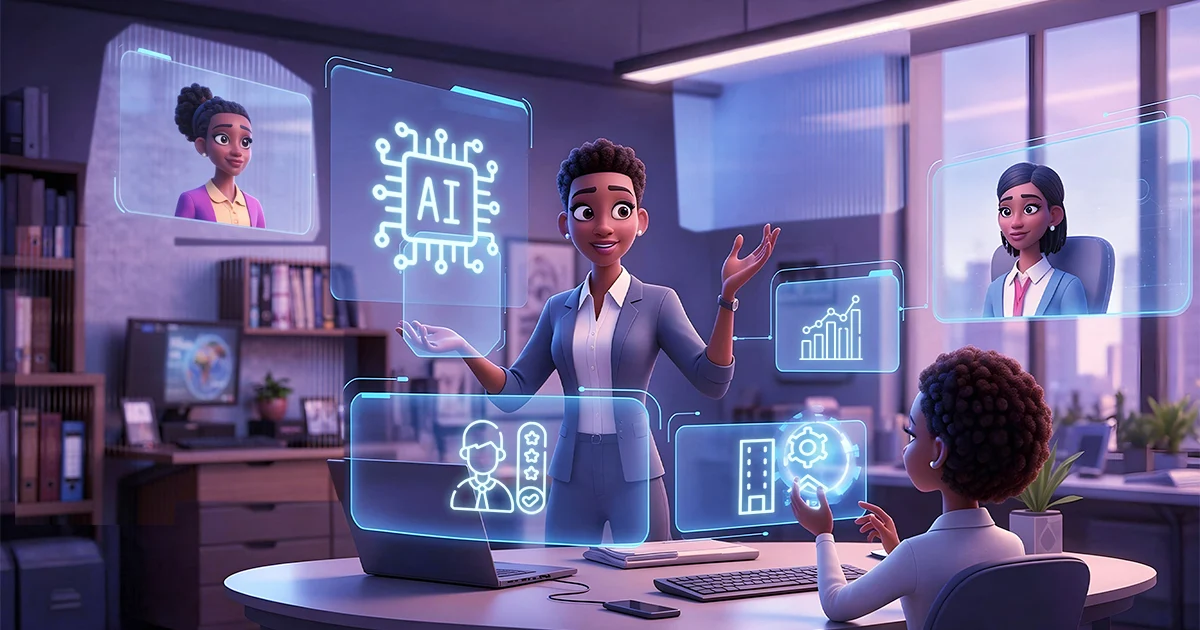
In a landmark initiative, the Ministry of Communication, Digital Technology and Innovations, in partnership with UNESCO, has successfully concluded the first cohort of Ghana’s nationwide Artificial Intelligence (AI) literacy training programme for civil servants .
The three-day programme, held from March 24–26, 2026, at the Best Western Premier Hotel in Accra, equipped participants with foundational knowledge and practical AI skills to strengthen public sector capacity and support the implementation of Ghana’s National Artificial Intelligence Strategy (2023–2033) .
Building a Digital-Ready Public Service
The Director of General Administration at the Ministry, Mr Alfred Nortey, described the training as a milestone in the government’s digitalisation agenda. He noted that AI offers opportunities to improve efficiency, enhance policy formulation, and transform public service delivery, while also requiring strong governance and ethical safeguards .
The programme adopted a Training-of-Trainers model, ensuring sustainability and institutional capacity building across the Civil Service. Participants explored key AI concepts such as machine learning, neural networks, predictive and generative AI, with emphasis on human oversight to guarantee accuracy and accountability .
Ethical Considerations
The Director emphasised that the training will be delivered in four cohorts from March to May 2026, with a strong focus on ethical and risk considerations, including algorithmic bias, misinformation, data privacy, and cybersecurity .
Representing the Office of the Head of the Civil Service, the Director of Recruitment, Training and Development Directorate, Dr Elizabeth Obeng-Yeboah, urged participants to take a leading role in translating national AI policy into measurable outcomes. She emphasised that civil servants trained in the programme will serve as resource persons to cascade AI knowledge across Ministries, Departments, and Agencies, while upholding principles of fairness, transparency, and accountability .
Accountability and Performance Management
Performance Contracts for MMDCEs
In February 2026, Metropolitan, Municipal and District Chief Executives (MMDCEs) in the Greater Accra Region signed their 2026 Performance Contracts, marking a critical milestone in strengthening local governance and improving service delivery .
Greater Accra Regional Minister, Ms Linda Obenewaa Akweley Ocloo, explained that the performance contracting system remained one of government’s most effective instruments for enhancing accountability, ensuring efficient use of public resources, and translating development policies into measurable outcomes that directly benefit citizens .
She stressed that the contracts should not be viewed merely as assessment tools but as practical management instruments that promote disciplined planning, clear target-setting, and effective implementation throughout the year .
The Results-Driven Culture
Ms Ocloo noted that since the introduction of performance contracting, Metropolitan, Municipal and District Assemblies had recorded notable improvements in planning, documentation, reporting, and regulatory compliance. The system had also helped to entrench a culture of performance consciousness, where leadership is held accountable for agreed targets and deliverables .
She cautioned, however, that the indicators contained in the contracts must guide daily administration, budgeting priorities, and monitoring efforts, and should not be treated as activities to be hurriedly addressed at the end of the assessment period .
Mayor of Accra’s Call for Attitudinal Change
At the Accra Metropolitan Assembly (AMA), Mayor Michael Kpakpo Allotey has called for a change in work attitude across the institution. In a January 2026 management meeting, he urged leaders and staff to take responsibility for addressing challenges within their areas of assignment .
“Wherever you find yourself, fix the problems there,” he said, stressing that the city’s transformation required practical solutions and a consistent mindset across departments .
The Mayor noted that AMA worked hard in the previous year, but explained that the impact of those efforts was not sufficiently felt because of recurring institutional and operational challenges. He said the new year would be approached with a stronger emphasis on outcomes .
As part of the year’s internal welfare and productivity goals, the Mayor said the Assembly was looking at providing buses for staff, explaining that better logistics support would contribute to improved efficiency and punctuality, while also strengthening staff morale .
Public-Private Partnerships and the 24-Hour Economy
Mayor’s Visits to Companies
In February 2026, the Mayor of Accra paid a two-day working visit to selected companies in the metropolis to familiarise himself with their operations, engage management on constraints affecting productivity, and encourage expansion to create more jobs .
The visit formed part of measures to operationalise the AMA’s stakeholder engagement plan, aimed at strengthening collaboration between the Assembly and the private sector to improve the business environment, attract investment, and support inclusive economic growth in the city .
The companies visited included Melcom, Mohinani Group, Ashfoam, Duraplast, Promasidor Ghana Limited, De-Luxy Paint, Latex Foam, M/S Thakar Overseas Limited, Sigma Gas Company Limited, and Royal Motors .
Focus on the 24-Hour Economy
The Mayor stressed the Assembly’s interest in companies operating 24-hour systems, noting that such business models had the potential to increase productivity and create more employment avenues for the youth. He said the AMA would prioritise engagements that supported expanded working hours and higher output, and would explore ways of providing guidance and support to firms and individuals who sought to participate in the 24-hour economy but lacked the capacity to do so effectively .
The Managing Directors of the companies visited commended the Mayor for the initiative, describing him as the first to pay them a personal working call since assuming office .
The Italian Innovation Center: A New Hub for Talent and Technology
Launch of the I.N.S.P.I.R.E. Project
On March 27, 2026, the E4Impact Foundation, in partnership with Università Cattolica del Sacro Cuore, hosted a landmark event: the dual launch of the Italian Innovation Center and the I.N.S.P.I.R.E. Entrepreneurship and Job Fair at Amartey Towers Building, University of Professional Studies (UPSA) .
The I.N.S.P.I.R.E. Project (Implementing New Solutions for the Professional Integration of Human Resources in the Entrepreneurial Ecosystem in Ghana) is a strategic initiative designed to catalyse growth by integrating youth, women, and persons with disabilities (PWDs) into the formal economy .
Key Targets
Spanning the Greater Accra, Ashanti, Northern, Bono, and Western regions, the I.N.S.P.I.R.E. Project aims to:
-
Create 1,620 sustainable jobs
-
Support the scaling of 570 SMEs
-
Upskill 4,615 youth through specialised Vocational Training Centers
The Italian Innovation Center
The program’s highlights include the inauguration of the Italian Innovation Center at UPSA, which will serve as the premier gateway for technology transfer and commercial synergies between Ghana and Italy .
Event features include:
-
Keynote Address: The I.N.S.P.I.R.E. Vision – Defining the roadmap for Innovation, Networking, and Impact
-
Plenary Session: The Future of Work – An expert-led discussion on navigating the digital shift and the rising demand for green skills in the workforce
-
Startup Showcase: A curated exhibition featuring proprietary innovations and scalable business models from MBA in Impact Entrepreneurship and Innovation students, alumni, and industry stakeholders
Expected Outcomes
For participants, the event offers:
-
Access to career pathways through direct engagement with hiring managers and industry partners for internship and full-time employment opportunities
-
Opportunities to showcase innovations to investors and mentors
-
Networking with industry leaders
-
Insights into the practical application of Artificial Intelligence and sustainable practices within modern business frameworks
E4Impact Foundation, present in 20 African countries with entrepreneurship training programmes, business accelerators, and multiple projects, has long promoted win–win partnerships between Italian and African companies .
What These Trends Mean for Accra’s Workforce
For Employees
The shift toward hybrid work, co-working spaces, and wellness programmes offers employees more flexibility, improved work-life balance, and access to professional environments that support productivity. The focus on skills development—through initiatives like the AI literacy training and the I.N.S.P.I.R.E. project—creates opportunities for career advancement and reskilling.
For Employers
Companies that embrace these trends are better positioned to attract and retain talent. The combination of flexible work arrangements, wellness initiatives, and digital transformation can improve productivity, reduce costs, and enhance employee satisfaction. The emphasis on accountability and performance management ensures that flexibility is paired with results.
For the Public Sector
The adoption of performance contracts, the focus on attitudinal change at the AMA, and the nationwide AI literacy training for civil servants signal a commitment to modernising public service delivery. These initiatives aim to make government institutions more responsive, efficient, and accountable to citizens.
For the Economy
The expansion of co-working spaces, the growth of the digital economy, and the focus on creating jobs through initiatives like I.N.S.P.I.R.E. contribute to Accra’s economic resilience. As more companies adopt flexible work models, the city’s infrastructure—from transport to real estate—will need to adapt to support this new way of working.
Frequently Asked Questions (FAQs)
1. What are the new workplace trends in Accra?
Key trends include the expansion of co-working spaces, the adoption of hybrid work models, corporate wellness programmes (health walks, gym facilities), AI literacy training for civil servants, and performance-based accountability frameworks in public sector leadership.
2. Why are co-working spaces growing in Accra?
Co-working spaces are expanding due to the global shift toward hybrid work, the need for reliable infrastructure (backup power, high-speed internet), cost savings for businesses, and the demand for community and networking opportunities among freelancers and remote workers .
3. Is hybrid work becoming common in Ghana?
Yes. Analysts argue that hybrid work can address Ghana’s productivity crisis by reducing commuting time, improving employee well-being, and lowering costs. The traditional 5-day, office-only model is increasingly seen as out of step with Ghana’s urban and technological realities .
4. How are companies investing in employee wellness?
OmniBSIC Bank has institutionalised its Health Walk, now in its 10th edition, which has grown from an internal staff programme into a nationally recognised public event . The NHIA has commissioned an ultra-modern gym at its head office, accessible outside official working hours, with professional instructors .
5. What is the AI literacy training for civil servants?
A nationwide AI literacy training programme for civil servants, in partnership with UNESCO, is training public sector workers in foundational AI concepts, machine learning, predictive and generative AI, with emphasis on ethical safeguards. The programme runs in four cohorts from March to May 2026 .
6. What is the I.N.S.P.I.R.E. Project?
The I.N.S.P.I.R.E. Project (Implementing New Solutions for the Professional Integration of Human Resources in the Entrepreneurial Ecosystem in Ghana) aims to create 1,620 sustainable jobs, support 570 SMEs, and upskill 4,615 youth across five regions .
7. What is the Italian Innovation Center?
Launched at UPSA in March 2026, the Italian Innovation Center is a hub for technology transfer and commercial synergies between Ghana and Italy. It supports innovation, entrepreneurship, and job creation .
8. How is the public sector improving accountability?
MMDCEs in Greater Accra have signed 2026 Performance Contracts, which promote disciplined planning, clear target-setting, and results-oriented leadership. The system has improved planning, documentation, and regulatory compliance in local governance .
9. What is the Mayor of Accra’s focus for 2026?
The Mayor has called for a change in work attitude at AMA, urging staff to “fix problems” where they find them. Priorities include improving logistics for staff, renovating schools and roads, and supporting the 24-hour economy .
10. What is the future of work in Accra?
The future is likely hybrid by default, with flexible work arrangements, co-working spaces, digital skills development, wellness programmes, and performance-based accountability becoming the norm. The 24-hour economy initiative may further transform work patterns .
Conclusion: A Workplace Revolution Underway
Accra’s workplaces are in the midst of a profound transformation. The traditional office—with its fixed desks, rigid hours, and hierarchical structures—is being replaced by more flexible, wellness-oriented, and digitally integrated models. The expansion of co-working spaces, the adoption of hybrid work policies, the institutionalisation of corporate wellness programmes, and the investment in digital skills training are all signs of a shift that is both global and distinctly local.
The International Workplace Group’s aggressive expansion in Accra reflects a global trend toward flexible work that has become permanent . OmniBSIC Bank’s 10th Health Walk demonstrates that wellness is no longer a fringe concern but a core component of corporate culture . The NHIA’s ultra-modern gym signals that government institutions are also investing in employee well-being . And the nationwide AI literacy training for civil servants points to a future where digital skills are essential for public service delivery .
These changes are not happening in isolation. They are supported by new accountability frameworks—performance contracts for MMDCEs, calls for attitudinal change at the AMA—that ensure flexibility is paired with results . And they are being accelerated by initiatives like the I.N.S.P.I.R.E. Project and the Italian Innovation Center, which create pathways for youth employment and entrepreneurship .
For employees, these trends offer more flexibility, improved work-life balance, and opportunities for growth. For employers, they offer a path to attracting and retaining talent, reducing costs, and improving productivity. For Accra as a city, they promise a more dynamic, resilient, and inclusive economy.
The future of work in Accra is being written now. And it is being written in the co-working spaces of Cantonments, the health walks of the University of Ghana, the AI classrooms of the civil service, and the performance contracts of local government. It is a future that is flexible, wellness-oriented, digitally literate, and accountable. It is a future that is already here.
Frequently Asked Questions (FAQs)
1. What are the new workplace trends in Accra?
Key trends include the expansion of co-working spaces, the adoption of hybrid work models, corporate wellness programmes (health walks, gym facilities), AI literacy training for civil servants, and performance-based accountability frameworks in public sector leadership .
2. Why are co-working spaces growing in Accra?
Co-working spaces are expanding due to the global shift toward hybrid work, the need for reliable infrastructure (backup power, high-speed internet), cost savings for businesses, and the demand for community and networking opportunities among freelancers and remote workers .
3. Is hybrid work becoming common in Ghana?
Yes. Analysts argue that hybrid work can address Ghana’s productivity crisis by reducing commuting time, improving employee well-being, and lowering costs. The traditional 5-day, office-only model is increasingly seen as out of step with Ghana’s urban and technological realities .
4. How are companies investing in employee wellness?
OmniBSIC Bank has institutionalised its Health Walk, now in its 10th edition, which has grown from an internal staff programme into a nationally recognised public event . The NHIA has commissioned an ultra-modern gym at its head office, accessible outside official working hours, with professional instructors .
5. What is the AI literacy training for civil servants?
A nationwide AI literacy training programme for civil servants, in partnership with UNESCO, is training public sector workers in foundational AI concepts, machine learning, predictive and generative AI, with emphasis on ethical safeguards .
6. What is the I.N.S.P.I.R.E. Project?
The I.N.S.P.I.R.E. Project aims to create 1,620 sustainable jobs, support 570 SMEs, and upskill 4,615 youth across five regions in Ghana .
7. What is the Italian Innovation Center?
Launched at UPSA in March 2026, the Italian Innovation Center is a hub for technology transfer and commercial synergies between Ghana and Italy .
8. How is the public sector improving accountability?
MMDCEs in Greater Accra have signed 2026 Performance Contracts, which promote disciplined planning, clear target-setting, and results-oriented leadership .
9. What is the Mayor of Accra’s focus for 2026?
The Mayor has called for a change in work attitude at AMA, urging staff to “fix problems” where they find them. Priorities include improving logistics, infrastructure, and supporting the 24-hour economy .
10. What is the future of work in Accra?
The future is likely hybrid by default, with flexible work arrangements, co-working spaces, digital skills development, wellness programmes, and performance-based accountability becoming the norm
Source: Accra Street Journal
Last Updated on March 31, 2026 by Samuel Kwame Boadu
Disclaimer: Some content on Accra Street Journal may be aggregated, summarized, or edited from third-party sources for informational purposes. Images and media are used under fair use or royalty-free licenses. Accra Street Journal is a subsidiary of SamBoad Publishing Hub under SamBoad Business Group Ltd, registered in Ghana since 2014.
For concerns or inquiries, please visit our Privacy Policy or Contact Page.

Samuel Kwame Boadu is a Ghanaian media entrepreneur and storyteller with a passion for amplifying urban voices and uncovering everyday truths. He is the Editor-in-Chief and Founder of Accra Street Journal, a dynamic digital platform dedicated to capturing the pulse of Ghana’s capital—its people, culture, challenges, business, sports and innovations.
Use the following reference when citing or referencing this article.
Your feedback helps us improve our journalism.
Report an Error
Help us maintain accuracy. Let our editorial team know if you spot an issue in this article.
Report a problem with this article