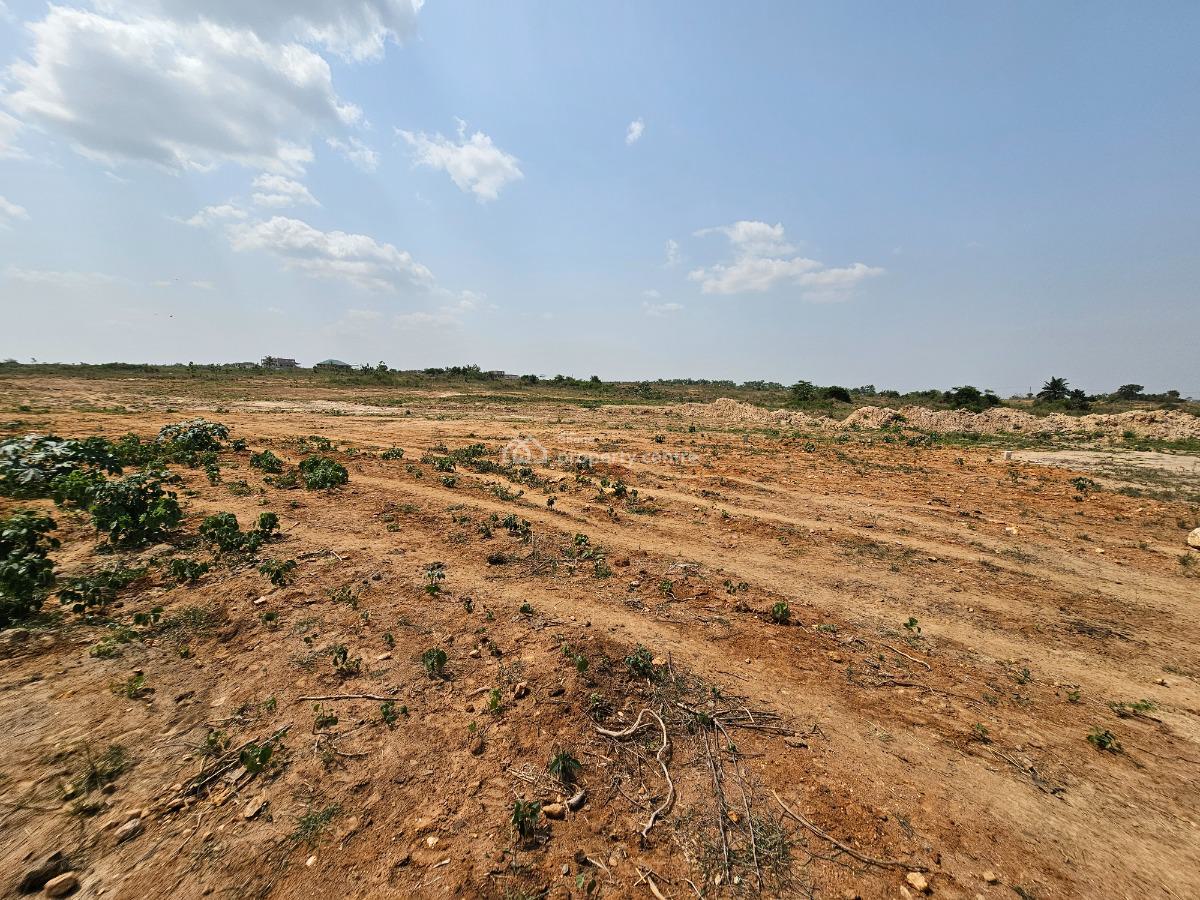
Introduction: The Danger Zone
You have found the perfect plot. You have negotiated with the chief, the family head, or the developer. You have paid the money. You have the indenture in your hand. The site plan is rolled up and tucked safely away.
You believe you are now a landowner. And that belief is where the danger begins.

The period after purchasing land is when most mistakes happen—not from malice, but from ignorance. The Greater Accra Regional Lands Officer, Timothy Anyidoho, has warned that people who keep indentures “under their bed” believing the transaction is complete are putting their investments at serious risk . The Regional Lands Officer for the Western Region has similarly warned that an indenture is “not a complete document .
📢 GET A DETAILED ARTICLES + JOBS
Join ASJ's WhatsApp Channel and never miss a post or opportunity.

This Accra Street Journal guide identifies the most common and costly mistakes people make after buying land in Ghana, and provides actionable steps to avoid them.
Mistake #1: Assuming the Indenture Is Enough
What Happens: You receive your indenture and site plan, file them away, and consider the transaction complete.

Why It’s Wrong: An indenture is a contract between buyer and seller, not proof of ownership. The Greater Accra Regional Lands Officer has stated plainly: securing an indenture on a parcel of land does not guarantee ownership of that land .
The Risk: Without registration, your indenture provides virtually no legal protection. If the seller sells the same land to someone else, or if another claimant emerges, your unregistered indenture carries little weight.
What to Do Instead: Register your indenture at the Lands Commission immediately. If your land is in a title registration district (Greater Accra, parts of Kumasi, Kasoa), apply for a Land Title Certificate .
Mistake #2: Never Visiting the Land Again
What Happens: You pay for the land, receive your documents, and never return until you are ready to build—sometimes years later.
Why It’s Wrong: Absentee landowners are the most vulnerable to encroachment. Opportunistic neighbours, squatters, or even the seller may assume the land is abandoned and move in.
The Risk: By the time you return, someone may have built a structure on your land. Evicting them could require years of litigation.
What to Do Instead: Visit your land at least once a month. Establish visible presence. Clear the boundaries. Introduce yourself to neighbouring property owners. If possible, erect a temporary fence or at least corner markers with “Private Property” signs.
Mistake #3: Skipping the Lands Commission Search
What Happens: You rely on the seller’s word or a search report they provide, without conducting your own independent verification.
Why It’s Wrong: The seller’s search may be outdated, incomplete, or fabricated. Only a fresh search at the Client Service and Access Unit (CSAU) reveals the current status of the land.

The Risk: The land may have been previously sold to someone else, registered to another person, or be subject to ongoing litigation. You could be buying a dispute, not a property.
What to Do Instead: Conduct your own search at the Lands Commission before paying. Engage a licensed surveyor and solicitor to assist. Verify the seller’s title, any existing caveats, and the land’s registration status.
“If your guarantor gives the same land to another person and he or she obtains the land title on it you can lose the land.”
— Timothy Anyidoho, Greater Accra Regional Lands Officer
Mistake #4: Failing to File a Caution
What Happens: You pay for the land but do not file a caution at the Lands Commission.
Why It’s Wrong: A caution is a formal notice to the Lands Commission that you have an interest in the property. It prevents the seller from selling the same land to another buyer while you complete the registration process.
The Risk: The seller could sell your land to someone else. That person, if they register first, could obtain a valid title that supersedes your unregistered interest.
What to Do Instead: File a caution at the Lands Commission within 24-48 hours of payment. A caution typically lasts 6-12 months, giving you sufficient time to complete registration.
Mistake #5: Not Paying Ground Rent
What Happens: You assume that once you have paid for the land, you have no further financial obligations to the traditional authorities.
Why It’s Wrong: Approximately 80% of land in Ghana is held under customary law by stools, skins, families, or clans . For these lands, annual ground rent is required.
The Risk: Non-payment constitutes breach of your lease and can lead to forfeiture of your interest. The stool or family could repossess the land and sell it to someone else.
What to Do Instead: Identify the rightful customary authority (stool, skin, family, or clan). Pay your annual ground rent on time. Obtain official receipts for each payment. Keep these records indefinitely.
Mistake #6: Building Without a Permit
What Happens: You are eager to start construction, so you begin building without obtaining a development permit from the local assembly.
Why It’s Wrong: Building without a permit violates local planning laws and building codes.
The Risk: The Metropolitan, Municipal, or District Assembly can issue a stop-work order, impose fines, or even order demolition of unapproved structures.
What to Do Instead: Before breaking ground, obtain a development permit from the Physical Planning Department of your local assembly. The process typically takes about 30 days and requires architectural drawings, site plan, and payment of fees.
“A good landlord is defined by having a development permit from the respective MMDA.
Mistake #7: Hiring Unlicensed Professionals
What Happens: To save money, you hire an unlicensed surveyor or someone who claims to be a “land consultant” but is not licensed by the Lands Commission.
Why It’s Wrong: Only licensed professionals can prepare documents acceptable to the Lands Commission. Unlicensed practitioners cannot sign or stamp the required forms.
The Risk: Your site plan may lack the required barcode and signature. Your documents will be rejected by the Lands Commission, wasting time and money. Worse, you may be defrauded entirely.
What to Do Instead: Verify that your surveyor is licensed by the Survey and Mapping Division. Ensure your solicitor is licensed to practice and endorsed by the General Legal Council. Deal only with officials wearing name tags at the Lands Commission .
Mistake #8: Losing Your Documents
What Happens: You keep your indenture, site plan, and receipts in an unsafe place—a drawer, a bag, or with an unreliable third party.
Why It’s Wrong: If your documents are lost, stolen, or destroyed, proving your ownership becomes exponentially harder. You will need to apply for a Substituted Certificate, a time-consuming and costly process.
The Risk: You could lose your land if you cannot produce documentation of your purchase.
What to Do Instead: Keep all original documents in a secure location—ideally a fireproof safe or a safety deposit box at a bank. Make multiple certified copies. Store digital backups (scans or photographs) in secure cloud storage and with your solicitor.
Mistake #9: Ignoring Your Neighbours
What Happens: You purchase land but never introduce yourself to the owners of adjacent properties.
Why It’s Wrong: Neighbouring property owners are often the first to know about boundary disputes, encroachment attempts, or competing claims. They can also be valuable witnesses if disputes arise.
The Risk: A boundary dispute could emerge years later, and you will have no relationship with the neighbours who could help resolve it.
What to Do Instead: After purchase, visit each neighbouring property owner. Introduce yourself as the new owner. Walk the common boundaries together. Share your contact information. Ask if they have any knowledge of existing disputes or claims.
Mistake #10: Not Following Up After Registration
What Happens: You lodge your documents at the Lands Commission and then wait for them to contact you.
Why It’s Wrong: The Lands Commission processes a high volume of applications. They will not chase you. If your file is missing a document or requires a signature, they may not notify you promptly.
The Risk: Your application could languish for months or years while you assume it is being processed. Meanwhile, your land remains vulnerable.
What to Do Instead: Follow up regularly. Call the Client Service Unit every 2-3 weeks. Visit in person monthly. Keep a log of who you spoke to and when. Escalate politely if processing exceeds quoted timelines. Have your solicitor handle correspondence if possible.
Summary Table: Mistakes and Solutions
| Mistake | Consequence | Solution |
|---|---|---|
| Assuming indenture is enough | No legal protection | Register at Lands Commission; obtain title if possible |
| Never visiting the land | Encroachment, squatting | Visit monthly; establish visible presence |
| Skipping Lands Commission search | Buying disputed land | Conduct independent search before payment |
| Failing to file caution | Double sale | File caution within 24-48 hours |
| Not paying ground rent | Forfeiture of interest | Pay annually; keep receipts |
| Building without permit | Fines, demolition, stop-work orders | Obtain development permit before construction |
| Hiring unlicensed professionals | Rejected documents, fraud | Verify licenses of surveyor and solicitor |
| Losing documents | Inability to prove ownership | Secure originals; make certified copies; digital backups |
| Ignoring neighbours | Boundary disputes, no witnesses | Introduce yourself; walk boundaries together |
| No follow-up after registration | Endless processing delays | Regular follow-up with Lands Commission |
Frequently Asked Questions (FAQs)
1. Is an indenture alone enough to prove land ownership in Ghana?
No. An indenture is a contract between buyer and seller, but it does not guarantee ownership. You must register it with the Lands Commission .
2. How soon after buying land should I file a caution?
Ideally within 24-48 hours of payment. A caution prevents the seller from selling the same land to another buyer .
3. Do I need to pay ground rent every year?
For lands under customary tenure (stool, skin, family, or clan lands), yes. Non-payment can lead to forfeiture of your interest .
4. Can I build immediately after buying land?
No. You must obtain a development permit from your local assembly before construction begins. Building without a permit invites fines and potential demolition .
5. How do I know if my surveyor is licensed?
Check with the Survey and Mapping Division of the Lands Commission. Licensed surveyors have registration numbers and can obtain site plan barcodes.
6. What happens if I lose my indenture?
You may apply for a Substituted Certificate. The Registrar publishes a 14-day notice, and if no objection, a substituted certificate is issued. Fraudulent procurement carries fines and imprisonment .
7. How often should I visit my land after purchase?
At least once a month. Regular visits deter encroachment and establish your presence as the owner.
8. What is the 30-day target for registration?
The government has directed the Lands Commission to complete land-related applications within 30 days. This target has not yet been consistently achieved .
9. Can I sell land that I haven’t registered?
You can, but it is risky. Buyers will conduct searches and may be unwilling to purchase unregistered land. A registered deed or title significantly increases your land’s marketability .
10. What should I do if someone encroaches on my land?
Document the encroachment with photographs and witnesses. Contact your solicitor immediately. File a complaint with the local assembly and police. If necessary, seek a court injunction to stop further construction.
Conclusion: Protect Your Investment
Buying land in Ghana is a significant investment—often the largest of your life. The mistake is not in purchasing; it is in assuming that the purchase is the end of the process. It is only the beginning.
The indenture in your hand is not ownership. It is a promise that must be transformed into registered title or deed through deliberate, consistent action. The caution you file, the ground rent you pay, the permits you obtain, the neighbours you meet, and the follow-up calls you make—these are the actions that protect your investment.
The Lands Commission may be slow. The process may be frustrating. But the alternative—unregistered land, vulnerable to double sales, encroachment, and legal disputes—is far more costly.
Do not keep your indenture under your bed. Take the steps. Do the work. And become not just a buyer, but a protected owner.
Frequently Asked Questions (FAQs)
1. Is an indenture alone enough to prove land ownership in Ghana?
No. An indenture is a contract between buyer and seller, but it does not guarantee ownership. You must register it with the Lands Commission .
2. How soon after buying land should I file a caution?
Ideally within 24-48 hours of payment .
3. Do I need to pay ground rent every year?
For lands under customary tenure, yes. Non-payment can lead to forfeiture of your interest .
4. Can I build immediately after buying land?
No. You must obtain a development permit from your local assembly first .
5. How do I know if my surveyor is licensed?
Check with the Survey and Mapping Division of the Lands Commission .
6. What happens if I lose my indenture?
You may apply for a Substituted Certificate with a 14-day public notice period .
7. How often should I visit my land after purchase?
At least once a month .
8. What is the 30-day target for registration?
Government directive to the Lands Commission; not yet consistently achieved .
9. Can I sell land that I haven’t registered?
You can, but it is risky and reduces marketability .
10. What should I do if someone encroaches on my land?
Document, contact your solicitor, file complaints, and seek a court injunction if necessary
Source: Accra Street Journal
Last Updated on June 14, 2026 by Samuel Kwame Boadu
Disclaimer: Some content on Accra Street Journal may be aggregated, summarized, or edited from third-party sources for informational purposes. Images and media are used under fair use or royalty-free licenses. Accra Street Journal is a subsidiary of SamBoad Publishing Hub under SamBoad Business Group Ltd, registered in Ghana since 2014.
For concerns or inquiries, please visit our Privacy Policy or Contact Page.

Samuel Kwame Boadu is a Ghanaian media entrepreneur and storyteller with a passion for amplifying urban voices and uncovering everyday truths. He is the Editor-in-Chief and Founder of Accra Street Journal, a dynamic digital platform dedicated to capturing the pulse of Ghana’s capital—its people, culture, challenges, business, sports and innovations.